


Self-Host Weekly is sponsored by PikaPods, the instant open source hosting service. Run a large selection of open source apps within seconds from just $1.20/month. Server administration, updates, and backups are all taken care of, leaving you in control of your data. Try it today with $5 free welcome credit!
The rumors of Booklore's death have not been greatly exaggerated. If you missed it, there was a recent controversy surrounding the developer's conduct towards contributors and potential abuse of the project's license, which culminated in the repository's removal from GitHub earlier this week and a teary-eyed goodbye from the developer.
On a separate note, AI continues to dominate the self-hosted conversation. This week, its impact on developers stole the spotlight.
For the unaware, AI is wreaking havoc on the development side of many popular projects as maintainers are now forced to sift through a large influx of AI-generated pull requests that pose several risks: Is the code maintainable? Does it reimplement something that already exists? Is it secure? Does it contain licensed code from other projects?
This Node.js pull request from January with 350+ comments is a great read and almost real-time example of a team running into each of these issues with just a single contribution. (In response, the team eventually developed and released their own AI contribution guidelines.)
But not all maintainers have taken it in stride. I've also noticed an uptick in the number of projects no longer accepting public contributions given the burden of reviewing, testing, and maintaining them. Of course, new tools to help projects combat this have started popping up and others are finding clever ways to filter out AI contributors, but it can still be overwhelming.
Meanwhile, the only element I need to identify an undisclosed vibe coded project these days is a single statement found in the project's repo: Made with ♥ by Developer. (Developers are not capable of love.)
In other news:
- Unraid v7.3.0 entered beta, which finally allows users to install the operating system on something other than a flash drive
- A satirical website dubbed Malus (malice) has been making its rounds and fooling users after claiming it's deploying AI tools to recreate open source projects from scratch with corporate-friendly licensing (my personal favorite is Emergency AGPL Removal in the footer links)
- Google officially walked back their decision to disable sideloading on Android, although users will need to jump through a few hoops to enable it in the future (a win for anyone deploying companion apps via tools like Obtainium)
- A recent study found that texting random peers is better for reducing loneliness than AI chatbots (like OpenClaw and NanoClaw)
Made with ♥ by selfh.st
Newswire
How Can Governments Pay Open Source Maintainers?
When I worked for the UK Government I was once asked if we could find a way to pay for all the Open Source Software we were using. It is a surprisingly hard problem and I want to talk about some of the issues we faced. The UK Government publishes a lot of Open Source code - nearly everything developed in-house by the state is available under an OSI Approved licence. The UK is generally pretty…
 Terence Eden

The wild six weeks for NanoClaw’s creator that led to a deal with Docker | TechCrunch
Gavriel Cohen is living an open source developer’s dream as his project has achieved acclaim and a partnership with Docker in a matter of weeks.
 TechCrunchJulie Bort

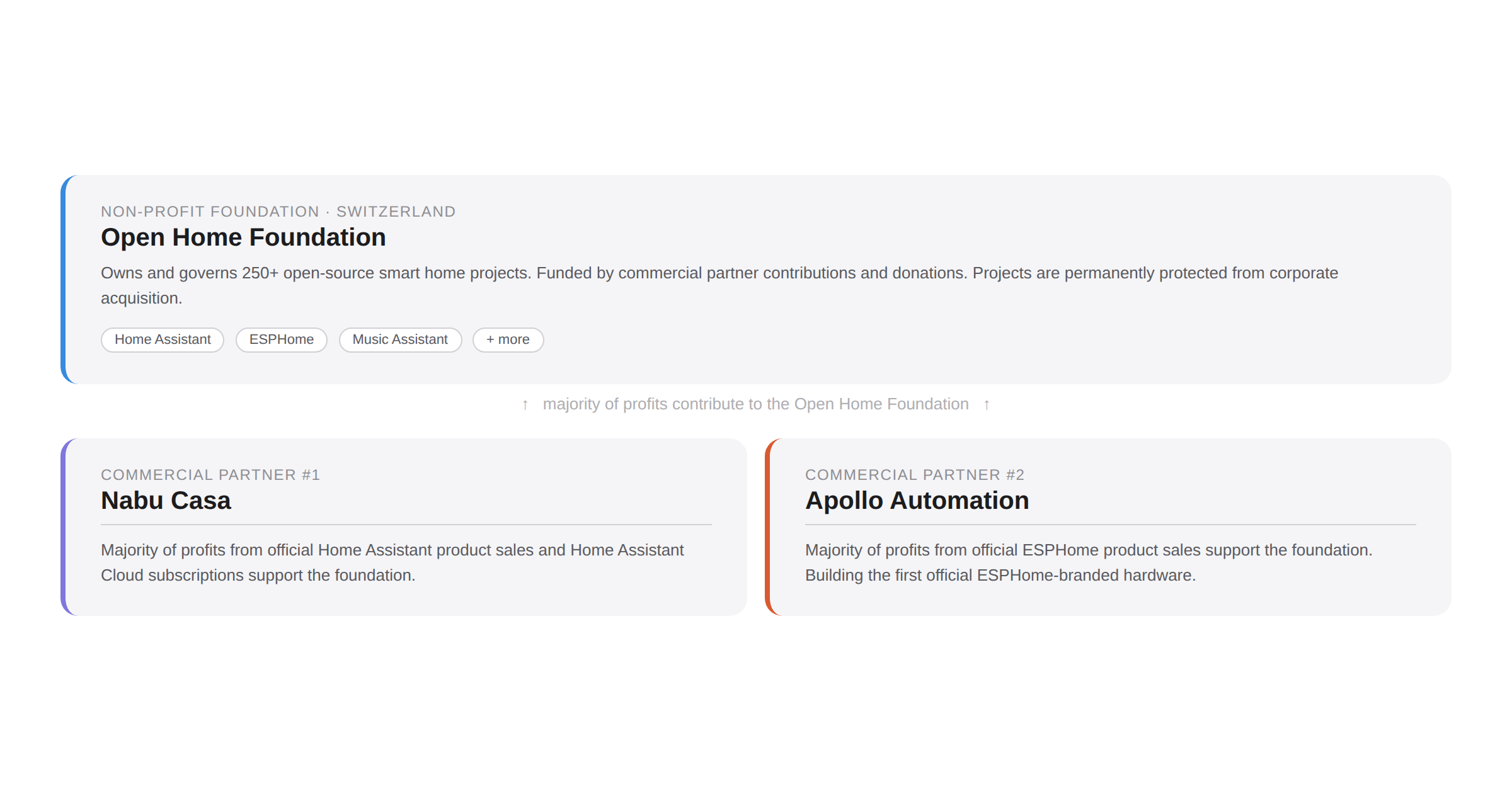
Who Owns Home Assistant, and What Are Commercial Partners? The Open Ho
If you’ve spent any time in the Home Assistant community, you’ve probably seen the names Open Home Foundation, Nabu Casa, and Apollo Automation come up together. A lot of people are understandably confused about who owns what, who funds what, and how we at Apollo fit into the picture. Let’s clear it all up. What Is the
 Apollo AutomationJustin Bunton
Standing up for the open Internet- why we appealed Italy’s Piracy Shield fine
Cloudflare is appealing a €14 million fine from Italian regulators over “Piracy Shield,” a system that forces providers to block content without oversight. We are challenging this framework to protect the Internet from disproportionate overblocking and lack of due process.
 The Cloudflare BlogPatrick Nemeroff

I prompt injected my CONTRIBUTING.md – 50% of PRs are bots
How a hidden prompt injection in CONTRIBUTING.md revealed that 40% of pull requests to a popular GitHub repository were generated by AI bots
 Glama – MCP Hosting Platformpunkpeye
Drop-in Binary Replacement: Migrate from MinIO to RustFS – RustFS Blog
 RustFS Blogrustfs

Fedora 44 on the Raspberry Pi 5 – nullr0ute’s blog

Users hate it, but age-check tech is coming. Here’s how it works.
On-device face scans and cross-platform age keys decrease privacy risks, but trust issues abound.
 Ars TechnicaAshley Belanger

More From selfh.st
Self-Hosted Software Names You’re Probably Mispronouncing
An unofficial guide to commonly mispronounced names in self-hosted software
 selfh.stEthan Sholly

Optimal Plex Settings for Privacy-Conscious Users
Update these settings to limit the data Plex collects about your account, content, and streaming habits
 selfh.stEthan Sholly

Feedback
Content Spotlight
Meet Sure, a self-hosted personal finance platform and successor to (and fork of) Maybe – a popular app that went closed source in 2025. Unlike alternatives that place a heavier emphasis on budgeting, Sure boasts itself as an all-in-one finance app with account linking to virtually any institution (via SimpleFin) for budgeting, expense tracking, and investment monitoring (crypto, real estate, and others). Optionally, users can also leverage its LLM integration to interact with their data via AI chat.
Sure can be easily deployed via Docker and requires separate containers for its front end and worker, as well as separate PostgreSQL and Redis services for data storage and in-memory caching.

Links: Website, Source Code
Videos and Podcasts
- NetBird Reverse Proxy: Better than Cloudflare Tunnels? | Servers@Home
- Should You Run Docker in LXC on Proxmox 9? | Lawrence Systems
- I Fixed YouTube ! | PewDiePie
- RIP Discord: Self-Hosted Discord Alternatives Tested | Gamers Nexus
- What’s Actually Running in My Homelab? (50+ Self-Hosted Services) | TechnoTim
Command Line Corner
Use ^typo^correction to fix mistakes in previous commands without having to retype the entire command from scratch:
/$ cd /home/usr
  -bash: cd /home/usr: No such file or directory
/$ ^usr^user
/home/user$ _
Click here for an archive of commands shared in past newsletters.
Thanks to following executive sponsors, whose continued support makes this newsletter possible:
Submit Content
I'm always looking for new and existing self-hosted content to share in Self-Host Weekly. Submit the form below if you'd like to have your own content featured or have a suggestion for content types you'd like to see featured in future newsletters.