


Published · 10 min read
When I first started leading teams, I thought being a good manager meant being everywhere. I felt like checking every ticket, joining every status update and so on. I got exhausted because you can only do so much. Honestly, my team was frustrated as if I was watching them over all the time. I was doing something wrong. It took a few painful lessons to realize that I had to let it go. That's when I came up with subteam tenets. Over the years, I updated and improved it but these gave me basis for self managing teams.
These guiding principles creates a workspace where everyone can manage themselves and work independently. It allowed me to adopt a 'fire and forget' methodology in my leadership approach. When I delegate a project or task, my aim is to set it in motion and then step back, trusting in my team's capability to handle it without further intervention from my end. And forgetting doesn't mean you don't support them down the road. One of my direct reports asked about that. It means I know it'll be done well.
When you get into managing details, it doesn’t scale. Talented engineers or managers just need direction. Steve Jobs puts it really well.
The greatest people are self-managing. They don’t need to be managed. Once they know what to do, they’ll go figure out how to do it… What they need is a common vision, and that’s what leadership is.
Steve Jobs
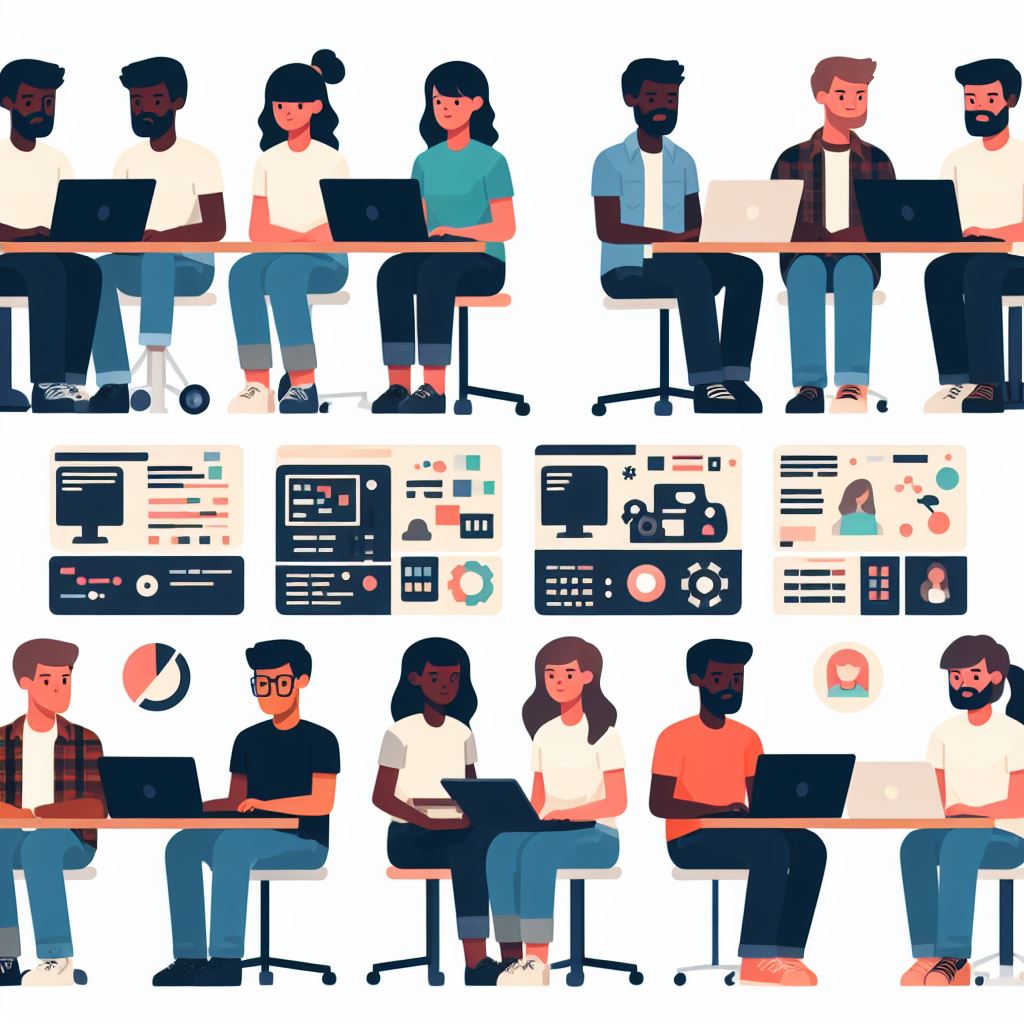 Leading Self Managing Teams
In leading teams, I often see how vision and mission guides us in who we bring on board and how we evolve. Those are the kind of things you want to spend some time on. You want to come up with a compelling vision, hire with mission in your mind and revise it as you evolve.
The first thing people ask about a team or organization is what it accomplishes. A vision makes it clear for everyone. It encapsulates a broader purpose and aligns our goals and actions. The key isn’t to have a fancy mission statement, but to make sure the mission comes up when you're going through everyday decisions. Bring it up in one-on-ones, retros, and even during casual chats. When your people start echoing the vision back to you, that feels nice. You're doing it.
In assembling a team, my focus is on finding individuals who bring not just the essential skills, but also a natural fit with the team's dynamics. What does it mean though? It means you make up a team based on key characteristics. Be it skill. Be it mindset. A good mix always gives diversity of capability. Once you get that right, clearly articulating the mission becomes the key. It helps gauge how potential team members resonate with and respond to our core objectives.
My best hires always had good attitude. This is why we sometimes passed on technically brilliant candidates who didn’t share our sense of ownership or curiosity. Skills can be taught, but shared purpose cannot. As the years go by, I find myself caring even more about attitude. People that I can depend on.
Neither vision nor mission is written on stone. It needs revisions regularly. I would like everyone to align about the latest direction and objectives. This requires revisiting mission and vision on a regular cadence. Revisiting the vision shouldn’t be seen as instability; it’s adaptation. I suggest hosting open mission review sessions twice a year, inviting engineers, designers, and even interns to critique our direction. It’s humbling but enlightening. You find yourself in a better place. At the very least, people feel they contribute back to mission.
Over time, I’ve learned that the best thing I can do as a leader is step back and let smaller teams take the lead. That’s when they really thrive. How do they become self sufficient? Well, by trying it out.
The hardest part as a leader is resisting the urge to step in. Been there, done that. You want people to succeed. But you need to give people room to stumble. Real learning happens when they recover without you. Watching someone make a mistake you could’ve prevented is painful. But if you jump in every time, they’ll never learn. I remind myself: my job isn’t to be the hero; it’s to make heroes out of others.
I am a huge fan of smaller teams that get things done with little communication overhead. Dividing the teams into smaller, self sufficient subteams has proven to be effective at every organization I've been. These groups have the autonomy to manage their projects. It brings a sense of ownership and accountability.
A subteam should be 2-5 people, no more. This gives focus but at the same time drastically decreases the communication overhead. Imagine you need to update 2 people as opposed to 5. Think about one-on-one combinations. The smaller the group is the less one-on-ones you need!
Empowering subteams to make their decisions allows for more efficient and responsive operations. It reduces the need for top-down management and frees me up. Decentralization doesn’t mean chaos; it means trust by default. My job shifts from telling people what to do, to giving them enough background to make informed calls.
Ideally, I like to say: “You own the decision, I own the outcome.” This simple statement clarifies accountability without killing the autonomy. If you want faster teams, push authority downward.
Having effective subteams requires hearing everyone and valuing their ideas to create collective sprit. Open communication isn’t about having more meetings. It’s about psychological safety. Your team should feel free to challenge you, to question priorities, even to say “I don’t know.” You have to stop yourself. Sometimes, people are just afraid to speak up because of your authority. So, speak less. Listen more.
I encourage a culture where open communication is the norm. People speaking their minds is an important way to build trust. This also fosters a culture of being heard and valued, essential for self-management.
As a mentor, I make it a point to model vulnerability. I share when I’m uncertain or wrong. It’s amazing how quickly others mirror that openness. Self-managing teams are built on mutual honesty, not perfect consensus.
Effective conflict resolution is essential for maintaining a focused and unified team. I encourage team members to independently resolve differences in ideas. I only step in only when necessary to provide decisive guidance or to act as a tiebreaker.
Conflict isn’t failure. It’s feedback. The goal isn’t to eliminate tension, but to channel it productively. If you have read 5 dysfunctions of a team. Nobody challenged each other. Why? There was no psychological safety. So, conflict is a good thing. You want the best outcome for your group. If nobody is challenging each other, it's very unlikely to get it it when there's no conflict.
Effectively leveraging individual skills means matching each person with the right role, while also fostering a sense of unity and teamwork. This is even more important for small teams because you need to pick a good balance. You need to play it to people strength while keeping bonding between teams. It's not easy. I got called out multiple times on the latter.
Matching projects with each team member's strengths within subteams leads to higher productivity and job satisfaction. It enables team members to excel and take ownership of their work. Say you have a subteam of 3 people. Ideally, you want one of them to be comfortable with systems, one of them to have expertise in the domain and the last one might be someone who like organizing. Not a bad combo, right? Well, obviously, what's ideal depends on the domain but you probably got the point.
Organizing regular activities for the team and subteams builds trust and collaboration. This is about sharing launch time, going out for dinners and doing activities outside of the work.
I generally do two things. One Guinness time. Yes, I live in Ireland. Two, weekend vibes. This just gives you two things. One, sometime to jell after work. Bring some of the things that people do outside of work. One Guinness after work usually solves more team tension than an hour-long meeting. You learn who people really are when the laptops are closed.
To really get our team firing on all cylinders, I work on cutting down the noise and distractions, making sure everyone can zone in on what they do best. Protect deep work. Create “no-meeting” windows. Shield your team from unnecessary pings. The quietest teams often produce the loudest results.
There are so many things going on at a time. It degrades the efficiency of the teams. As a leader, managing the amount of distractions comes in handy to get your team's focus on what matters.
Ask people to come up with tasks they are working on. If there are more than 3, that's not going to work. Start prioritizing. Give them direction. Do not answer priority question yourself. Give them guidance to decide what priority might be. People do their best work when they know exactly what deserves their attention.
Identifying and addressing obstacles early ensures that subteams can continue their work with minimal disruptions. One of my managers mentioned and still stuck with me as his super power was unblocking. If you want your people to get things done, you need to unblock their footpath.
I like to ask my teams weekly: “What’s slowing you down?” It signals that speed matters more than status. This gives you an idea where the bottleneck is. When you hear the similar thing from everyone, you know what to do.
The initial team members significantly influence the team's culture and effectiveness. Think of your early hires as DNA. They’ll define your culture long after you’re gone. Choose people who embody curiosity, humility, and resilience. Then, you can focus on a shared mission and support teams that can manage themselves. I like this approach as it helped us meet our goals, grow our team, and develop the best multiple times. These strategies are integral to the success of the self-managing teams I lead.
In leading my teams, it's like planting a garden rather than building a machine. Each person is a unique seed. With the right directions and care, they can grow and flourish. My job is to provide the soil and the sunshine. It's the vision, freedom, and support they need. Together, we're not just ticking boxes or meeting targets. We're growing something special that's bigger than all of us.
此内容由惯性聚合(RSS阅读器)自动聚合整理,仅供阅读参考。 原文来自 — 版权归原作者所有。