



惯性聚合 高效追踪和阅读你感兴趣的博客、新闻、科技资讯
阅读原文 在惯性聚合中打开

推荐订阅源

A
About on SuperTechFans
D
DataBreaches.Net
K
KPMG report finds enterprise disconnect between AI and its ROI | CIO
V
Visual Studio Blog
奇客Solidot–传递最新科技情报
奇客Solidot–传递最新科技情报
B
Blog RSS Feed
Recent Announcements
The Register - Security
S
Secure Thoughts
Y
Y Combinator Blog
The Last Watchdog
The Last Watchdog
L
LINUX DO - 最新话题
V2EX - 技术
V2EX - 技术
腾讯CDC
GbyAI
GbyAI
G
Google Developers Blog
博客园 - 司徒正美
博客园 - 三生石上(FineUI控件)
T
The Exploit Database - CXSecurity.com
T
Threat Research - Cisco Blogs
P
Proofpoint News Feed
Schneier on Security
Microsoft Security Blog
Jina AI
Jina AI
WordPress大学
WordPress大学
aimingoo的专栏
aimingoo的专栏
MyScale Blog
MyScale Blog
Help Net Security
Help Net Security
K
Kaspersky official blog
P
Privacy & Cybersecurity Law Blog
www.infosecurity-magazine.com
AI
AI
MongoDB | Blog
MongoDB | Blog
Scott Helme
Scott Helme
J
Java Code Geeks
Engineering at Meta
Engineering at Meta
H
Heimdal Security Blog
H
Help Net Security
D
Darknet – Hacking Tools, Hacker News & Cyber Security
云风的 BLOG
云风的 BLOG
Microsoft Azure Blog
S
Security Affairs
TaoSecurity Blog
TaoSecurity Blog
The GitHub Blog
The GitHub Blog
Hacker News: Ask HN
Hacker News: Ask HN
Martin Fowler
Martin Fowler
cs.AI updates on arXiv.org
Project Zero
Project Zero
T
The Blog of Author Tim Ferriss
Last Week in AI
Last Week in AI

Yusuf Aytas

When Code Is Cheap, Does Quality Still Matter? Why Crouching Tiger, Hidden Dragon Is a Masterpiece Why We Ignore Advice The Mirror Is Part of the Machine When Too Many Maps Overlap on One Person The Work Runs on Different Maps Your Work Introduces You Trial By Fire The Dude Why Headcount Math Lies Capacity Is the Roadmap The Roadmap Is Not the System Torres del Paine W Trek Escaping Status Theater Incentives Drive Everything Scaling Culture Without Dilution What Good Looks Like Why Airport Security Feels Random Why Politics Appear How to Work with Me The Janus Protocol Multi-Horizon Delivery Framework What Good Execution Looks Like Managing Your Manager Why Kingdom of Heaven’s Director’s Cut Is Better AI Broke Interviews Most of What We Call Progress Managers Have Been Vibe Coding All Along Stop Wasting Brainpower Why Over-Engineering Happens Prisoner's Dilemma Climbing No More The Weekly Win Mevlana Candy Brewing Turkish Tea Onboarding Your Engineering Manager Technical Deep Dives Yapay Zekâ Çağında Bilgisayar Mühendisliği Building Remote Teams From Idea to Launch in 2 Weeks Reflecting on Software Engineering Handbook Representing the Business New Manager Survival Guide Take Self Reviews Seriously Chasing Real Respect The Invisible Difference Learning the Johari Window Management is a Lonely Place Simple Task Management AI Balance in Work PIP Manager Insights Engineering Manager Interview Preparation Work-Life Balance as a Manager Bridging the Management Disconnect Tech Hiring Bubble Bursts Traits for EMs Simple Acts of Recognition Matter The Question I Ask Every New Report The Reality of an Employer's Market Bridging Ideals and Reality Hiring Red Flags Why The Godfather Is So Damn Good Subteam Tenets No Fluff Please Losing a Top Performer Balancing Act of Reliability Building Trust in Engineering Teams Ideal Number of Direct Reports Overriding a People Leader’s Decision From Misperception to Promotion Perception vs Perspective Setting Goals From Engineer to Manager Getting Delegation Right Interviewing Your Future Boss Celebrating Our Book in Iceland On Writing Software Engineering Handbook Charlie Munger Quotes Working with Dependencies From Las Vegas to Canyons Navigating Layoffs Handling Competitive Dynamics A Weekend Getaway to Malta Engineering Health Essentials Should Dev Managers Code? Confronting the Life on Pause Winning Eleven Kindness is A Choice Bireysel Katılımcılar ve Yöneticiler Leading from Where You Are The Subtle Art of Listening Coding in Leadership The Power of Consistency The Making of a Leader The Path to Leadership Embracing TikTok Talent Sourcing Journey Leading Self Managing Teams Cracking Coding Bottlenecks Quick Reflexes in Decision Making
Operational Skills Needed
Yusuf Aytas · 2024-06-06 · via Yusuf Aytas

Published · 6 min read

Over the years, I've interviewed many candidates. One crucial skill that often gets overlooked is operational reflexes during oncalls. Surprisingly, few companies test for this, yet it's a capability that greatly distinguishes engineers.

There is a gap in interviewing. Some of the candidates excel in code interviews and system design but not on the operational side of things. They can build elegant architectures on the whiteboard but freeze when the pager goes off. Sometimes, they effectively play the system without real operational experience. They secure positions but lack the practical skills to handle real world scenarios

As software engineers, we are expected to run what we build, either individually or as a team. If you lack operational experience, it can spell trouble. The operational muscle is something you build with time. It requires a combination of interpreting graphs, understanding system behavior, and staying calm. It’s the difference between reacting to noise and responding to signals.
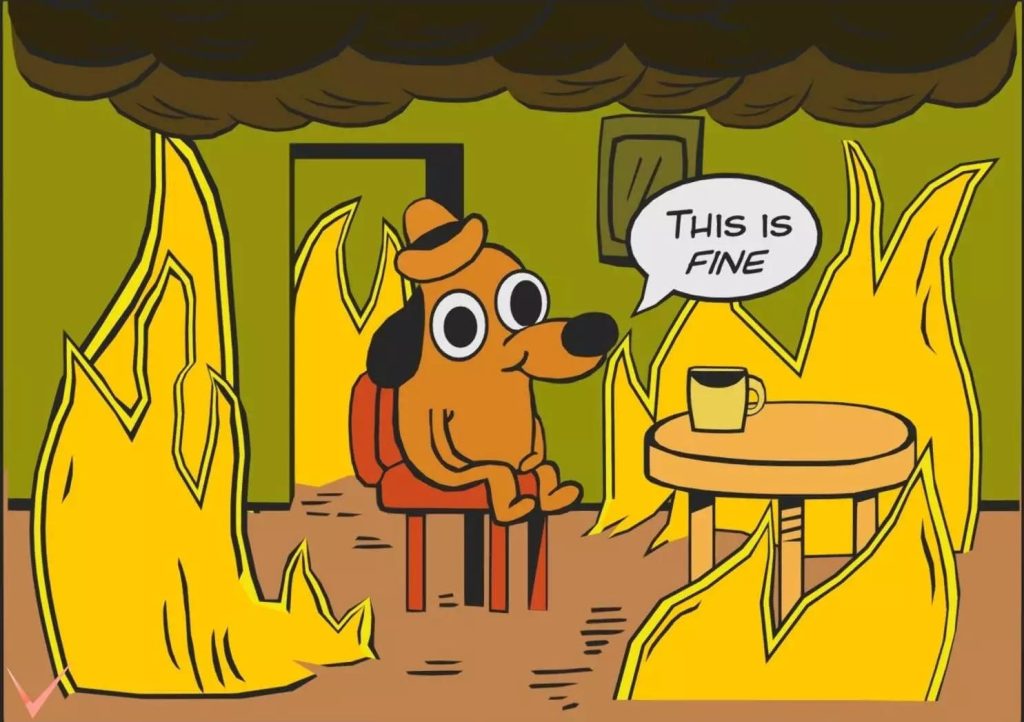
This is Fine!!!This is Fine!!!

The Importance of Operational Reflexes

Operational reflexes are not just about reacting to incidents but also about anticipating and preventing them. They’re built the hard way, by breaking things, owning them, and cleaning up after yourself. Engineers with strong operational skills can diagnose problems from seemingly minor alerts, recognize patterns that suggest larger issues, and apply fixes before problems escalate. You don’t develop this by reading post-mortems; you develop it by being in one.

The best lessons usually come from pain. Everyone who’s done oncall long enough remembers the first real incident. That script that looked harmless until it locked half the database, or the small config change that quietly took down an entire region. In the middle of that chaos, you learn more in two hours than in two years of normal operation. You learn how systems really behave under stress, how communication fails under pressure, and how your tools behave when you actually need them.

Having the gut feeling for operations helps improve and maintain system reliability and performance. Most engineers get that gut feeling by operating systems in production and seeing different failure cases. That’s why I believe operational skill can only be truly learned on the job. You can process, automate, and document to improve but nothing replaces the raw, lived experience of handling real failures.

That’s why operational reflexes aren’t theoretical knowledge; they’re earned scars. Each incident teaches timing, restraint, and humility the hard way. These skills can’t be measured by any coding interview. Look around your company, there are people who are so good at this. Why? Because they have been to many of those before.

Interviewing for Operational Experience

Alright, we understand we should test someoneʼs operational experience but how do we do it? Traditional interviews focus on coding skills and theoretical knowledge. Obviously, they are easier to evaluate through standardized questions. Yet, operational skills require a different approach, as they depend on judgment, timing, and how people behave under real pressure.

One potential method could be incorporating scenario-based questions in interviews. For example, presenting candidates with a hypothetical system outage and asking them to walk through their troubleshooting process. Hence, this could reveal their thought process, decision-making skills, and familiarity with operational tools and practices. But even that has limits. Real incidents never follow the script. I wish they did. In real life, graphs lag, alerts flood in and you have ten minutes to make a call you’ll have to explain in a post-mortem later.

That’s why I believe operations can only be partially simulated. The best proxy is asking for real stories. Ask candidates what their worst oncall night looked like. What went wrong? What did they do first? What did they learn? You’ll quickly see who has been through it and who hasn’t. People who’ve truly run systems don’t talk about perfect playbooks. They will talk about tradeoffs, damage control, and lessons learned.

Interviewing for operations is mostly about testing composure and reflection. You’re not looking for someone who’s never broken production; you’re looking for someone who knows what to do next time.

Operational Scenario Interviews

To better evaluate candidates, interview processes should include:

  • Realistic Incident Scenarios: Present candidates with past incidents your team has faced. Ask them how they would respond, what steps they would take to identify and resolve the issue. Understand how they would potentially communicate with stakeholders during the incident. 
  • System Monitoring and Alerting: Assess candidatesʼ familiarity with monitoring tools like Prometheus, Grafana, or Datadog. Ask them how they would set up alerts and what metrics they would monitor to ensure system health. Don’t settle for textbook answers like “CPU, memory, and latency.” Ask why those metrics matter, what thresholds they’d pick, and how they’d avoid alert fatigue. A good candidate ties observability to decision-making, not dashboards.
  • Post-Mortem Analysis: Discuss the importance of post-mortem analysis after incidents. Ask candidates to describe how they would conduct a post-mortem, identify root causes, and implement measures to prevent recurrence. Listen to how they handle accountability: do they focus on learning or blame? Engineers with strong operational maturity turn every incident into institutional knowledge, not personal defense.

Operational experience is a crucial yet often overlooked aspect of interviewing. By introducing realistic operational scenarios into the interview process, we can better evaluate an engineerʼs ability to handle real-world challenges. This not only ensures that new hires are technically proficient but also operationally capable. Ultimately, it’s not about hiring people who never break production. It’s recruiting engineers who you can trust to bring it back gracefully.

All in All

You can’t fake operational maturity. It only comes from being there when things go wrong and staying long enough to fix them. The first time you take production down, you panic. The second time, you breathe. The third time, you already have a plan. That’s how operational reflexes form.

The best engineers are the ones who recover fast, share what they learned, and make sure no one else has to repeat the same mistake. Every outage hurts, but it’s also a form of apprenticeship. Operations humbles you. It teaches you that reliability isn’t a feature you build, it’s a culture you practice.