


Published · 6 min read
If you are part of a large organization, the term "dependencies” probably means more than software packages. In a big organization, when we talk about "dependencies," we're diving into more than just software stuff. It's about all the other teams we're on this journey with. For us engineering leaders, figuring out the dance between needing stuff from others (downstream) and being asked for stuff (upstream) is pretty much what we do every day. Let’s get into what this all means and why getting it right is key to keeping our projects sailing smoothly.
Imagine navigating a large ship, not in solitude, but as part of a coordinated fleet. Each part of the fleet must harmonize its efforts to navigate the waters successfully. Similarly, in large organizations, the seamless collaboration between different teams (the fleet) is essential for achieving collective goals. Neglecting the management of upstream and downstream dependencies is akin to rowing on your own, leading to inefficiencies and delays.
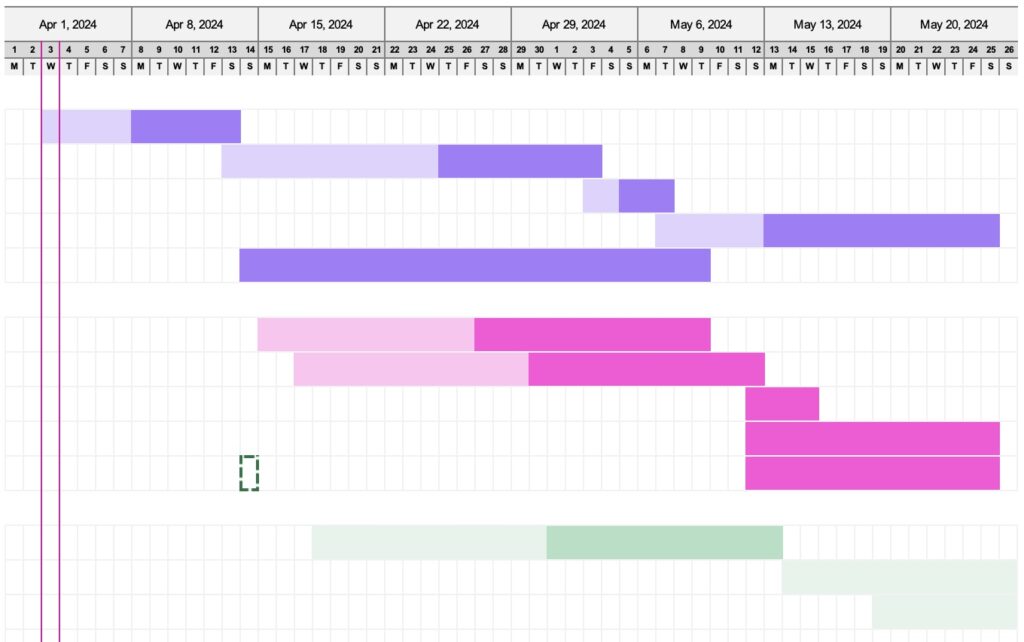 Project Management Gantt Chart
Gantt Chart Example
For steering multi-team/org projects, using tools like Gantt charts for timeline tracking is necessary. Think of a Gantt chart as the navigator’s map for our fleet. It doesn’t just show the route but also highlights how each ship moves in relation to the others. It ensures that all parts of the project fleet are aligned and moving at the right pace, reducing the chances of collision or getting off course. Especially for very large projects, where the complexity can be overwhelming, Gantt charts provide a clear, visual structure to manage timelines, dependencies, and milestones. They make it easier to spot potential delays before they happen and adjust the sails accordingly, keeping the entire fleet on a steady course towards the project's destination.
Another necessary tool is establishing communication lines. Broadly, we're talking about two types: face-to-face meetings and written updates. The sweet spot often lies in a blend of both. This approach allows every team or organization to regularly share updates and pinpoint risks. We need these communication methods to ensure that everyone is aligned and informed. Such a strategy not only keeps surprises to a minimum but also nurtures a collaborative environment.
Handling dependencies in large projects feels like a pain in the neck. There's a straightforward reason for this: complexity and unpredictability. At the heart of the issue, managing dependencies requires coordinating large tasks and teams in a way that ensures everything aligns perfectly for the project to move forward. However, this is easier said than done.
Firstly, dependencies introduce a layer of complexity because they link tasks together. If one task is delayed, it doesn't just affect that single task; it cascades, impacting everything else lined up after it. Imagine you're waiting on a piece of crucial information from another team to kickstart your work. If they're late, you're stuck. Your timeline gets pushed back, and suddenly, you're scrambling to make up for lost time.
Moreover, the unpredictability of dependencies creates stress in every stakeholder. Projects are dynamic, with requirements and scopes changing along with many unknowns. When dependencies shift, it can throw off the entire project schedule. You thought you had everything mapped out. But, wait! Now, you're back at the planning again, figuring out how to accommodate new changes.
The challenge gets worse by the need for constant communication and coordination across different teams. Each team has its own priorities and deadlines, and aligning them requires a tough balance. Miscommunications or delays in updates leads to misunderstandings about who needs to do what and by when. All in all, any trouble in communication adds more to the confusion and frustration. That’s why it is tricky and sometimes seems like a lost cause.
So, how can engineering leaders mitigate the challenges posed by dependencies? Taking inspiration from the film "Margin Call", where John Tuld outlines three strategies for success in business—being first, being smarter, or cheating—it's evident that some options are more viable than others.
In essence, nail down those dependencies right out of the gate and ask for what you need ASAP. This strategy means that by the time you're really in the thick of it, you're not waiting on anyone because you've already set the stage. It's about being one step ahead, ensuring everything's rolling smoothly from get-go.
Nevertheless, this isn’t always possible as you might have to kickstart everything together. Then, the best thing is to have an extra buffer for almost every task. Remember, sometimes things will go as fast as they could but won’t be enough. The best way to deal with it is acknowledging risks early and communicating to stakeholders. It’s as simple as telling confidence levels as high, medium, low. When it’s high, you think you’ll make it. Medium means if anything comes up you won’t make it. Low means there are already problems and you will most potentially miss the deadline. Everyone realizes it’s hard to get these things moving and getting them to the finish line. Being upfront is way to go.
If you want to go fast, go alone. If you want to go far, go together.
African proverb
Handling dependencies requires a deep focus, especially in the large organizations with large program of work. If you are an engineering leader, dependencies become part of your routine. On a day to day basis, you need to make many decisions with very little information especially with timelines. In the end, though, it's about communicating clearly and keeping everyone on the same page. Leaders make mistakes. It's better to acknowledge them early and keep the momentum.
此内容由惯性聚合(RSS阅读器)自动聚合整理,仅供阅读参考。 原文来自 — 版权归原作者所有。