


Published · 5 min read
Have you ever found yourself questioning someone's decision, only to realize later that you didn't have the full picture? You know it's really easy to get caught up in our own way of thinking. And then we expect others to see things just as we do. It shouldn't be surprising that most people do the same. Everyone gets stuck with their perception, we can't really overcome misunderstandings and make progress.
Sometimes, we label these misunderstandings as office politics simply because we don't know what's really going on behind the scenes. We can't fully understand a situation from another person's eyes unless we make an effort to see their perspective. If we don't, we just limit ourselves to a narrow view. A better way would be to consider each person's perception to grasp the overall picture, the perspective.
Perception is our personal interpretation of the world, shaped by our senses, beliefs, and past experiences. For instance, when receiving feedback, one person might feel it as criticism, while another sees it as a chance to grow.
Perspective, on the other hand, is our point of view. This is the position from which we approach a situation. It’s influenced by our perceptions, but it also reflects our attitudes, experiences, and the context we bring to the table. If perception is about what we see, perspective is about the unique angle from which we view it.
A while back, I was in a series of meetings with a group of engineering leaders, each representing different teams within our organization. I was trying to push a change as fast as possible because I was thinking that we were just losing momentum because we were operating too many services that pretty much did the same thing. So, we needed some consolidation.
Nevertheless, one of the eng leads was particularly vocal about pushing back on every proposed solution or timeline. He almost always insisted that we slow down and take a more cautious approach. In my eyes, he was simply being overly cautious, almost to the point of stalling progress. From my viewpoint, he seemed resistant to change, and his constant objections felt like roadblocks to our progress.
This perception led to frustration. In my eyes, he was focused on the trivial things. It felt like he was holding us back for some hidden agenda. I found myself getting increasingly defensive in meetings.
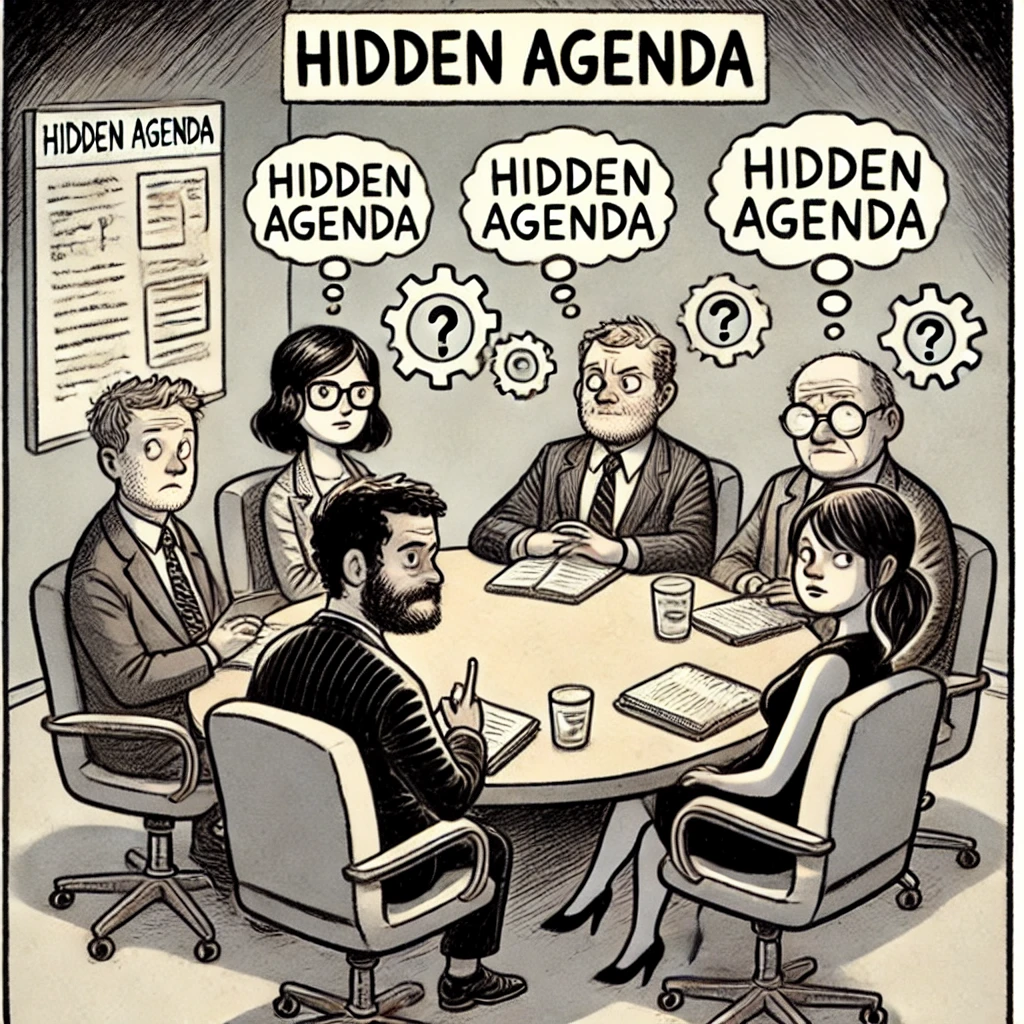 hidden agenda
Finally, I decided we needed to have a direct conversation outside the formal meeting room. I reached out to him and suggested we grab a coffee. During that chat, I asked him to share his concerns in more detail. That’s when the real story came out. He explained that his previous team had faced a catastrophic failure during a similar platform overhaul. They rushed changes. And it led to significant downtime that damaged customer trust. From his perspective, his pushback wasn’t about resisting progress but about ensuring we didn’t repeat past mistakes. He was trying to protect the company from a disaster.
That conversation completely shifted my perspective. I realized that he wasn’t trying to block progress. He was coming from hard-earned experience and genuinely trying to safeguard us from potential pitfalls. My perception of him as overly cautious transformed into an appreciation for his commitment to risk management.
We left that coffee chat with a better understanding of each other's viewpoints. In the next meeting, I made a point to acknowledge his concerns and incorporate more detailed and controlled phases into our plan. Voila!
This whole experience made a huge impact on me. I first tried to find out what this was. Reading it in other places, I learned that this was perception vs perspective. What we see is shaped by our own experiences, but it’s never the whole story. And we tend to imagine things like someone having a hidden agenda. Especially in leadership, it’s easy to get stuck in our own views, thinking we have the right answer, but the truth is, there’s always another side we’re missing.
Next time before you imagine things or while imagining, knock on your colleagues door. Learn about their perception, what they care, what they want, and understand why they act the way they do. When we get this whole picture, then we aren't stuck with our perception.
So, the next time you find yourself frustrated in a meeting or feeling stuck on a problem, take a step back. Ask yourself: what am I missing here? Who sees this differently? Those other perspectives might be exactly what you need to move forward in the best way possible.
Here's my tiktok video on this.
@yusufaytas Understanding the difference between perception and perspective is crucial because it helps us grasp why people think and act differently. Perception is about how we use our senses to interpret the world around us, influenced by our beliefs and experiences. It's a personal, internal process. On the other hand, perspective is about how we view situations or issues, our angle or point of view, which is shaped by our perceptions. By distinguishing between these two, we can better appreciate that each person's reality is shaped by their unique experiences and thought processes. This understanding is especially important in diverse environments, like the workplace, where multiple viewpoints need to be considered to make informed decisions. Recognizing the difference enables us to communicate more effectively, resolve conflicts, and collaborate more efficiently by acknowledging and valuing the variety of insights that each person brings to the table. #CareerGrowth #OfficeStrategy #Leadership #PersonalGrowth #WorkplaceWisdom #Growth #WorkplaceWisdom #Perception #Perspective #RealTalk ♬ original sound - Yusuf Aytaş
此内容由惯性聚合(RSS阅读器)自动聚合整理,仅供阅读参考。 原文来自 — 版权归原作者所有。