



惯性聚合 高效追踪和阅读你感兴趣的博客、新闻、科技资讯
阅读原文 在惯性聚合中打开

推荐订阅源

Application and Cybersecurity Blog
A
About on SuperTechFans
S
SegmentFault 最新的问题
奇客Solidot–传递最新科技情报
奇客Solidot–传递最新科技情报
Help Net Security
Help Net Security
有赞技术团队
有赞技术团队
博客园 - 【当耐特】
O
OpenAI News
美团技术团队
月光博客
月光博客
Apple Machine Learning Research
Schneier on Security
Webroot Blog
Webroot Blog
Cyberwarzone
Cyberwarzone
Hacker News - Newest:
Hacker News - Newest: "LLM"
Google Online Security Blog
T
Tenable Blog
S
Security Affairs
博客园_首页
S
Schneier on Security
Security Latest
Security Latest
T
Threat Research - Cisco Blogs
T
Tailwind CSS Blog
大猫的无限游戏
大猫的无限游戏
Spread Privacy
Spread Privacy
量子位
让小产品的独立变现更简单 - ezindie.com
K
Kaspersky official blog
Hugging Face - Blog
Hugging Face - Blog
TaoSecurity Blog
TaoSecurity Blog
博客园 - 聂微东
Vercel News
Vercel News
M
MIT News - Artificial intelligence
T
Troy Hunt's Blog
B
Blog
MongoDB | Blog
MongoDB | Blog
Martin Fowler
Martin Fowler
Attack and Defense Labs
L
LINUX DO - 最新话题
D
DataBreaches.Net
cs.CV updates on arXiv.org
Stack Overflow Blog
Stack Overflow Blog
cs.AI updates on arXiv.org
博客园 - Franky
W
WeLiveSecurity
Threat Intelligence Blog | Flashpoint
F
Fortinet All Blogs
www.infosecurity-magazine.com
C
Check Point Blog
H
Hacker News: Front Page

Yusuf Aytas

When Code Is Cheap, Does Quality Still Matter? Why Crouching Tiger, Hidden Dragon Is a Masterpiece Why We Ignore Advice The Mirror Is Part of the Machine When Too Many Maps Overlap on One Person The Work Runs on Different Maps Your Work Introduces You Trial By Fire The Dude Why Headcount Math Lies Capacity Is the Roadmap The Roadmap Is Not the System Torres del Paine W Trek Escaping Status Theater Incentives Drive Everything Scaling Culture Without Dilution What Good Looks Like Why Airport Security Feels Random Why Politics Appear How to Work with Me The Janus Protocol Multi-Horizon Delivery Framework What Good Execution Looks Like Managing Your Manager Why Kingdom of Heaven’s Director’s Cut Is Better AI Broke Interviews Most of What We Call Progress Managers Have Been Vibe Coding All Along Stop Wasting Brainpower Why Over-Engineering Happens Prisoner's Dilemma Climbing No More The Weekly Win Mevlana Candy Brewing Turkish Tea Onboarding Your Engineering Manager Technical Deep Dives Yapay Zekâ Çağında Bilgisayar Mühendisliği Building Remote Teams From Idea to Launch in 2 Weeks Reflecting on Software Engineering Handbook Representing the Business New Manager Survival Guide Take Self Reviews Seriously Chasing Real Respect The Invisible Difference Learning the Johari Window Management is a Lonely Place Simple Task Management AI Balance in Work PIP Manager Insights Engineering Manager Interview Preparation Work-Life Balance as a Manager Bridging the Management Disconnect Tech Hiring Bubble Bursts Traits for EMs Simple Acts of Recognition Matter The Question I Ask Every New Report The Reality of an Employer's Market Bridging Ideals and Reality Hiring Red Flags Why The Godfather Is So Damn Good Subteam Tenets No Fluff Please Losing a Top Performer Balancing Act of Reliability Building Trust in Engineering Teams Ideal Number of Direct Reports Overriding a People Leader’s Decision From Misperception to Promotion Perception vs Perspective Setting Goals From Engineer to Manager Getting Delegation Right Interviewing Your Future Boss Celebrating Our Book in Iceland Operational Skills Needed On Writing Software Engineering Handbook Charlie Munger Quotes Working with Dependencies From Las Vegas to Canyons Navigating Layoffs Handling Competitive Dynamics A Weekend Getaway to Malta Engineering Health Essentials Should Dev Managers Code? Confronting the Life on Pause Winning Eleven Kindness is A Choice Bireysel Katılımcılar ve Yöneticiler Leading from Where You Are The Subtle Art of Listening Coding in Leadership The Power of Consistency The Making of a Leader The Path to Leadership Embracing TikTok Talent Sourcing Journey Leading Self Managing Teams Cracking Coding Bottlenecks
Smaller is Faster
Yusuf Aytas · 2016-10-22 · via Yusuf Aytas

Published · 4 min read

“Smaller is faster” is a well-known hardware design principle, as you might already know it. Generally speaking, smaller pieces of hardware will be faster than larger ones because shorter distances, fewer layers, and simpler coordination usually mean less latency.

I have always thought about this principle mainly in terms of computer hardware. Processors, memory, circuits. Just a while ago, however, I started to realize that this principle is also deeply applicable to software development, not just to physical machines. Throughout this post, Iʼll try to give some practical insights, brief reasoning, and a few examples showing how “smaller is faster” also applies to teams, code, and systems in software development.
Smaller is fasterSmaller is faster

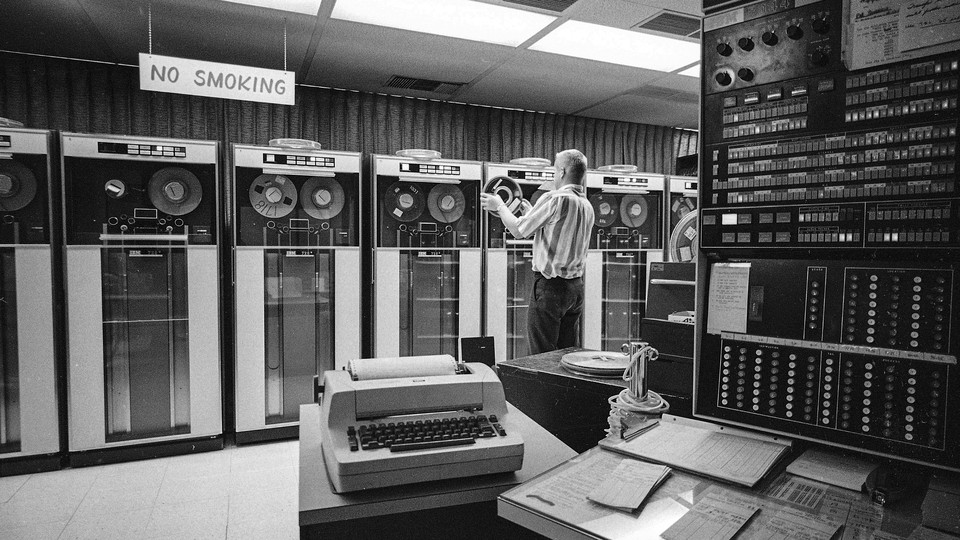
Don Lightfoot in main computing facilities changes some computer tapes at the Rand Corp. Headquarters in Santa Monica, Calif., November 1966. (AP Photo/George Brich)

Smaller Data, Faster Transfer

The amount of data needs to be transferred has been important in software development. Obviously, the smaller the data, the faster itʼs transferred. This simple physical constraint still drives most performance optimization today.

Transferring fast is essential when it comes to web page loading. We want pages to load as fast as they can. As a result, we minify our JavaScript files. We also compress almost anything we can to make transfers as fast as possible. From images to CSS, from payloads to database dumps, we constantly aim to shrink size.

Thus, smaller data favors faster transfers. Even tiny reductions, a few kilobytes shaved off here and there, can add up to a noticeably faster and smoother experience for users.

Smaller Code, Faster Understanding

Understanding a piece of code is an everyday activity for every programmer. Itʼs hard to focus when the code gets big. We have been trying to overcome code complexity by single responsibility principle and many others. Typically, we are trying to minimize, or in other words, make the code smaller so that we can understand it faster.

A function or method with 100 lines of code would be scary to anyone. Hence, the smaller a piece of code, the faster you can understand it. Smaller pieces also make refactoring easier and help reduce cognitive load, allowing developers to see intent rather than syntax.

In short, smaller code doesn’t just look cleaner, it reads faster and feels lighter to work with.

Smaller Teams, Faster Progress

The team size can be one of the key factors for a successful software project. As team size grows, human communication complexities become a burden to the project. Adding more programmers to a project can make a project even worse than it was, as described in The Mythical Man-Month.

In my experience, I have always seen smaller teams produce faster. I think it isnʼt just about communication. As the team gets bigger, you also need to deal with politics and coordination overhead. In a team of three people, you canʼt really have politics. Everyone knows what needs to be done, and progress feels natural.

Consequently, the smaller the team size is, the faster you develop. Small teams make faster decisions, adapt quickly, and build with shared purpose.

Smaller Services, Faster Deployment

In contemporary software development, microservices architecture has been widely adopted. Previously, we developed monolithic applications where a single code base contained all of an applicationʼs logic. As the project grows bigger, it becomes almost impossible to reason about the code base or manage each piece of software.

Decomposing the project into smaller parts became the natural solution. Therefore, the smaller the service you have, the faster it is to develop, test, and deploy it. Smaller services also reduce dependency risks and make ownership clearer.

When teams build and own small services independently, release cycles shorten, recovery improves, and innovation happens faster.

All in All

"Smaller is faster" is applicable to various aspects of software development. The smaller the software is, the faster it becomes to understand, develop, deploy, and optimize it. This principle applies not only to code and systems but also to how we think and organize teams. Smallness brings clarity, speed, and focus. It helps us cut through noise, make better decisions, and deliver results with precision.

In the end, simplicity scales. Smaller truly is faster.