







Published · 7 min read
A healthy level of competition can fuel innovation, drive individuals to excel, and push teams to achieve remarkable results. However, when competition crosses the line and becomes overly aggressive, it can hinder the growth and productivity of the team as a whole. I don’t think competition is inherently negative. It becomes problematic when it starts overshadowing the team. Over the years, I observed when team members are overly competitive, the environment becomes counterproductive. This atmosphere often leads to decline in efficiency and an erosion of trust among team members.
The main challenge is striking a balance. We need to encourage a healthy level of competition that motivates and inspires, but not so much that it hurts how the team works together and performs. In this article, I will cover how being overly competitive can hinder a team's growth. I will then talk about what vs how. Finally, I'll explain why being a force multiplier who helps the whole team do better is the best approach for engineers.
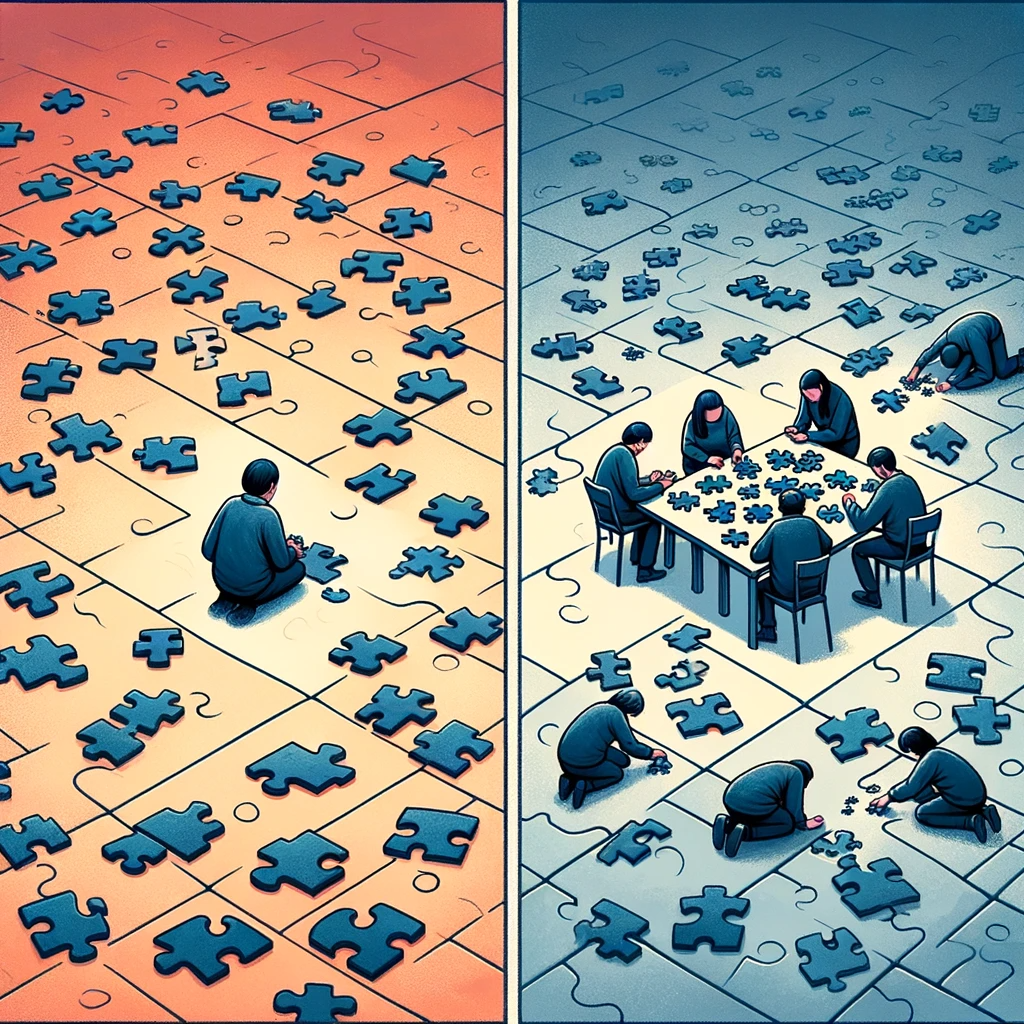 Assembling Puzzle As A Team Vs As An Individual
Overly competitive behavior can significantly impede growth and progress. This behavior manifests in various harmful ways. Each one might harm team harmony, efficiency, and success.
In many cases, I saw a major issue arise when team members prioritize their personal success over the team's objectives. This mindset brings more conflicts. Ultimately, it diminishes morale where cooperation isn’t a priority. With such shifts in the team dynamics, it’s harder for people to ramp up, push for the finish line and openly discuss problems.
I often noticed when people are overly competitive, there's a tendency to withhold knowledge. Engineers might fear that sharing information or assisting others could give their peers an advantage. Obviously, the reluctance to share expertise and skills hinders a team's ability to grow collectively.
When people are overly competitive, they may often chase their personal agenda. It sometimes comes with the cost of a team's long term goals. It’s not only counterproductive but it also derails from strategic objectives. That narrow focus eventually becomes a significant challenge to plan for the future. Moreover, it also becomes harder for people to speak freely. Team members might become reluctant to share ideas or take risks. They usually fear failure or judgment from others. This atmosphere becomes detrimental to the creative process.
The overly competitive behavior becomes a trust issue in time. Engineers can be more focused on outperforming each other rather than collaborating towards shared objectives. It then creates a toxic environment. People then start throwing in the towel and move on to other companies and teams.
So, what do we do if people are overly competitive? As leaders, we need to emphasize both what and how. If we solely focus on the 'what', it shows an incomplete picture of success. Equally important is the 'how'. It includes the process, collaboration, and the impact on the team dynamics.
The 'what' is about concrete products of our work. The number of the features developed, the bugs fixed, the systems optimized, and the projects completed. These are the visible markers of progress and success, and they are undeniably important.
On the other hand, the 'how' is about the journey to these results. It involves the methods used, the interaction within the team, and the overall approach to problem-solving. This includes:
In my experience leading software development teams, I focus on guiding engineers not just by what they achieve, but also by how they achieve it. This means paying attention to their teamwork, their approach to collaboration, and their overall impact on the team. As a leader, I make sure it’s communicated clearly and set the right expectations for the ‘How’ part to iron out overly competitive behavior.
I believe that it’s important to balance personal achievements with the team's success. This perspective helps in reducing overly competitive behaviors, encouraging a more cooperative environment. It’s important to highlight that their contribution to the team's success is evaluated based on both their technical accomplishments and their approach to work. This includes how they collaborate with others, their willingness to share knowledge, and how they contribute to a positive, supportive work culture. Setting those expectations on the how side provides a clear growth path. So, it’s in their benefit to follow that. Otherwise, they won’t get what they want in the end.
An engineer can only do so much. If they are overly competitive, they will be stuck by their own output. If someone really wants to go to the next level, then they need to really become a force multiplier. As I navigated my career in software engineering, I observed many engineers who have been nothing but force multipliers grew faster than independent solo artists.
Being a force multiplier can be counterintuitive at first. One needs to begin to shift their focus from individual accomplishments to team enablement. One needs to mentor colleagues, share knowledge, and create a collaborative environment. This may not come naturally at first. It might feel even slowing down but once people get up to speed, engineers can deliver faster.
This is the second point I bring with competitive engineers. It’s in their benefit to bring the team forward as opposed to being a solo artist. Make them realize that solo efforts have a ceiling. No matter how skilled or efficient they are, there are only so many hours in a day.
Leading various software teams, I've come to appreciate the real power of working together, a real team. Creating cohesive teams is hard. I know. And, the competition shouldn't derail it. We should reiterate how important it's to be a well gelled team. We should guide our competitive people about that.
I remember this one time when a project hit a deadline with multiple bugs. Instead of calling it a day, the whole team rallied around, listed all bugs, and each engineer took a piece and solved most of the bugs. We made it! It wasn't just the solution that impressed me, but the way everyone jumped in to help without a second thought. This kind of team energy really prepares us for any challenge. Building teams like this is beneficial for all. It makes our work more effective and enjoyable. It then opens up more opportunities than if we were all just focusing on our tasks.
In guiding overly competitive engineers, it’s important to focus on how they work, not just what they achieve. Additionally, I often emphasize the importance of being a force multiplier who is an individual whose actions benefit the entire team. With these two together along with general sentiment about team centric approach effectively does the job. Engineers understand and become motivated towards the right behavior.
此内容由惯性聚合(RSS阅读器)自动聚合整理,仅供阅读参考。 原文来自 — 版权归原作者所有。