



惯性聚合 高效追踪和阅读你感兴趣的博客、新闻、科技资讯
阅读原文 在惯性聚合中打开

推荐订阅源

WordPress大学
WordPress大学
D
Darknet – Hacking Tools, Hacker News & Cyber Security
Hacker News: Ask HN
Hacker News: Ask HN
N
News and Events Feed by Topic
Forbes - Security
Forbes - Security
The Last Watchdog
The Last Watchdog
TaoSecurity Blog
TaoSecurity Blog
Schneier on Security
SecWiki News
SecWiki News
V
Vulnerabilities – Threatpost
Project Zero
Project Zero
O
OpenAI News
W
WeLiveSecurity
Security Archives - TechRepublic
Exploit-DB.com RSS Feed
H
Hacker News: Front Page
Cisco Talos Blog
Cisco Talos Blog
Spread Privacy
Spread Privacy
Help Net Security
Help Net Security
P
Privacy & Cybersecurity Law Blog
K
Kaspersky official blog
S
Security @ Cisco Blogs
Latest news
Latest news
AWS News Blog
AWS News Blog
U
Unit 42
Martin Fowler
Martin Fowler
阮一峰的网络日志
阮一峰的网络日志
S
Secure Thoughts
CTFtime.org: upcoming CTF events
Application and Cybersecurity Blog
Know Your Adversary
Know Your Adversary
Scott Helme
Scott Helme
博客园 - 司徒正美
B
Blog RSS Feed
C
Check Point Blog
Hacker News - Newest:
Hacker News - Newest: "LLM"
D
Docker
Google Online Security Blog
Jina AI
Jina AI
aimingoo的专栏
aimingoo的专栏
Recent Commits to openclaw:main
Last Week in AI
Last Week in AI
月光博客
月光博客
C
CXSECURITY Database RSS Feed - CXSecurity.com
S
SegmentFault 最新的问题
NISL@THU
NISL@THU
T
The Blog of Author Tim Ferriss
C
Cisco Blogs
Attack and Defense Labs
小众软件
小众软件

Sealos Blog

Build a Full-Stack App with Claude Code + InsForge — Zero Backend Code | Sealos Blog InsForge vs Supabase: Which Backend for AI-Powered Development? | Sealos Blog Kubernetes NodePort Exhaustion: SSH Gateway Solution | Sealos Blog Claude Code Metrics Dashboard: Grafana Setup (2026) | Sealos Blog What Is RustFS? Apache 2.0 MinIO Alternative (2026) | Sealos Blog Claude Code Mobile: iPhone, Android & SSH (2026) | Sealos Blog Eaglercraft Server Hosting: Fast Setup (2026) | Sealos Blog An Honest Review: Migrating a Complex Microservice App from Heroku to Sealos | Sealos Blog The Ultimate Guide to Kubernetes Audit Logging for Security and Compliance | Sealos Blog Cost Optimization Shootout: Sealos Autonomous FinOps vs. Kubecost Manual Reports | Sealos Blog For CTOs: How to Cut Your Cloud Bill by 50% Without Sacrificing Performance | Sealos Blog Building Resilient Systems: A Deep Dive into Sealos High-Availability and Auto-Failover | Sealos Blog Building a Scalable Event-Driven Architecture with Sealos Managed Kafka | Sealos Blog Beyond kubectl apply: 5 GitOps Best Practices for Production-Ready CI/CD on Sealos | Sealos Blog Advanced RAG Pipelines: Why Your Choice of Vector Database (like Milvus) Matters | Sealos Blog Advanced MLOps: How to Monitor and Evaluate LLM Applications in Production | Sealos Blog A Developer's Guide to Kubernetes RBAC: Securing Your Cluster the Easy Way with Sealos | Sealos Blog A CISO's Guide to Cloud Development: Securing the CI/CD Pipeline with Sealos DevBox | Sealos Blog What is Kubernetes Multi-Tenancy? A Guide for Platform Engineers | Sealos Blog What is Infrastructure from Code (IfC)? The Next Step After Infrastructure as Code (IaC) | Sealos Blog What is GitOps? A Beginner's Guide to "Push-to-Deploy" Workflows | Sealos Blog What is eBPF? The Future of Kubernetes Networking and Security | Sealos Blog What is an "AI-Native" Platform? (And Why You Need One for MLOps) | Sealos Blog What is an Agentic Workflow? Building the Next Generation of AI Apps | Sealos Blog What is a Kubernetes Chargeback Model (And How Does it Save You Money?) | Sealos Blog What is a "Headless" Development Environment? (And How it Works with VS Code) | Sealos Blog What is a Graph-Based Vector Database? (And When to Use It Over Milvus) | Sealos Blog What is a "Cloud Operating System"? The Next Evolution of PaaS Explained | Sealos Blog The Real Cost of EKS: How Sealos Delivers a Simpler, Cheaper Kubernetes Experience | Sealos Blog The 3 Types of Kubernetes Autoscaling (HPA, VPA, CA) and How Sealos Manages Them for You | Sealos Blog Sealos vs Vercel: Why a Cloud OS Beats a Frontend Platform for Full-Stack Apps | Sealos Blog Sealos vs. Render vs. Fly.io: A 2025 Guide to the Best Heroku Alternatives | Sealos Blog Sealos vs. OpenShift: Kubernetes for Developers vs. Kubernetes for Ops Teams | Sealos Blog Sealos vs. Netlify: When to Choose a Full Kubernetes Platform over a Static Site Hoster | Sealos Blog Sealos vs. DigitalOcean App Platform: A Head-to-Head Comparison on Cost, Features, and Scalability | Sealos Blog Sealos vs. AWS Elastic Beanstalk: The Modern PaaS for Developers Who Hate YAML | Sealos Blog Sealos DevBox vs. AWS Cloud9: Why Your CDE Should Be Platform-Agnostic | Sealos Blog For Developers: Stop Wasting Time on DevOps. A 10-Minute Guide to Shipping Faster with DevBox. | Sealos Blog Deploying n8n with Docker: From Local Setups to a Radically Simple Cloud Alternative | Sealos Blog The Impact of Prompt Bloat: How the Sealos AI Proxy Can Cache Queries and Cut LLM Costs | Sealos Blog The FinOps Playbook: How to Implement Kubernetes Chargebacks and Showbacks with Sealos | Sealos Blog Smoke Testing for ML Pipelines: Catching Data and Model Errors Before They Hit Production | Sealos Blog Optimizing PostgreSQL Performance: A Guide to Sealos Managed Database Tuning | Sealos Blog Managing Kubernetes Multi-Tenancy: How Sealos Enforces Resource Quotas and Network Policies | Sealos Blog From Days to Minutes: How to Standardize Developer Environments for Your Entire Engineering Org | Sealos Blog For Platform Engineers: How to Build a Golden Path IDP (Internal Developer Platform) with Sealos | Sealos Blog For FinOps Managers: The 5 Leakiest Buckets in Your Kubernetes Budget (And How to Plug Them) | Sealos Blog For Educators & IT Admins: How to Provide a Secure, Scalable Cloud Lab for 1000+ Students on a Budget | Sealos Blog What is a Vector Database? A Beginner's Guide to Milvus, Pinecone, and More | Sealos Blog Why Your Microservices Architecture is Failing (And How a Cloud OS Can Fix It) | Sealos Blog The Power of Autoscaling: A Deep Dive into HPA, VPA, and Cluster Autoscaler | Sealos Blog The Total Economic Impact of Cloud Development Environments (CDEs) | Sealos Blog The Illustrated Guide to the Kubernetes Control Plane | Sealos Blog The MLOps Lifecycle Explained: From Data Prep to Model Deployment | Sealos Blog Beyond Vercel's AI Cloud: The Case for an AI-Native Operating System | Sealos Blog The Architecture of a Modern AI Application: A 2025 Blueprint | Sealos Blog GitHub Codespaces is Great, But Your Workflow is Incomplete. Here's Why. | Sealos Blog The Best Heroku Alternatives in 2025 for Scalability and Cost | Sealos Blog CAST AI vs. Kubecost vs. Sealos: Choosing the Right K8s Cost Management Tool | Sealos Blog DevBox vs. Gitpod vs. Replit: An Unbiased Comparison for 2025 | Sealos Blog Unlocking Hidden Savings: A Guide to Using Spot Instances Safely in Kubernetes | Sealos Blog Can a CDE Really Replace Your MacBook Pro? A Performance Benchmark | Sealos Blog The End of "Works on My Machine": Achieving 100% Reproducible Builds with DevBox | Sealos Blog The Ultimate Guide to GPU Provisioning and Management in Kubernetes | Sealos Blog Rightsizing Kubernetes Workloads: How to Stop Wasting Money on CPU and Memory Requests | Sealos Blog The 2025 Guide to Kubernetes Cost Optimization: 10 Strategies to Cut Your Bill in Half | Sealos Blog FinOps for Startups: How to Build a Cost-Conscious Culture from Day One | Sealos Blog How to Onboard a New Developer in Under 5 Minutes with Sealos DevBox | Sealos Blog Calculating Kubernetes Costs: A Breakdown of EKS, GKE, and AKS Pricing Models | Sealos Blog Case Study: How We Reduced Our Kubernetes Bill by 87% with Sealos | Sealos Blog Are You Overpaying for Managed Kubernetes? The True Cost of Vendor Lock-in | Sealos Blog Beyond Monitoring: How Sealos Autonomously Optimizes Your Cloud Spend | Sealos Blog A Practical Guide to Kubernetes Security: Hardening Your Cluster in 2025 | Sealos Blog A Secure-by-Design Development Workflow with Isolated Cloud Environments | Sealos Blog Setting Up a Collaborative Python Data Science Environment with DevBox | Sealos Blog Using the Sealos AI Proxy to Manage and Cache LLM API Calls | Sealos Blog Migration Guide: Moving Your Node.js & Postgres App from Heroku to Sealos in Under an Hour | Sealos Blog Serving Machine Learning Models at Scale: A Guide to Inference Optimization | Sealos Blog Headless Development with Sealos: Using Your Local VS Code with a Powerful Cloud Backend | Sealos Blog How to Build and Deploy a RAG Pipeline with Llama 3 and Milvus on Sealos | Sealos Blog From Localhost to Production in 15 Minutes: A Full-Stack CDE Workflow with Sealos DevBox | Sealos Blog GitOps on Autopilot: Implementing a CI/CD Pipeline with Sealos and GitHub Actions | Sealos Blog Fine-Tuning Open-Source LLMs on a Budget with Sealos | Sealos Blog From Docker Compose to Kubernetes: A Simple Migration Path with Sealos | Sealos Blog Building an AI Agentic Workflow with LangChain and Sealos | Sealos Blog What is Helm for Kubernetes? The Ultimate Package Manager Explained | Sealos Blog What is a Custom Resource Definition (CRD) in Kubernetes? | Sealos Blog What is a Kubernetes StatefulSet? A Practical Guide | Sealos Blog What is a Kubernetes Ingress Controller? A Guide to Smart Traffic Routing | Sealos Blog What is a Kubernetes Operator? Automating Complex Applications | Sealos Blog What is a Kubernetes Service? A Simple Guide for Developers | Sealos Blog Streamlining Your CI/CD Pipeline with a DevBox Build Environment | Sealos Blog Why Standardized Development Environments Are Key to Team Velocity | Sealos Blog What Is GitHub Codespace? | Sealos Blog DevBox Install? Skip It Entirely. Get a Ready-to-Code Environment in One Click with Sealos DevBox. | Sealos Blog How to Set Up a DevBox: The Ultimate Guide to 1-Click Cloud Development | Sealos Blog Empowering Indie Devs and Startup Teams: How Sealos DevBox Accelerates Agile Development | Sealos Blog From Chaos to Consistency: How Sealos DevBox Transforms Enterprise Development Workflows | Sealos Blog From Campus Labs to Cloud Freedom: How Sealos DevBox Supercharges Student Development | Sealos Blog How Sealos DevBox Cut Container Commit Time from 15 Minutes to 1 Second | Sealos Blog
Scaling to 2,000 Tenants: Why Sealos Moved from Nginx to Envoy | Sealos Blog
Sealos · 2025-05-20 · via Sealos Blog

Sealos Cloud has effectively navigated the complex landscape of mainstream open-source API gateways. This article aims to help readers understand the challenges of API gateway selection for demanding public cloud environments, prevent common pitfalls, and provide a reference based on practical experiences from Sealos.

Since its launch, Sealos Cloud has maintained explosive growth, currently supporting 87,000 registered users. Each user deploying applications requires dedicated access endpoints, causing the cluster's routing table to grow exponentially, requiring robust support for hundreds of thousands of Ingress entries. This scale is a primary factor in our Kubernetes gateway selection.

Delivering shared cluster services on the public internet demands stringent multi-tenancy capabilities. User traffic must maintain complete isolation with robust traffic management controls to prevent cross-tenant interference.

Public cloud environments present significant security challenges. Attackers target both tenant applications and platform exit points, creating complex threat vectors for cloud operators. Therefore, a secure and scalable API gateway is paramount.

Controller components face extreme performance demands. As routing tables expand, many solutions consume excessive resources, often resulting in OOM (Out of Memory) failures that crash gateways – a critical concern for any production-ready Kubernetes Ingress solution.

Our initial implementation utilized Nginx Ingress, but several critical limitations emerged, impacting our ability to serve a multi-user public cloud:

  • Reload Instability: Configuration changes caused temporary connection drops. In multi-user clusters, frequent ingress modifications led to persistent network instability.
  • Unreliable Long Connections: Active connections frequently terminated during configuration updates, a major issue for real-time applications.
  • Performance Limitations: We observed slow configuration propagation and high resource consumption under load, making it unsuitable as a high-performance API gateway for our needs.

These Nginx Ingress limitations ruled out most Nginx-based gateways. Our comparative testing revealed that Envoy-based solutions deliver superior performance with minimal overhead on both control and data planes.
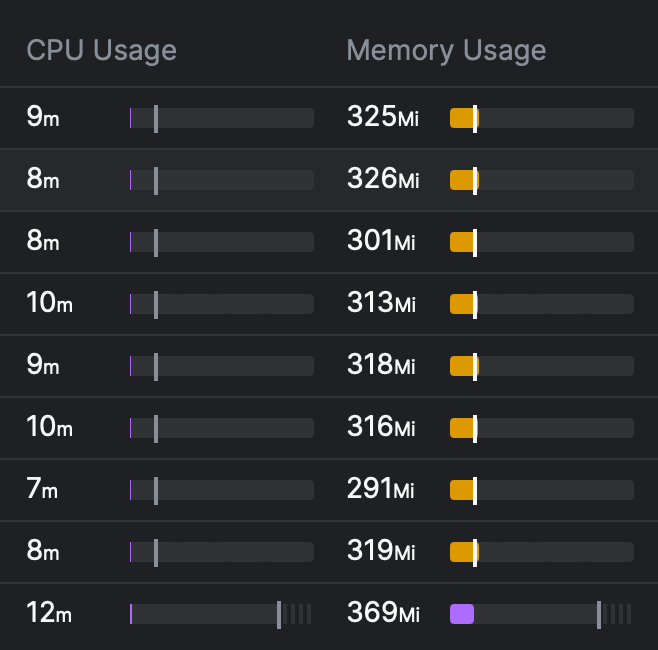
CPU and memory usage of various Envoy instancesCPU and memory usage of various Envoy instances
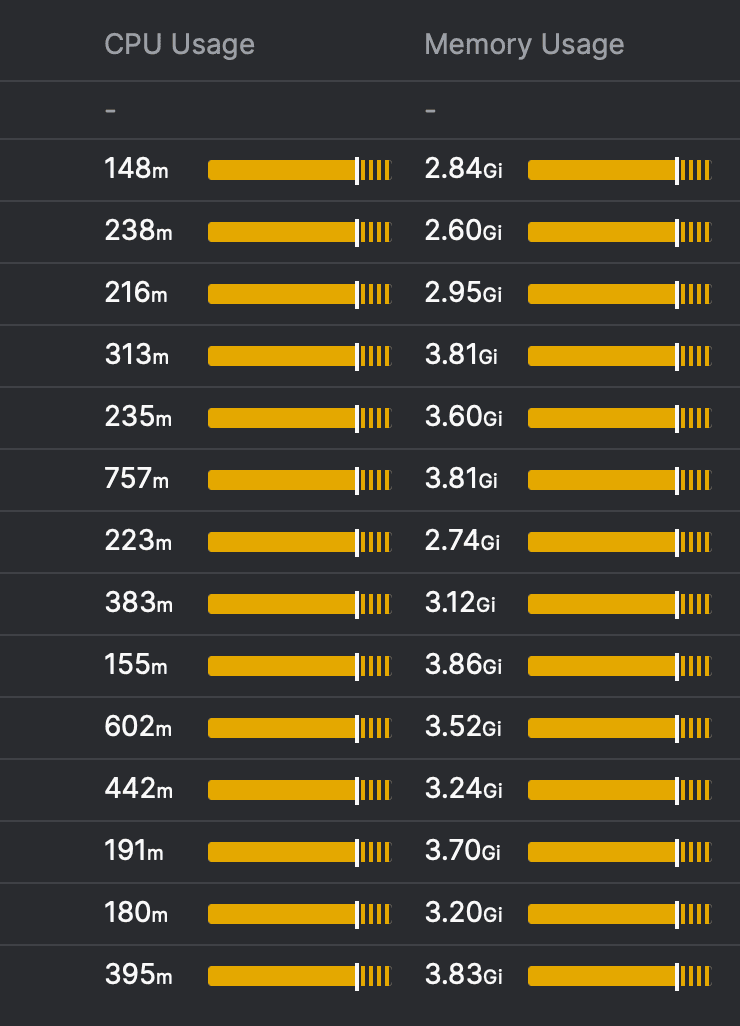
CPU and memory usage of various Nginx instancesCPU and memory usage of various Nginx instances

The significant performance disparity clearly justified our complete transition towards Envoy-based solutions for a more efficient cloud native gateway.

APISIX is fundamentally an excellent project that effectively addresses Nginx reload challenges. This is why we initially adopted APISIX for our Laf platform. However, we encountered significant operational issues with its APISIX Ingress Controller, which proved unstable in practice. Control plane crashes caused multiple critical failures and even controller OOM incidents.

While we genuinely wanted to make it work, recurring faults eventually forced us to abandon it. That said, the APISIX community remains actively engaged in resolving these issues and continues to improve the platform.

To summarize: APISIX demonstrates strong core stability, but its controller requires substantial optimization and stability improvements for demanding production environments. The community shows robust support, yet our urgent production requirements couldn't accommodate their gradual development pace. We ultimately had to migrate to alternative gateway solutions.

Having transitioned our CNI to Cilium early on (a decision that has proven technically sound), we naturally considered adopting Cilium Gateway for our gateway implementation as well. Reality, however, presented significant limitations for our specific use case.

Cilium Gateway exclusively supports LB mode, creating tight coupling with cloud vendor LB services. This conflicts with our private deployment requirements where we prefer decoupled architectures. Stability concerns also emerged: when handling large-scale routing configurations, Cilium Gateway Ingress rule propagation became unacceptably slow (measured in minutes). Our operational SLA requires sub-5-second route convergence. Given these constraints, our current conclusion is to defer Cilium Gateway adoption until these critical issues are resolved.

As Kubernetes evolves toward standardized Gateway APIs (replacing traditional Ingress), and considering our preference for Envoy-based implementations, Envoy Gateway initially appeared promising. During our early evaluation (based on last year's versions), however, the project was still in relatively early development stages with several limitations we encountered at the time: memory leaks causing OOM, pathpolicy misconfigurations, and feature gaps in merged gateway mode.

We're pleased to note that these issues have since been resolved, and the Envoy Gateway community has demonstrated excellent responsiveness and problem-solving capabilities. We actively contributed to upstream development through bug reports and improvement suggestions. However, given our urgent production requirements at that time, we chose to proceed with more mature solutions available then.

The Kubernetes Gateway API standard faces an awkward reality in complex deployments. From my perspective, its designers haven't fully grappled with real-world multi-tenant Kubernetes gateway requirements. When multiple tenants share a cluster, clear permission boundaries between administrators and users become essential. The current Gateway design lacks this crucial consideration.

Consider this example: Network listening port configurations should be exclusive to cluster administrators rather than regular users. TLS certificate settings are application-specific – while administrators maintain configuration privileges, individual users should manage their own certificates. This permission overlap necessitates user-level Gateway access, requiring complex controller-level permission controls including port whitelisting and conflict resolution mechanisms.

An optimal design would push tenant-specific fields down to the HTTPRoute level or implement them through dedicated Custom Resource Definitions (CRDs). This architectural approach would establish clearer boundaries between user-space operations and super-admin management. Though functional, the existing hybrid approach remains somewhat convoluted – albeit still viable.

Our extensive evaluation and real-world testing led us to focus on solutions that could overcome the limitations of previous gateways. Higress, an Envoy-based gateway, emerged as a strong contender by directly addressing our key pain points:

  1. Rapid Ingress Configuration: Initial Ingress configuration delays were significant with other solutions when handling large volumes of routing entries (new routes requiring over 2 minutes to activate). Higress, through community optimizations and its incremental configuration loading mechanism, reduced this to around 3 seconds. This extreme performance level, now even surpassing container readiness duration, is vital for our dynamic environment.
  2. Controller Stability and Resource Efficiency: Controller OOM issues, experienced with other gateways during non-dynamic loading scenarios due to high resource consumption, were resolved. Higress's controller implementation proved stable and remarkably resource-efficient even under massive routing loads.
  3. Timeout Anomaly Resolution: We mitigated occasional timeout anomalies (observed with onDemandRDS parameters in one cluster with a previous setup) by fine-tuning configurations, ensuring consistent performance across all clusters with Higress.

Regarding security, many of our past incidents originated from performance bottlenecks. Traffic surges overwhelming gateways are common in our environment, making API gateway performance absolutely critical. Testing confirms Envoy demonstrates significantly superior performance, and Higress particularly shines in this aspect with its controller implementation:

Higress Controller Performance under massive routing loadsHigress Controller Performance under massive routing loads
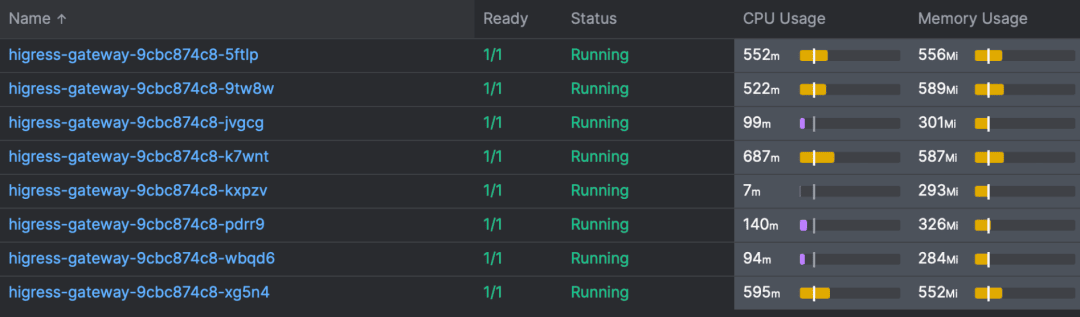
Higress Resource Consumption even with high concurrencyHigress Resource Consumption even with high concurrency

Even under massive routing loads and ultra-high concurrency scenarios, Higress requires surprisingly minimal resources.

A crucial factor for us was that Higress maintains compatibility with Nginx Ingress syntax through annotation support. Since our existing codebase already uses Ingress, migration costs are virtually non-existent – upgrades can be completed in just a few minutes. This seamless transition path was a significant advantage.

To further promote community development and enhance Higress for broader use cases, we've provided several suggestions:

  • Enhanced Gateway API Standard Support: While v1 version compatibility exists, full feature parity with Ingress capabilities remains incomplete and is an area for growth.
  • Open-Sourcing Advanced Features: Game-changing features like advanced security protections and circuit breaker mechanisms should ideally be open-sourced. We welcome commercial integration opportunities as platform requirements evolve.
  • Plugin Architecture Expansion: Peripheral functionality should be expanded through a robust plugin architecture to maintain core function cohesion and reliability.

Gateways represent absolutely critical components for cloud infrastructure and applications. As Sealos continues scaling, new challenges in API gateway management will inevitably emerge. We aim to establish close collaboration with upstream/downstream communities to advance open-source gateway technology and benefit more developers.

The gateways listed above – Nginx Ingress, APISIX, Cilium Gateway, and Envoy Gateway – are all excellent solutions in their own right. The fact that Sealos hasn't adopted them doesn't reflect any shortcomings in these projects, but rather our highly demanding and unique scenarios requiring a high-performance, scalable, multi-tenant API gateway.

In reality, there are very few gateways capable of supporting multi-tenant environments in public internet deployments at our scale. Therefore, we encourage readers to make selections based on their specific use cases. Our API gateway selection journey is provided solely as a reference. Meanwhile, Sealos Cloud itself will also continue to monitor the development of other gateways with an open mindset.