
惯性聚合 高效追踪和阅读你感兴趣的博客、新闻、科技资讯
阅读原文 在惯性聚合中打开

推荐订阅源

aimingoo的专栏
aimingoo的专栏
Google DeepMind News
S
SegmentFault 最新的问题
Project Zero
Project Zero
D
DataBreaches.Net
I
InfoQ
L
Lohrmann on Cybersecurity
OSCHINA 社区最新新闻
OSCHINA 社区最新新闻
酷 壳 – CoolShell
酷 壳 – CoolShell
Stack Overflow Blog
Stack Overflow Blog
The Register - Security
Recorded Future
Recorded Future
Vercel News
Vercel News
博客园 - 司徒正美
freeCodeCamp Programming Tutorials: Python, JavaScript, Git & More
I
Intezer
The Hacker News
The Hacker News
F
Fortinet All Blogs
Microsoft Azure Blog
P
Proofpoint News Feed
Help Net Security
Help Net Security
cs.CV updates on arXiv.org
Application and Cybersecurity Blog
Scott Helme
Scott Helme
T
Threatpost
爱范儿
爱范儿
N
Netflix TechBlog - Medium
D
Docker
云风的 BLOG
云风的 BLOG
C
Cisco Blogs
K
Kaspersky official blog
H
Help Net Security
S
Secure Thoughts
T
Threat Research - Cisco Blogs
钛媒体:引领未来商业与生活新知
钛媒体:引领未来商业与生活新知
S
Security @ Cisco Blogs
Cyberwarzone
Cyberwarzone
N
News and Events Feed by Topic
G
Google Developers Blog
Forbes - Security
Forbes - Security
博客园 - 三生石上(FineUI控件)
博客园 - 叶小钗
B
Blog
Google DeepMind News
Recent Announcements
Simon Willison's Weblog
S
Securelist
P
Privacy International News Feed
Spread Privacy
Spread Privacy
The Last Watchdog
The Last Watchdog

Sealos Blog

Build a Full-Stack App with Claude Code + InsForge — Zero Backend Code | Sealos Blog InsForge vs Supabase: Which Backend for AI-Powered Development? | Sealos Blog Kubernetes NodePort Exhaustion: SSH Gateway Solution | Sealos Blog Claude Code Metrics Dashboard: Grafana Setup (2026) | Sealos Blog What Is RustFS? Apache 2.0 MinIO Alternative (2026) | Sealos Blog Claude Code Mobile: iPhone, Android & SSH (2026) | Sealos Blog Eaglercraft Server Hosting: Fast Setup (2026) | Sealos Blog An Honest Review: Migrating a Complex Microservice App from Heroku to Sealos | Sealos Blog The Ultimate Guide to Kubernetes Audit Logging for Security and Compliance | Sealos Blog Cost Optimization Shootout: Sealos Autonomous FinOps vs. Kubecost Manual Reports | Sealos Blog For CTOs: How to Cut Your Cloud Bill by 50% Without Sacrificing Performance | Sealos Blog Building Resilient Systems: A Deep Dive into Sealos High-Availability and Auto-Failover | Sealos Blog Building a Scalable Event-Driven Architecture with Sealos Managed Kafka | Sealos Blog Beyond kubectl apply: 5 GitOps Best Practices for Production-Ready CI/CD on Sealos | Sealos Blog Advanced RAG Pipelines: Why Your Choice of Vector Database (like Milvus) Matters | Sealos Blog Advanced MLOps: How to Monitor and Evaluate LLM Applications in Production | Sealos Blog A Developer's Guide to Kubernetes RBAC: Securing Your Cluster the Easy Way with Sealos | Sealos Blog A CISO's Guide to Cloud Development: Securing the CI/CD Pipeline with Sealos DevBox | Sealos Blog What is Kubernetes Multi-Tenancy? A Guide for Platform Engineers | Sealos Blog What is Infrastructure from Code (IfC)? The Next Step After Infrastructure as Code (IaC) | Sealos Blog What is GitOps? A Beginner's Guide to "Push-to-Deploy" Workflows | Sealos Blog What is eBPF? The Future of Kubernetes Networking and Security | Sealos Blog What is an "AI-Native" Platform? (And Why You Need One for MLOps) | Sealos Blog What is an Agentic Workflow? Building the Next Generation of AI Apps | Sealos Blog What is a Kubernetes Chargeback Model (And How Does it Save You Money?) | Sealos Blog What is a "Headless" Development Environment? (And How it Works with VS Code) | Sealos Blog What is a Graph-Based Vector Database? (And When to Use It Over Milvus) | Sealos Blog What is a "Cloud Operating System"? The Next Evolution of PaaS Explained | Sealos Blog The Real Cost of EKS: How Sealos Delivers a Simpler, Cheaper Kubernetes Experience | Sealos Blog The 3 Types of Kubernetes Autoscaling (HPA, VPA, CA) and How Sealos Manages Them for You | Sealos Blog Sealos vs Vercel: Why a Cloud OS Beats a Frontend Platform for Full-Stack Apps | Sealos Blog Sealos vs. Render vs. Fly.io: A 2025 Guide to the Best Heroku Alternatives | Sealos Blog Sealos vs. OpenShift: Kubernetes for Developers vs. Kubernetes for Ops Teams | Sealos Blog Sealos vs. Netlify: When to Choose a Full Kubernetes Platform over a Static Site Hoster | Sealos Blog Sealos vs. DigitalOcean App Platform: A Head-to-Head Comparison on Cost, Features, and Scalability | Sealos Blog Sealos vs. AWS Elastic Beanstalk: The Modern PaaS for Developers Who Hate YAML | Sealos Blog Sealos DevBox vs. AWS Cloud9: Why Your CDE Should Be Platform-Agnostic | Sealos Blog For Developers: Stop Wasting Time on DevOps. A 10-Minute Guide to Shipping Faster with DevBox. | Sealos Blog Deploying n8n with Docker: From Local Setups to a Radically Simple Cloud Alternative | Sealos Blog The Impact of Prompt Bloat: How the Sealos AI Proxy Can Cache Queries and Cut LLM Costs | Sealos Blog The FinOps Playbook: How to Implement Kubernetes Chargebacks and Showbacks with Sealos | Sealos Blog Smoke Testing for ML Pipelines: Catching Data and Model Errors Before They Hit Production | Sealos Blog Optimizing PostgreSQL Performance: A Guide to Sealos Managed Database Tuning | Sealos Blog Managing Kubernetes Multi-Tenancy: How Sealos Enforces Resource Quotas and Network Policies | Sealos Blog From Days to Minutes: How to Standardize Developer Environments for Your Entire Engineering Org | Sealos Blog For Platform Engineers: How to Build a Golden Path IDP (Internal Developer Platform) with Sealos | Sealos Blog For FinOps Managers: The 5 Leakiest Buckets in Your Kubernetes Budget (And How to Plug Them) | Sealos Blog For Educators & IT Admins: How to Provide a Secure, Scalable Cloud Lab for 1000+ Students on a Budget | Sealos Blog What is a Vector Database? A Beginner's Guide to Milvus, Pinecone, and More | Sealos Blog Why Your Microservices Architecture is Failing (And How a Cloud OS Can Fix It) | Sealos Blog The Power of Autoscaling: A Deep Dive into HPA, VPA, and Cluster Autoscaler | Sealos Blog The Total Economic Impact of Cloud Development Environments (CDEs) | Sealos Blog The Illustrated Guide to the Kubernetes Control Plane | Sealos Blog The MLOps Lifecycle Explained: From Data Prep to Model Deployment | Sealos Blog Beyond Vercel's AI Cloud: The Case for an AI-Native Operating System | Sealos Blog The Architecture of a Modern AI Application: A 2025 Blueprint | Sealos Blog GitHub Codespaces is Great, But Your Workflow is Incomplete. Here's Why. | Sealos Blog The Best Heroku Alternatives in 2025 for Scalability and Cost | Sealos Blog CAST AI vs. Kubecost vs. Sealos: Choosing the Right K8s Cost Management Tool | Sealos Blog DevBox vs. Gitpod vs. Replit: An Unbiased Comparison for 2025 | Sealos Blog Unlocking Hidden Savings: A Guide to Using Spot Instances Safely in Kubernetes | Sealos Blog Can a CDE Really Replace Your MacBook Pro? A Performance Benchmark | Sealos Blog The End of "Works on My Machine": Achieving 100% Reproducible Builds with DevBox | Sealos Blog The Ultimate Guide to GPU Provisioning and Management in Kubernetes | Sealos Blog Rightsizing Kubernetes Workloads: How to Stop Wasting Money on CPU and Memory Requests | Sealos Blog The 2025 Guide to Kubernetes Cost Optimization: 10 Strategies to Cut Your Bill in Half | Sealos Blog FinOps for Startups: How to Build a Cost-Conscious Culture from Day One | Sealos Blog How to Onboard a New Developer in Under 5 Minutes with Sealos DevBox | Sealos Blog Calculating Kubernetes Costs: A Breakdown of EKS, GKE, and AKS Pricing Models | Sealos Blog Case Study: How We Reduced Our Kubernetes Bill by 87% with Sealos | Sealos Blog Are You Overpaying for Managed Kubernetes? The True Cost of Vendor Lock-in | Sealos Blog Beyond Monitoring: How Sealos Autonomously Optimizes Your Cloud Spend | Sealos Blog A Practical Guide to Kubernetes Security: Hardening Your Cluster in 2025 | Sealos Blog A Secure-by-Design Development Workflow with Isolated Cloud Environments | Sealos Blog Setting Up a Collaborative Python Data Science Environment with DevBox | Sealos Blog Using the Sealos AI Proxy to Manage and Cache LLM API Calls | Sealos Blog Migration Guide: Moving Your Node.js & Postgres App from Heroku to Sealos in Under an Hour | Sealos Blog Serving Machine Learning Models at Scale: A Guide to Inference Optimization | Sealos Blog Headless Development with Sealos: Using Your Local VS Code with a Powerful Cloud Backend | Sealos Blog How to Build and Deploy a RAG Pipeline with Llama 3 and Milvus on Sealos | Sealos Blog From Localhost to Production in 15 Minutes: A Full-Stack CDE Workflow with Sealos DevBox | Sealos Blog GitOps on Autopilot: Implementing a CI/CD Pipeline with Sealos and GitHub Actions | Sealos Blog Fine-Tuning Open-Source LLMs on a Budget with Sealos | Sealos Blog From Docker Compose to Kubernetes: A Simple Migration Path with Sealos | Sealos Blog Building an AI Agentic Workflow with LangChain and Sealos | Sealos Blog What is Helm for Kubernetes? The Ultimate Package Manager Explained | Sealos Blog What is a Custom Resource Definition (CRD) in Kubernetes? | Sealos Blog What is a Kubernetes StatefulSet? A Practical Guide | Sealos Blog What is a Kubernetes Ingress Controller? A Guide to Smart Traffic Routing | Sealos Blog What is a Kubernetes Operator? Automating Complex Applications | Sealos Blog What is a Kubernetes Service? A Simple Guide for Developers | Sealos Blog Streamlining Your CI/CD Pipeline with a DevBox Build Environment | Sealos Blog Why Standardized Development Environments Are Key to Team Velocity | Sealos Blog What Is GitHub Codespace? | Sealos Blog DevBox Install? Skip It Entirely. Get a Ready-to-Code Environment in One Click with Sealos DevBox. | Sealos Blog How to Set Up a DevBox: The Ultimate Guide to 1-Click Cloud Development | Sealos Blog Empowering Indie Devs and Startup Teams: How Sealos DevBox Accelerates Agile Development | Sealos Blog From Chaos to Consistency: How Sealos DevBox Transforms Enterprise Development Workflows | Sealos Blog From Campus Labs to Cloud Freedom: How Sealos DevBox Supercharges Student Development | Sealos Blog How Sealos DevBox Cut Container Commit Time from 15 Minutes to 1 Second | Sealos Blog
Best Google Analytics Alternatives for 2025: Privacy-Focused & Powerful Options | Sealos Blog
Sealos · 2025-06-25 · via Sealos Blog

Google Analytics is a widely used platform for tracking and analyzing website and app traffic. It helps organizations understand user behavior, optimize digital strategies, and improve marketing effectiveness. The latest version, GA4, uses an event-based model to provide a more complete view of the customer journey across devices and platforms, with a focus on privacy-safe measurement.

Google Analytics is popular because it offers powerful, often free, analytics and reporting tools. Businesses use it to:

  • Gain insights into customer behavior and website performance
  • Track conversions and optimize marketing campaigns
  • Access real-time and historical data
  • Integrate seamlessly with Google Ads, Google Cloud, and other tools
  • Scale from small sites to large enterprises Its robust features, integrations, and accessibility have made it the industry standard for web analytics.

Despite its strengths, Google Analytics has notable drawbacks:

  • Privacy and Compliance: Increasing privacy regulations (like GDPR and CCPA) and legal rulings in Europe have made standard Google Analytics usage problematic for many organizations.
  • Data Ownership: Users have limited control over where data is stored and how it is used, as Google retains significant rights over collected data.
  • Complexity: The GA4 interface can be overwhelming, especially for beginners, and migrating from Universal Analytics is challenging.
  • Data Sampling: For high-traffic sites, reports may be based on sampled data, reducing accuracy.
  • Feature Gaps: Lacks built-in qualitative tools like heatmaps and session replay, often requiring third-party solutions.
  • Support: Free users rely on community support, with no dedicated help from Google.

Official Website: plausible.io

Introduction Plausible is a lightweight, privacy-first web analytics tool designed to be simple, fast, and fully compliant with privacy regulations. It is open-source and can be self-hosted or used via a managed EU-based cloud service. Plausible is known for its clean interface and focus on essential metrics without tracking personal data or using cookies.

Screenshots
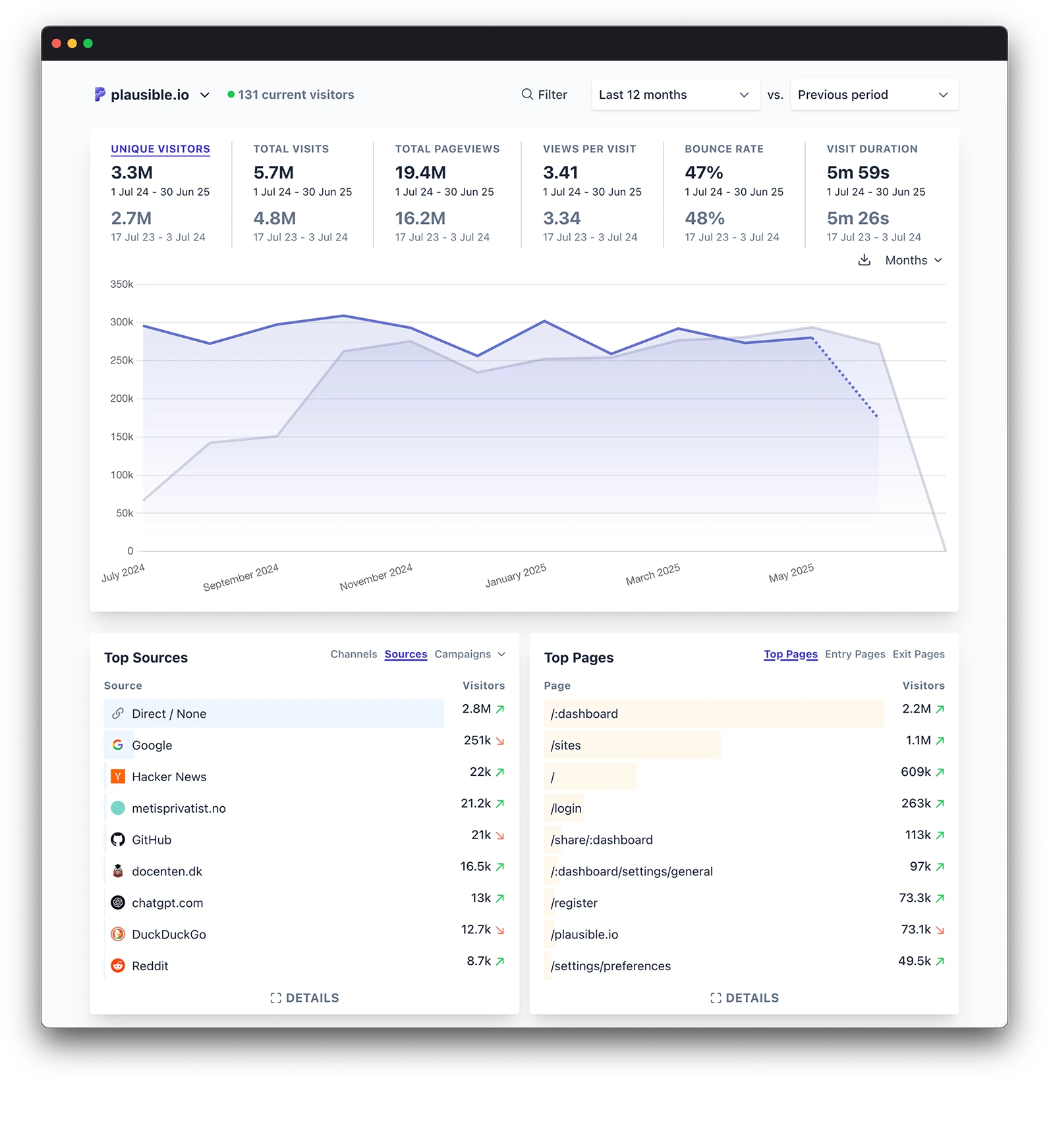
Plausible dashboard screenshotPlausible dashboard screenshot

Advantages

  • No cookies or personal data collected
  • GDPR, CCPA, and PECR compliant by design
  • Simple, intuitive dashboard with real-time data
  • Lightweight script for fast page loads
  • Open-source and can be self-hosted
  • Easy goal and event tracking

Disadvantages

  • Fewer advanced features compared to Matomo or Google Analytics
  • Limited integrations and customization
  • No built-in heatmaps or session recordings
  • Paid for managed cloud version (no perpetual free tier)

Who Should Use Plausible? Plausible is perfect for privacy-conscious site owners, bloggers, startups, and small businesses who want simple, transparent analytics without the complexity or privacy concerns of Google Analytics.

Get Started: Deploy and get started with Plausible

Official Website: umami.is

Introduction Umami is an open-source, privacy-focused analytics solution that provides simple, clear insights without tracking personal data or requiring cookies. It is designed for easy self-hosting and offers a minimalist, user-friendly dashboard.

Screenshots
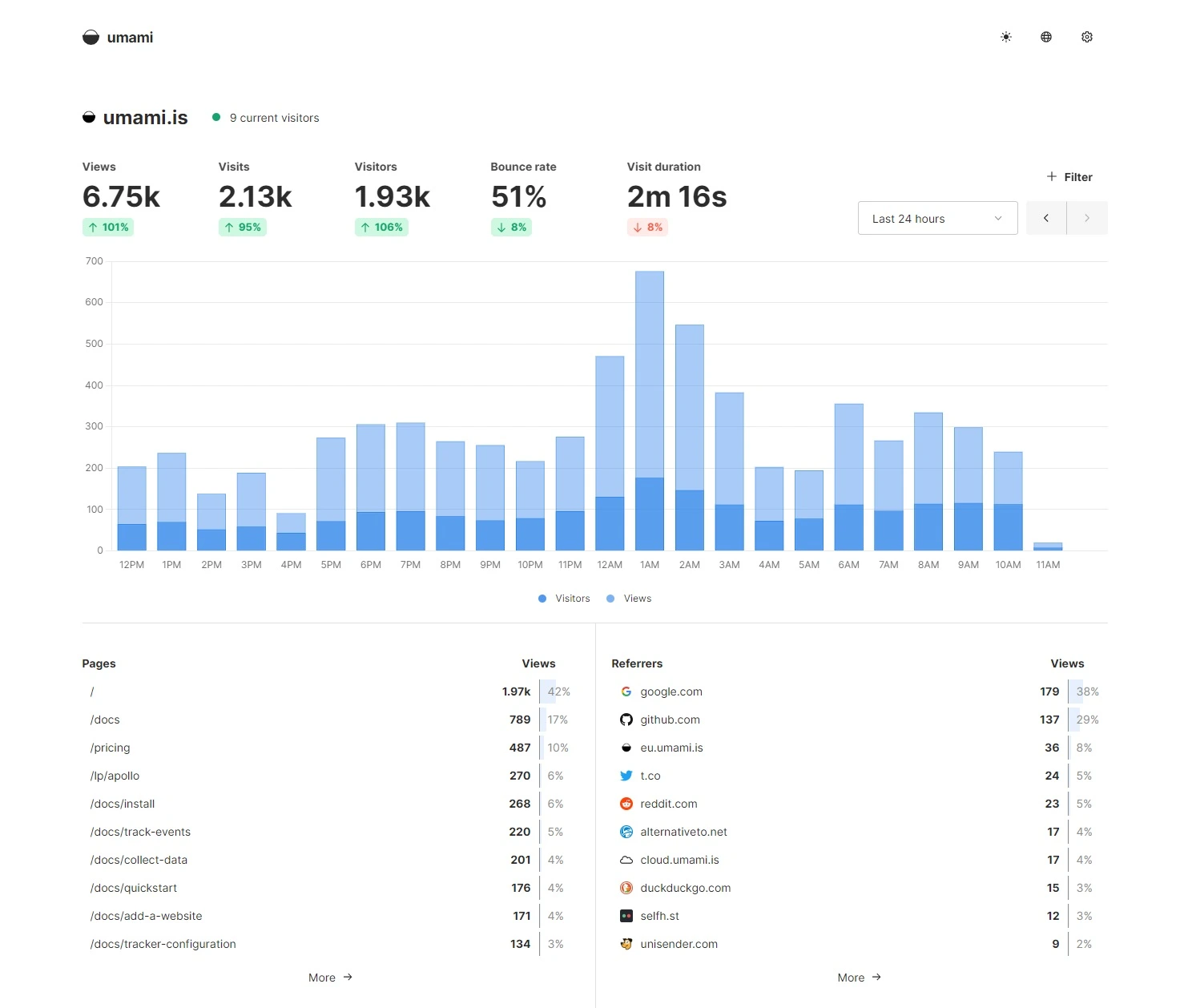
Umami dashboard screenshotUmami dashboard screenshot

Advantages

  • 100% open-source and free to self-host
  • No cookies or personal data collected
  • Simple, modern dashboard with real-time stats
  • Lightweight and easy to deploy
  • Multi-site support from a single installation

Disadvantages

  • Requires self-hosting and basic server management
  • Fewer features and integrations than Matomo or Google Analytics
  • No built-in heatmaps, session replay, or advanced segmentation

Who Should Use Umami? Umami is ideal for developers, privacy advocates, and anyone who wants a no-frills, open-source analytics solution they can fully control.

Get Started: Deploy and get started with Umami

Official Website: rybbit.io

Introduction Rybbit is a modern analytics platform focused on privacy, speed, and actionable insights. It aims to provide a balance between simplicity and powerful features, with a strong emphasis on user privacy and compliance.

Screenshots
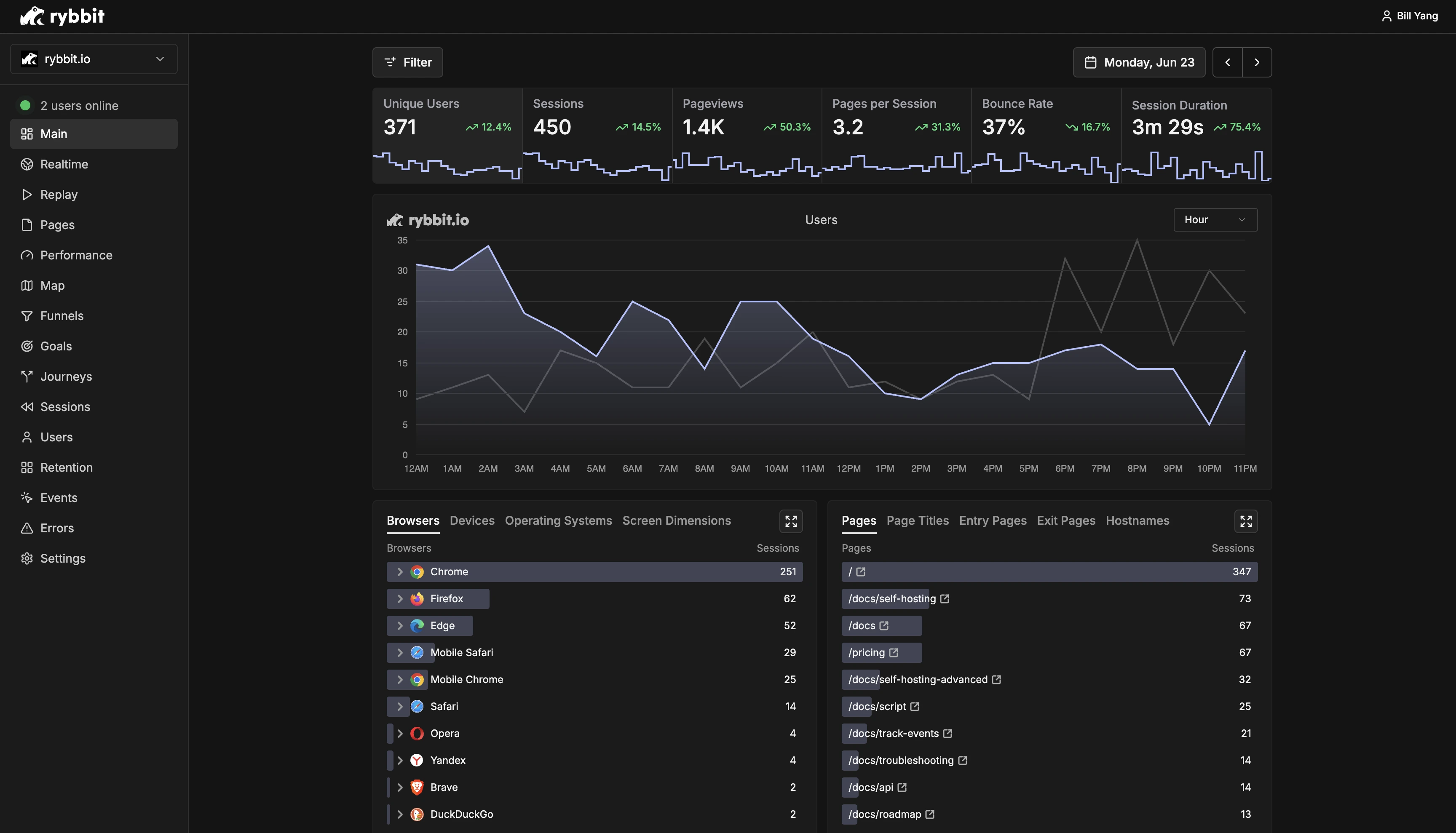
Rybbit dashboard screenshotRybbit dashboard screenshot

Advantages

  • Privacy-first approach with no personal data collection
  • Fast, real-time analytics and reporting
  • Clean, modern interface
  • Easy event and goal tracking
  • Designed for compliance with global privacy laws

Disadvantages

  • Newer platform with a smaller user base
  • Limited third-party integrations
  • Some advanced features may require a paid plan

Who Should Use Rybbit? Rybbit is a great choice for startups, small businesses, and privacy-focused organizations looking for a modern, easy-to-use analytics tool that respects user privacy.

Get Started: Deploy and get started with Rybbit

Official Website: matomo.org

Introduction Matomo is a leading open-source web analytics platform designed as a privacy-focused alternative to Google Analytics. It offers full data ownership, flexible hosting options (cloud or self-hosted), and a comprehensive feature set that rivals Google Analytics, making it a popular choice for organizations with strict privacy or compliance requirements.

Screenshots
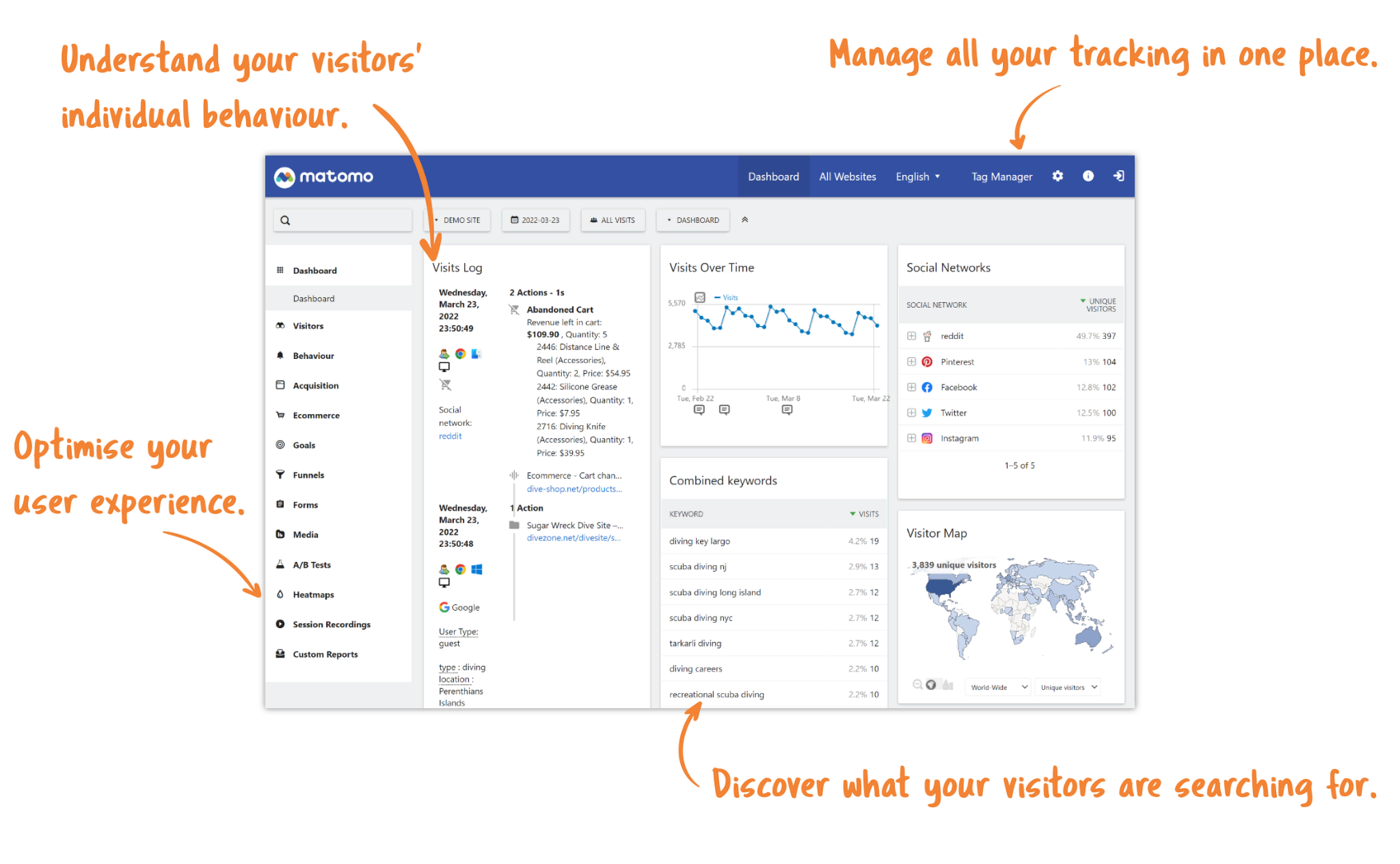
Matomo dashboard screenshotMatomo dashboard screenshot

Advantages

  • 100% data ownership and control
  • Can be self-hosted or hosted in the EU for compliance
  • No data sampling—reports are always based on complete data
  • Built-in features like heatmaps, session recordings, and form analytics
  • GDPR, CCPA, and HIPAA compliant
  • No need for intrusive cookie consent banners (with proper configuration)
  • Open-source and extensible with plugins

Disadvantages

  • Self-hosting requires technical setup and ongoing maintenance
  • Some advanced features require paid add-ons or a cloud subscription
  • Interface can be less polished than Google Analytics for some users
  • Smaller community and fewer third-party integrations compared to Google

Who Should Use Matomo? Matomo is ideal for organizations that prioritize privacy, need full control over their analytics data, or operate in regions with strict data protection laws. It's also a strong choice for those who want advanced analytics features without sharing data with third-party ad networks.

Web analytics are essential for understanding your audience, measuring success, and making informed decisions about your digital presence. While Google Analytics remains a powerful and accessible tool, its limitations—especially around privacy, data ownership, and complexity—mean it may not be the best fit for every organization.

When choosing an analytics solution, consider your privacy requirements, data control needs, technical expertise, and the specific features that matter most for your business. Alternatives like Matomo, Plausible, Simple Analytics, and others offer privacy-focused, user-friendly, or specialized options that may better align with your goals. Ultimately, the best analytics platform is the one that empowers you to make smarter decisions while respecting your users' privacy and your own operational needs.