


 128
Screenshots »
128
Screenshots »
Pragmata is a brand-new sci-fi action-adventure IP developed and published by Capcom. The game releases on April 17th, just four more days. First revealed at a PlayStation event in June 2020, the game spent over five years in development, with its release date pushed back several times. Set in the near future, Pragmata follows astronaut Hugh Williams and his android companion Diana—a little blonde girl—as they fight to escape a hostile lunar research station, governed by a rogue AI called IDUS. The station on the Moon is built using a special ore with amazing properties—it can be 3D printed and is capable of replicating anything, as long as the data of the original is available. When a catastrophic moonquake strikes the station, Hugh is separated from his crew, and Diana rescues him. Together, they must navigate the station's AI-controlled machines and find a way back to Earth. Gameplay blends third-person shooting with cooperative mechanics: Hugh handles firearms and jetpack-assisted movement, while Diana can hack into enemy robots and the station itself to expose weak points and open new paths.
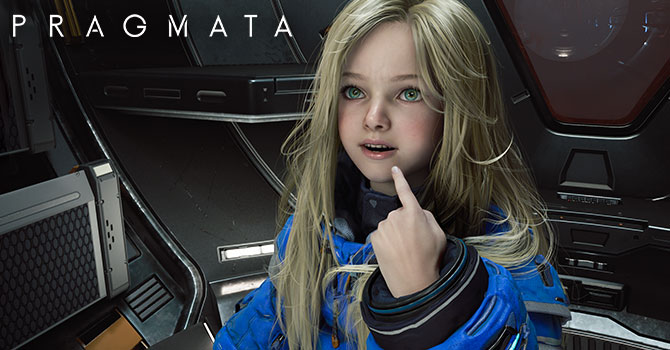
Pragmata is built on Capcom's proprietary RE Engine—the same technology behind recent Resident Evil titles and Monster Hunter Wilds—and uses DirectX 12. On the rendering front, the game supports running with and without ray tracing, and you may also enable full path tracing, which offers a step up from the ray-traced reflections and lighting seen in earlier RE Engine games. Upscaling support includes NVIDIA DLSS and AMD FSR—though notably no Intel XeSS. Frame generation is available as a separate toggle, supporting both NVIDIA and AMD. NVIDIA DLSS Ray Reconstruction is automatically enabled with path tracing. NVIDIA Reflex Low Latency is available as a separate option. The game also features RE Engine's strand-based hair rendering system for physics-based individual hair simulation.
This review will evaluate the performance of Pragmata across a wide range of contemporary graphics cards, compare image quality settings, and analyze the game's VRAM usage to provide insight into the hardware requirements needed for an optimal experience.


此内容由惯性聚合(RSS阅读器)自动聚合整理,仅供阅读参考。 原文来自 — 版权归原作者所有。