








- 5 min read
- Design, UX, UI, Design Patterns
We often see design principles as rigid guidelines that dictate design decisions. But actually, they are an incredible tool to rally the team around a shared purpose and document the values and beliefs that an organization embodies.
They align teams and inform decision-making. They also keep us afloat amidst all the hype, big assumptions, desire for faster delivery, and AI workslop. But how do we choose the right ones, and how do we get started? Let’s find out.
Real-World Design Principles
In times when we can generate any passable design and code within minutes, we need to decide better what’s worth designing and building — and what values we want our products to embody.
It’s similar to voice and tone. You might not design it intentionally, but then end users will define it for you. And so, without principles, many company initiatives are random, sporadic, ad-hoc — and feel vague, inconsistent, or simply dull to the outside world.
Design principles are guidelines and design considerations that designers apply with discretion — by default, without debating or discussing what has already been agreed upon.
One fantastic resource that I keep coming back to after all these years is Ben Brignell’s Principles.design. It has 230 pointers for design principles and methods, searchable and tagged, covering everything from language and infrastructure to hardware and organizations.
10 Principles Of Good Design
There is no shortage of principles out there. But the good ones are more than just being visionary — they have a point of view, and they explain what we don’t do as much as what we do. They also explain what we stand for in the world — beyond profits, stock prices, and all the hype and noise around us.
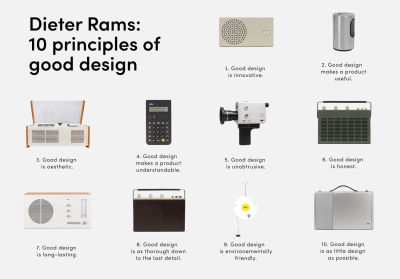
Many years ago, I encountered Dieter Rams’ 10 principles of good design (see above), a very humble, practical and tangible overview of principles that were informing, shaping, and guarding his design work at Braun.
There are no visionary claims, and no big bold statements: just a clear overview of what we do, and where our ambition and care lie for the products we are designing. It’s honest, sincere, and in many ways beautifully humane.
Examples Of Design Principles
There are plenty of wonderful examples that I keep close:
- Anthropic’s Constitution
- Principles of Product Design, by Joshua Porter
- Guiding Principles for Experience Design, by Whitney Hess, PCC
- Principles of Web Accessibility, by Heydon Pickering
- Humane by Design, by Jon Yablonski
- Designing Voice UX Principles, by Brian Colcord
- Agentic Design Principles, by Linear
- AI Chatbot Design Principles, by Emmet Connolly
- Voice UX Principles, by Ben Sauer
Design Principles In Design Systems
How To Establish Design Principles
Design principles can be personal, but usually they are committed to and shaped by the entire product team. Design principles aren’t just for designers. User’s experience is everything from performance to support to customer service, and ideally, participants would cover these areas as well.
In practice, though, establishing principles might feel incredibly challenging. They are abstract and fluffy and often ambiguous, and often very difficult to agree upon.
You can get started with a simple 8-step workshop (inspired by Marcin Treder, Maria Meireles and Better):
- Pre-session Research
Study how users speak about the products, what they appreciate, and the words they use. - Get Into Principles Mode
Invite 6–8 participants, ask them to choose their favorite object, and describe it in 3 words. - Product Analogies
Compare product to tangible items (e.g., ‘A Porsche 911’ or ‘a Braun audio system’). - Extract Attributes
Individually, in silence, everyone writes 3–5 initial principles, which are then grouped by theme for review. - Link Attributes To Research
Link attributes to actual user pain points or desires, to make sure they are grounded in reality. - Value Statements
We write ‘We want X because of Y’ sentences that express the rationale behind our thinking. - Move to Principles
Remove analogies to create enduring rules that will guide our design process. - Reality Check
Search for both positive and negative examples in our products to see where principles are being met or ignored.
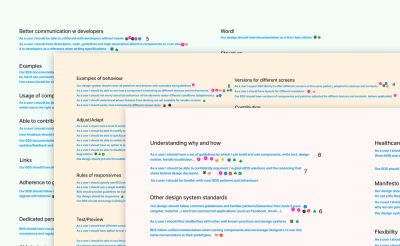
Useful Starter Kits For Principles Workshops
- Design Principles Workshop (Figma Template), by Maria Meireles
- Design Principles Workshop (FigJam Template), by Richard Picot
- How to Create Design Principles (Miro Workshop Template), by NanoGiants
Wrapping Up
Creating principles is only a small portion of the work; most work is about effectively sharing and embedding them. It’s difficult to get anywhere without finding ways to make design principles a default — by revisiting settings, templates, naming conventions, and output.
Principles help avoid endless discussions that often stem from personal preferences or taste. But design should not be a matter of taste; it must be guided by our goals and values. Design principles can help with just that.
Meet “Design Patterns For AI Interfaces”
Meet Design Patterns For AI Interfaces, Vitaly’s new video course with 100s of real-life examples and UX guidelines to design AI features that people actually use — with a live UX training later this year. Jump to a free preview.

Useful Resources
- Design Principles Collection, by Ben Brignell
- “How To Establish Design Principles”, by Marcin Treder
- “Establishing Design Principles for a Design System and What It Taught Us”, by Better Design Team
- Design Principles, by Jeremy Keith
- Design Principles Collection, by Gabriel Svennerberg
- Design Principles Workshop (Figma Template), by Maria Meireles
- Design Principles Workshop (FigJam Template), by Richard Picot
- How to Create Design Principles (Miro Workshop Template), by NanoGiants
- Modals in Design Systems
 (yk)
(yk)