






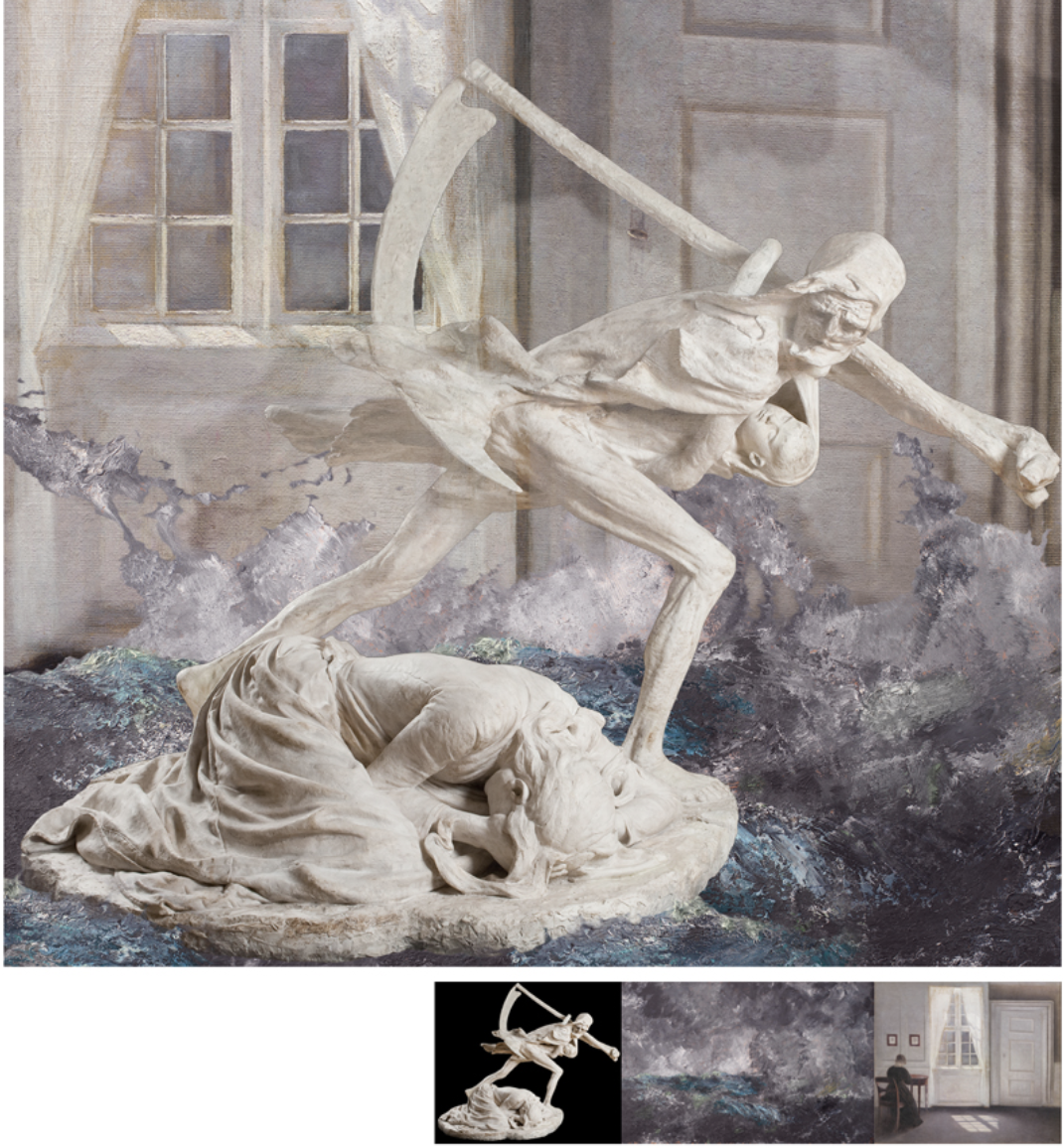
 Apollo or Venus in your living room? This is the proposition made by Denmark’s Statens Museum for Kunst (SMK) upon openly sharing its vast collection of 3D models of sculptures. With SMK’s open files of digital reproductions of sculptures in the public domain, anyone can 3D-print a sculpture of Roman gods Apollo or Venus and use it to create a new object to decorate the living room, among many creative endeavors.
In this blog post, we highlight some examples of the benefits of open heritage and show what becomes possible when barriers are removed and heritage in the public domain is openly accessible.
When cultural heritage institutions (CHIs) like the SMK openly share their public domain collections in the digital environment, their mission to make heritage available to all really comes alive. Open heritage can prompt curiosity, unlock creativity, spark imagination, spur artistic experimentation, and nurture the contemporary art scene. It allows artists, creators, designers and creative entrepreneurs to have a fresh take on our shared heritage. Open heritage is essential if we want people to be able to interrogate humanity’s cultural record, participate in cultural life, and enjoy the arts without barriers and on equitable terms.
Europeana’s GIF IT UP annual competition is another great example of creative remixing and storytelling made possible by open heritage. Every year in October, people from around the globe create new GIFs from openly licensed heritage material and share them with the world.
It is also fascinating to see artist Amy Karle leveraging Smithsonian 3D scans of a fossilized Triceratops skeleton (the first “digital dinosaur”) to create sculptures consisting of “novel evolutionary forms based upon extinct species to explore hypothetical evolutions through technological regeneration.” And for the romantics among us, Germany’s Coding da Vinci produced a playful “dating app” matching users with portrait paintings digitized by the Augustinermuseum (Städtische Museen Freiburg).
Increased creativity is not the only benefit of open heritage. In particular, open heritage can also contribute to heritage preservation and increased visibility. For example, in 2021, the Wellcome Collection in the UK announced its images had passed 1.5 billion views on Wikipedia. Open heritage also helps enhance student engagement and learning: the Wikipedia in School project in Denmark integrated open heritage resources directly into school curricula, making education more interactive and culturally relevant. It can also accelerate scientific research to address global challenges like climate change. CHIs can amplify the scientific value of their heritage collection and foster cross-border collaboration among researchers. The butterfly story mentioned in part 1 of this series is a clear illustration of the value of open heritage for scientific progress.
From advancing cultural rights and digital equity, to fueling education and scientific research and discovery, open heritage generates ripple effects across society. And as the world faces multiple challenges, open heritage is all the more critical if we want to sustain resilient, free and democratic societies, strengthen fundamental freedoms, and foster the production of new solutions to the world’s biggest problems.
However, as we explored in part 1 of this series, so much of our shared digital heritage remains locked away, despite the fact that heritage in the public domain belongs to the public, and should be free for anyone to access, reuse, and breathe new life into it. Equitable access to heritage is not just a means to enjoy culture as a global public good; it is also a social and economic imperative.
To support open heritage at scale and protect access to public domain heritage for future generations, we need global alignment. This October, the TAROCH Coalition (Towards a Recommendation on Open Cultural Heritage) will publish the Open Heritage Statement, a collaborative declaration that sets out shared values, challenges, and priorities for closing the global gap in equitable access to heritage. The Statement will enshrine the principles that underpin equitable access and identify concrete actions to lower barriers, enabling open heritage to nurture creativity and shape sustainable futures for all. The Statement is designed to support UNESCO’s ongoing work on cultural rights, digital transformation, and knowledge sharing for sustainable development, reinforcing its founding commitment to the free flow of ideas.
Register today for the launch of the Open Heritage Statement on 14 October, 14:00 UTC to learn more about our global call for equitable access to public domain heritage in the digital environment. Once released, the Statement will be made available for governments, institutions and organizations to sign and promote, laying the groundwork for a future international framework on open heritage.
Openness entered the world of heritage in the early 2000s. Open access in the context of heritage materials means heritage (and associated metadata) is as broadly accessible as possible and it is shared and reused (including commercial use and modification) by anyone for any purpose, at no cost to the user and free from unnecessary copyright restrictions.
Open heritage is achieved by leveraging the vast potential of digital tools and technologies in enhancing access, protecting the public domain from erosion, and encouraging the use of open licenses and tools, such as Creative Commons licenses and public domain tools, to clearly communicate how heritage materials can be accessed and reused. A central tenet is that faithful digital reproductions of public domain materials must stay in the public domain.
It’s important to note that openness is relative, nuanced and contextual. Open heritage does not aim to force access to heritage that was never meant by its community holders or traditional custodians to be shared, let alone openly shared.
Openness is a means to an end, and not an end in and of itself. It is a means to remove unfair barriers to access and use of heritage, so people can equitably connect and engage with heritage in the digital environment and together build and sustain a thriving commons. It is a pathway to achieve heritage-related goals, such as preservation, safeguarding, transmission, access, representation, and participation.
There are also legal and ethical factors to consider when making heritage open: data protection (protection of personal or confidential information), privacy, and cultural sensitivities around heritage, among others, as well as respect for Indigenous heritage and Traditional Knowledge. In sum, there may be legitimate reasons not to openly share heritage.
This blog post is an adaptation of this pre-print manuscript, where you can discover many more examples of the benefits made possible by open heritage.
GIF by Francesco Trentadue (Valenzano, Italy). Based on “Wasserfall“ by Franz Rechberger. Public Domain. Albertina Museum, via Europeana.
此内容由惯性聚合(RSS阅读器)自动聚合整理,仅供阅读参考。 原文来自 — 版权归原作者所有。