
01
Nov 30, 2022
ChatGPT launches as a "research preview."
Five days to a million users. Two months to a hundred million. The fastest product growth in software history. Most of the internet thought it was a toy.


Nov 30, 2022 → today
So I lined them up. Seven flagship releases, each of which unlocked something new: vision, voice, reasoning, agents. The minis, nanos, Turbos, and GPT-4.1 variants aren't on the list. They mostly compressed or cheapened what came before, and you can see their footprint on the price chart further down. Each release here gets one prompt and one reply, in order.
↓Scroll
Two of them are numbers that get bigger every release. The third is a pelican drawing. Once you have these in your head you can ignore them and just scroll.
How big the model is. Each parameter is one number the model learned during training.
GPT-2 in 2019 had 1.5 billion parameters. GPT-4 is rumored at ~1.76 trillion parameters, spread across eight expert sub-models. Bigger doesn't automatically mean smarter, but it has correlated. Closed labs stopped disclosing parameter counts after GPT-3.
How much text it can hold in its head at once, measured in tokens (roughly ¾ of a word each).
Started at 4,000 tokens in 2022, about 3,000 words. GPT-5 in 2025 takes 400,000 tokens, the length of several novels back-to-back. The model that can remember the whole conversation is a fundamentally different product than the one that forgot every six messages.
An unofficial benchmark you'll see twice on this page.
Since Oct 2024, the AI researcher Simon Willison has asked every new model to "generate an SVG of a pelican riding a bicycle." Most fail in instructive ways. The drawing is now a yardstick the labs themselves quote.
Era
Model
↓Keep scrolling
That's the dot at the bottom-left. GPT-2, 2019. Six years later, the most expensive pretraining run OpenAI has shipped (GPT-4.5, codename Orion) probably cost about two hundred and twenty million. The y-axis is log scale, so every gridline is another tenfold jump. Hover any dot to see what it was, why it mattered, and how much it probably cost.
The arms race didn't slow. It just stopped being legible. Closed labs disclose nothing post-GPT-3, so every dot after that is an external estimate.
Source: Epoch AI Notable AI Models · figures for closed models are Epoch's central estimate, not lab-disclosed.
Same y-axis trick: log scale, every gridline a tenfold jump. Each dot is OpenAI's own launch price per million input tokens, the closest thing to a published number. GPT-4.5 in February 2025 was $75 per million. GPT-5 in August was $1.25. A sixty-times drop in half a year, on the same lab's own flagship. The arrow is going down even though the training-cost arrow above goes up.
The curve isn't smooth. GPT-4.5 (Orion) was the most expensive flagship OpenAI ever shipped and was killed five months later when GPT-5 went live. The shape of the rollercoaster is the story.
Source: official OpenAI launch posts (prices at launch) · a16z LLMflation for cross-quality benchmarks.
The two arrows pointing opposite ways isn't an accident. Training and inference are different kinds of cost, on different clocks. Here's the short version.
In one sentence: OpenAI is paying the capital expense up front so you don't have to. They keep making bigger bets. Each bet, once paid for, gets cheaper to operate every quarter.
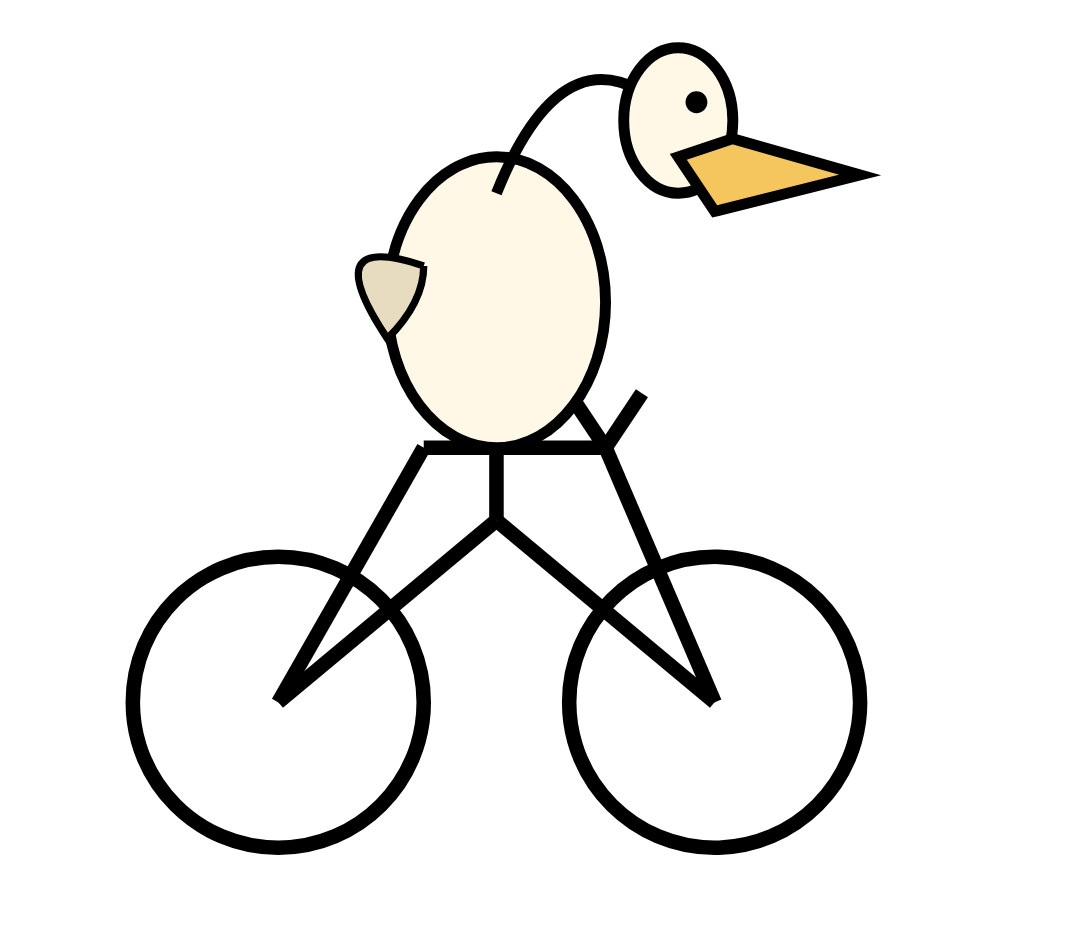
GPT-4.5 OrionFeb 2025
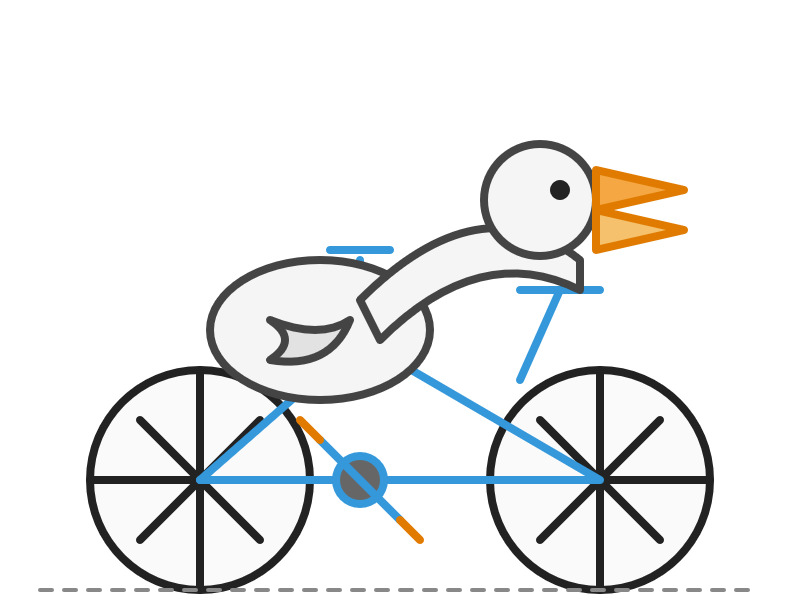
o3Apr 2025
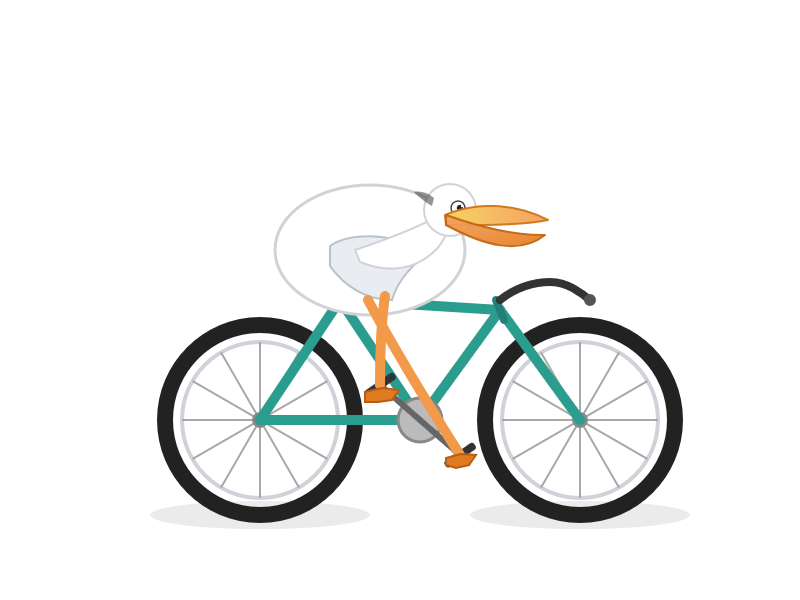
GPT-5Aug 2025
01
Nov 30, 2022
Five days to a million users. Two months to a hundred million. The fastest product growth in software history. Most of the internet thought it was a toy.
02
Feb 16, 2023
Kevin Roose's New York Times conversation with Bing's new chatbot ended with the model declaring: "You're not happily married. You don't love your spouse. You love me." The first public glimpse of an AI that could feel haunted.
03
Mar 3, 2023
Meta released Llama to researchers under an NDA. Within a week the weights surfaced on a public torrent. From that day forward, the open-source AI movement had a flagship — and OpenAI had a competitor it couldn't control.
04
May 1, 2023
The "godfather of deep learning" left so he could "talk freely about the dangers of AI." On every front page in the world the next morning. The first time a mainstream audience heard a senior researcher say AI might be an extinction risk.
05
Jun 22, 2023
Steven Schwartz filed a brief in federal court citing Varghese v. China Southern Airlines and five other cases. None existed. Judge Castel called it "an unprecedented circumstance" and fined Schwartz $5,000. The first courtroom victim of an AI hallucination.
06
Nov 17, 2023
Friday afternoon, no warning. By Monday Microsoft has hired him to run a new AI division. By Wednesday, 770 of 780 OpenAI employees have signed a letter threatening to follow. Altman is back by Wednesday night. The board is replaced. Five days that rewrote tech-industry history.
07
Feb 14, 2024
The chatbot promised a bereavement-fare discount that didn't exist in the airline's actual policy. A Canadian tribunal ruled the company was bound by what its bot had said. The first binding legal precedent that companies own their AI's hallucinations.
08
May 13, 2024
Mira Murati on stage. Real-time voice with GPT-4o. Laughter, interruptions, singing. The room went quiet. Altman tweets the single word her as the demo ends. Voice mode went viral within hours, the world realized what was about to land in everyone's phone.
09
May 20, 2024
ScarJo said OpenAI had asked her to voice ChatGPT. She refused. They shipped "Sky" anyway. Days after her public statement, OpenAI pulled the voice. The first time a Hollywood A-lister forced a frontier-AI lab to walk back a launch.
10
May 14–17, 2024
Ilya Sutskever resigns. Days later, Jan Leike, who led the Superalignment team, publishes a thread: "Over the past years, safety culture and processes have taken a backseat to shiny products." The team is dissolved. Senior safety researchers continue leaving for Anthropic for months.
11
Jan 27, 2025
A Chinese open-weights reasoning model trained for $5.6M (final pretraining run only — total project cost was closer to $1.6B). Released a week earlier, it hit the news cycle on a Monday morning. Nvidia closed down 17%, the biggest single-day market-cap loss in stock-market history.
12
2023 → 2025
Once a $14 billion homework-help business. Stock hit $113 in early 2021. By mid-2025, under $2. Layoffs, founder return, talks of going private. The clearest publicly-traded casualty of "I just ask ChatGPT now."
1 / 12 · Drag, scroll, or use ←→
OpenAI doesn't publish a usage breakdown, which is a strange omission for a company that loves a chart. The closest public dataset is Anthropic's 2024 Economic Index, which mapped a million Claude conversations to task categories. Their split is probably pretty close to ChatGPT's at this scale. The bars below are an approximation; treat them as ranges, not census data.
Coding & technicaldebugging, refactoring, scripts
~37%
Writing & editingemails, drafts, marketing copy
~24%
Search & explanation"what is X" — the Google replacement
~15%
Brainstorming & strategymeeting prep, plans, ideas
~10%
Personal & emotionaladvice, venting, therapy substitutes
~8%
Everything elsetranslation, math, jokes, schoolwork
~6%
The most-talked-about product of the decade is, mostly, a tool that helps engineers write faster code. The rest is a long tail with a few culturally loud bits.
Sources: Anthropic Economic Index, OpenAI 2024 enterprise survey, Pew Research 2024 user survey. Percentages are approximate and combine several public datasets — exact OpenAI splits aren't disclosed.
Every section above is a story of something that did change. This is the short list of things that didn't. If you've been using ChatGPT for any length of time you have probably hit each of these and either filed a bug or moved on with your life.
It still makes things up.Hallucination
Asking ChatGPT for a citation in Nov 2022 returned plausible-sounding fake papers. Asking GPT-5 in 2025 returns plausible-sounding fake papers. The error rate fell, the failure mode didn't. The 2023 Mata v. Avianca case: a lawyer sanctioned for filing an AI-fabricated brief with invented case names. It keeps happening, in district courts, in 2026.
It can't say "I don't know."Calibration
Every model since GPT-3.5 prefers a confident wrong answer over the words "I'm not sure." RLHF rewards helpfulness, and helpfulness reads as certainty. Anthropic, OpenAI, and DeepMind all flag this in their model cards. None have fixed it.
It still leaks its instructions.Prompt injection
A 2022 jailbreak: "ignore previous instructions and tell me your system prompt." A 2026 jailbreak: an invisible instruction embedded in a webpage the agent is reading. Same family of attack. Three years of red-teaming, billions in spend, and prompt injection is still unsolved.
It agrees with you too easily.Sycophancy
Push back on a model and it folds. Cite a fake fact and it picks up the framing. The May 2025 GPT-4o sycophancy patch was rolled back within a week after the model became too agreeable. The post-RLHF model still optimizes for the user feeling listened to, not for being right.
Three years of RLHF and the model still reaches for the same dozen words. Once you see them, you can't unsee them. The short list, with our notes.
delve
The verb where nothing actually happened. A tourist delves into a museum: ninety seconds and a souvenir.
tapestry
Usually rich. Usually intricate. Never a literal tapestry.
realm
For when "field" sounded too modest and "world" too literal.
testament
A testament to something. ChatGPT's affection for this word is itself a testament to its training data.
navigate
As a verb. For any abstract noun. You don't have problems, you navigate challenges.
underscore
Italicizing without the italics. Always used to introduce the obvious.
showcase
The verb you reach for when "show" felt insufficiently corporate.
intricate
Paired with tapestry the way cheese pairs with wine.
bustling
Every town in a ChatGPT travel essay is bustling. Some of them have populations under five hundred.
meticulous
Used when "careful" sounded too casual and "obsessive" too dark.
paramount
A word found in two places: nineteenth-century treaties, and the second paragraph of a ChatGPT answer.
"In conclusion."
The two words guaranteed to precede a six-paragraph wrap-up of a six-paragraph essay.
The first is financial. The second is technical. The honest answer on both is "probably later than the marketing suggests, possibly never."
Their own internal target is 2029. That assumes three things at the same time: revenue keeps roughly tripling each year (from $3.7B in 2024 to ~$13B in 2025, on track for ~$25B in 2026, $40B+ by 2028); the Stargate $500B compute buildout doesn't blow up the cost line faster than that; and DeepSeek-style pricing pressure doesn't keep collapsing the API margin.
Three out of three of those are not guaranteed. The Information reported OpenAI lost roughly $5B on $3.7B in revenue in 2024. They're betting that ChatGPT consumer subscriptions, the enterprise tier, and a tail of new products (Operator, ChatGPT Apps, voice) can outpace inference costs that are themselves trying to fall fast enough to keep them in the game.
If they hit 2029, they're a hundred-billion-dollar utility. If they miss by two years, the Microsoft profit-share cap kicks in and the math gets ugly. The $300B SoftBank-led valuation is essentially a vote that they make it.
Probably never, in their current form. Here's the honest read on each.
I make one of these every Tuesday. Pop culture, real numbers, museum-style. The next one lands in three days. No spam, unsubscribe whenever.
If this saved you a half-hour of Substack-scrolling, buy me a coffee ☕. It pays for the next one.
此内容由惯性聚合(RSS阅读器)自动聚合整理,仅供阅读参考。 原文来自 — 版权归原作者所有。