year of linux on the framework laptop
“We actually have slightly more Linux users than Windows users.”
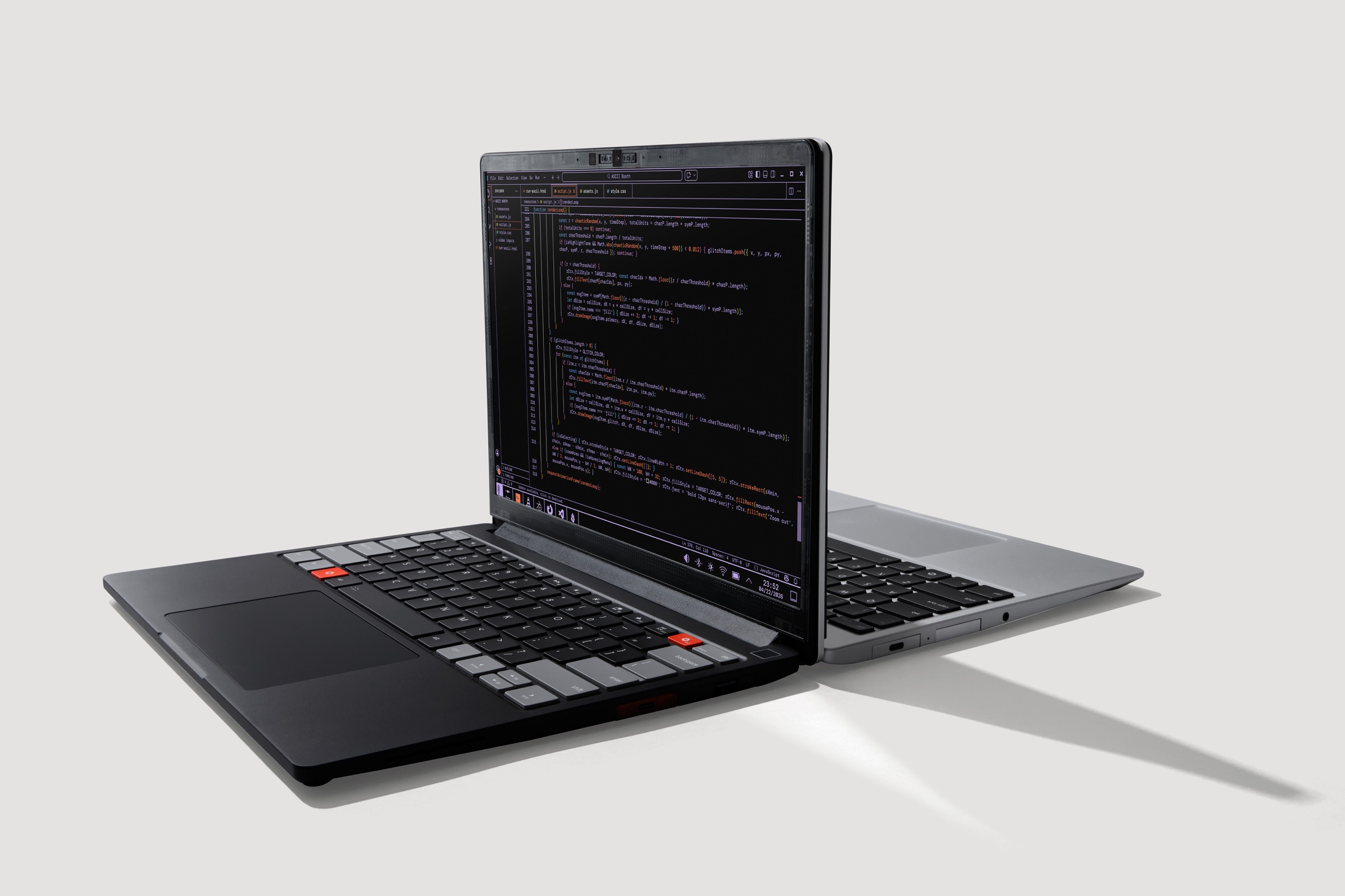
The Framework Laptop 13 Pro and Framework Laptop 13 running Linux. Credit: Framework
The Framework Laptop 13 Pro and Framework Laptop 13 running Linux. Credit: Framework
We’ve seen enough product announcements from Framework at this point that today’s updates feel more or less routine. The biggest new thing is an updated motherboard with Intel’s Core Ultra Series 3 processors that can either be dropped into the existing Framework Laptop 13 or bought as part of the new Framework Laptop 13 Pro. Updated screens, keyboards, and other parts—mostly compatible with Framework’s existing laptops, mostly meant to address specific complaints about, or missing features in, those products—are also available.
But the company has also decided to place more emphasis than usual on its support for Linux.
The company’s teaser site for today’s announcements encouraged users to “follow the white penguin,” a Linux-y reference to The Matrix (1999) (or maybe a Matrix-y reference to Linux’s mascot). Framework has always officially supported various Linux flavors on its systems, but the Laptop 13 Pro will be the first pre-built Laptop 13 that can ship with Linux installed from the factory, and is Framework’s first officially Ubuntu Certified system. Framework CEO Nirav Patel is even trying to position the Laptop 13 Pro as “MacBook Pro for Linux users.”
Last week, we had a chance to talk to Patel about the new products, how Framework is navigating RAM and storage shortages, and why Framework is playing up the Linux angle this time around.
A Linux-forward ecosystem
According to imperfect measuring tools like StatCounter, Linux’s usage share among the general populace hovers somewhere between 3 and 4 percent, the same place where it has been for the past couple of years. But Framework’s products draw a more technically oriented audience.
“We do surveys to figure out what our customers are using on their Framework Laptops,” Patel told Ars. “And on Framework Laptop 13, we actually have slightly more Linux users than Windows users. It’s something like 55/45 [Linux versus Windows] on the 13. It varies on our different products. The [Framework Laptop] 16 is a bit more Windows heavy.”
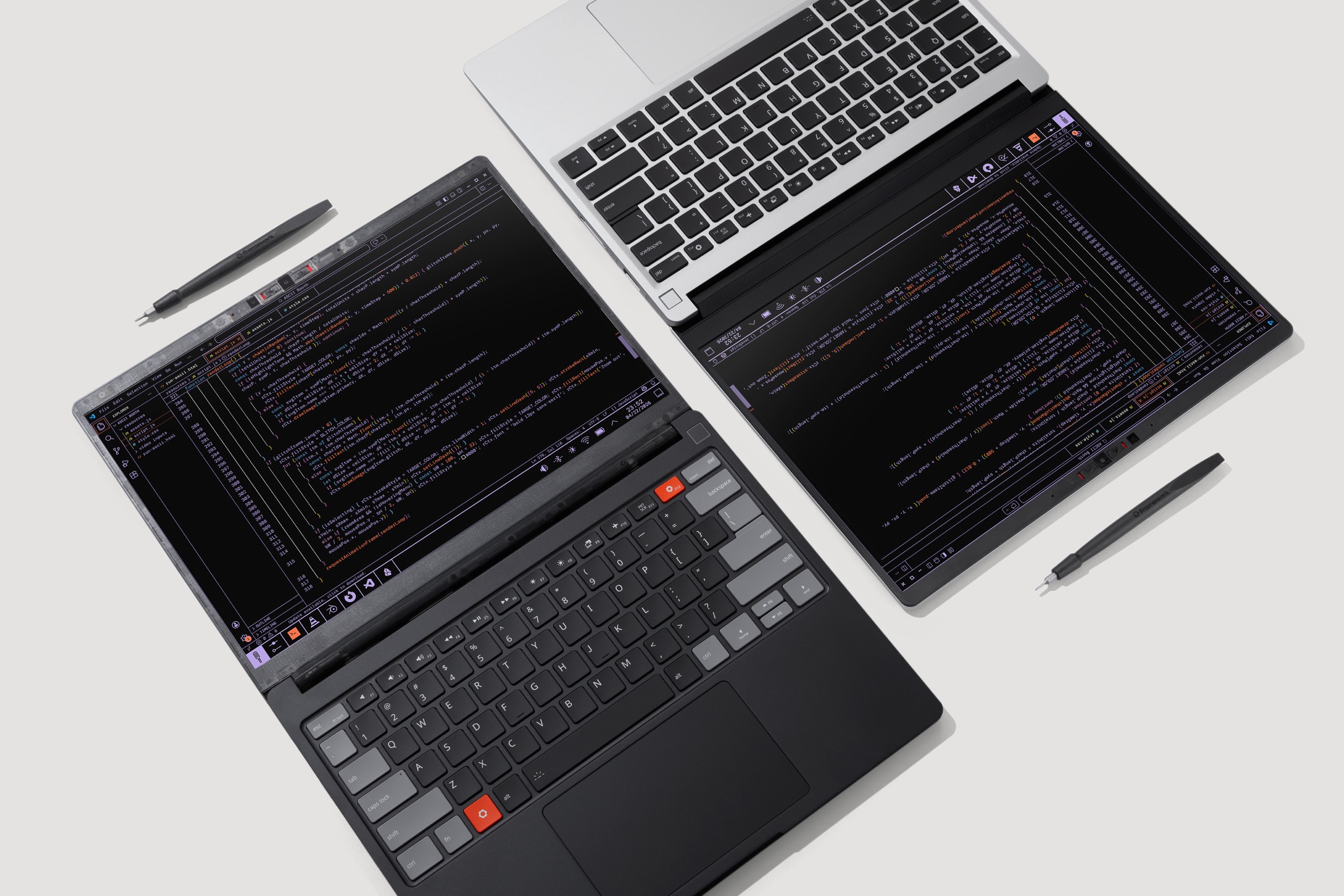
The Framework Laptop 13 Pro and Framework Laptop 13.
Credit: Framework
The Framework Laptop 13 Pro and Framework Laptop 13. Credit: Framework
Framework’s renewed emphasis on Linux comes at a complicated moment for Microsoft, which has spent the past couple of months reassuring users that it really does want Windows to be a good operating system that is pleasant to use. The company has promised to make Windows faster, more reliable, more secure, and less annoying, and is also pumping the brakes at least somewhat on Copilot’s unchecked proliferation throughout PC hardware and software.
That Microsoft feels a need to make these kinds of public commitments does not speak particularly well of Windows’ current reputation, especially among enthusiasts. It’s also happening at the same time as SteamOS and Proton are making it easier to play Windows games on Linux, lowering one barrier that has historically kept many enthusiasts and tinkerers locked into Windows by default.
But Framework isn’t just trying to make Windows users into Linux users—it can sell Framework Laptops either way, after all. The company is also trying to capture Mac users, which was one reason Framework shifted from a trackpad with a physical clicking mechanism to a haptic trackpad like the ones Apple has used in most MacBooks over the past decade.
The haptic trackpad helped save enough room inside the Laptop 13 Pro to fit its bigger battery, Patel told Ars, “but the bigger part was just the user experience and the familiarity around being able to click anywhere, especially for people coming off of MacBook Pros,” he said. “That’s something that they miss today in the Framework Laptop 13, and we wanted to make sure they didn’t have to miss it.”
I was surprised to hear that Framework was attracting enough Mac buyers for this to matter. In many ways, Apple and Framework take completely different approaches to product design and user experience, with Apple prioritizing a more appliance-like, buy-once-and-forget-about-it-until-you-replace-it model, and Framework encouraging a sort of infinitely sustainable Laptop of Theseus approach. But Patel says that those Mac-to-Framework users definitely exist.
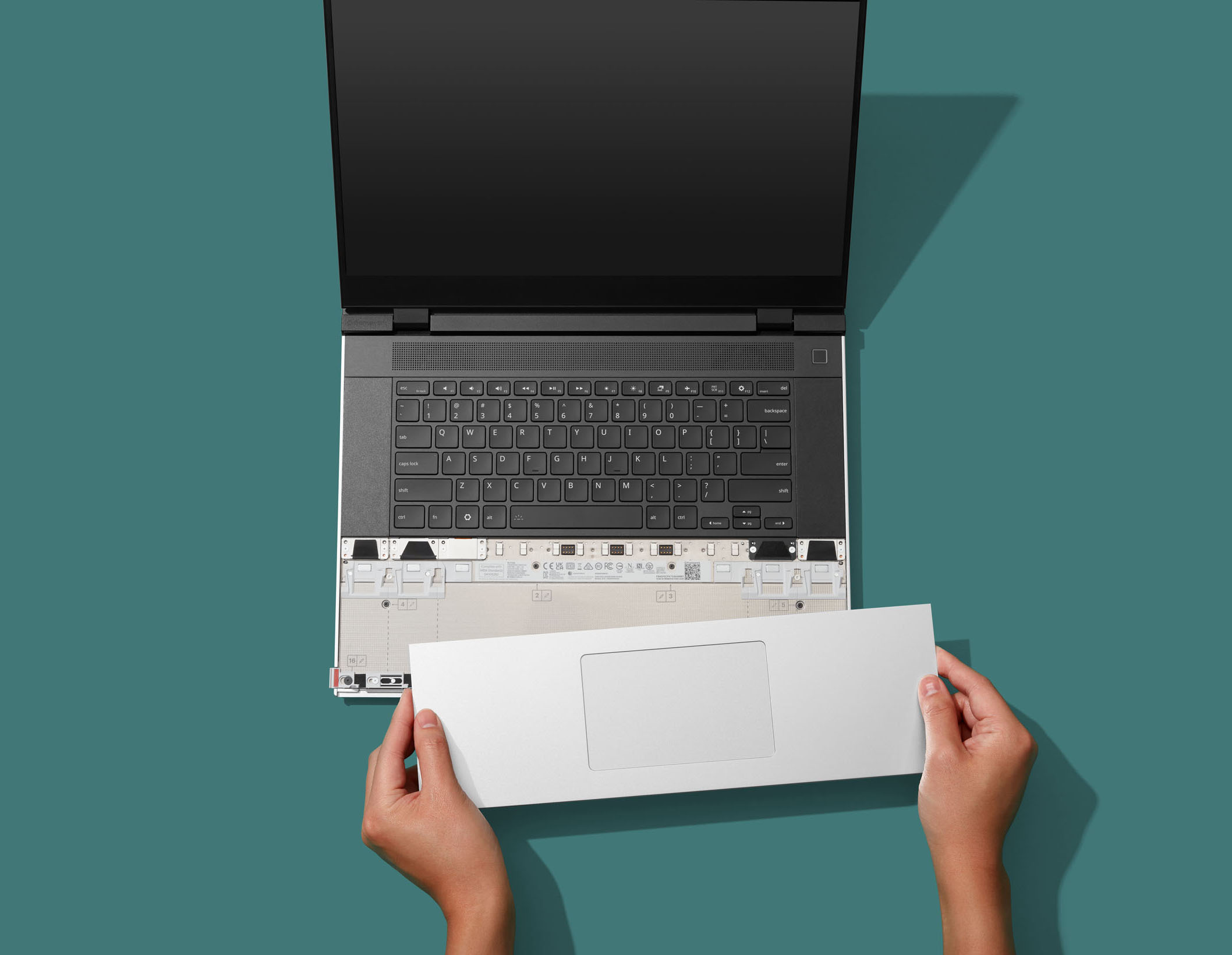
Framework’s new haptic trackpad, available for both the Laptop 13 and Laptop 16, was made at least partly with MacBook users in mind.
Credit: Framework
Framework’s new haptic trackpad, available for both the Laptop 13 and Laptop 16, was made at least partly with MacBook users in mind. Credit: Framework
“Increasingly over the last five years, especially software developers come in because they want Linux and they want it on hardware that supports it as a first-class experience,” Patel told Ars. “And so really a lot of the philosophy behind the [Framework Laptop 13] Pro was ‘let’s build essentially the MacBook Pro for Linux users. Let’s take the software that they want, the distro that they prefer, and then make sure that the hardware experience lives up to what they would expect coming from a MacBook Pro.’”
For a lot of the Intel Mac era, the best way to get a Linux version of the MacBook Pro was to install Linux on an actual MacBook Pro. But that became more difficult as Apple migrated away from Intel toward its own chips; a lot of late-era Intel Mac hardware required Apple’s T2 coprocessor to work, something that is only supported by most Linux distros in a limited sort of way. And the Asahi Linux project, while technically impressive and surprisingly full-featured on M1- and M2-class Macs, has not been able to keep pace with newer Apple Silicon chip generations.
Trying to make a “MacBook Pro for Linux users” is a marketing line, to some extent. Linux will run well on all kinds of high-quality PC hardware, and hundreds of models are officially Ubuntu certified, as the Framework Laptop 13 Pro is. But it’s still a particularly good time to be making that pitch—to try to capture frustrated Windows 11 users, Windows 10 users upset that they’re being forced to upgrade, and people who prefer Mac hardware quality but would prefer to run something other than macOS (or who would like something more repairable and upgradeable).
How Framework is navigating the RAM crisis
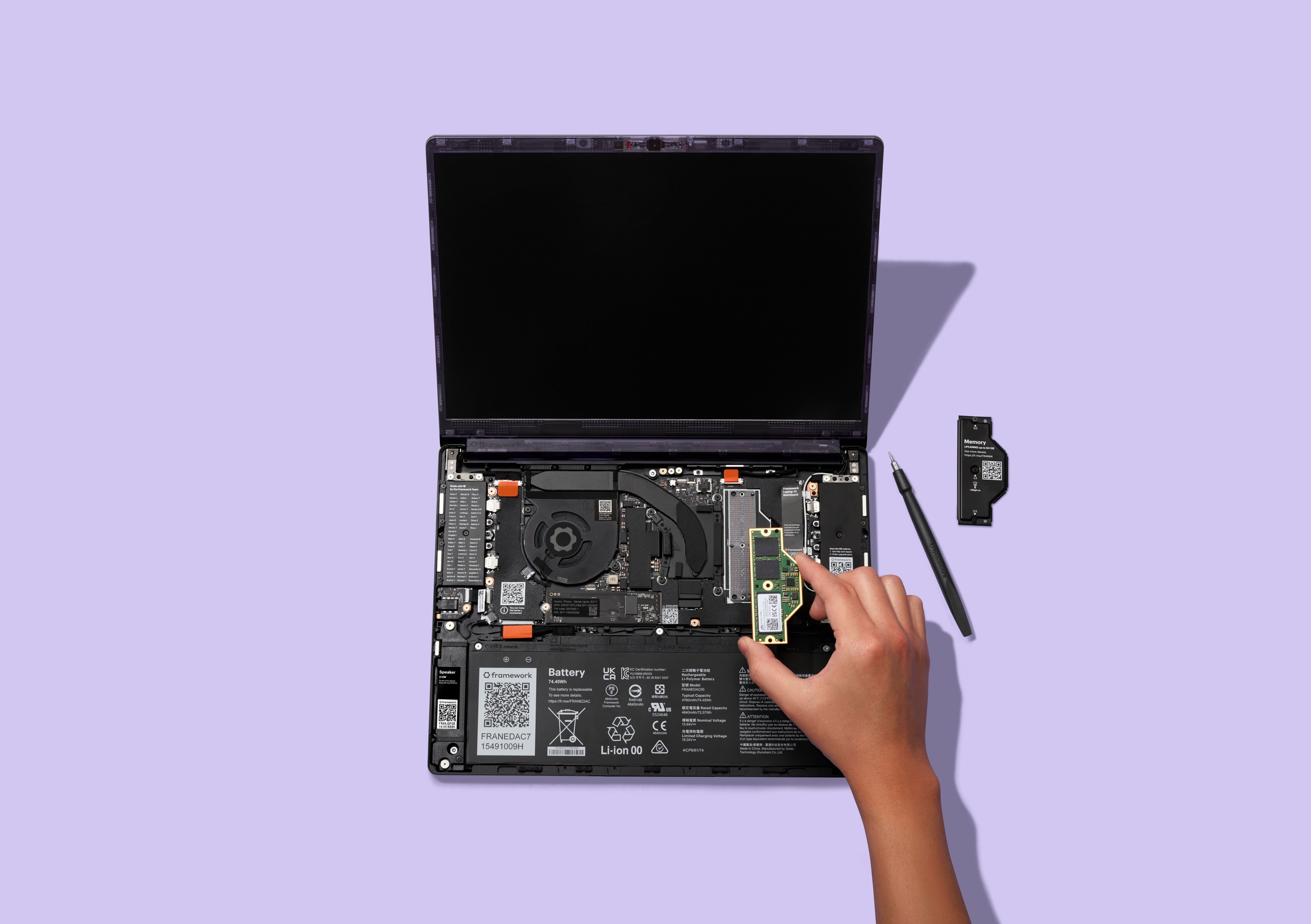
Replacing an LPCAMM2 memory module in the Laptop 13 Pro.
Credit: Framework
Replacing an LPCAMM2 memory module in the Laptop 13 Pro. Credit: Framework
The RAM and storage supply crunch has been particularly tough for small manufacturers to navigate. Just look at Valve, which can’t keep its Steam Deck gaming handheld in stock, and which has been forced to delay its Steam Machine desktop and Steam Frame headset. Ayaneo, a lesser-known company that helped pioneer the modern handheld gaming PC, stopped taking preorders for its NEXT 2 handheld after the cost to manufacture the hardware rose to nearly “twice the price we originally set.”
As a smaller independent PC maker, you’d expect Framework to be subject to some of the same problems. But at least according to Patel, the shortage has been difficult, but not existential.
“We’re in an environment now where everyone’s got to pay,” Patel told Ars. “No one’s getting preferential pricing, really. But now we’re operating at a scale five years in where we can go directly to the module makers, the distributors, and even all the way to Micron… and get allocation. If I had started Framework a few years later, actually, it may be the case that we’d be boxed out entirely. But we have enough established history, we’re doing enough volume that we’re able to go and get that supply.”
Though buyers may be reassured that Framework isn’t in danger of being driven out of business by RAM and storage prices, the company is still passing many of those increases on to its users by necessity. Framework has been changing its prices on a near-monthly basis since late last year, and that may continue for the foreseeable future.
“Every month we take in our latest cost data, we look at our inventory position, we basically take a weighted average of the new memory purchases we’re making that we’re bringing into inventory and the current inventory that we have that may have been at different historical prices, and then take that weighted average to set the new pricing,” Patel told Ars. “If pricing only changed by a few percent, we’ll just absorb it and keep the price stable to avoid having to change everything. But once it passes some threshold, then we’ll go and update that pricing.”
Although price increases may be a necessary evil for now, Patel at least wants users to feel like they understand why they’re going up.
“We update our blog posts. We do social media messaging to make sure that people know that we did update that price and why we updated it,” Patel told Ars. “Our philosophy is, let’s do everything we can to make memory and storage available so people can still buy and build their computers. And then let’s be transparent about what’s driving the pricing behind it.”

Andrew is a Senior Technology Reporter at Ars Technica, with a focus on consumer tech including computer hardware and in-depth reviews of operating systems like Windows and macOS. Andrew lives in Philadelphia and co-hosts a weekly book podcast called Overdue.