


惯性聚合 高效追踪和阅读你感兴趣的博客、新闻、科技资讯
阅读原文 在惯性聚合中打开

推荐订阅源

U
Unit 42
Blog — PlanetScale
Blog — PlanetScale
H
Help Net Security
The GitHub Blog
The GitHub Blog
博客园 - Franky
酷 壳 – CoolShell
酷 壳 – CoolShell
Recent Announcements
量子位
aimingoo的专栏
aimingoo的专栏
大猫的无限游戏
大猫的无限游戏
博客园 - 叶小钗
Microsoft Azure Blog
Martin Fowler
Martin Fowler
Cyber Security Advisories - MS-ISAC
奇客Solidot–传递最新科技情报
奇客Solidot–传递最新科技情报
A
About on SuperTechFans
T
Tailwind CSS Blog
V
V2EX
OSCHINA 社区最新新闻
OSCHINA 社区最新新闻
B
Blog
钛媒体:引领未来商业与生活新知
钛媒体:引领未来商业与生活新知
S
SegmentFault 最新的问题
G
Google Developers Blog
M
MIT News - Artificial intelligence

Ars Technica - All content

Pentagon wants $54B for drones, more than most nations’ military budgets Mozilla: Anthropic's Mythos found 271 security vulnerabilities in Firefox 150 Supreme Court arguments make it clear that FCC fines are "nonbinding" Silo S3 teaser hints at the wasteland's origins Framework's CEO on the RAM crisis and creating a "MacBook Pro for Linux users" Florida probes ChatGPT role in mass shooting. OpenAI says bot "not responsible." Report: Meta will train AI agents by tracking employees' mouse, keyboard use Microsoft removes Call of Duty from Game Pass, lowers subscription pricing Framework Laptop 13 Pro is a major overhaul for the modular, upgradeable laptop Framework Laptop 16 upgrades make it look less like an unfinished prototype Internal emails show how Amazon raises prices across the Internet, lawsuit says Anthropic gets $5B investment from Amazon, will use it to buy Amazon chips CATL's new LFP battery can charge from 10 to 98% in less than 7 minutes AMD Ryzen 9 9950X3D2 Dual Edition review: Tons of cache for tons of dollars What's the deal with spacesuits for the Moon? Will they be ready in time? Loneliness in older adults can often lead to memory impairment Contrary to popular superstition, AES 128 is just fine in a post-quantum world Pentagon pulls the plug on one of the military's most troubled space programs John Ternus will replace Tim Cook as Apple CEO Blue Origin's rocket reuse achievement marred by upper stage failure I’ve fired one of America’s most powerful lasers—here’s what a shot day looks like Great white sharks are overheating US-sanctioned currency exchange says $15 million heist done by "unfriendly states" Man with @ihackedthegovernment Instagram account tells judge, “I made a mistake" Trump picks qualified, normal health leader to head CDC; experts still cautious $25,000 buys plenty of used EVs: Here are some options Satellite and drone images reveal big delays in US data center construction Amazon won’t release Fire Sticks that support sideloading anymore Ridley Scott's post-apocalyptic The Dog Stars drops first trailer Artemis II pilot talks about what it was really like to fly and land in Orion
With new patch design, the Crew-13 astronauts clearly are...
Robert Pearlman · 2026-04-28 · via Ars Technica - All content

It comes after 12

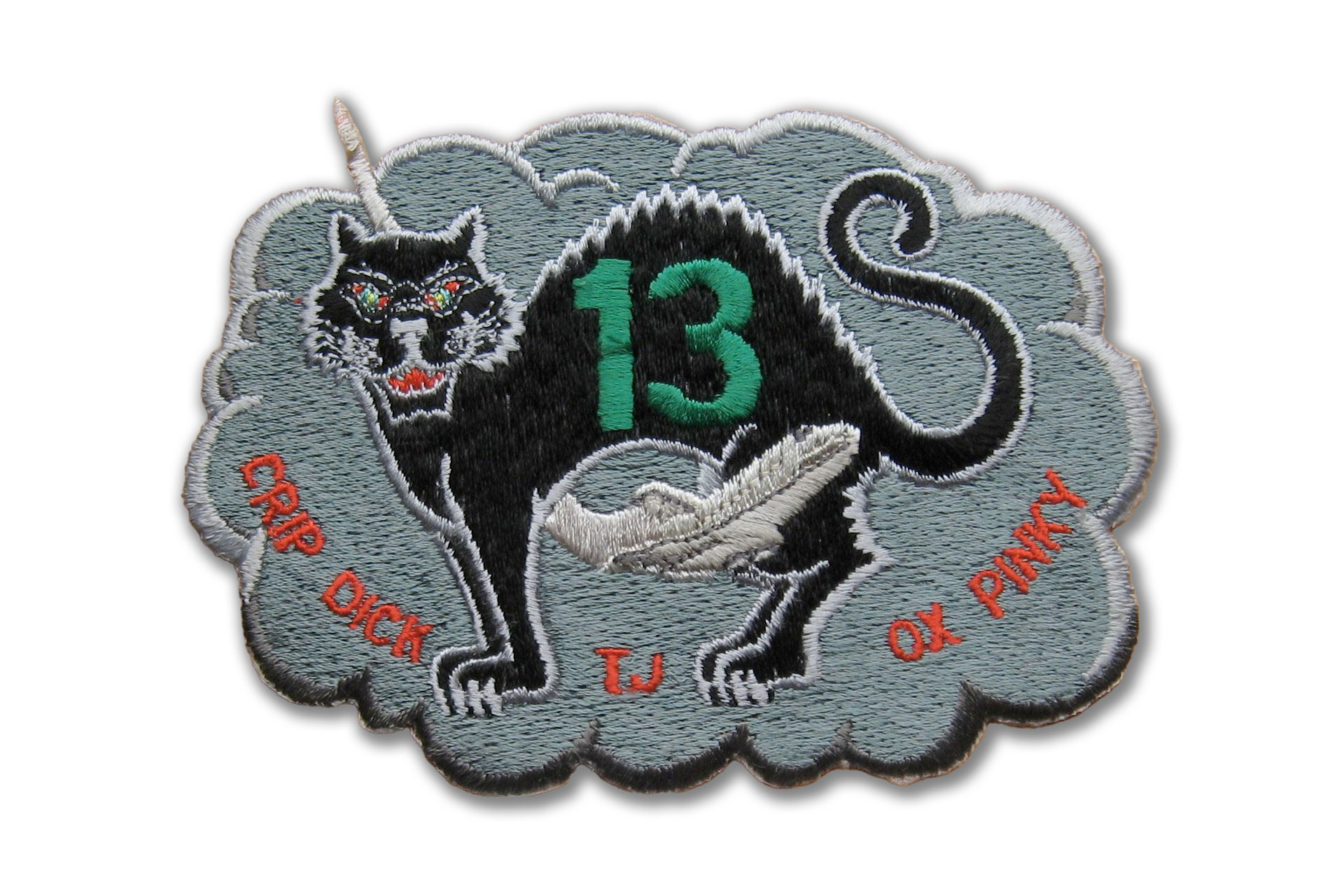
The STS-13 crew, redesignated STS-41-C, created this patch that highlights superstitions and triskaidekaphobia.

The STS-13 crew, redesignated STS-41-C, created this patch that highlights superstitions and triskaidekaphobia. Credit: collectSPACE.com

Prior to Crew-13, NASA managers leaned into the superstition and devised a less intuitive but more data-driven designation that went into effect after the ninth space shuttle mission. Hence, what would have been STS-13 became STS-41-C, where the 4 was the fiscal year (1984), the 1 was the launch site (Kennedy Space Center in Florida), and C was the order of launch (C was the third planned flight of the year).

“I mentioned it was 41-C that originally was STS-13, and my friend Jim Beggs, who was the administrator of NASA, had triskaidekaphobia, and he said, ‘There’s not going to be [another] Apollo 13 or a Shuttle 13, so come up with a new numbering system.’ So we did come up with this complex system for numbering the shuttles during that period of time,” said Bob Crippen, STS-41C commander, in a NASA oral history interview.

NASA later reverted to a straightforward numerical designation after the loss of the space shuttle Challenger and the STS-51L crew in January 1986. As such, there was an STS-113, which launched aboard space shuttle Endeavour in 2002, but not before having to make late crew changes due to medical issues. The last time that NASA faced the same decision was on Apollo 13.

“We were joking a lot about being number 113,” commander Ken Bowersox told the press at the time. He added that to play it safe, the mission patch used Roman numerals (CXIII).

On board the International Space Station, the 13th crewed expedition began on April 1, 2006, 10 days before the 36th anniversary of the Apollo 13 launch.

The Russian space program launched six crewed missions designated as number 13. At least one of those times, the head of the country’s space agency suggested it be skipped.

“Many people have superstitious beliefs,” said Roscosmos director Anatoly Perminov, according to his press secretary, in 2008. “That’s why I think that it is a good idea to change the number of the next spaceship.”

Despite the concern, Soyuz TMA-13 went forward as planned. As did Soyuz 13, Soyuz T-13, and Soyuz TM-13 before it.

Soyuz TMA-13M launched Reid Wiseman, and Soyuz MS-13 landed with Christina Koch. Both US astronauts went on to fly aboard NASA’s Artemis II mission earlier this month, a crewed fly-by of the Moon that broke the distance record set by the Apollo 13 astronauts.