nice hypothesis you got there, shame if something happened to it…
For decades, scientists have concentrated on what now looks to be a blind alley.
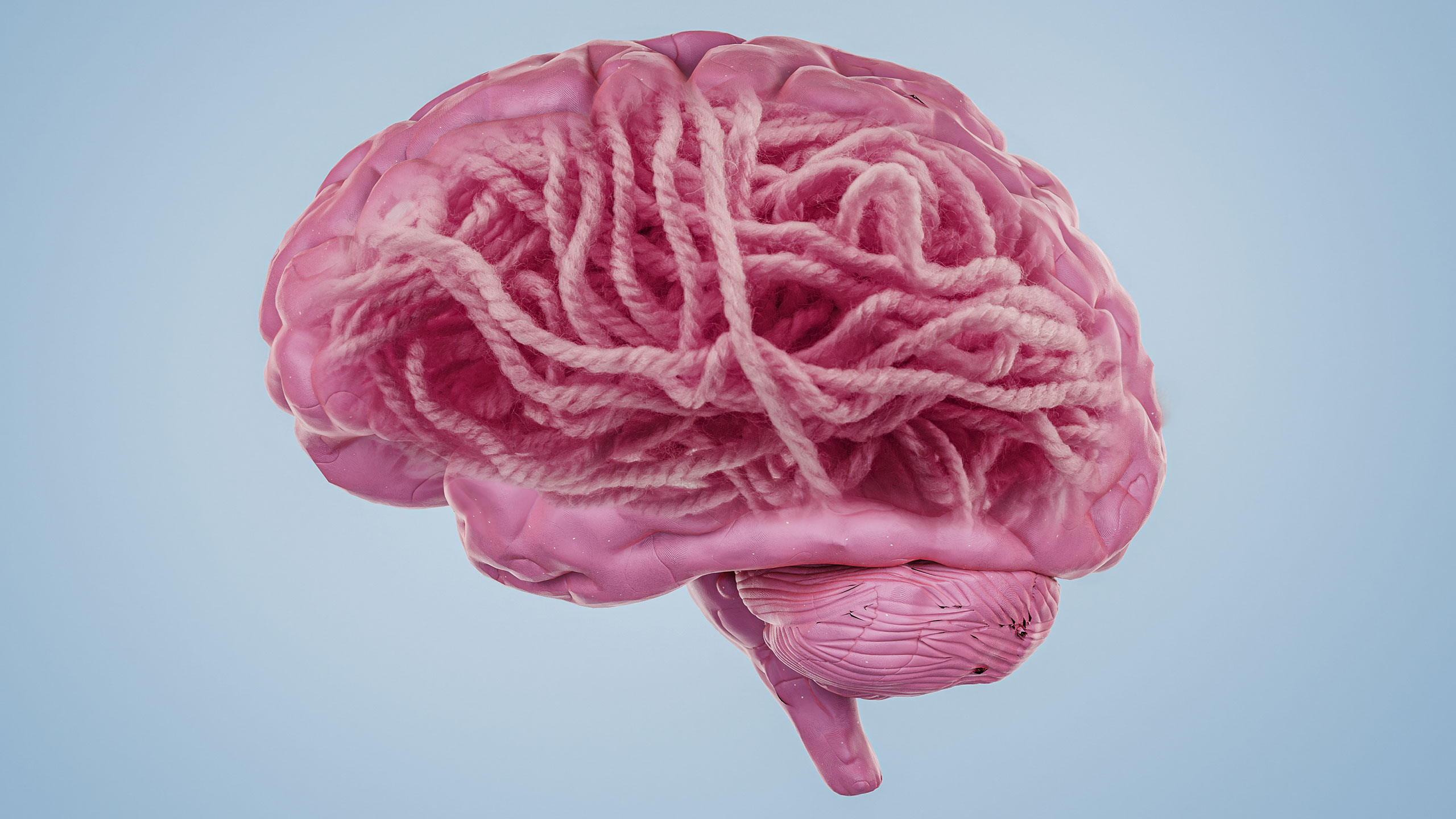
Credit: Aurich Lawson | Getty Images
Credit: Aurich Lawson | Getty Images
At the end of last month, a scientific journal pulled a research paper on Alzheimer’s disease.
The retraction came from Neurobiology of Aging, which removed a 2011 paper claiming to show that a version of a protein called amyloid-β was responsible for memory loss in Alzheimer’s disease. On its own, that might not seem notable; bad papers can make it through peer review and are only caught after publication.
But this wasn’t an isolated case. Over the past few years, multiple studies arguing that amyloid-β is the central driver of Alzheimer’s disease have been retracted. Some scientists have even been indicted for fraud over the issue. All the while, none of the drugs targeting this protein and its pathway have had any real clinical effect.
Why does this keep happening?
Plaques and tangles
The medical condition we currently call Alzheimer’s disease was first identified in 1906, after a neuropathologist named Alois Alzheimer examined brain tissue from the autopsy of Auguste Deter, a dementia patient he had been treating. Deter was just 55 when she died, much younger than most dementia patients. Alzheimer noted that her brain tissue contained plaques, which had previously been seen in other dementia patients, as well as tangles of nerve fibers, which had not.
For the next 80 years, that was about as much as we knew about this condition that robs sufferers of their memories, skills, and personalities. And until very recently, it was only possible to diagnose it post-mortem by examining the brain for those plaques and tangles. The advent of PET scanners and the discovery of biomarkers in blood have changed that.
It wasn’t until 1984 that we identified amyloid-β accumulating in the plaques of people with Alzheimer’s. Scientists weren’t really sure what amyloid-β did, but another study found plenty of it in the brains of people with Down syndrome, who often suffer from dementia later in life. In fact, the gene that encodes amyloid-β—or more accurately, for an upstream molecule called amyloid precursor protein—is found on chromosome 21, and the signature of Down syndrome is an extra copy of that. Raising suspicions further, in 1987, patients with a familial case of Alzheimer’s were found to have a mutation in their amyloid protein precursor gene.
Something was causing amyloid-β to be cut off from its precursor, then clump together, in people with dementia. If only we could stop it from aggregating or remove the aggregates from the brain, we could stop the disease, the conventional wisdom held.
In 2006, this idea looked even better, as a paper was published in Nature showing that memory loss was associated with a specific form of amyloid-β buildup outside of neurons.
Stay on target
A potential therapeutic target gave scientists something to aim for. As with so many other poorly understood, complex diseases, they set about studying it in mice. But like so many of those other complex diseases that afflict humans, mice don’t naturally get Alzheimer’s. They do if you insert a mutated copy of the human APP gene into their genome, however. Armed with this early mouse model, scientists got to work.
In 1999, Elan Pharmaceuticals created a vaccine to a particular part of amyloid-β and then showed that mice would clear plaques from their brains after treatment with the vaccine. Better still, it worked whether the vaccine was given to very young mice, before the plaques could form, or to older mice where the plaques were already present.
Vaccines work by prompting the body to produce antibodies against whatever the vaccine recognizes. So a few years later, Elan went on to show that anti-amyloid antibodies also cleared plaques in the transgenic mice’s brains when given directly.
But there’s many a slip between mouse and man. Elan tried its vaccine in human patients suffering mild to moderate Alzheimer’s disease but had to suspend the trial of 360 patients after a number developed brain inflammation. While Elan’s vaccine didn’t go anywhere, other pharmaceutical companies and biotechs were still on the case.
Trial after trial failed to arrest or reverse the disease, no matter the approach. Targeting different parts of the amyloid-β pathway also created side effects aplenty, some of them life-threatening or fatal. Regardless, amyloid-β remained the preferred target. Eventually, in 2021, the Food and Drug Administration approved an antibody called aducanumab, made by Biogen.
To call the approval controversial would be an understatement. Aducanumab had failed not one but two large double-blind, placebo-controlled phase III trials in 2019. Eventually, its makers scoured the data sets a little more, claiming to find a small reduction in amyloid-β plaque size and a small cognitive improvement in a particular group of participants.
Many scientists were outraged by the approval, and their outrage looked justified once we saw how the drug would be marketed: with a cognitive test that no one could pass. A congressional inquiry into aducanumab’s approval found it was “rife with irregularities.” But at $65,000 per patient per year, the drug represented a potential $18 billion-a-year revenue stream for Biogen.
Aducanumab was approved by the FDA in June 2021. But by early July, the regulator had already narrowed the set of people it would allow the drug to be given to, restricting it to just patients with a mild form of the disease. Biogen ended up losing money on it and removed the drug from the market in January 2024.
But only so it could concentrate on another amyloid-β-targeting antibody, this one developed with a biotech company called Eisai. This therapy, called lecanemab, was half the price of aducanumab, at $26,500 per year, and it got the nod from the FDA in 2023. There were plenty of questions about the approval because, yet again, there was very little data indicating that patients were getting any better. And there were still nasty side effects; three patients died from brain swelling and hemorrhaging.
Another antibody targeting amyloid-β, called donanemab, made headlines in 2023 when its maker, Eli Lilly, published trial data that claimed to slow the progression of the disease “by about 35 percent in the early stages.” Again, this came with the risk of severe side effects like brain swelling and bleeding. Those side effects may have been the only way to tell someone was on the drug, given that it provided extremely mild cognitive benefits.
Surely we’ve had some other ideas?
We’re now more than 40 years on from the identification of amyloid-β as the bad stuff in plaques and 30 years from being able to clear amyloid-β from the brains of mice (and, more recently, humans). Yet doing that is more likely to make an Alzheimer’s patient’s brain bleed than it is to restore cognitive function or even meaningfully slow its decline. But it’s not like we haven’t had other ideas.
Take inflammation, for instance. Brains aren’t just made of neurons; they’re surrounded by glial cells, some of which envelop the neuronal junctions. Some of these glia are similar in ways to macrophages, a kind of immune cell that goes a little haywire in heart disease and some other conditions. In 2008, a small-scale study showed that the arthritis drug etanercept, which inhibits an inflammatory cytokine called TNF-α, caused a rapid improvement in cognitive function for Alzheimer’s patients.
The only hitch? The drug needed to be infused directly into the spinal column. A larger trial that used etanercept injections under the skin didn’t run into any of the horrible side effects of the amyloid-β antibodies, but it also failed to show any real clinical benefit.
To others in the scientific community, the trigger for that inflammation is likely to be infection. Our immune system uses cytokines like TNF-α to fight infections, in addition to other chemicals like peroxynitrite, which causes oxidative stress, all of which is associated with inflammation.
Neuropathologists have identified viral infections in plaques, and a group from Tufts recently proposed a mechanism by which herpes simplex virus-1 could be driving the disease. But many other viruses have also been implicated; data-mining samples from biobanks in the UK and Finland found infections from several different viruses were associated with an increased risk of Alzheimer’s disease (as well as other neurological disorders), with the most striking correlation being viral encephalitis.
Even influenza infection was associated with a five-fold increase in the risk of developing Alzheimer’s. But again, the data is equivocal and a little confusing. In that study, the risk of developing Alzheimer’s was greatest at one year after infection and then decreased over time. But we know that the disease takes decades to progress.
Bacterial infections have also seen scrutiny. Porphyromonas gingivalis is an anaerobic bacterium that’s one of the main culprits of gum disease, and it has been linked to a range of common diseases, including things like atherosclerosis and—you guessed it—Alzheimer’s. The idea is that p. gingivalis enters the bloodstream through abrasions in the mouth and then reaches the brain; the response causes the plaques and tangles to form.
Still other research has suggested a role for our gut microbiome, the vast collection of microbes that help us digest food—more recently, we’ve discovered they do so, so much more. Here, tantalizingly, there are other hints of therapeutic targets. For example, foods that reduce inflammation, such as those high in fiber or omega-3 fatty acids, may be neuroprotective, in addition to being good for your heart. And a variant of the APOE4 gene that results in high levels of LDL cholesterol is also associated with an increased risk of Alzheimer’s.
The problem with any of these hypotheses is that many, many more people will be infected with a virus or bacteria that has been implicated in Alzheimer’s than will ever develop the disease. Two-thirds of people under 50 have HSV-1, for example, and they won’t all get Alzheimer’s. The same goes for people with gum disease or an influenza infection. Perhaps the disease requires multiple different pathogens to be sparked?
More likely, each of these can insult the brain and trigger plaque formation, but only in combination with other factors. Recently, a role for lithium deficiency has looked rather compelling.
The Amyloid Mafia
We would almost certainly know a lot more about those other potential causes had it not been for the so-called Amyloid Mafia. Scientists aren’t immune to groupthink, and the people responsible for deciding who got research grants and who didn’t have not been at all receptive to proposals that investigate non-amyloid mechanisms.
“You were just lucky when you weren’t beaten up by the amyloid-β or tau people if you would mention immunology,” said Michael Heneka, a neuroinflammation specialist interviewed by Nature in 2023. (Tau is another Alzheimer ’s-associated protein.)
Speaking to American Public Media, the former director of Alzheimer’s research at the National Institute of Aging said, “It became gradually an infallible belief system. So everybody felt obligated to pay homage to the idea without questioning. And that’s not very healthy for science when scientists… accept an idea as infallible. That’s when you run into problems.”
To make matters worse, it turned out that much of that confidence in amyloid-β as the one true cause was built on fake data.
That landmark 2006 Nature paper that claimed to show that a specific form of amyloid-β was the culprit causing the disease? It was retracted in 2024 after it emerged that the authors had faked some of the data, copy-pasting images of protein detections. In another case, a scientist at City University of New York was indicted last year for falsifying data that helped support the ideas behind an Alzheimer’s drug being developed by Cassava Sciences. (For a more comprehensive look at the Amyloid Mafia, check out Charles Piller’s work.) Sadly, this kind of scientific misconduct is more common than we’d like and can be hard to detect before publication.
Those FDA drug approvals have also been tainted. In addition to the aforementioned congressional investigation that found irregularities, the head of FDA’s neuroscience office was forced to step down in 2023 after it was found that he had an inappropriately close relationship with Biogen.
Despite this litany of clinical failures and research misconduct, it would be a stretch to say that the amyloid hypothesis is dead. Only one of the five FDA-approved therapies is independent of the amyloid pathway, and while work is conducted on other areas, amyloid-β research remains the lion’s share.
Jonathan is the Automotive Editor at Ars Technica. He has a BSc and PhD in Pharmacology. In 2014 he decided to indulge his lifelong passion for the car by leaving the National Human Genome Research Institute and launching Ars Technica's automotive coverage. He lives in Washington, DC.