That just happened
“It’s a special thing to be human, and it’s a special thing to be on planet Earth.”
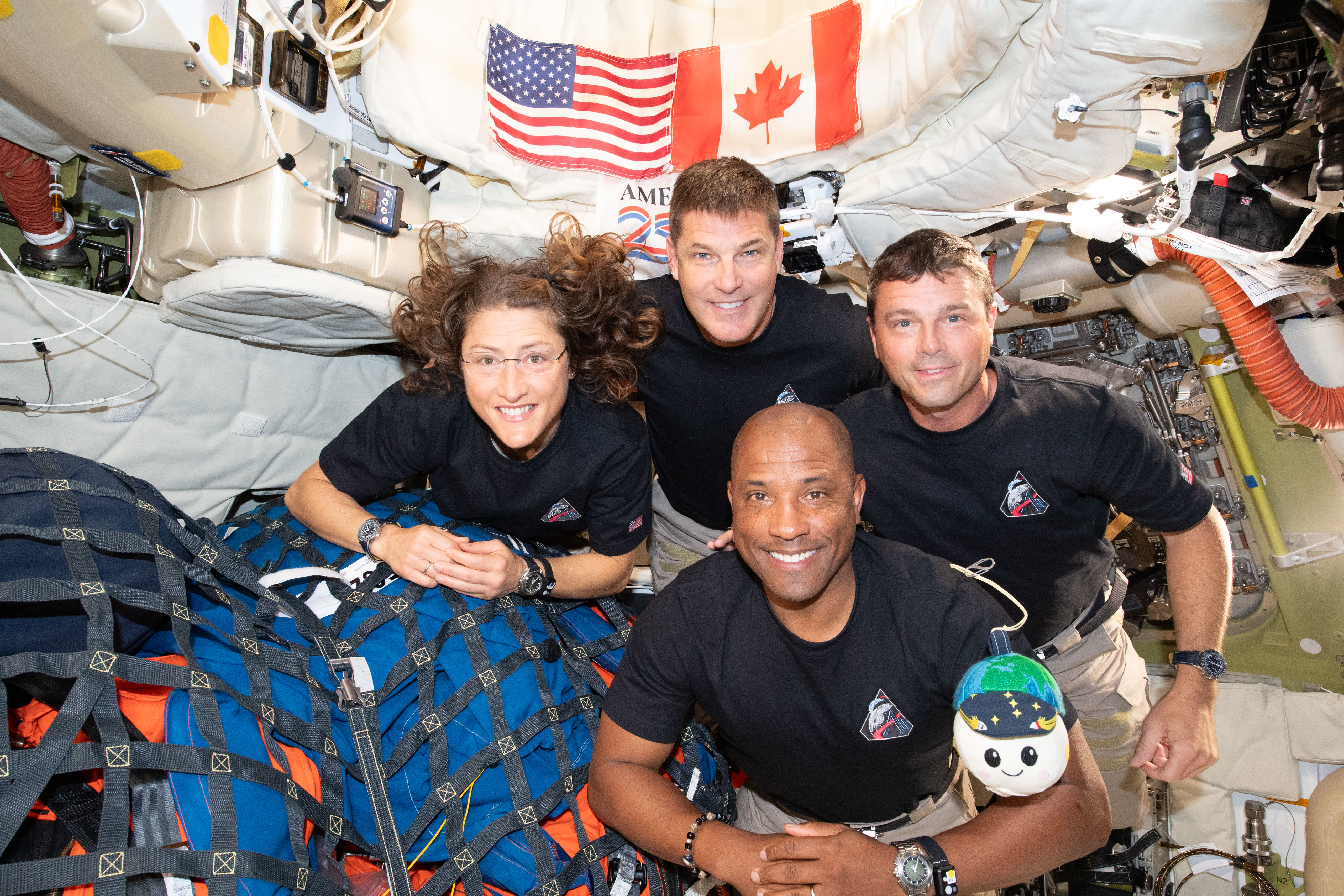
Christina Koch, Jeremy Hansen, Victor Glover, and Reid Wiseman (left to right) are joined by their mission mascot, a plushie toy named "Rise," inside the Orion spacecraft. Credit: NASA
Christina Koch, Jeremy Hansen, Victor Glover, and Reid Wiseman (left to right) are joined by their mission mascot, a plushie toy named "Rise," inside the Orion spacecraft. Credit: NASA
HOUSTON—Their mission is complete. The four people who flew beyond the Moon on NASA’s Artemis II mission are back home in Houston with their families. But the lessons from Artemis II are just beginning to be told.
There are tangible, objective takeaways from the nine-day mission. How did NASA’s Space Launch System rocket perform? Nearly perfectly. Was the Orion spacecraft up to the job of flying to the Moon and back? Absolutely. Will engineers need to make any changes before the next Artemis mission? Yes, and that’s not terribly surprising for a program that, 20 years in, has just flown a crew to space for the first time.
Ars has covered the technical lessons from Artemis II, such as hydrogen leaks on the launch pad, helium leaks in space, and a toilet that wasn’t always available for No. 1.
But there’s something else that must be said. NASA struck gold when it selected the astronauts to fly on the Artemis II mission. NASA’s opaque formula for picking space crews worked three years ago when Reid Wiseman, Victor Glover, Christina Koch, and Jeremy Hansen strode across the stage inside Hangar 135 at Ellington Field. It was there that the agency held an extravagant event to announce the crew for Artemis II, complete with VIPs, spotlights, and an elaborate stage setting flanked by a supersonic jet trainer.
Three years and eight days later, Wiseman, Glover, Koch, and Hansen returned to Hangar 135 on Saturday afternoon with the same enthusiasm and excitement. But they arrived with an entirely different perspective, having wrapped up their circumlunar journey less than 24 hours earlier.
NASA again set the stage to welcome the Artemis II astronauts back to their home base in Houston. The scene wasn’t quite as glossy as NASA’s crew announcement in 2023, and it didn’t need to be. This event had more gravitas. NASA let the achievement make the noise.
The four astronauts were reunited with their families moments before the homecoming ceremony Saturday. They splashed down in the Pacific Ocean off the coast of Southern California on Friday evening, spent the night on a Navy ship, then flew to San Diego by helicopter to catch a NASA business jet for the trip back to Houston.
They had traveled more than 252,000 miles into space, more than 4,000 miles beyond the Moon, farther than any human has ventured from Earth in history. Their experience was still fresh when they took the stage in Houston.
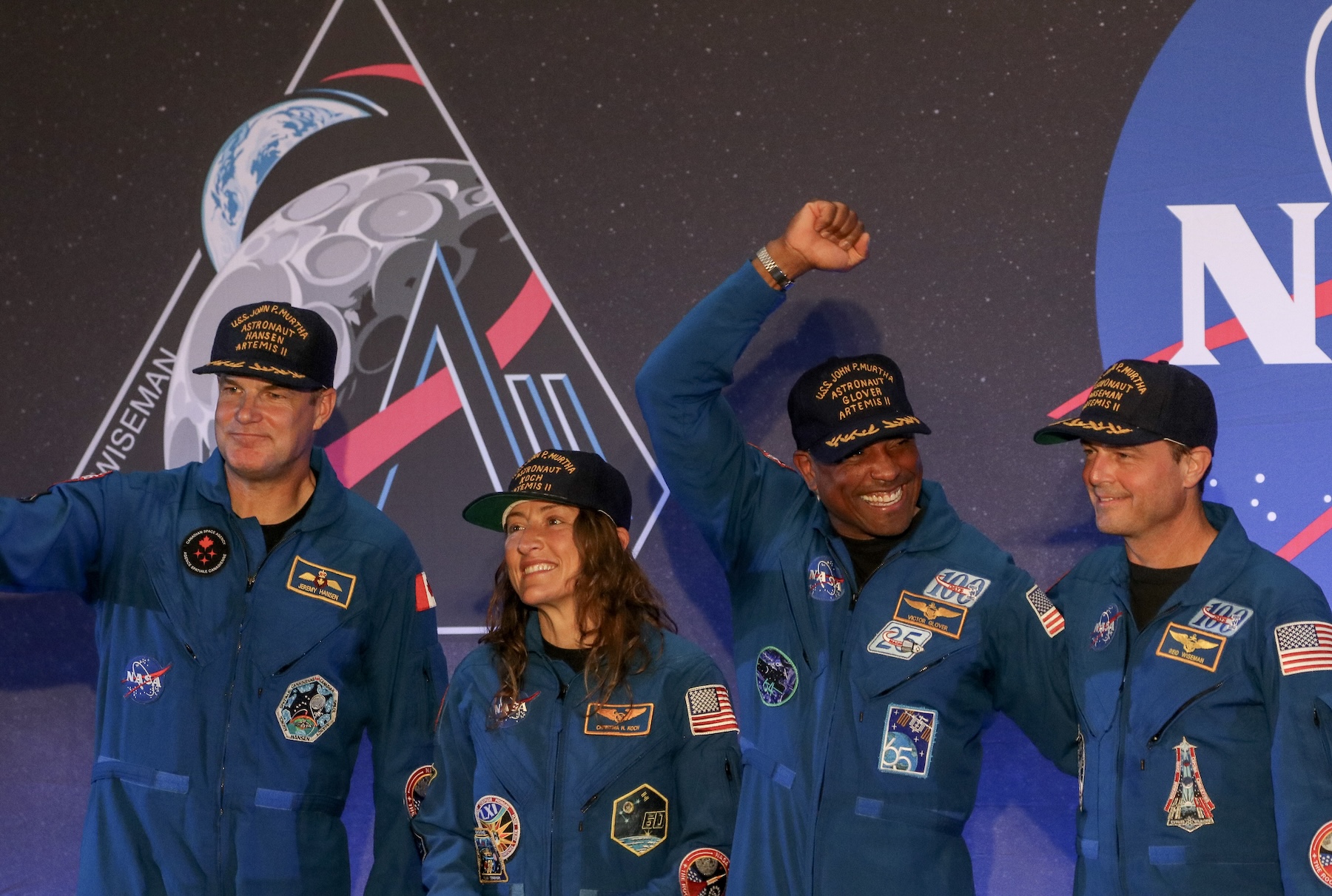
Jeremy Hansen, Christina Koch, Victor Glover, and Reid Wiseman return to Houston for a reunion with their families.
Credit: Stephen Clark/Ars Technica
Jeremy Hansen, Christina Koch, Victor Glover, and Reid Wiseman return to Houston for a reunion with their families. Credit: Stephen Clark/Ars Technica
The eternal allure of exploration
Wiseman, the mission commander, is not usually at a loss for words. He was on Saturday, though. “I have absolutely no idea what to say,” he said. “Twenty-four hours ago, the Earth was that big out the window and we were doing Mach 39, and here we are back… at home.”
All four wore their emotions back to Ellington Field. Their preflight notions were replaced by the reality of their experience. They no longer have to answer pesky media questions about what they expect to think or feel when they reach the Moon. Now, we all want to know what it was actually like. We’re just starting to get some answers.
“This was not easy,” Wiseman said. “Being 200,000-plus miles away from home, before you launch, it feels like it’s the greatest dream on Earth, and when you’re out there, you just want to get back to your families and your friends. It’s a special thing to be human, and it’s a special thing to be on planet Earth.”
I am part of the estimated three-quarters of the human population who were not alive or too young to remember the Apollo Moon missions of the late 1960s and early 1970s. I became a space enthusiast, and then a space reporter, by following the Space Shuttle program.
This job has the perk of letting me meet some extraordinary people and witnessing history. I was there when NASA announced the Artemis II crew three years ago, interviewed the astronauts and numerous members of their support team, and watched the explorers leave port on April 1 at Kennedy Space Center in Florida.

The Artemis II astronauts depart their crew quarters at NASA’s Kennedy Space Center on April 1.
Credit: Stephen Clark/Ars Technica
The Artemis II astronauts depart their crew quarters at NASA’s Kennedy Space Center on April 1. Credit: Stephen Clark/Ars Technica
Seeing the astronauts leave their crew quarters at Kennedy, I thought of the Apollo documentaries I watched as a child. But the sense of history was soon overwhelmed by the warmth of watching as each crew member said goodbye to their loved ones before boarding a ride to carry them to their rocket. The grandeur of the moment was immediately replaced with something relatable for any living, breathing human being.
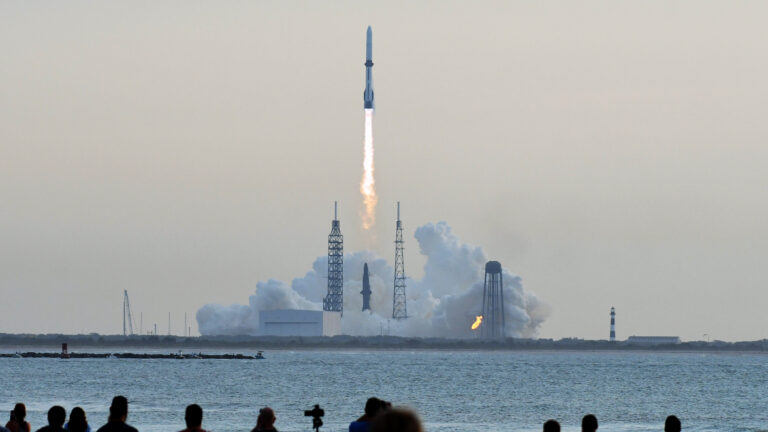
The launch was a memorable visual spectacle. I’ve seen countless rockets take off before, dispatching missions to destinations like Mars, Jupiter, Pluto, and beyond, thousands of times farther than Artemis II’s maximum distance. The difference this time, again, was the humanity on board.
Perhaps because I wasn’t alive during Apollo, part of me has often gravitated to robotic space missions. I identified with spacecraft like Voyager, Cassini, New Horizons, and the rovers traversing Mars as examples of real exploration. It was still possible to connect crewed platforms in low-Earth orbit, like the International Space Station, with the idea of exploring through the attainment of knowledge. With more than 25 years of uninterrupted crewed operations, the ISS has taught NASA and its international partners how to live and work in space and paved the way for the establishment of a permanent base on the Moon.
But it was easy to connect the innate drive to explore with the excitement of seeing new landscapes on Mars, the ghostly plumes of Enceladus, and the heart of Pluto. These were new worlds revealed for the first time, and each discovery sparked a bevy of new questions.
Artemis II struck the same vein, revealing things unseen by human eyes before. Like those missions far out in the Solar System, this was exploration in action. But seeing and hearing what the Artemis II astronauts saw added another dimension. It scratched an itch that a robot can’t reach. Here were human beings, people I’ve met and people you might someday meet, going through an entirely new experience.
This is not to say that NASA should withdraw from robotic exploration. Without these machines, we would have had to wait generations to see the things we’ve seen on Mars and untold lifetimes to know what’s lurking deeper into the Solar System. NASA is preparing to launch a robotic rotorcraft to Saturn’s moon Titan in 2028. If you’re a fan of exploration, the prospect of flying a drone through Titan’s hazy, methane-rich atmosphere nearly a billion miles from Earth should amp you up.
This is about all of us
Sure, Artemis II didn’t land on the Moon. That will come on a future Artemis flight. But these four astronauts ventured to greater distances than Apollo and saw parts of the far side of the Moon hidden from view during those missions more than 50 years ago. Modern technology provided new opportunities for the astronauts to share their views with the world—from their view, just a fragile blue marble suspended in a cosmic void.
Speaking from the Orion spacecraft on April 4, Glover, the mission’s pilot, remarked on the view in a long-distance virtual interview with CBS News.
“One of the really important personal perspectives that I have up here is I can really see Earth as one thing,” Glover said on the eve of Easter. “You guys are talking to us because we’re in a spaceship really far from Earth, but you’re on a spaceship called Earth that was created to give us a place to live in the Universe, in the cosmos.
“Maybe the distance we are from you makes you think what we’re doing is special, but we’re the same distance from you, and I’m trying to tell you—just trust me—you are special. In all of this emptiness—this is a whole bunch of nothing, this thing we call the Universe—you have this oasis, this beautiful place that we get to exist together.
“As we go into Easter Sunday, thinking about all the cultures all around the world, whether you celebrate it or not, whether you believe in God or not, this is an opportunity for us to remember where we are, who we are, and that we are the same thing, and that we’ve got to get through this together.”
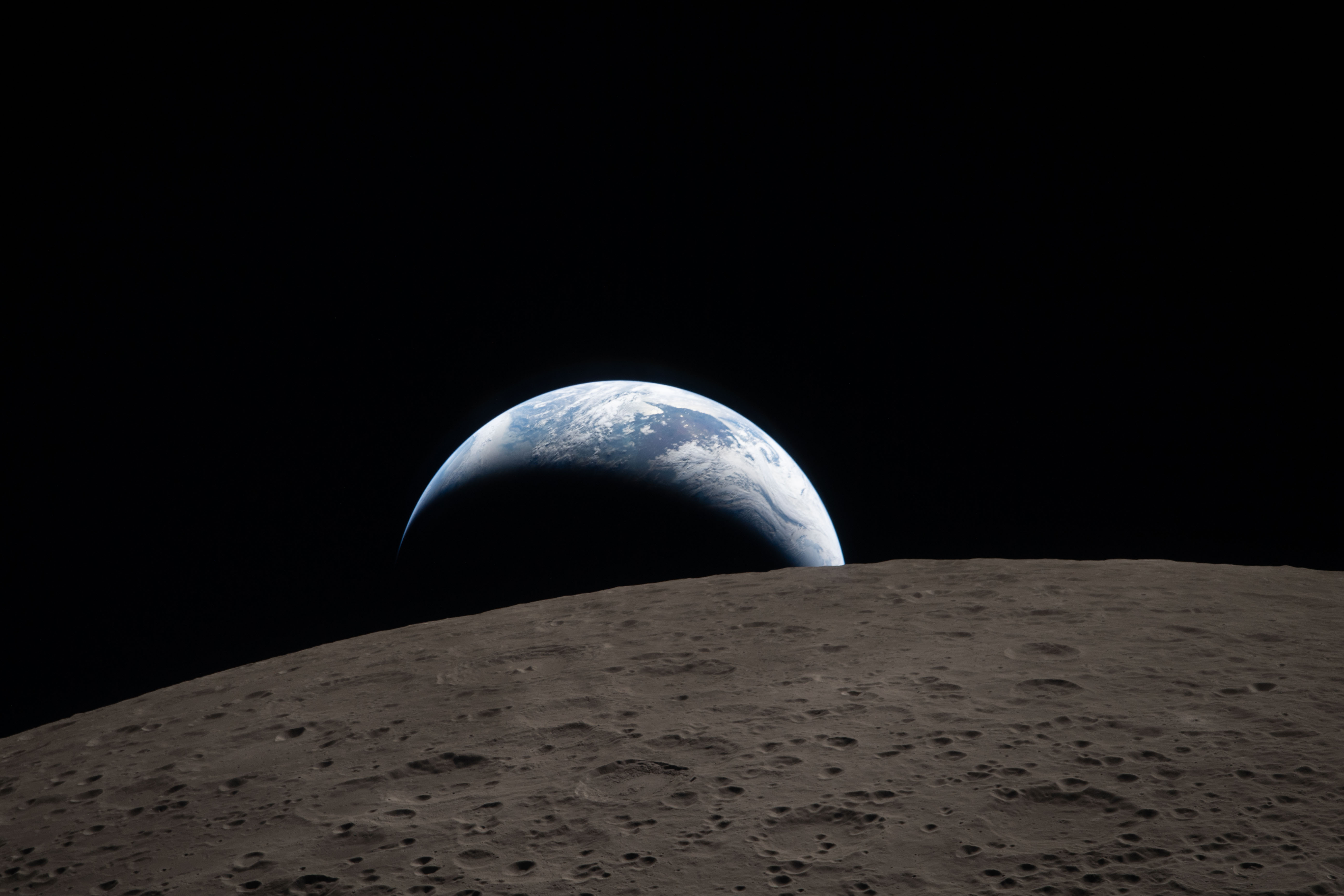
A crescent Earth sets behind the Moon’s horizon on April 6.
Credit: NASA
A crescent Earth sets behind the Moon’s horizon on April 6. Credit: NASA
Back on Earth, Koch recalled seeing our home planet as she returned to Houston on Saturday.
“When we saw tiny Earth, people asked our crew what impressions we had, and honestly, what struck me wasn’t necessarily just Earth. It was all the blackness around it. Earth was just this lifeboat hanging undisturbingly in the Universe,” she said. “I know I haven’t learned everything that this journey has yet to teach me, but there is one new thing I know, and that is planet Earth, you are a crew.”
These are important messages for a world afflicted by war and division. Hansen, a Canadian mission specialist on Artemis II, encapsulated the sentiment.
“You haven’t heard us talk a lot about the science, the things we’ve learned, and that’s because they’re there, and they’re incredible, but it’s the human experience that is extraordinary for us, and it sounds like maybe for you, too. When you look up here, you’re not looking at us. We are a mirror reflecting you, and if you like what you see, then just look a little deeper. This is you.”
Yeah, NASA (and Canada) really nailed it with this group.

Stephen Clark is a space reporter at Ars Technica, covering private space companies and the world’s space agencies. Stephen writes about the nexus of technology, science, policy, and business on and off the planet.