



惯性聚合 高效追踪和阅读你感兴趣的博客、新闻、科技资讯
阅读原文 在惯性聚合中打开

推荐订阅源

A
About on SuperTechFans
博客园 - 聂微东
让小产品的独立变现更简单 - ezindie.com
奇客Solidot–传递最新科技情报
奇客Solidot–传递最新科技情报
博客园 - 司徒正美
宝玉的分享
宝玉的分享
美团技术团队
量子位
The Cloudflare Blog
freeCodeCamp Programming Tutorials: Python, JavaScript, Git & More
IT之家
IT之家
爱范儿
爱范儿
J
Java Code Geeks
博客园 - Franky
Last Week in AI
Last Week in AI
B
Blog
H
Hackread – Cybersecurity News, Data Breaches, AI and More
I
InfoQ
GbyAI
GbyAI
Recent Announcements
小众软件
小众软件
H
Help Net Security
Microsoft Azure Blog
MyScale Blog
MyScale Blog

Ars Technica - All content

Our favorite gear at Sea Otter Classic wasn't the bikes—it was the accessories Pentagon wants $54B for drones, more than most nations’ military budgets Mozilla: Anthropic's Mythos found 271 security vulnerabilities in Firefox 150 Supreme Court arguments make it clear that FCC fines are "nonbinding" Silo S3 teaser hints at the wasteland's origins Framework's CEO on the RAM crisis and creating a "MacBook Pro for Linux users" Florida probes ChatGPT role in mass shooting. OpenAI says bot "not responsible." Report: Meta will train AI agents by tracking employees' mouse, keyboard use Microsoft removes Call of Duty from Game Pass, lowers subscription pricing Framework Laptop 13 Pro is a major overhaul for the modular, upgradeable laptop Framework Laptop 16 upgrades make it look less like an unfinished prototype Internal emails show how Amazon raises prices across the Internet, lawsuit says Anthropic gets $5B investment from Amazon, will use it to buy Amazon chips CATL's new LFP battery can charge from 10 to 98% in less than 7 minutes AMD Ryzen 9 9950X3D2 Dual Edition review: Tons of cache for tons of dollars What's the deal with spacesuits for the Moon? Will they be ready in time? Loneliness in older adults can often lead to memory impairment Contrary to popular superstition, AES 128 is just fine in a post-quantum world Pentagon pulls the plug on one of the military's most troubled space programs John Ternus will replace Tim Cook as Apple CEO Blue Origin's rocket reuse achievement marred by upper stage failure I’ve fired one of America’s most powerful lasers—here’s what a shot day looks like Great white sharks are overheating US-sanctioned currency exchange says $15 million heist done by "unfriendly states" Man with @ihackedthegovernment Instagram account tells judge, “I made a mistake" Trump picks qualified, normal health leader to head CDC; experts still cautious $25,000 buys plenty of used EVs: Here are some options Satellite and drone images reveal big delays in US data center construction Amazon won’t release Fire Sticks that support sideloading anymore Ridley Scott's post-apocalyptic The Dog Stars drops first trailer
What leaked "SteamGPT" files could mean for the PC gaming...
Kyle Orland · 2026-04-11 · via Ars Technica - All content

These days, it seems like every tech company and their corporate parent is looking to squeeze AI tools and features into their products, whether they’re wanted or not. So when files with names and functions referencing a “SteamGPT” appeared in a recent Steam client update, Valve watchers took quick notice.

From the outside, it’s hard to tell precisely what form any such “SteamGPT” would take. But looking through variable names and references in the files themselves suggests that Valve may be looking to use AI tools to streamline internal evaluations of in-game incidents and sift through potentially suspicious accounts.

Looking at the variables

As tracked by the automated SteamTracking GitHub project, the term “SteamGPT” appears multiple times in three separate files added in the April 7 Steam client update. In addition to the SteamGPT naming convention—a seemingly obvious reference to the generative pre-trained transformers popularized by ChatGPT and its ilk—the files include mentions of terms like multi-category inference, fine-tuning, and “upstream models” that point to some sort of generative AI system.

What might that AI be used for? Well, the files contain multiple references to a labeler and “labeling tasks,” working with arguments identifying a “problem” and “subproblem” and looking at an “evaluation_evidence_log” related to a specific “matchid.” Together with mentions of a “logs_to_inference” metamodel, that sounds like it could be a hook into a system for automatically generating labels to categorize the various incident reports made in Steam multiplayer games.
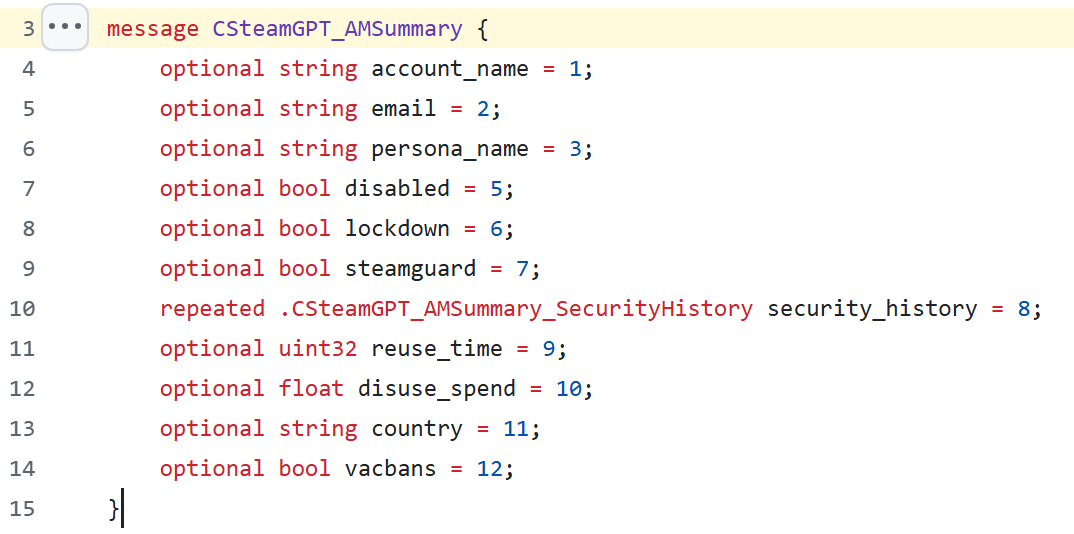
A SteamGPT function makes references to numerous security features.

A SteamGPT function makes references to numerous security features. Credit: SteamTracking / Github

Another portion of the SteamGPT files hints that Valve might use AI tools to summarize suspicious activity history or patterns in potentially fraudulent Steam accounts. A number of “SteamGPTSummary” functions include references to VAC bans, Steam Guard, and account lockdowns. These functions also seem to look at evidence such as email addresses (“high_fraud_email”), use of advanced security features (“two_factor”), and where a linked phone number originates (“phone_country”) to help determine whether an account is on the up-and-up. There are also a few references here to an account’s trust score, which is already used to help secure matchmaking in games like Counter-Strike 2.