




惯性聚合 高效追踪和阅读你感兴趣的博客、新闻、科技资讯
阅读原文 在惯性聚合中打开

推荐订阅源

月光博客
月光博客
雷峰网
雷峰网
S
SegmentFault 最新的问题
博客园 - 【当耐特】
博客园_首页
量子位
爱范儿
爱范儿
博客园 - 叶小钗
freeCodeCamp Programming Tutorials: Python, JavaScript, Git & More
Jina AI
Jina AI
V
V2EX
美团技术团队
V
Visual Studio Blog
博客园 - 三生石上(FineUI控件)
IT之家
IT之家
Hugging Face - Blog
Hugging Face - Blog
Apple Machine Learning Research
小众软件
小众软件
博客园 - 聂微东
钛媒体:引领未来商业与生活新知
钛媒体:引领未来商业与生活新知
The Cloudflare Blog
宝玉的分享
宝玉的分享
WordPress大学
WordPress大学
OSCHINA 社区最新新闻
OSCHINA 社区最新新闻

Ars Technica - All content

Pentagon wants $54B for drones, more than most nations’ military budgets Mozilla: Anthropic's Mythos found 271 security vulnerabilities in Firefox 150 Supreme Court arguments make it clear that FCC fines are "nonbinding" Silo S3 teaser hints at the wasteland's origins Framework's CEO on the RAM crisis and creating a "MacBook Pro for Linux users" Florida probes ChatGPT role in mass shooting. OpenAI says bot "not responsible." Report: Meta will train AI agents by tracking employees' mouse, keyboard use Microsoft removes Call of Duty from Game Pass, lowers subscription pricing Framework Laptop 13 Pro is a major overhaul for the modular, upgradeable laptop Framework Laptop 16 upgrades make it look less like an unfinished prototype Internal emails show how Amazon raises prices across the Internet, lawsuit says Anthropic gets $5B investment from Amazon, will use it to buy Amazon chips CATL's new LFP battery can charge from 10 to 98% in less than 7 minutes AMD Ryzen 9 9950X3D2 Dual Edition review: Tons of cache for tons of dollars What's the deal with spacesuits for the Moon? Will they be ready in time? Loneliness in older adults can often lead to memory impairment Contrary to popular superstition, AES 128 is just fine in a post-quantum world Pentagon pulls the plug on one of the military's most troubled space programs John Ternus will replace Tim Cook as Apple CEO Blue Origin's rocket reuse achievement marred by upper stage failure I’ve fired one of America’s most powerful lasers—here’s what a shot day looks like Great white sharks are overheating US-sanctioned currency exchange says $15 million heist done by "unfriendly states" Man with @ihackedthegovernment Instagram account tells judge, “I made a mistake" Trump picks qualified, normal health leader to head CDC; experts still cautious $25,000 buys plenty of used EVs: Here are some options Satellite and drone images reveal big delays in US data center construction Amazon won’t release Fire Sticks that support sideloading anymore Ridley Scott's post-apocalyptic The Dog Stars drops first trailer Artemis II pilot talks about what it was really like to fly and land in Orion
NASA's Psyche spacecraft returns unfamiliar views of a fa...
Stephen Clar · 2026-05-21 · via Ars Technica - All content

“As a bonus, it captured Mars images from a rare perspective,” NASA said in a press release.

The spacecraft approached Mars from a high phase angle, or from the side opposite the Sun, making the planet appear as a thin crescent as Psyche moved in for the encounter. The wispiness of the thin Martian atmosphere was on full display, with sunlight shining through diffuse clouds of dust suspended dozens of miles over the sharp edge of the planet’s rust-colored surface.
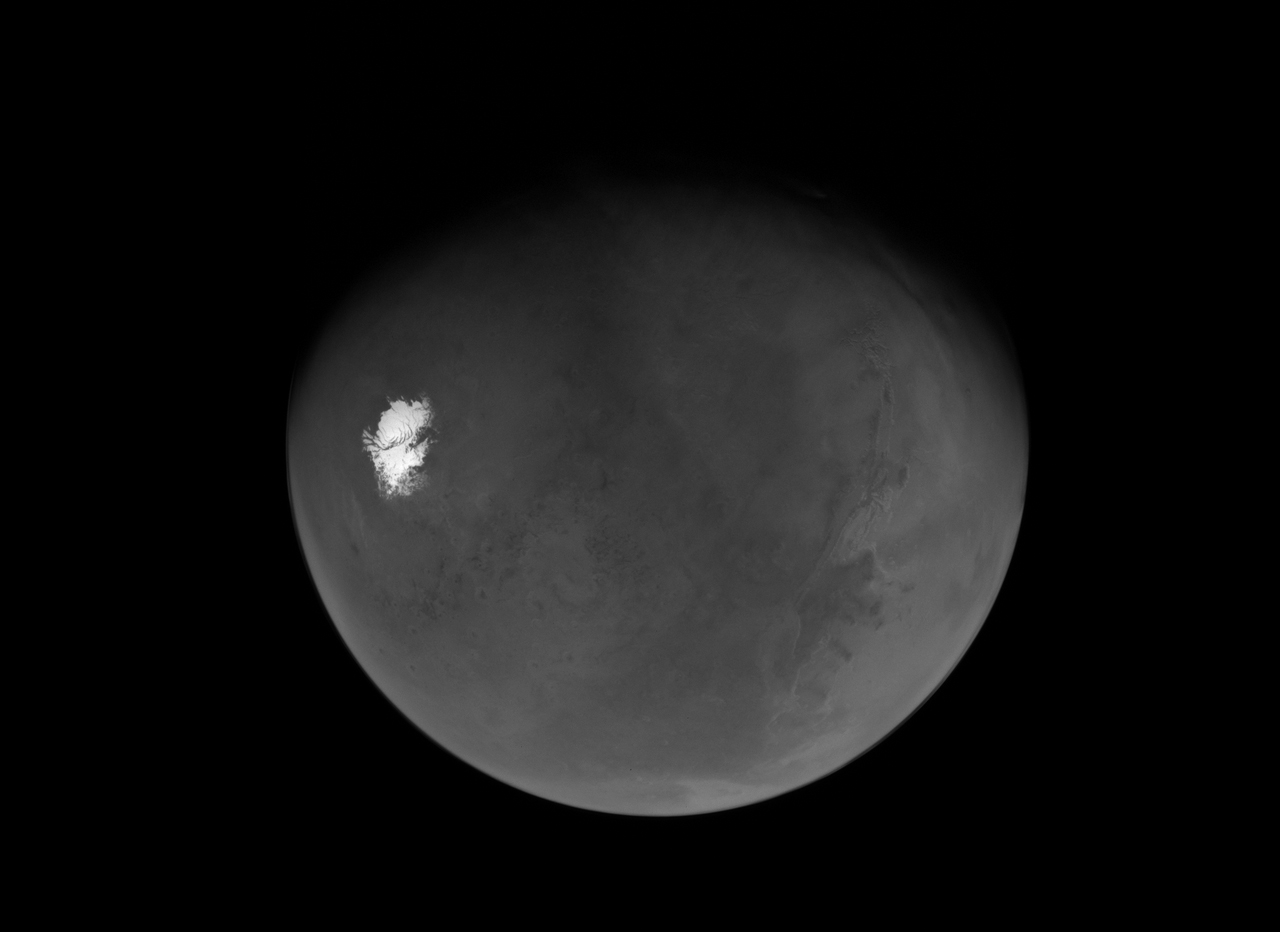
This is the first view of a nearly “full Mars” as seen by NASA’s Psyche spacecraft shortly after its closest approach to the planet on May 15, 2026. The view extends from the south polar cap northwards to the Valles Marineris canyon system and beyond.

Credit: NASA/JPL-Caltech/ASU

This is the first view of a nearly “full Mars” as seen by NASA’s Psyche spacecraft shortly after its closest approach to the planet on May 15, 2026. The view extends from the south polar cap northwards to the Valles Marineris canyon system and beyond. Credit: NASA/JPL-Caltech/ASU

As Psyche zoomed past the red planet, its cameras captured a wide-angle overhead view of Mars’ southern polar ice cap. Jim Bell, who leads the Psyche imager instrument team at Arizona State University, said the spacecraft took thousands of images during the encounter. The observations will help scientists “calibrate and characterize” the performance of the cameras, Bell said.

Psyche’s magnetometer may have detected a signature of the solar wind interacting with Mars’ upper atmosphere or its remnant magnetic field, and its spectrometers were tuned to measure the chemical composition of the Martian surface underneath the spacecraft’s flight path.

Numerous other missions are exploring Mars full-time, so there’s little chance of any major discoveries lurking in Psyche’s flyby datasets. But scientists should be able to calibrate the mission’s instruments by comparing flyby observations with archival data from other Mars missions.

It is always interesting to gain new perspectives, even on something familiar. You can’t see a crescent Mars from Earth. But the Psyche mission’s real payoff will come in three years, when the probe pulls in close to asteroid Psyche, an object the size of Massachusetts that is rich in iron, nickel, and likely other metals that we know only as a fuzzy blob through telescopes. It is truly uncharted territory, but the Psyche spacecraft will have more than two years to survey the asteroid, far longer than the fleeting glimpse it got of Mars last week.