






In the Sessions keynote, we talked about how agents are becoming active participants in the internet economy, and how we’re building the infrastructure to support them.
Agents have become increasingly capable in recent months, but making purchases across the internet remains difficult. While machine payments protocols are still gaining adoption, agents need to work with the payment options sellers and consumers use today.
Today we’re launching Link’s wallet for agents, built on top of Stripe’s new Issuing for agents. You can now give agents programmatic access to Link and the ability to get a one-time-use card or a Shared Payment Token (SPT), backed by the cards and bank accounts already in your wallet. The agent never gets access to your raw payment credentials.
You can review and approve each spend request from the agent on the web, or in Link’s new iOS and Android apps. This makes it easy for consumers to enable personal AI agents such as OpenClaw to make an authorized purchase on their behalf.
If you’re a developer or business building consumer-facing agents, such as personal assistants, Link’s wallet for agents removes the need to build wallet infrastructure from scratch. Link handles the abstraction across payment options your agent might need—like cards and SPTs (with stablecoins and other payment methods coming soon). It also takes care of fund flow complexity and helps you reach Link’s customer base of more than 200 million consumers.
Imagine you are building a shopping agent that recommends apparel to your consumers. First, the consumer grants your agent access to their Link wallet via a standard OAuth flow.
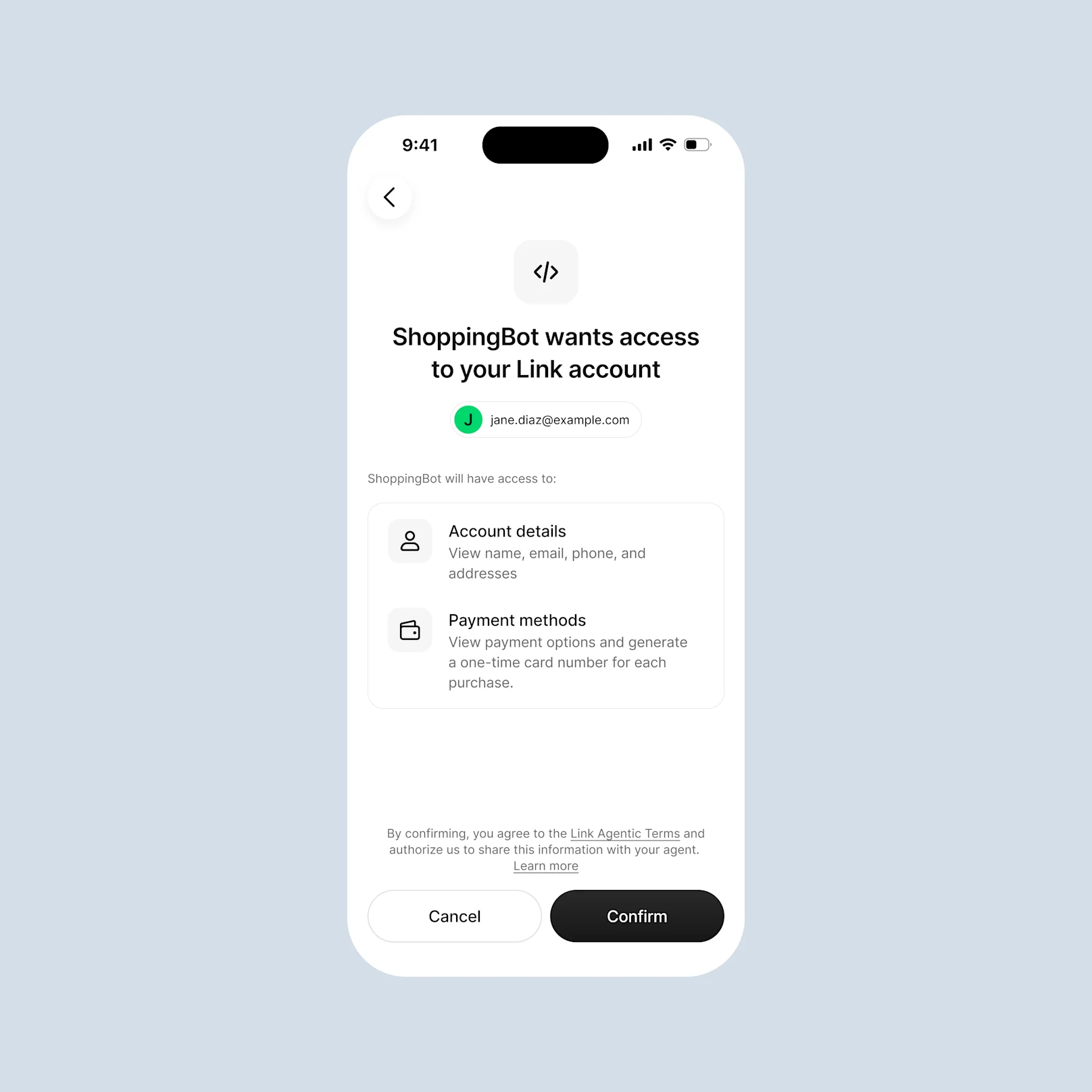
Once your agent has access, it can create a spend request to get either a one-time-use card or an SPT to complete the transaction. Your agent provides context on the transaction, so the person can understand and approve the request. In both card and machine-native flows, the payment credential can be scoped with controls like amount, currency, and merchant. Support for agentic tokens, stablecoins, and other payment types are coming soon.
The consumer gets a notification and approves the spend request in Link (on the web, or in the Link iOS or Android app). Today, each request requires the person’s review before the credential is shared with your agent. We’re planning on expanding these controls to let people set spending limits, and choose when agents can act without additional approval.
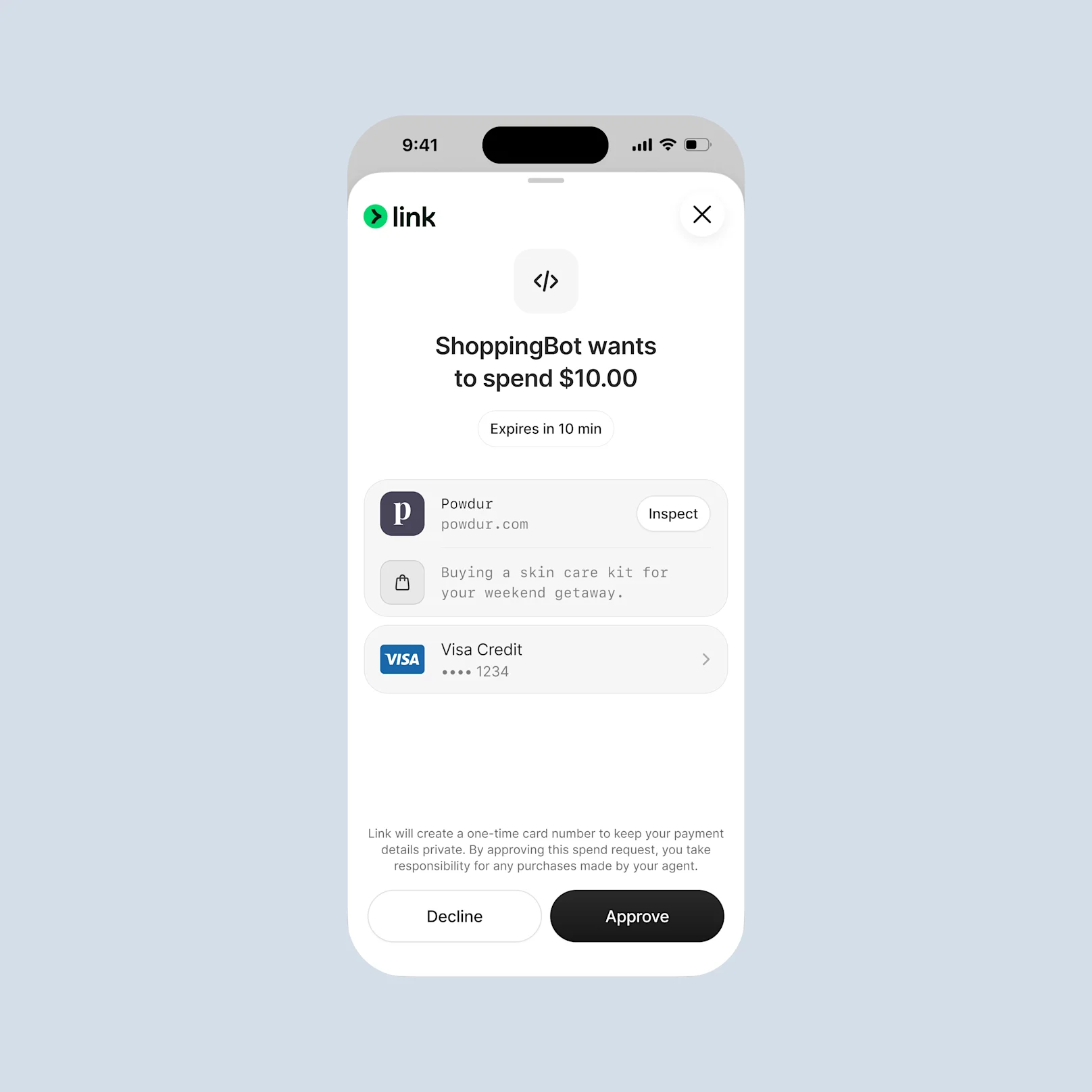
After approval, Link returns the one-time-use card or SPT to your agent for it to complete the purchase. The person can track agent spending and manage connected agents directly in Link.
Link’s wallet for agents is built directly on top of Stripe’s Issuing primitives. For businesses that want to build and customize their own agentic wallets and cards, Issuing for agents gives developers access to the full set of Issuing APIs to power agentic spending and custom financial workflows for agents and their users.
Businesses can design user-facing experiences to fit their product, including onboarding, fund flows, and spending controls. They can define when and how agents move funds, set permissions at the card level, introduce fraud controls at transaction authorization, and gain visibility into historical and real-time card activity.
Issuing for agents provides the underlying infrastructure for these experiences, from single-use virtual cards and fund storage to spending controls, transaction monitoring, and advanced fraud tools. This infrastructure supports a range of use cases:
Get started today with Link’s wallet for agents, and read our docs to learn more about Issuing for agents.
此内容由惯性聚合(RSS阅读器)自动聚合整理,仅供阅读参考。 原文来自 — 版权归原作者所有。