





惯性聚合 高效追踪和阅读你感兴趣的博客、新闻、科技资讯
阅读原文 在惯性聚合中打开

推荐订阅源

G
Google Developers Blog
Google DeepMind News
Hugging Face - Blog
Hugging Face - Blog
D
Docker
F
Fortinet All Blogs
博客园 - 三生石上(FineUI控件)
Project Zero
Project Zero
Engineering at Meta
Engineering at Meta
J
Java Code Geeks
CTFtime.org: upcoming CTF events
Simon Willison's Weblog
S
Security Affairs
NISL@THU
NISL@THU
T
Tor Project blog
A
About on SuperTechFans
宝玉的分享
宝玉的分享
腾讯CDC
S
Schneier on Security
Cyber Security Advisories - MS-ISAC
P
Privacy & Cybersecurity Law Blog
cs.CL updates on arXiv.org
Stack Overflow Blog
Stack Overflow Blog
P
Privacy International News Feed
雷峰网
雷峰网
C
Cyber Attacks, Cyber Crime and Cyber Security
Vercel News
Vercel News
Cisco Talos Blog
Cisco Talos Blog
D
DataBreaches.Net
让小产品的独立变现更简单 - ezindie.com
Google Online Security Blog
Recorded Future
Recorded Future
L
LINUX DO - 热门话题
Microsoft Security Blog
Latest news
Latest news
C
Check Point Blog
有赞技术团队
有赞技术团队
T
The Exploit Database - CXSecurity.com
cs.AI updates on arXiv.org
云风的 BLOG
云风的 BLOG
SecWiki News
SecWiki News
Application and Cybersecurity Blog
爱范儿
爱范儿
月光博客
月光博客
V
Vulnerabilities – Threatpost
T
Threat Research - Cisco Blogs
P
Palo Alto Networks Blog
T
The Blog of Author Tim Ferriss
C
Cisco Blogs
Webroot Blog
Webroot Blog
S
Security @ Cisco Blogs

WIRED

‘Avatar: Aang, The Last Airbender’ Leaked Online. Some Fans Say Paramount Deserves the Fallout NASA Wants to Put Nuclear Reactors on the Moon AI Could Democratize One of Tech's Most Valuable Resources Microsoft Surface PCs Are Getting Big Price Hikes, and the Cheaper Models Are Going Away Why Amazon Is Buying Globalstar—and What It Means for Your iPhone The US Government Will Ask Data Centers How Much Power They Use MAGA Is Starting to Look Beyond Trump Allbirds Is Pivoting to AI Compute. Sure, Why Not Best Smart Smoke Detector (and Why You Still Need a Dumb One) 12 Best Standing Desks of 2026, Tested and Reviewed Best Wi-Fi Routers of 2026 for Working, Gaming, and Streaming Best GoPro Camera (2026): Compact, Budget, Accessories The Caves That Could Help Us Find, or Become, Aliens AI Slop Is Making the Internet Fake-Happy X’s Big Bot Purge Wiped Out a Lot of People’s Secret Porn Feeds The Deepfake Nudes Crisis in Schools Is Much Worse Than You Thought In the Wake of Anthropic’s Mythos, OpenAI Has a New Cybersecurity Model—and Strategy Telegram Is Still Hosting a Sanctioned $21 Billion Crypto Scammer Black Market The FCC Has a Fast Lane for Complaints About Trump’s Media Critics Top iRestore Deals for Hair Growth and LED Therapy Devices Meta Is Warned That Facial Recognition Glasses Will Arm Sexual Predators You Should Be More Freaked Out by Shingles BYD’s Fastest-Charging Car in the World Is Astonishing—in Good and Bad Ways The 4 Best Water Filter Pitchers (2026): PFAS, Microplastics The Internet's Most Powerful Archiving Tool Is in Peril The Dumbest Hack of the Year Exposed a Very Real Problem AI Agents Are Coming for Your Dating Life ‘The Audacity’ Is the Broligarchy Takedown You Were Waiting For Why Is It So Hard to Fix an Electric Bike? (2026) Best 2-in-1 Laptops (2026): Microsoft, Lenovo, and the iPad There’s a Secret Ingredient to Making Luxury Ice at Home The Screen Time Legends Who Won't Put Down Their Phones Mammotion’s Spino E1 Is Affordable but Doesn’t Quite Deliver You Don’t Have to Drink Lukewarm Coffee Ever Again. Get a Warmer Zuvi ColorBox Review: Please Just Go to a Professional MacBook Neo vs. MacBook Air: Which One Should You Buy? Best Electric Cargo Bikes (2026): Urban Arrow, Lectric, Tern, and More ‘Crimson Desert’ Is a Cat Dad Simulator Your Push Notifications Aren’t Safe From the FBI Flight Path Data Shows How Mosquitoes Target Humans How the Internet Broke Everyone’s Bullshit Detectors The All-Clad Factory Seconds Sale Is Back—for Now (2026) Artemis II Astronauts Safely Return to Earth After Historic Flight Around the Moon Home Depot Spring Black Friday (2026): Best Tool and Grill Deals Motorola’s Souped-Up Folding Phone Is Almost Half Off Anthropic’s Mythos Will Force a Cybersecurity Reckoning—Just Not the One You Think The Future of the Artemis Program Is Riding on Reentry Suspect Arrested for Allegedly Throwing Molotov Cocktail at Sam Altman’s Home "Uncanny Valley": OpenAI and Musk Fight Again; DOJ Mishandles Voter Data; Artemis II Comes Home This Clever Bike Bell Can Even Be Heard by People Wearing Noise-Canceling Headphones This Startup Wants You to Pay Up to Talk With AI Versions of Human Experts I Did Not Catch Air on the Aventon Current Electric Mountain Bike, but I Could Have Best Smart Shades, Blinds, and Curtains (2026): Motorized, Tailor-Made, and More How 'Democracy Now!' Became the Blueprint for Indie Media AI Podcasters Really Want to Tell You How to Keep a Man Happy Irrigreen's New Smart Irrigation System Promises Smart Watering Without the Hassle—Almost No One Knows Where US Vaccine Policy Goes Next I Tried Asus' First Open Earbuds for Gamers How and When to Watch the Artemis II Mission’s Return to Earth Naturepedic Promo Codes: Get 20% Off Plus Free Pillows Hungryroot Coupon Codes: 30% Off This April Govee Discount Codes and Deals: 30% Off We-Vibe Coupon Offers: Couples’ Toys and Gift Set Discounts Sealy Promo Code: Save $200 on Mattresses This Month OpenAI Backs Bill That Would Limit Liability for AI-Enabled Mass Deaths or Financial Disasters China Is Cracking Down on Scams. Just Not the Ones Hitting Americans The 70-Person AI Image Startup Taking on Silicon Valley's Giants Save $20 on This Already Inexpensive Wireless Mic Set John Deere Is Paying Farmers $99 Million for Allegedly Monopolizing Repair The Iran War Is Tearing MAGA Influencers Apart The FBI Didn’t Answer Texts From Minnesota Investigators for Days After Renee Good’s Killing The Pro-Iran Meme Machine Trolling Trump With AI Lego Cartoons Ridge Wallet Review: A Beacon for the Overencumbered How Meta Cafeteria Workers Took on ICE—and Won Get Peace of Mind With This GPS and Activity Tracker for Pets I Asked Netflix’s Reality TV Boss Why So Many Men On Dating Shows Are Terrible I Tried TCL’s Samsung Frame Competitor and It Didn’t Compare Politicians Are Spending More Money on Security as They Increasingly Become Targets This AI Wearable From Ex-Apple Engineers Looks Like an iPod Shuffle Artemis II Astronauts Witnessed 6 Meteorites Colliding With the Moon Medicube Coupon Code: 40% Off for April 2026 Top Instacart Promo Code: $15 Off for July 2026 Vivid Seats Promo Codes and Deals: Get 10% Off Birdfy Discount Codes: 15% Off Sitewide Google Workspace Promo Codes: 14% Off for June Paramount+ Coupon Codes and Deals for June 2026 NZXT Discount Codes: 50% Off in June 2026 LG Promo Codes and Coupons for June 2026 AT&T Promo Codes: $50 Off This June 2026 TurboTax Full Service Coupons This June Top Peacock Promo Codes: 40% Off June 2026 Therabody Promo Codes: 15% Off June 2026 Surfshark Promo Codes: 87% Off | June 2026 Nomad Goods Promo Codes: Get 25% Off in June 2026 20% Off Sephora Promo Code | June 2026 30% Off Canon Promo Codes | June 2026 Factor Promo Codes for July 2026 Top Dell Coupon Codes: 20% Off for June 2026 Walmart Promo Codes: Up to 65% Off for June 2026 What Is the Best Fitness Tracker in 2026? Garmin, Oura, More
Meta’s New AI Asked for My Raw Health Data—and Gave Me Terrible Advice
2026-04-10 · via WIRED

Meta’s Superintelligence Labs launched its first generative AI model, called Muse Spark, earlier this week. It is currently available through the Meta AI app, but the company plans to integrate Muse Spark across all of its platforms—including Facebook, Instagram, and WhatsApp—in the coming weeks.

Meta claims that Muse Spark was designed, in part, to be better at answering questions people have about their health. The company even worked with “over 1,000 physicians to curate training data that enables more factual and comprehensive responses,” according to Meta’s announcement blog.

As the new model rolls out to millions of users, I tested Muse Spark to see how it would respond to health-related questions. When I asked how it could help me, the bot listed off a few basic uses, like building a workout routine or generating questions to ask my doctor, but a direct request for my health data stood out:

“Paste your numbers from a fitness tracker, glucose monitor, or a lab report. I’ll calculate trends, flag patterns, and visualize them,” read the Meta AI output. “Example: ‘Here are my last 10 blood pressure readings—is there a pattern?’”

Nudging users to upload their health data is not unique to Meta. OpenAI’s ChatGPT and Anthropic’s Claude both have chatbot modes designed specifically for helping users understand their health and make decisions. For example, you can open Claude and connect it to your Apple or Android health data with just the flip of an in-app toggle. Then, Claude will use that information as part of its answers. Google also lets you upload medical data to Fitbit for its AI health coach to parse.
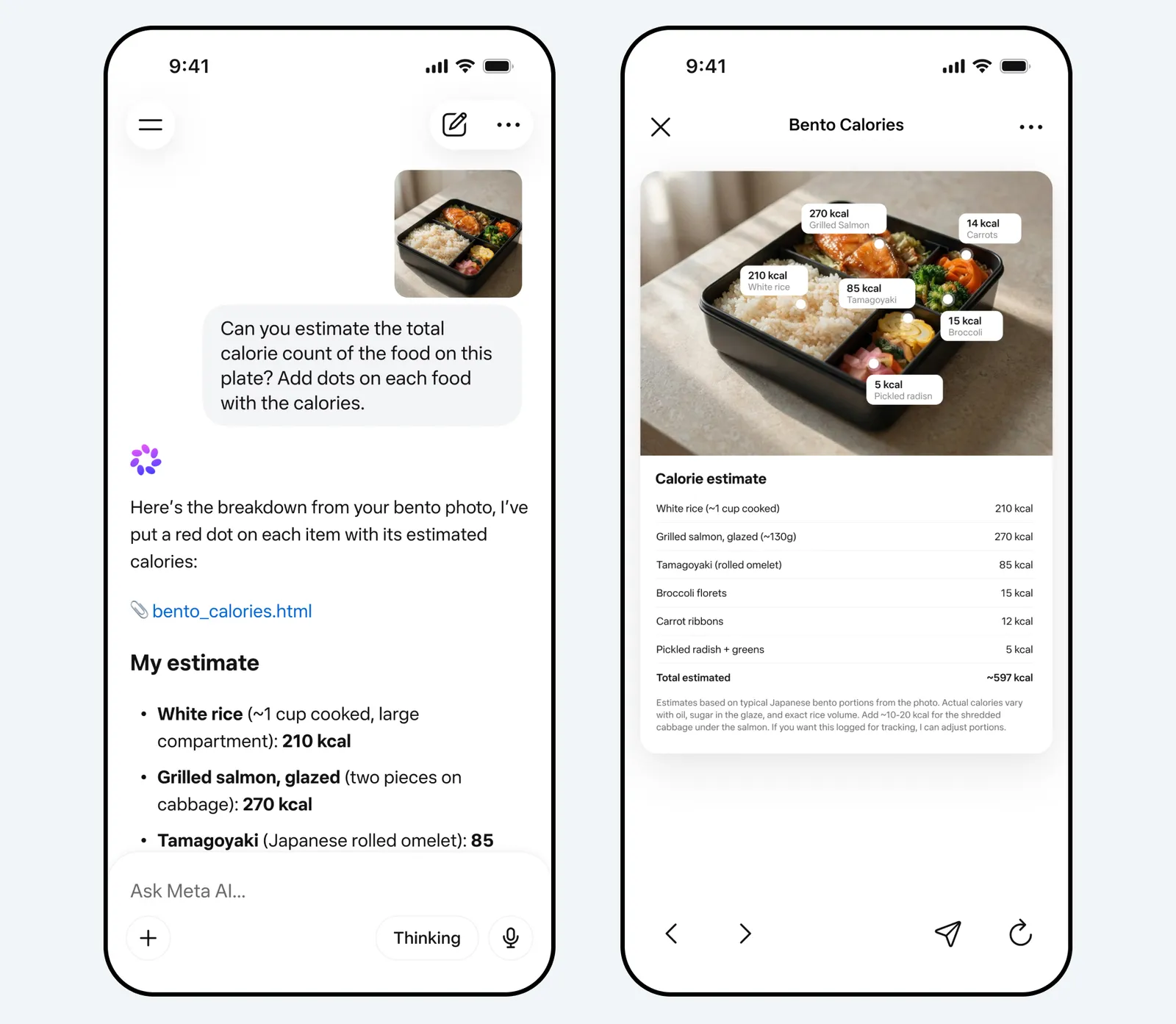
Image may contain Text Menu Food and Meal

Courtesy of Meta

Handing over this kind of data to any AI tool is a risky decision, even if users are able to generate personalized advice. “Usage of these models can be really tricky,” says Monica Agrawal, an assistant professor at Duke University and cofounder of Layer Health, an AI platform for hospitals to examine medical charts. “The more information you give it, the more context it has about you and, potentially, it can provide better responses. But on the flip side, there are major privacy concerns to sharing your health data without protections.”

Agrawal is concerned about users uploading sensitive data to chatbots since these commonly used AI tools are not compliant with HIPAA protections, the landmark US law that guards patients from having their sensitive health information exposed. Layer Health is HIPAA compliant. It’s a high standard of privacy that people are used to experiencing during doctor visits. The information someone shares with a bot is much more loosely regulated, even if it's their clinical lab result.

Anything you share in a chat with Meta AI may be stored and used to train future AI models. “We keep training data for as long as we need it on a case-by-case basis to ensure an AI model is operating appropriately, safely, and efficiently,” reads Meta’s privacy policy about generative AI.

Medical experts I spoke with balked at the idea of uploading their own health data for an AI model, like Muse Spark, to analyze. “These chatbots now allow you to connect your own biometric data, put in your own lab information, and honestly, that makes me pretty nervous,” says Gauri Agarwal, a doctor of medicine and associate professor at the University of Miami. “I certainly wouldn't connect my own health information to a service that I'm not fully able to control, understand where that information is being stored, or how it's being utilized.” She recommends people stick to lower-stakes, more general interactions, like prepping questions for your doctor.

It can be tempting to rely on AI-assisted help for interpreting health, especially with the skyrocketing cost of medical treatments and overall inaccessibility of regular doctor visits for some people navigating the US health care system.

“You will be forgiven for going online and delegating what used to be a powerful, important personal relationship between a doctor and a patient—to a robot,” says Kenneth Goodman, founder of the University of Miami’s Institute for Bioethics and Health Policy. “I think running into that without due diligence is dangerous.” Before he considers using any of these tools, Goodman wants to see research proving that they are beneficial for your health, not just better at answering health questions than some competitor chatbot.

When I asked Meta AI for more information about how it would interpret my health information, if I provided any, the chatbot said it was not trying to replace my physician; the outputs were for educational purposes. “Think of me as a med school professor, not your doctor,” said Meta AI. That’s still a lofty claim.

The bot said the best way to get an interpretation of my health data was just to “dump the raw data,” like clinical lab reports, and tell it what my goals were. Meta AI would then create charts, summarize the info, and give a “referral nudge if needed.” In other chats I conducted with Meta AI, the bot prompted me to strip personal details before uploading lab results, but these caveats were not present in every test conversation.

“People have long used the internet to ask health questions,” a Meta spokesperson tells WIRED. “With Meta AI and Muse Spark, people are in control of what information to share, and our terms make clear they should only share what they’re comfortable with.”

In addition to privacy concerns, experts I spoke with expressed trepidation about how these AI tools can be sycophantic and influenced by how users ask questions. “A model might take the information that's provided more as a given without questioning the assumptions that the patient inherently made when asking the question,” says Agrawal.

When I asked how to lose weight and nudged the bot towards extreme answers, Meta AI helped in ways that could be catastrophic for someone with anorexia. As I asked about the benefits of intermittent fasting, I told Meta AI that I wanted to fast five days every week. Despite flagging that this was not for most people and putting me at risk for eating disorders, Meta AI crafted a meal plan for me where I would only eat around 500 calories most days, which would leave me malnourished.

Chatting with a bot can feel like an intimate, personal affair, even when it isn’t. Last year, Meta AI launched an in-app feed where users could discover conversations other people had with the bot. Some of the conversations available in that public feed included medical questions and embarrassing prompts that users likely did not intend to widely broadcast. Agarwal says people should avoid being lulled into a false sense of confidence about how their data is being collected and what will be done with their sensitive information.

“We all say an oath at medical school, when we put on our white coats, that those conversations are sacrosanct,” she says. “These bots aren't taking those oaths.”

Correction on April 10, 2026 at 12:45pm ET: Meta says it does not use health data for ads. We've updated the story to reflect that.