


The countertop kitchen composter is a lovely vision. Instead of a smelly bucket of vegetable scraps and coffee grounds breeding fruit flies on your counter or attracting rats to your backyard, you could just put it all into a nifty electric gadget, and at some undetermined point in the future, you'll have a bountiful supply of nutrient-rich compost to use in your garden.
Unfortunately, none of the more popular electric machines quite do this. Even though some of these devices are marketed as “composters" and have instruction booklets and apps detailing all the ways in which one can use compost, the vast majority of kitchen composters are just going to grind up and dry your food scraps. Your waste output will be greatly reduced in volume and will no longer smell, but if you’re hoping to put eggshells and banana peels into a machine and magically scoop out the kind of compost you’d buy at the garden center, that’s just not going to happen.
That said, you can mix small amounts of these grounds into potting soil in very small ratios, or use them as feeder for a “real” compost pile, but most of these machines are meant for those wanting to reduce the volume of food waste their household produces. This is itself a legitimate goal, as cast-off food makes up 24 percent of municipal solid waste, resulting in the release of methane, a destructive greenhouse gas, as it breaks down in the landfill.
Or maybe you'd just like your food grounds to be odor-free and shelf-stable before adding them to your green waste bin for municipal composting or your backyard compost. In any case, despite critics’ cries of greenwashing and corporate astroturfing, there is still value to these devices. They make people more aware of their food waste. They don't use as much power as you think they would (around 1 kilowatt-hour was typical). And my top pick, the Reencle Prime, even produces something close to compost.
Read on for our assessment, and once you're done, check out some of our other kitchen-related guides, including the Best Coffee Makers, Best Toaster Ovens, Best Meat Subscription Boxes, and Best Meal Kit Delivery Services.
Updated April 2026: I've added the Terra II from GEME and Clear Drop's Organics Collector to the section of other devices I've tried and ensured up-to-date links and prices. I'm currently testing a composter from Airthereal.
Table of Contents
Photograph: Kat Merck
Reencle
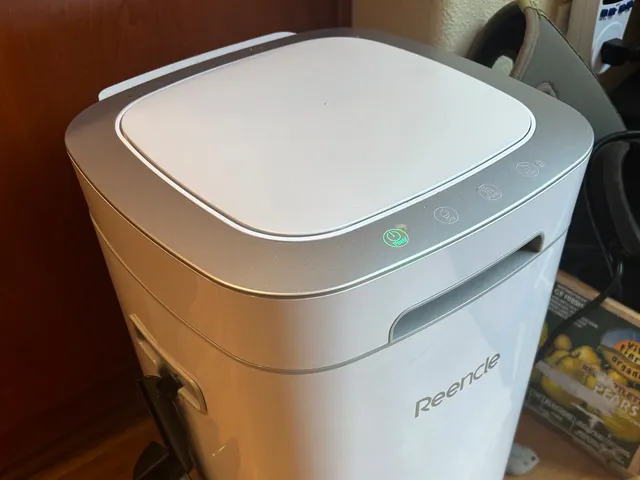
As I mentioned above, none of these machines makes truly ready-to-use compost, but the Reencle Prime comes closest to a traditional compost bin. Popular in South Korea years before it appeared in the US, the Reencle arrives with a starter bag of ReencleMicrobe (which can be purchased separately for $65) containing activated carbon, wood pellets, glucose, and a trio of patented microbes ready to chow down. There's also a prefilled carbon filter that slots into the back.
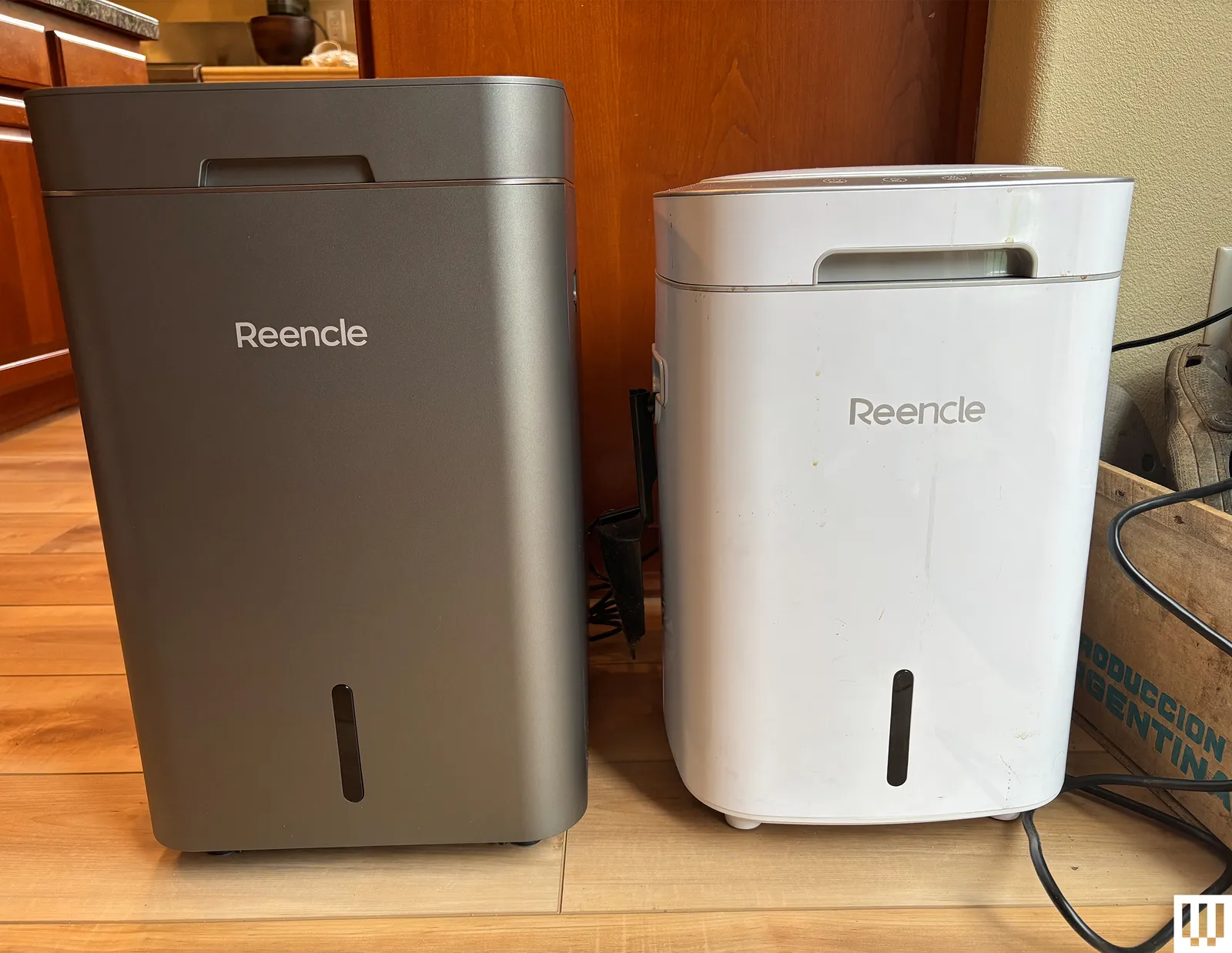
Reencle Gravity (left) and Prime (right)
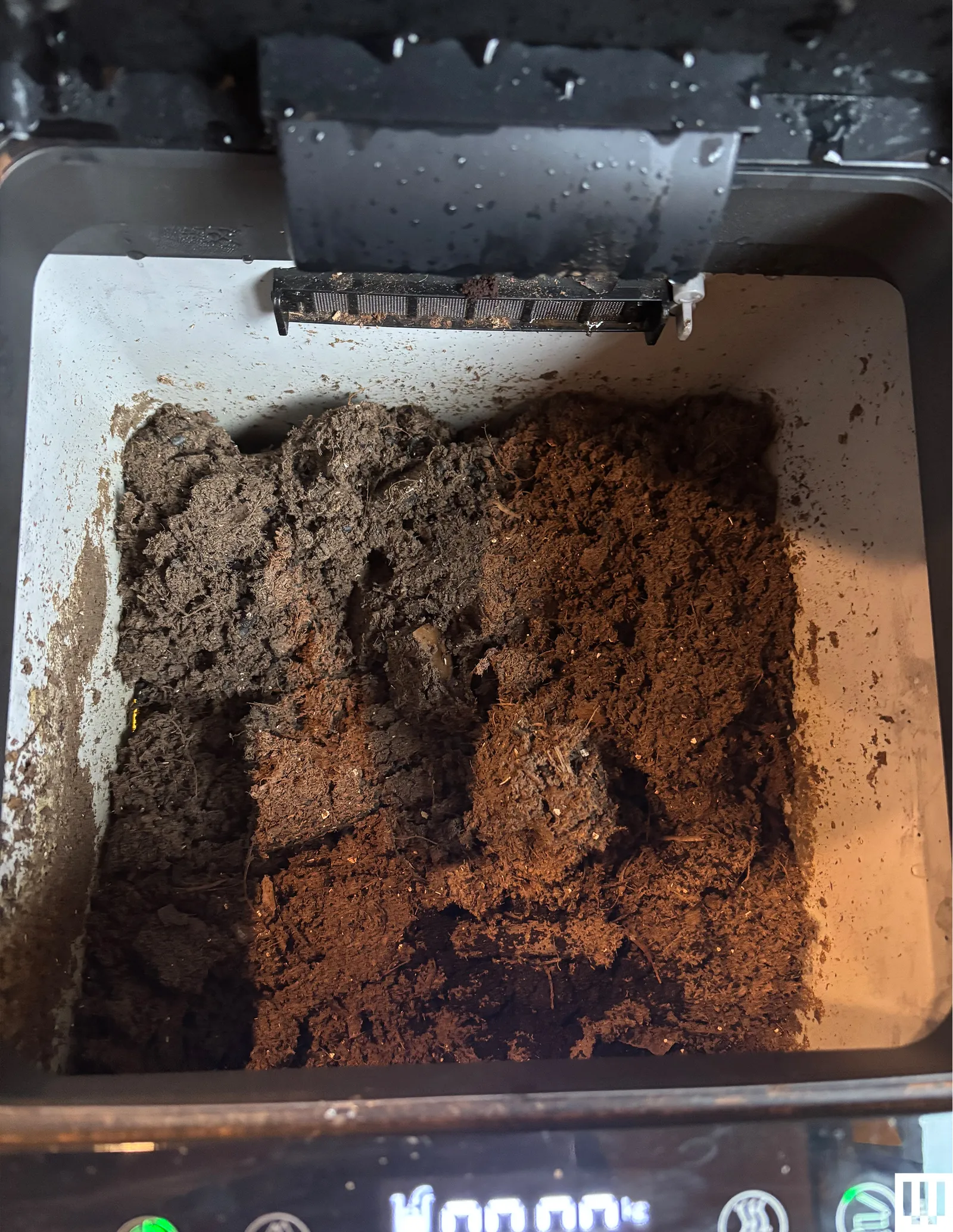
At 14 x 15 x 22 inches, the Prime is too large for a kitchen counter, but it conveniently operates much like a heated trash can. The lid can be opened via a sensor at the bottom or a button on the control panel, and in goes your organic matter. That's it. There are no cycles, tablets, or auxiliary buckets to worry about. Even the app is totally optional. Within hours to days, depending on the item, the scraps are broken down into a material resembling a cross between dirt and sawdust.
The smell isn't always pleasant, but it can usually be mitigated by using the control panel's Dry and Purify buttons or by adding what, in composting lexicon, is called “browns”—dry, carbon-rich materials like bread or shredded paper.
Photograph: Kat Merck
The Reencle also tends not to smell when it's being fed its preferred diet of 1.5 pounds of scraps per day. Unlike other machines, it can also accept meat and dairy. For larger households, there's the Reencle Gravity ($649), which is a couple of inches taller and can accept 3.3 pounds of waste a day. I also tested this and found it to be significantly quieter than the Prime—not that the Prime is noticeably loud, only about 30 decibels—but the Gravity is nearly silent, which is a nice bonus.
When the volume reaches the fill line, the Reencle grounds can be scooped out, mixed with potting soil at a 1:4 ratio, and left to cure for three weeks (I used a large tub in my garage). Afterward, it can be used for both outdoor and indoor plants. I have used this resultant mix to positive effect both indoors and outdoors.
| Dimensions | 12 x 13 x 18.4 inches |
| Capacity: | Minimum 1.5 pounds, maximum 2.2 pounds |
| Can't process: | Large bones or shells, fruit pits |
| Fastest waste breakdown: | 2 to 24 hours or longer, depending |
| How to use its output: | Sift, mix 1:4 ratio with soil, cure for 3 weeks, and add to plants indoors or outdoors; add to compost pile |
| Warranty: | 1 year |
Photograph: Kat Merck
Photograph: Kat Merck
Photograph: Kat Merck
Video: Kat Merck
Lomi
Most kitchen “composters" simply grind and dry your food scraps, but the Lomi 3 does the best job of this of the bunch. I'm always impressed when companies listen to feedback and adapt, and Lomi's new model solves a couple of the now-discontinued Lomi 2's quirks and foibles. Gone are the multiple modes, annoying twist-off lid, and having to put scraps right into the machine. Now there's a convenient 3-liter, 7.5-inch-tall countertop bucket, just like the FoodCycler below; an easy push-button lid; and just two simple processing modes: Grow and Express. The Lomi 3 is also smaller and supposedly quieter than the Lomi 2, but my decibel meter found the difference to be negligible. One feature I did like on Lomi 2 that's missing from the 3, however, is Lomi mode, which could break down a list of approved bioplastics, including the Lomi's own packaging. Lomi confirms the new model cannot accept bioplastics.
Photograph: Kat Merck
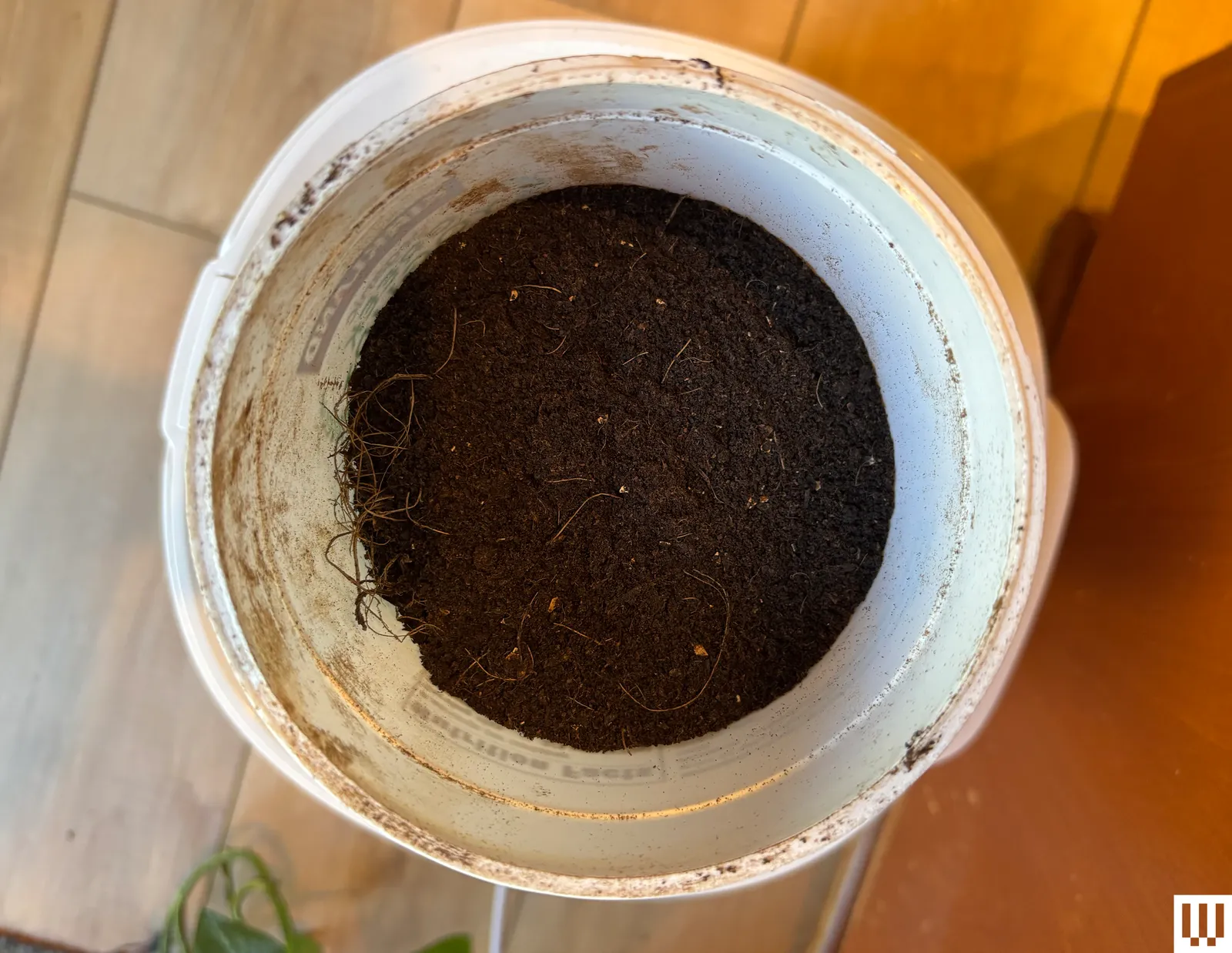
Like with the Lomi 2, an app exists for basic management, but I enjoyed not having to use it—press a button and the Lomi turns on. When it's done (cycle lengths vary from 3 to 16 hours, depending on amount and moisture of contents), it will play a little chime, and you can either put the processed grounds, which are very fine and look like Folgers, in your outdoor compost pile, top-dress your lawn with them, or add them to soil at a 1:10 ratio (1:15 if using meat/dairy). I also like that the Lomi 3 has a clear lid, so you can see exactly where it is in its cycle.
It's a lot to pay for what's essentially a grinder-and-dryer, which is why I generally recommend the Reencle above, especially if you want to generate something close to compost. However, if you're simply looking to reduce the volume of waste in your trash, or you live in an area that's subject to composting fines, the Lomi 3 is a thoughtfully engineered, easy-to-use option most people would be happy with. Note that my test unit originally came with a lid that warped after several months, allowing odors to escape and attracting fruit flies. Lomi said the initial batch of lids was made with faulty plastic and sent a new lid, but the new version is starting to warp as well after a couple of months.
| Dimensions | 11 x 11 x 12 inches |
| Capacity: | 3 liters |
| Can't process: | High-sugar products, hard bones, hard shells, sawdust, unpopped popcorn, compostable plastics |
| Fastest waste breakdown: | 3 to 16 hours |
| How to use its output: | Mix with soil at 1:10 ratio, or 1:15 if using meat/dairy; add to compost; sprinkle on your lawn |
| Warranty: | One year (two additional years of LomiCare can be added on for $140) |
Photograph: Kat Merck
FoodCycler
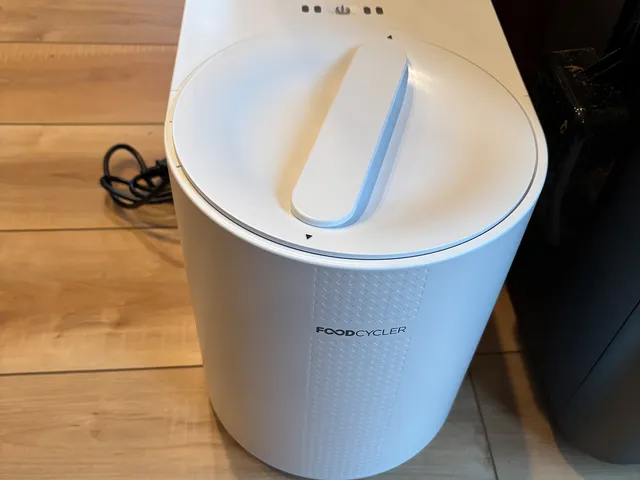
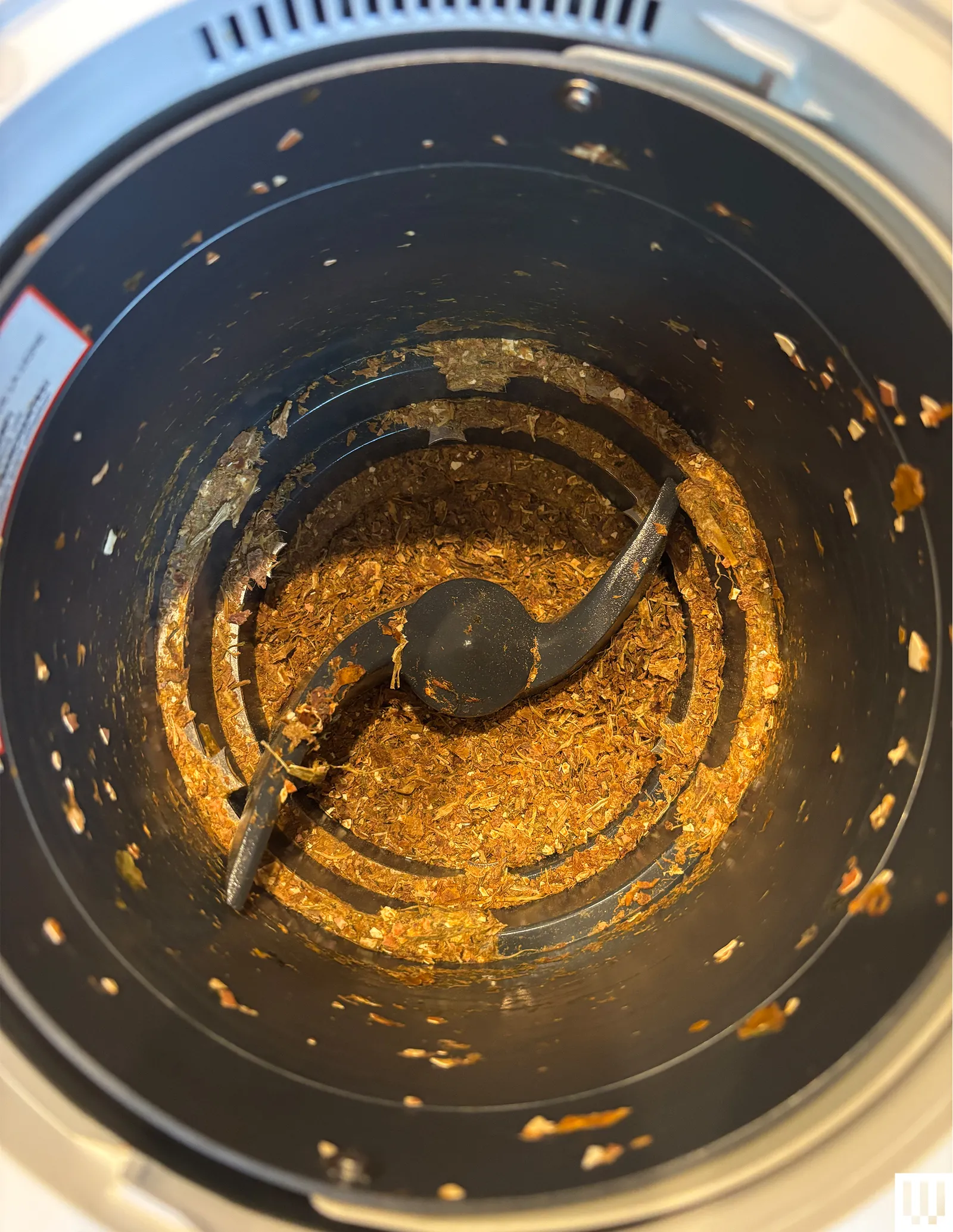
First off, I appreciate that FoodCycler doesn’t even pretend it's making compost. “The FoodCycler is a food waste recycler,” the company explained firmly before agreeing to ship a test unit. “Our primary goal is to provide a modern food waste solution for users who may lack access to traditional composting or other disposal options that divert from the landfill. Therefore, the resulting byproduct cannot be labeled as ‘compost.’” And indeed, the FoodCycler breaks down food so quickly, and with no microbial involvement, that there’s no way anyone could think this was proper compost. But if you are going to go with a grinder/dryer, the Eco 3 makes more groaning/creaking noises while in operation than the Lomi 3, above, but it is still a great pick.
Photograph: Kat Merck
Launched in 2024, the Eco 3 is a smaller version of the Vitamix FoodCycler FC-50, sporting a larger 3.5-liter capacity and, according to FoodCycler, better grinding capability. At 11 x 9 x 13 inches, it is small enough to sit on a counter or tabletop, though the real convenience with this machine is its auxiliary pail. Fill the sleek, 8-inch-tall lidded container with scraps (in my household of three people, this took about three days), and once it's full, swap out the lids, seat it in the machine, and press a button.
A few hours later, you'll have a handful of “Foodilizer,” a "homemade soil amendment” that looks like finely ground dirt. In fact, the output is one of the most finely ground of any of these machines. There's no assembly with this machine (other than filling a filter with carbon granules), no app, no making an account, no pods or tablets or choosing various cycles—you don't even have to plug it in until you're ready to use it.
The cycle runs from four to nine hours, depending on the water content of the scraps, and though its base sound is an audible but unobtrusive whir (about 36 dB on my decibel meter), it has started making loud groaning and creaking sounds after six months of regular use, so I only run it at night or when I won't be home. I also occasionally had trouble getting the bucket to seat correctly, but the manual addresses this, and I was always able to get it right after a couple of tries.
Note: If you know you like the FoodCycler but need a larger capacity, FoodCycler's XL Eco 5 model (see Also Tried, below) can accommodate 5 liters of kitchen waste with slightly larger dimensions (14 x 14 x 10 inches). WIRED reviewer Nena Farrell tested the Eco 5 during the holiday party season, but felt the space investment required was not worth it over the Eco 3 for a grind-and-dry processor.
| Dimensions: | 11 x 9 x 13 inches |
| Capacity: | 3.5 liters |
| Can't process: | Compostable plastics, beef bones, candy, oils/fats |
| Fastest waste breakdown: | 4 to 9 hours |
| How to use its output: | Mix with soil at 1:10 ratio, or 1:15 if using meat/dairy; add to compost; sprinkle on your lawn |
| Warranty: | 3 years |
Photograph: Kat Merck
Vego
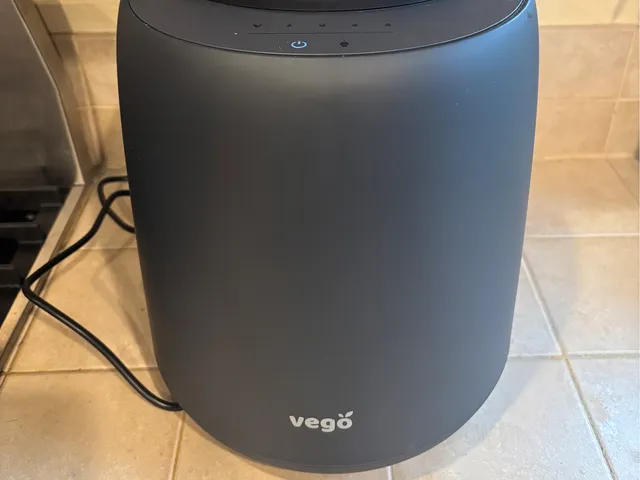
If you have a surfeit of stinky kitchen waste and want it dry and broken down lightning fast—say, in two hours, the quickest of any device on this list—the Vego is your machine. It's roughly the same size and dimensions as the Lomi, with many of the same operational features, but it has the distinction of being significantly less expensive. However, there are definitely some inconveniences that go along with the price point.
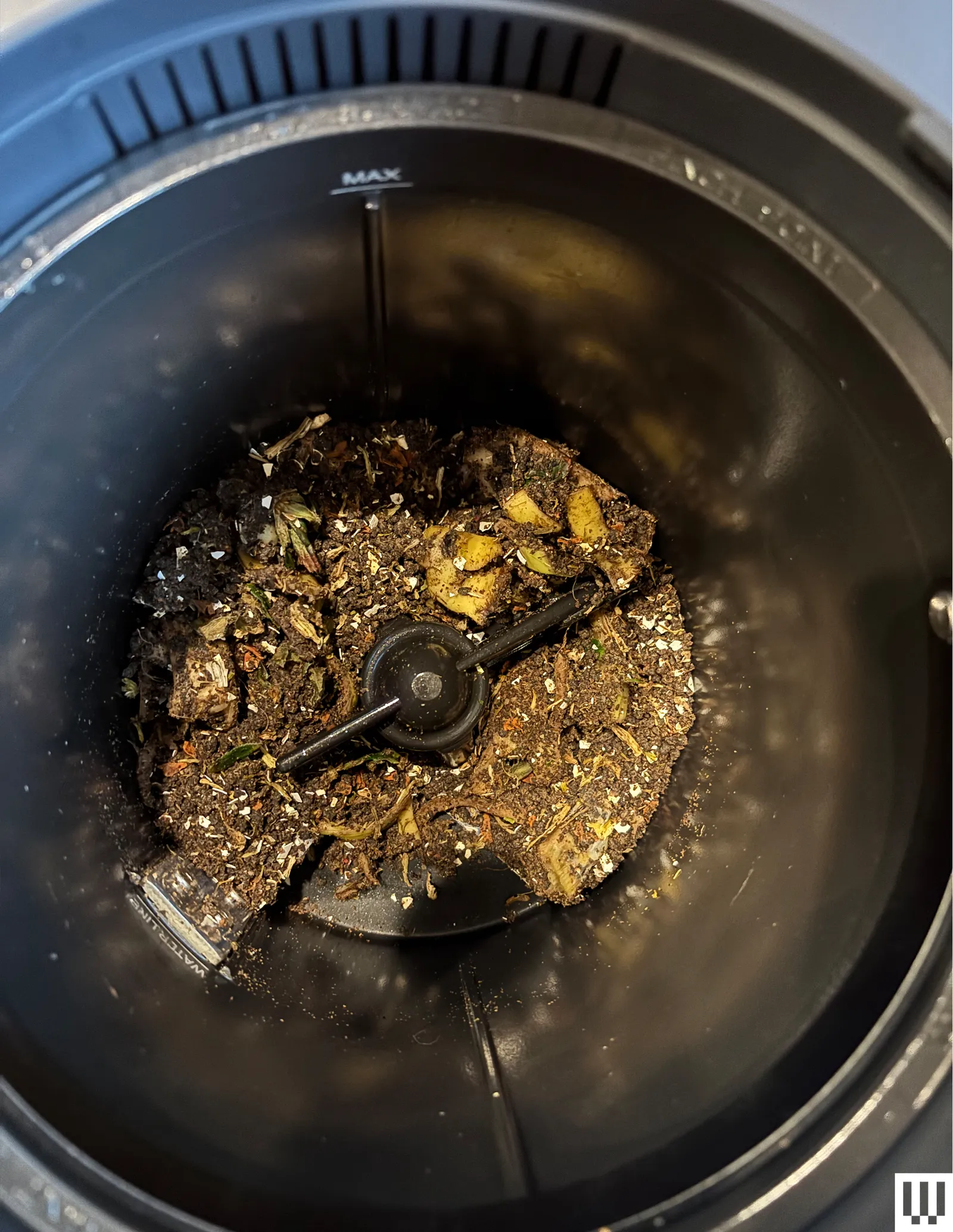
For one, like the Lomi, scraps need to be added into the bucket seated in the machine. You can remove the bucket, but unlike the FoodCycler, there's no separate lid for the bucket and the metal mechanism underneath is exposed. Further, the lid to the machine is a bona fide pain to get on and off, requiring precise alignment of notches and two hands to wrench it open or closed. Not easy to do with fists full of scraps. It's also got four different cycles to choose from—Vego, Express, Fertilize, and Grass. I tried them all. Express mode results in grounds that look more roughly chopped, as with the Mill (below), but there seemed to be little visual difference among the others, including Vego mode.
Photograph: Kat Merck
Vego claims its Vego mode does create a biologically active soil amendment when processed with one of the included VegoTabs (packet of 30, $30 if purchased separately). These “compost enhancer tablets" can be added during the Vego, Fertilize, and Grass modes. You can also add scraps while it's in Vego mode, and there's a clear lid and nifty light inside in case you want to watch the process.
In all modes, but Vego mode especially, the barrel turns every couple of minutes, emitting a loud whirring. Because the sound isn't constant, it's more noticeable. Even from 10 feet away, I found it obtrusive enough to want to turn up the TV volume. The Vego has an app, but it's meh at best, unhelpful at worst. It tells you the weight of scraps you've added (why?), as well as the benefits of and directions for using finished compost, which is not what is produced by the machine. There's also completely unrelated information about composting outside. However, this is the best entry-level option for this type of machine, so it's worth a look if you plan on having a separate bucket setup.
| Dimensions: | 14.37 × 11.22 × 12.64 inches |
| Capacity: | 4 liters |
| Can't process: | Meat, dairy, fat/oils, hard items like fruit pits or beef bones |
| Fastest waste breakdown: | 2 to 24 hours depending on cycle |
| How to use its output: | Mix with soil at 1:10 ratio, add to existing compost, spread on lawn |
| Warranty: | 1 year |
Photograph: Kat Merck
Mill
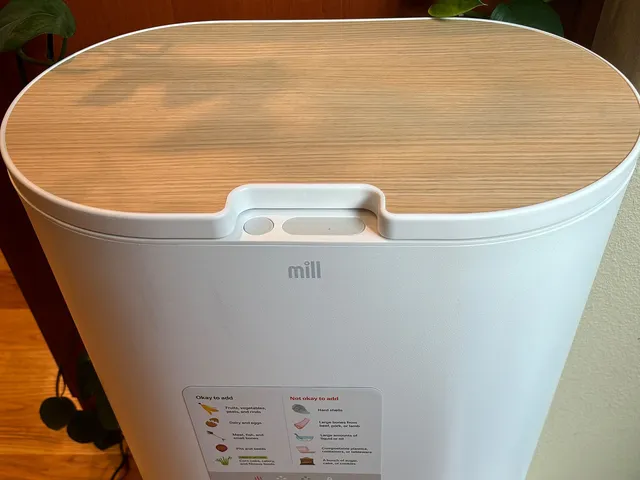
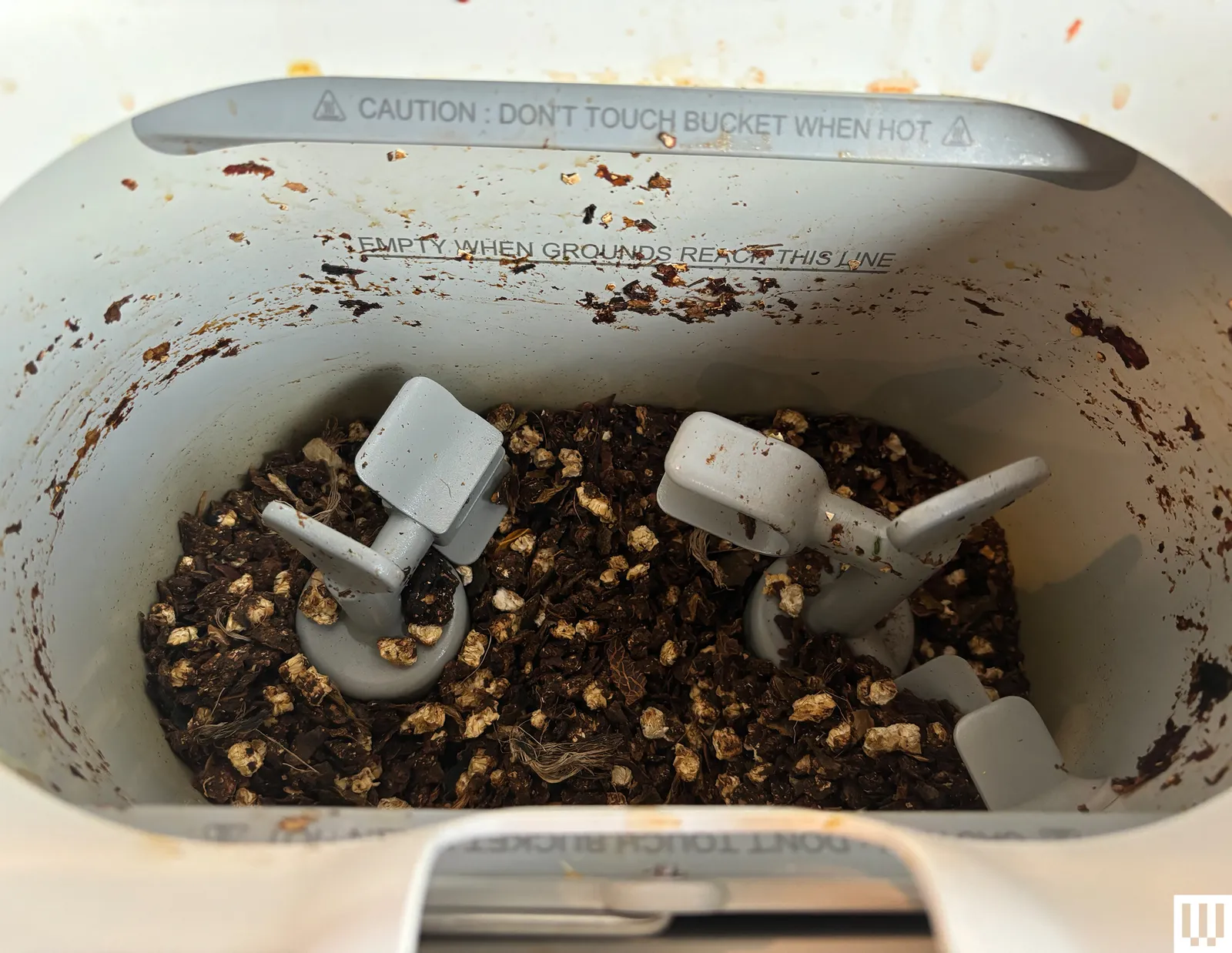
All of these machines do a great job breaking down food scraps in some way or another, but still don't fully address what one is supposed to do with them absent a yard or compost pile. Adding them at a 1:10 (or 1:15!) ratio to potting soil is kind of a pain, and many people don't have the space to store all this dirt. The Mill is the only device that addresses this issue by allowing users to ship their grounds in a box via USPS to a farm in Washington state that repurposes them for chicken feed (for an extra fee).
When I first tested the Mill, I didn't care for this idea, which seemed inefficient at best, and canceling out the benefit of recycling the food waste at worst. I also didn't love the coarse texture of the grounds, having tried to use them in my garden and finding them too easily rehydrated. The price also seemed over the top for what's essentially an oversized Lomi. But if you're looking to reduce the amount of food waste leaving your house, the Mill has the best ease of use, requiring the least amount of work on a user's part.
Photograph: Kat Merck
Like the Reencle, it acts as a big trash can—you can throw in whatever you'd like at any time, and you can program a cycle any time you'd like via the app, which is exceedingly complete and user-friendly. There's an almost encyclopedic directory of what can and can't go in the machine, as well as a tracker that shows how many pounds of waste you've diverted over time. The Mill also has such a massive capacity that it only needs to be emptied about once a month, a claim I found to be accurate during my testing period. It's on the louder side at around 60 dB, so I highly recommend scheduling its processing cycle to run at night. Mill had stopped its rental program when we first published our initial review, but it looks like it's back up again for $35 a month or $420 a year (one-year commitment required).
| Dimensions: | 27 x 16 x 15 inches |
| Capacity: | 6.5 liters, or 40 pounds |
| Can't process: | Large bones or shells, large amounts of oil or sugar/candy, compostable plastics/packaging, moldy meat |
| Fastest waste breakdown: | 3 hours to up to 24 hours |
| How to use its output: | Send in provided boxes to a farm, add to your own compost, feed to your chickens, add to soil at a ratio of 8 cups per 10 square feet |
| Warranty: | Five years (for units purchased on or after March 17, 2025) |
Photograph: Kat Merck
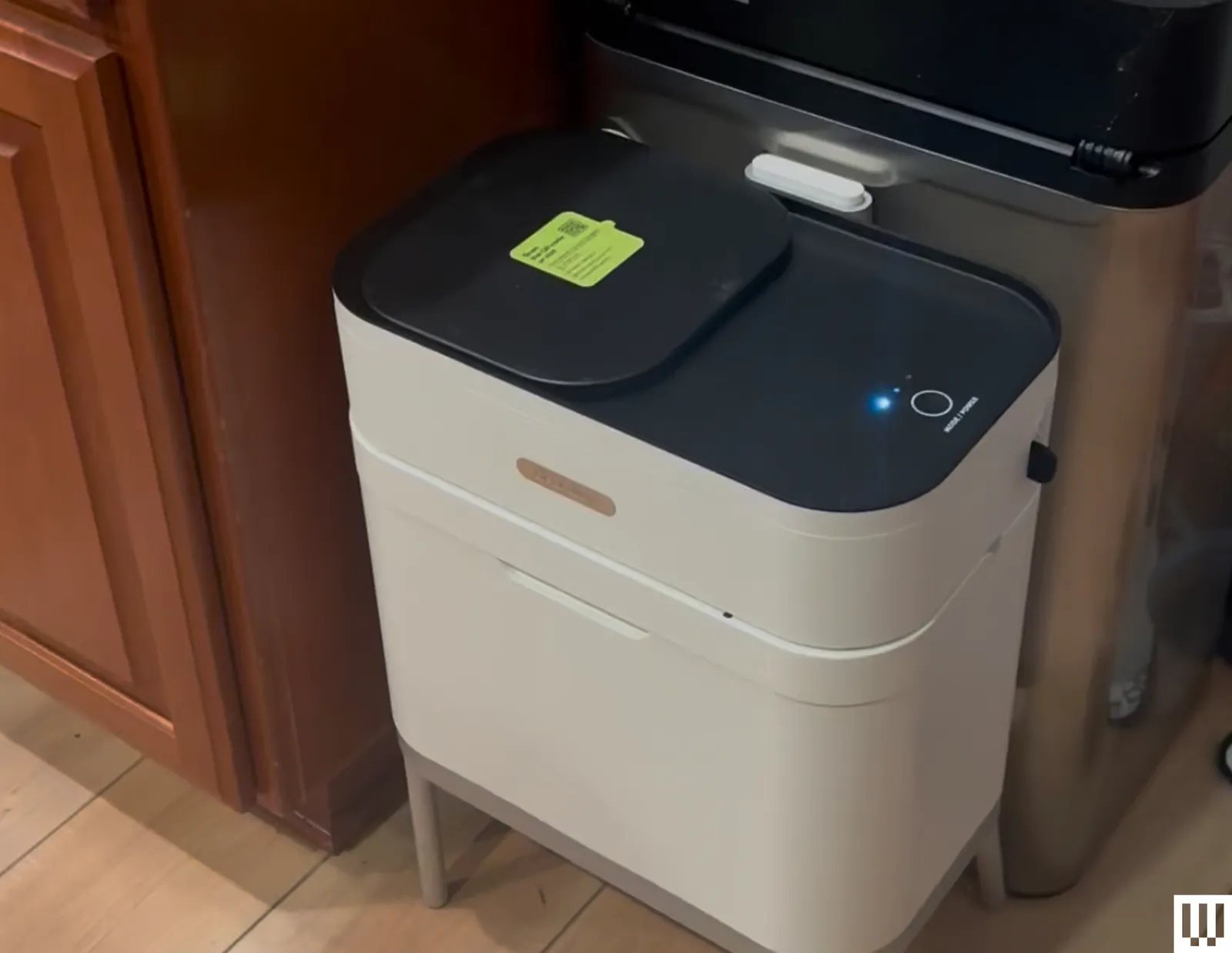
Clear Drop Organics Collector (OC) for $450: New from the makers of the innovative Soft Plastic Compactor, this simple white box does not claim to grind, process, or compost your food scraps—it simply stores up to 3.5 gallons' worth of them in an enclosed container with a fan and carbon filter for odors. For its part, it did this well. I also appreciated the paper-bag liners it came with, which made it easy to drop the scraps off at a nearby collection bin, as my town does not have municipal compost. I also loved the sensor-activated lid that slides back and forth. Clear Drop posits that municipal composting is the best option overall, because the process can be standardized for quality and is easy for everyone to do, and I agree. But, let's be real—you can get a carbon-filter compost canister for less than $30. If taking the compost out every couple of days instead of every seven days is a chore you're willing to pay $450 to avoid, then knock yourself out. But you should know that the OC makes a loud fan noise—40 dB on my decibel meter, which annoyed everyone in my household so much that I didn't even make it through the full test period.
GEME Terra II for $599: Billed as the first "AI-powered kitchen appliance that uses industrial-grade microbes to turn waste into living soil,” this machine operates much like the Reencle, with a heated, enclosed container and bag of proprietary starter microbes. While the Reencle is also, unfortunately, a little fuzzy in its marketing about what's produced (not actual compost), the Terra II marketing unashamedly claims to make ready-to-use dirt. (Like the Reencle, it makes pre-compost that can be mixed with dirt.) What role AI plays in this process was not explained on the website, with the machine itself, or in the instruction booklet, but the Terra II's signature feature is that its industrial-grade microbes can withstand the supposed high heat of the breakdown process. Because of this high-heat process, the Terra II instructions claim it can accept meat, dairy, and “pet poops.” I shouldn't have to say this, but please do not put pet—or any—feces in your kitchen food recycler, as they may contain dangerous bacteria and parasites that could be transferred to your plants/garden. When I put a temperature probe into the Terra II's pre-compost, it was 97 degrees Fahrenheit—nowhere near hot enough to kill pathogens. Further, this machine emitted a constant fan noise, like a range hood on medium speed—46 dB on my decibel meter, which was loud enough to be disruptive.
FoodCycler Eco 5 for $599: Like the Eco 3 above, this is a food recycler and doesn’t claim to create true compost. It’s a large machine, and quiet; my 3-year-old likes to turn it on when I’m not looking, and I don’t notice until I see the blue light on. Thus, the food scraps I put in there have been shredded to intense bits thanks to my kid’s sneaky button-pushing. The result doesn’t look like compost, but has been ground down to some bare-bones food bits after several extra cycles initiated by my son. Each cycle runs between four and nine hours. Still, it hasn’t been stinky, and it has been handy to have nearby in the kitchen for food waste. It is quite large, though—nearly as bulky as my robot vacuum station due to its 5-liter capacity. The cheaper Eco 3 is a more efficient use of space in your kitchen, unless you have a ton of food scraps on a regular basis and really need the larger-capacity bin. —Nena Farrell
I cook daily for my family of three, and I've been processing our kitchen scraps in these composters in my home kitchen since summer 2024. Each was tested under typical household use for a minimum of four weeks each, and in several cases, six weeks or longer. I tested all cycles offered and with all manner of foods allowed according to the manual, and in the case of the Reencle and the Mill, even attempted to use the finished product in my yard and houseplants (to varying effect).
Power up with unlimited access to WIRED. Get best-in-class reporting and exclusive subscriber content that's too important to ignore. Subscribe Today.
此内容由惯性聚合(RSS阅读器)自动聚合整理,仅供阅读参考。 原文来自 — 版权归原作者所有。