





For NASA astronomers, engineers and mission managers, the most critical point of a trip to the moon is not the maneuver around the satellite but rather a much less moment: reentry. That final effort, which lasts less than 20 minutes, may completely redefine the Artemis program.
The four Artemis II astronauts are the first to return to lunar orbit after 50 years. They are also the first to return to Earth in a new spacecraft that will reach about 11 kilometers per second—32 times the speed of sound, or nearly twice the speed of a traditional reentry from the International Space Station. During this final stage, the Orion capsule will pass through a plasma cocoon where the temperature reaches 2,700 degrees Celsius (4,900 Fahrenheit) due to friction with the atmosphere.
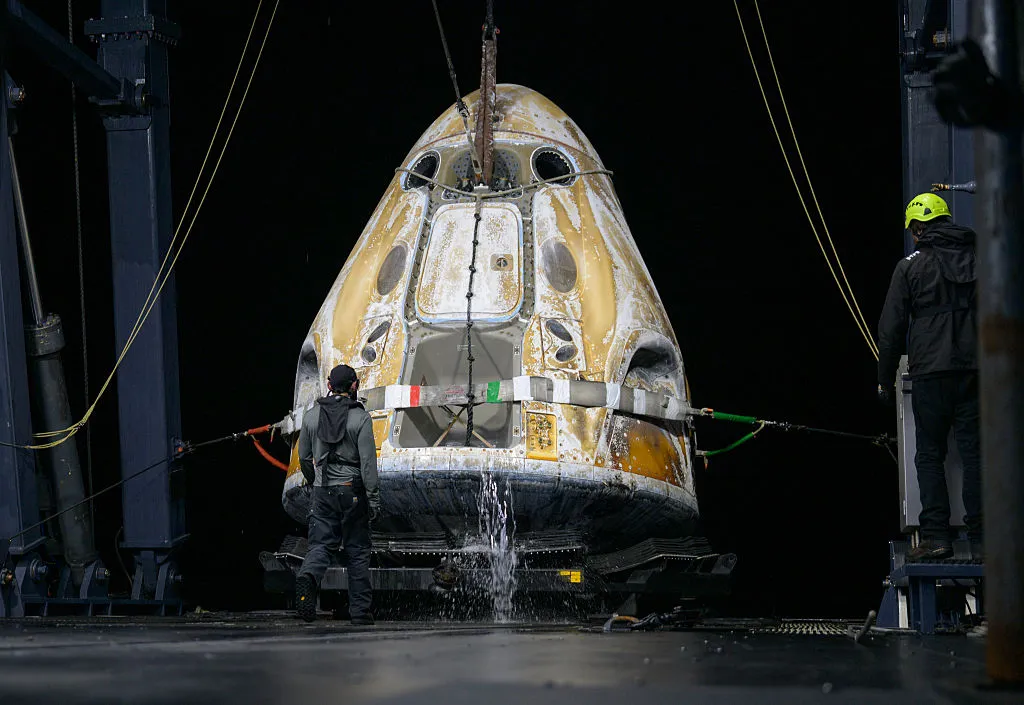
This is what a capsule looks like after it returns to Earth from the International Space Station.
For about six minutes, the spacecraft will lose communication with NASA, endure deceleration forces of 3.9 g’s, and rely entirely on the heat shield, which is made of Avocat, a material designed to burn in a controlled manner. That shield is literally the barrier separating the crew from the incandescent exterior.
This is the second time Orion has faced that test. On its first attempt, it did not pass at all. During Artemis I, the capsule returned from the moon orbit, uncrewed, to test its heat shield under real-world conditions. Instead of showing uniform wear, the Avcoat burned unevenly and shed more material than expected, leaving erosion patterns that did not match what engineers had modeled.
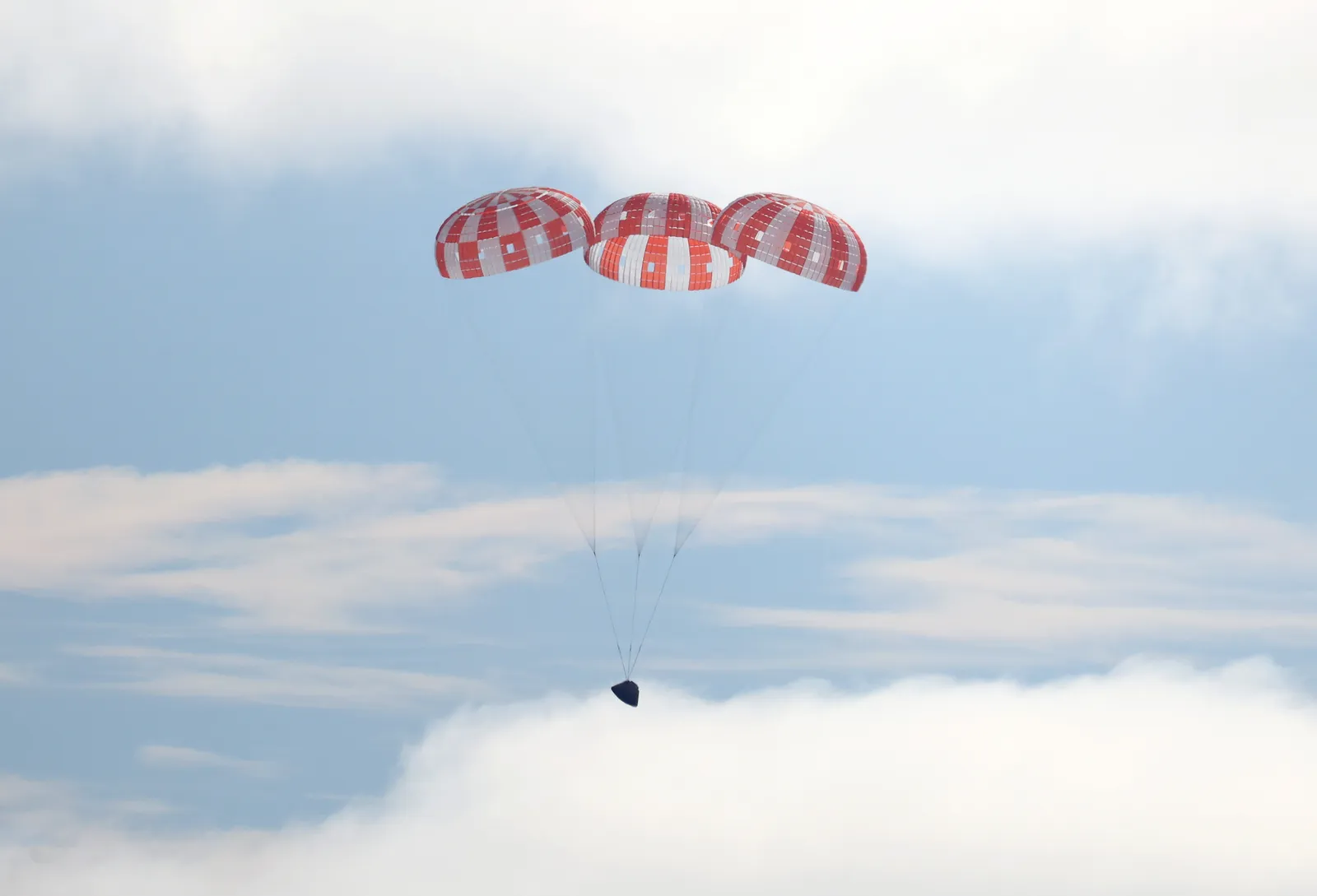
The last phase of the Artemis I mission's descent.
Specialists did not classify it as a catastrophic failure, but it was a clear sign that something was wrong and could put lives at risk. In response, NASA halted the program's progress. Artemis II did not go forward until Orion went through a shield redesign, new materials testing, and a complete recalibration of the thermal models. The dream of returning to the moon was delayed for nearly two years.
Space history is replete with moments when a problem during reentry forced entire missions to be halted or reconsidered. The case of Soyuz 1 in 1967 is one of the most remembered. The pioneering capsule orbited Earth, but its parachute system failed during reentry, and the spacecraft hit the ground at full speed. Cosmonaut Vladimir Komarov died and the program was suspended for 18 months.
For NASA, tragedy struck in 2003. A foam fragment hit the left wing of the shuttle Columbia during launch and damaged its heat shield. No one detected the flaw. Upon reentry, heat penetrated the structure and the spacecraft disintegrated. All seven crew members died. The shuttle program was halted for two years and eventually was canceled.
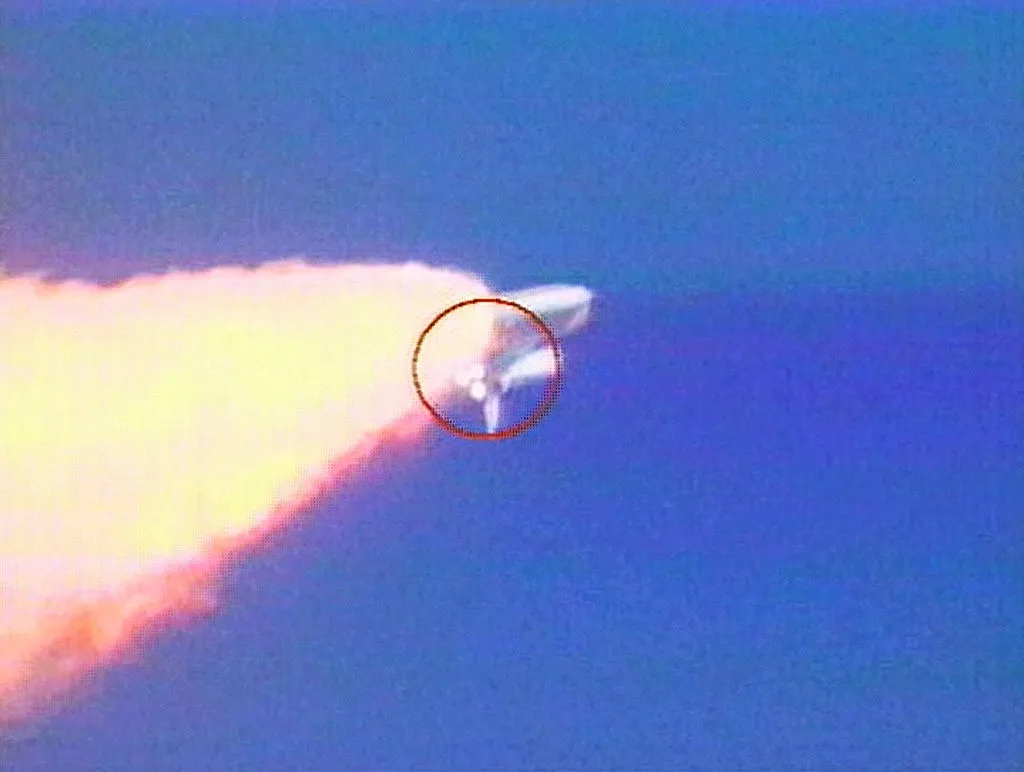
The moment when a fragment damaged the wing of the shuttle Columbia.
There is no room for improvisation in reentry. Artemis II is critical to the lunar program because it must demonstrate that the conditions are in place to safely carry human beings to, and return them from, the moon. If that final leg is not flawless, the program grinds to a halt.
Partly for this reason, the expected lunar landing was moved to Artemis IV, scheduled for before 2030. Artemis III will be an intermediate mission, less spectacular but more critical, and dedicated to validating systems, suits, and maneuvers. This will ensure that, when the time comes to set foot on the moon, as little as possible is left to chance.
This story originally appeared in WIRED en Español and has been translated from Spanish.
此内容由惯性聚合(RSS阅读器)自动聚合整理,仅供阅读参考。 原文来自 — 版权归原作者所有。