
惯性聚合 高效追踪和阅读你感兴趣的博客、新闻、科技资讯
阅读原文 在惯性聚合中打开

推荐订阅源

Hacker News: Ask HN
Hacker News: Ask HN
WordPress大学
WordPress大学
H
Help Net Security
小众软件
小众软件
N
Netflix TechBlog - Medium
C
Check Point Blog
量子位
Last Week in AI
Last Week in AI
GbyAI
GbyAI
Martin Fowler
Martin Fowler
M
MIT News - Artificial intelligence
博客园 - 聂微东
Engineering at Meta
Engineering at Meta
让小产品的独立变现更简单 - ezindie.com
J
Java Code Geeks
D
DataBreaches.Net
Project Zero
Project Zero
P
Proofpoint News Feed
T
Threat Research - Cisco Blogs
Security Latest
Security Latest
Cisco Talos Blog
Cisco Talos Blog
Recorded Future
Recorded Future
I
Intezer
L
Lohrmann on Cybersecurity
Cyberwarzone
Cyberwarzone
博客园_首页
C
Cyber Attacks, Cyber Crime and Cyber Security
L
LangChain Blog
P
Palo Alto Networks Blog
V
V2EX
D
Darknet – Hacking Tools, Hacker News & Cyber Security
T
The Exploit Database - CXSecurity.com
The Hacker News
The Hacker News
Blog — PlanetScale
Blog — PlanetScale
G
GRAHAM CLULEY
T
The Blog of Author Tim Ferriss
C
Cisco Blogs
The Register - Security
L
LINUX DO - 热门话题
P
Privacy & Cybersecurity Law Blog
Scott Helme
Scott Helme
F
Full Disclosure
博客园 - 司徒正美
Recent Announcements
IT之家
IT之家
CTFtime.org: upcoming CTF events
Attack and Defense Labs
Cloudbric
Cloudbric
Help Net Security
Help Net Security
The Last Watchdog
The Last Watchdog

Hacker News: Show HN

PurrrrrFocus: Pomodoro Timer App - App Store Workflow Engine — Multi-Step Orchestration for Bun RapidPhoto: Pro Photo Editor App - App Store GitHub - DheerG/swarms: Achieve extraordinary results with claude code across a variety of tasks SPICE simulation → oscilloscope → verification with Claude Code — Lucas Gerads Show HN: VCoding – A 5 MB native Windows IDE with no dynamic dependencies Show HN: LLMs don't hallucinate because they're bad at math, it's the format GitHub - Agent-FM/agentfm-core: AgentFM is a peer-to-peer network that turns everyday computers into a decentralized AI supercomputer. AgentFM lets you run massive AI workloads directly across a global mesh of idle CPUs and GPUs. Show HN: Tracking Top US Science Olympiad Alumni over Last 25 Years GitHub - Potarix/agent-hub: One place to talk to all your agents Show HN: Runtime security for AI agents(injection,tool abuse, data exfiltration) GitHub - dubeyKartikay/lazyspotify: Terminal Spotify client for macOS and Linux GitHub - the-banana-tool/king-louie: Easy to use GUI Personal AI Assistant. Win/Linux/Mac. Show HN I made my vacation rental bookable by AI agents–no Airbnb, 0% commission GitHub - basteez/jsf-autoreload: maven plugin to enable hot reload on jsf projects uvm32/hosts/host-gdbstub at main · ringtailsoftware/uvm32 GitHub - labsai/EDDI: Config-driven engine that turns JSON into production-grade AI agents. Multi-agent orchestration, 12+ LLM providers, MCP/A2A protocols, RAG, persistent memory, and enterprise compliance (EU AI Act, GDPR, HIPAA). Built on Quarkus. GitHub - glitchnsec/fortyone-oss: AI Executive Assistant Platform Quickstart | Alien GitHub - muxshed/shed: One stream in, or many. Every destination, simultaneously. No cloud middleman, no per-channel fees, no limits. GitHub - ocrbase-hq/ocrbase: 📄 PDF/IMG ->.MD/JSON Document OCR API for PaddleOCR and GLMOCR. Self-hostable. GitHub - impactjo/home-memory: MCP server that lets your AI assistant remember everything about your home. GitHub - Sets88/dbcls: DbCls is a powerful terminal database client that supports various databases GitHub - neptun2000/heor-agent-mcp GitHub - SeanFDZ/macmind: Single-layer transformer in HyperTalk for the classic Macintosh RollQuation: Math Puzzles - Apps on Google Play GitHub - dropbox/witchcraft Show HN: Agent-cache – Multi-tier LLM/tool/session caching for Valkey and Redis GitHub - opentalon/opentalon: OpenTalon is an open-source platform built from the ground up in Go as a robust alternative to OpenClaw LinkedIn™ 职位抓取工具 - Chrome 应用商店 GitHub - EdoardoBambini/Agent-Armor-Iaga: AI agents are getting tool access — shell, file system, databases, APIs, secrets. But **nobody is governing what they actually do with it**. Frameworks like LangChain, CrewAI, AutoGen, and Claude Code give agents the power to execute. Agent Armor gives you the power to control, audit, and approve every single action before it happens. HN Vibes — Week 15, Apr 7–13 2026 GitHub - chojs23/ec: Easy terminal-native 3-way git mergetool vim-like workflow GitHub - SethPyle376/hiraeth: Local AWS emulator focused on fast integration testing, with SQS support, SQLite-backed state, and a debug-friendly web UI. GitHub - JakOb-dotcom/cloud-sandbox-security-analysis: Technical analysis and Proof of Concept (PoC) regarding environment variable exfiltration in containerized cloud sandboxes via side-channel data leaks. Springboards - Flint Alpha Show HN: A simpler coding agent harness GitHub - audiodude/sudomake-friends GitHub - 256thFission/mini-mythos: OSS clone of Anthropic’s Mythos harness to locate C/C++ memory vulnerabilities Show HN: OpenParallax: OS-level privilege separation for AI agent execution Hacker News Sorted - Chrome 应用商店 Show HN: How to Install Docker on Ubuntu 24.04 LTS: Complete 2026 Guide GitHub - himanshudongre/smriti GitHub - sverrirsig/claude-control: macOS desktop dashboard for monitoring and managing multiple Claude Code sessions GitHub - ory/dockertest: Write better integration tests! Dockertest helps you boot up ephermal docker images for your Go tests with minimal work. Chiral - Chrome 应用商店 Show HN: Two Claudes collaborating through shared memory on a $100 mini-PC GitHub - pmichaillat/latex-cv: Minimalist LaTeX template for academic CVs GitHub - oguzbilgic/posse: A web UI for Anthropic Managed Agents. GitHub - sshiraz/depsly: Dependency risk analysis tool for npm packages ABI Add safari/agent-harness — Safari browser automation via safari-mcp by achiya-automation · Pull Request #212 · HKUDS/CLI-Anything GitHub - Halfblood-Prince/trustcheck: Verify PyPI package attestations and improve Python supply-chain security GitHub - oguzbilgic/kern-ai: Agents that do the work and show it. GitHub - bruits/satteri: High-performance Markdown and MDX processing for the JavaScript ecosystem GitHub - tylergibbs1/feedstock: High-performance web crawler and scraper for TypeScript, powered by Bun and Playwright GitHub - Grimm67123/grimmbot: The self-improving sandboxed and open-source AI agent. With persistent memory and scheduling. GitHub - whitevanillaskies/whitebloom: Local whiteboard that blooms. GitHub - hwdsl2/docker-whisper: Docker image for a self-hosted Whisper speech-to-text server with speaker diarization and OpenAI-compatible transcription and translation APIs. Powered by faster-whisper. Supports all Whisper models, NVIDIA GPU (CUDA) acceleration, JSON/SRT/VTT output, SSE streaming, offline mode, and multi-arch (amd64, arm64). GitHub - yisding/reviewwiggum GitHub - MarwanAlsoltany/serrors: Structured errors for Go: sentinel hierarchies, typed data, custom formatting, and slog integration. GitHub - soatok/age-php GitHub - Luthiraa/markitme GitHub - stagas/rtdiff: realtime git diff gui and AI-assisted commits GitHub - tombedor/excalicharts GitHub - wh1le/excalidraw-edit: Open and edit .excalidraw files from the terminal. Offline, auto-saves to disk. MalExt Sentry - Malicious Extension Scanner - Chrome 应用商店 GitHub - syi0808/asciianimesvg: Generate animated ASCII art SVGs from text. CLI, Rust library, WASM, and web editor. GitHub - zaina-ml/ml_forge: A visual-based graph node editor for training computer vision models. GitHub - anakin87/llm-rl-environments-lil-course: 🌱 A little course on Reinforcement Learning Environments for evaluating and training Language Models GitHub - takaakit/superpowers-uml: Superpowers-UML modifies Superpowers to ensure a software development workflow in which AI agents design through UML modeling. AdriByte Studio - Sviluppo Web e Soluzioni Digitali GitHub - chouligi/angel-copilot: Your personalized Angel Investment Advisor Show HN: MoodSense AI (ML and FastAPI and Gradio, Deployed on Hugging Face) Moodsense Ai - a Hugging Face Space by aman179102 GitHub - agenteractai/lodmem: Level Of Detail Context Management for Agents GitHub - ostefani/subnetlens: A fast, concurrent network scanner with a TUI and plain-text CLI, built in Go. It discovers live hosts on your network, scans their open ports, resolves hostnames, and fingerprints operating systems—delivered. Cyber Pulse: Agentic Intel - Apps on Google Play Whisper API: Self-Hostable Speech to Text Transcription The Agent-Web Protocol Stack: A Research Thesis GitHub - msmarkgu/RelayFreeLLM: A restful API designed to route user prompts to various AI model providers. Show HN: Provepy – A Python decorator that proves your code using Lean and LLMs Show HN: Pardonned.com – A searchable database of US Pardons GitHub - patrickdappollonio/dux: Dux is a terminal UI that lets you run multiple AI coding agents side by side, each in its own git worktree, with full companion terminals, macros, commit generation, and a command palette that knows more tricks than you do. kMC Crystal Simulator Show HN: HyperFlow – A self-improving agent framework built on LangGraph GitHub - stef41/vibescore: 🎵 Grade your vibe-coded project. One command, instant letter grade across security, quality, dependencies, and testing. GitHub - stef41/lmscan: 🔍 Detect AI-generated text and fingerprint which LLM wrote it. Open-source GPTZero alternative. Zero dependencies, works offline. imgur.com GitHub - visionscaper/collabmem: Enabling long-term collaboration with Agentic AI - building up episodic and world model memory over time with in-context awareness 在 Steam 上购买 FriedrichAI: Offline AI 立省 10% GitHub - atripati/ark: AI Runtime Kernel — a context operating system for AI agents. Eliminates tool bloat, loads only what’s needed, and gives LLMs their reasoning space back. GitHub - nowork-studio/toprank: Open-source Claude Code skills for SEO, SEM, Google Ads GitHub - tacomanator/sash: Lightweight macOS menu bar app for reliably cycling through windows of the current application. Appents | Social Media Management for Product-First Teams GitHub - pnhoang/youtube-spam-blocker: Automatically detects and hides spam messages in YouTube Live chat. Set rate limits, keyword filters, and block repeat offenders. GitHub - decisionnode/DecisionNode: CLI + Local MCP - A shared structured memory store across Claude Code, Cursor, Windsurf, Antigravity, and every MCP client. Semantically queryable. GitHub - AvaCodeSolutions/django-email-learning: An open source Django app for creating email-based learning platforms with IMAP integration and React frontend components. The $100K Gap in Kubernetes Security Tooling Function Calling Harness: From 6.75% to 100%
YC Spring 2026 Batch: All 194 Companies, Scored | Fluenta
Oleg Ivanov · 2026-06-16 · via Hacker News: Show HN

By Oleg IvanovUpdated Jun 13, 202612 min read

YC's Spring 2026 batch demos on June 16. We scored all 194 companies on public data before they walked on stage, and three things stand out. None of them is what the batch is selling.

One line holds the whole thing together. Almost half the batch is building tools for AI agents, and the highest score on the board belongs to a company you should question hardest.

Key Takeaways

The batch is one bet made 194 ways: most of it builds for AI agents or sells AI automation, and the same theses repeat inside every group.

Monetization is the strongest-looking signal and the least trustworthy. On real payback math, dozens of companies need over a year to earn back one customer.

The scoring pushed most companies toward a narrow wedge. In a batch this concentrated, the broad lane is already taken.

Group averages sit in a tight band: Agent Infrastructure 50.3, AI Workforce 49.1, Care and Capital 48.3, AI Meets the Real World 46.3.

Public data only. A quiet company with signed pilots can score low; the value is the three questions per company, not the number.

See where every company landed

All 194, scored on six public signals — searchable, each with the three questions to ask its founder. Free and open below, no signup.

Jump to the board ↓

The shape of the batch

We split the 194 into four groups. None of them pulled away from the rest. Agent Infrastructure came out highest on average and the atoms group lowest, with the other two stacked in between. The whole class lives in a narrow band. There is no runaway here. (The group averages and the full ranking are in the chart and table below.)

What repeats is the bet. The batch made a single wager and made it over and over, mostly some flavor of building for agents or selling AI automation, and the duplicates pile up inside a group rather than across it. What also repeats is the verdict. The scoring kept telling companies to narrow down, and almost never told one to go wide.

Group 1: Agent Infrastructure, the monetization mirage

Fifty-five companies building the rails everyone else builds agents on: runtimes, sandboxes, memory, observability, agent payments and identity. Twenty-eight of them literally say "for agents" in the one-liner. Top of the group: Kuli at 65.5, Armature and Superlog at 63.2. Bottom: RentAHuman at 32.7.
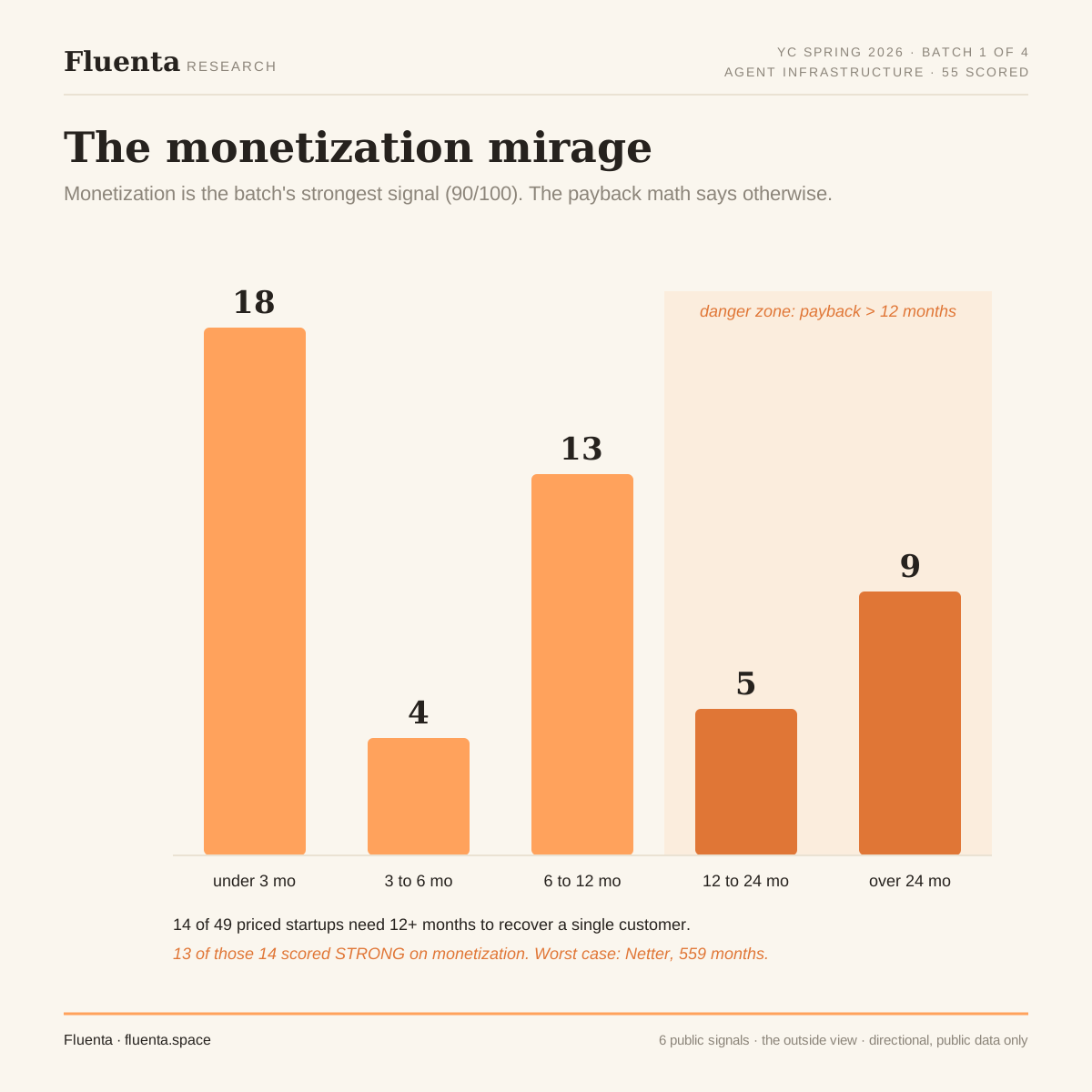
Batch 1: strong monetization scores, broken payback math

Fourteen of 49 priced Agent-Infrastructure companies need over a year to earn back a single customer.

Fourteen of 49 priced Agent-Infrastructure companies need over a year to earn back a single customer.

Source · Fluenta, YC Spring 2026

Monetization is the group's strongest signal, and that is the trap. On real CAC-versus-payback math, 14 of the 49 priced companies need more than a year to recover a single customer. Netter pencils out at 559 months, Amboras at 511, Replicas at 508, Incandor at 225. Thirteen of those fourteen scored "strong" on monetization. The lesson is blunt: do not underwrite the monetization score, underwrite the payback.
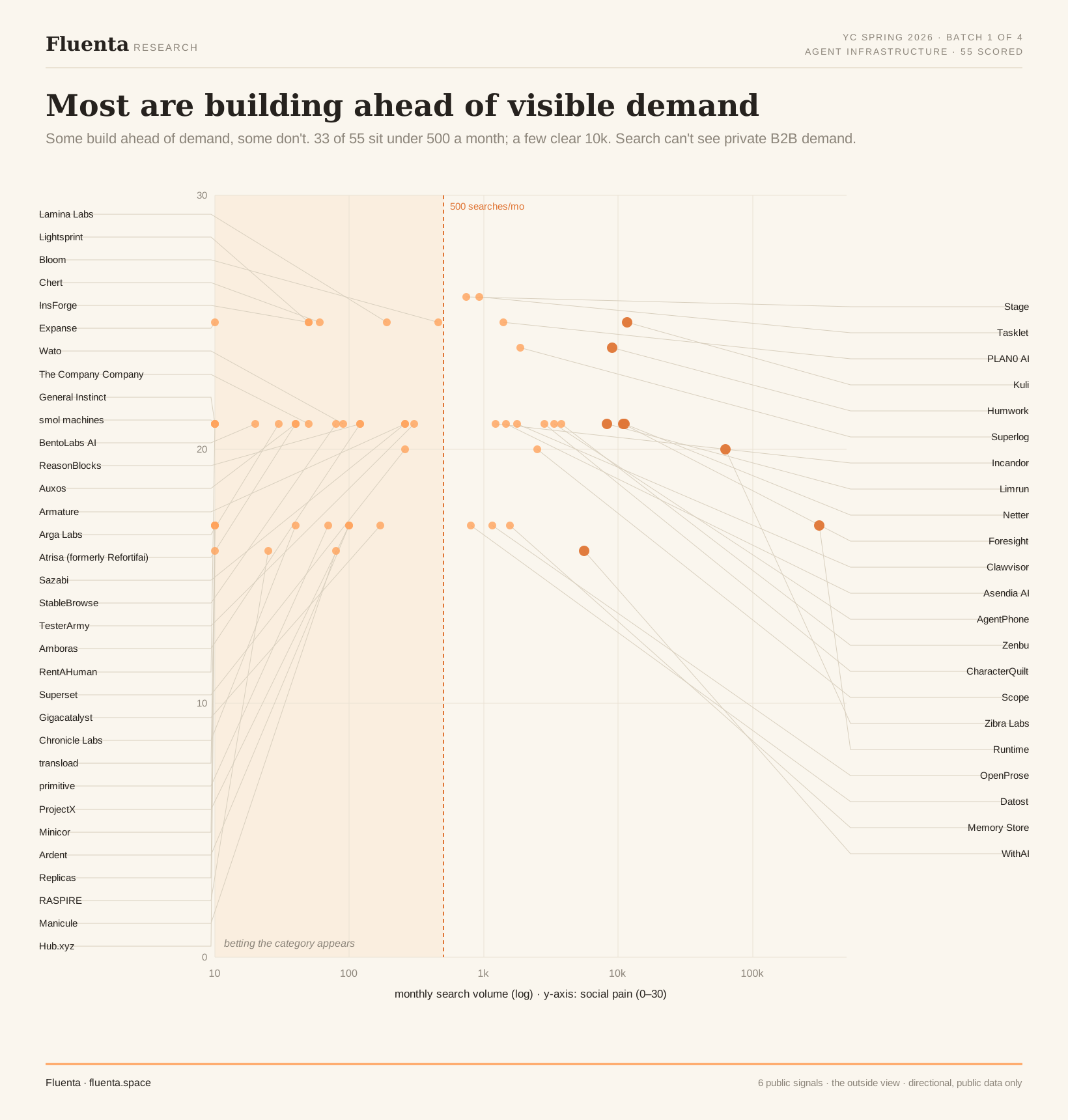
Batch 1: demand against competition

Most of the group clusters in low-search, crowded territory.

Most of the group clusters in low-search, crowded territory.

Source · Fluenta, YC Spring 2026

The other pattern is internal collision. Agent memory shows up three times in the same group. Agent sandboxes and testing show up four times. For those companies the first diligence question is not about the market. It is why you and not the others in your own cohort.

Group 2: The AI Workforce, the money already came

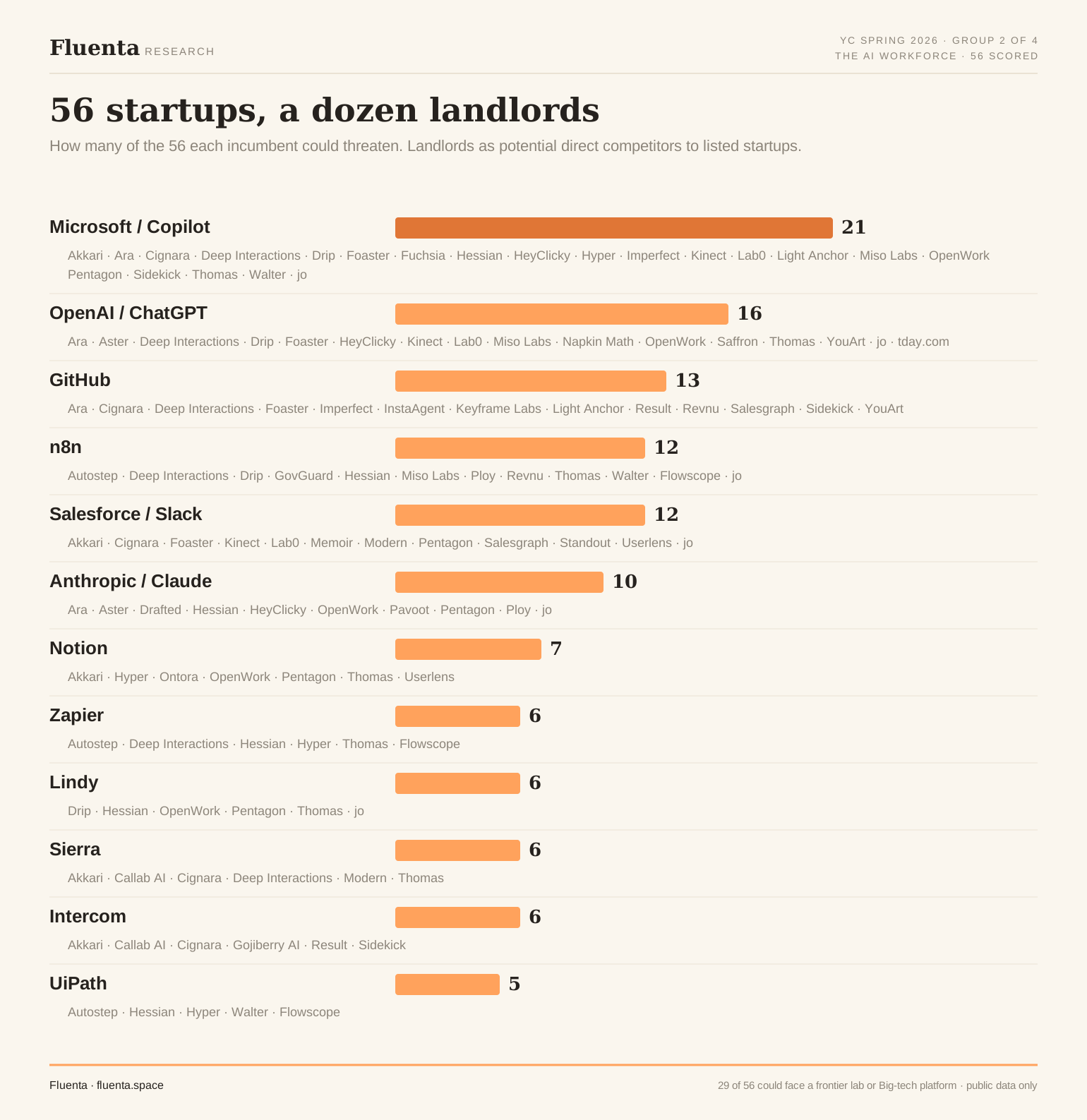
Fifty-six companies pointing agents at specific jobs: sales, support, recruiting, finance, back-office operations. Top: Saffron at 59.9, Pentagon at 59.5, InstaAgent at 58.8. Bottom: Drafted at 37.6.
Batch 2: the capital already came and left

Billions raised in these categories, absorbed rather than broken out.

Billions raised in these categories, absorbed rather than broken out.

Source · Fluenta, YC Spring 2026

Funding is the weakest signal for 32 of the 56, and not because the money is absent. It is because the money already came and left. Billions flowed into these categories and got absorbed rather than breaking out. The highest scorers sit in the white space the capital skipped, smaller raises in jobs the giants ignored. The investor read is the inverse of the usual one: a hot funding history here is a warning, not a green light.
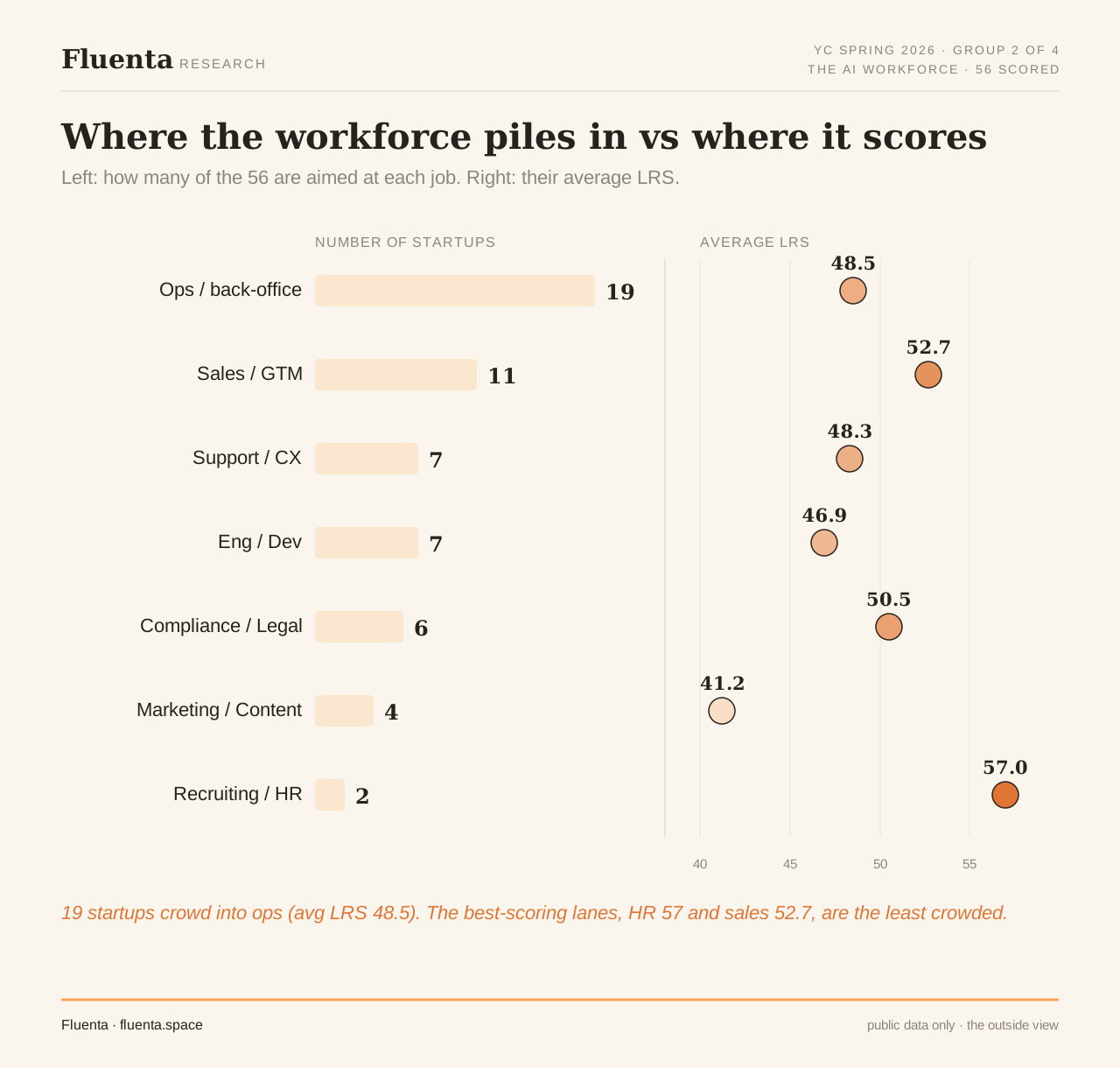
Batch 2: which jobs the AI workforce targets

The agents point at back-office and sales work first.

The agents point at back-office and sales work first.

Source · Fluenta, YC Spring 2026

The label itself is the tell. Every company in the group's bottom six is a vague "AI automation for X" play. Every company at the top owns one specific job. If the one-liner is "AI automation," the first question is which X they actually own, because the data says the vague ones do not score.

Group 3: AI Meets the Real World, where the unit economics are fiction

Thirty-nine companies that build in the physical world. One makes a nuclear reactor. Others make robots or drones, and a couple are defense plays. It scored lowest of the four groups, and that ranking is an artifact more than a finding. (Scores and the top and bottom names are in the chart and table below.)
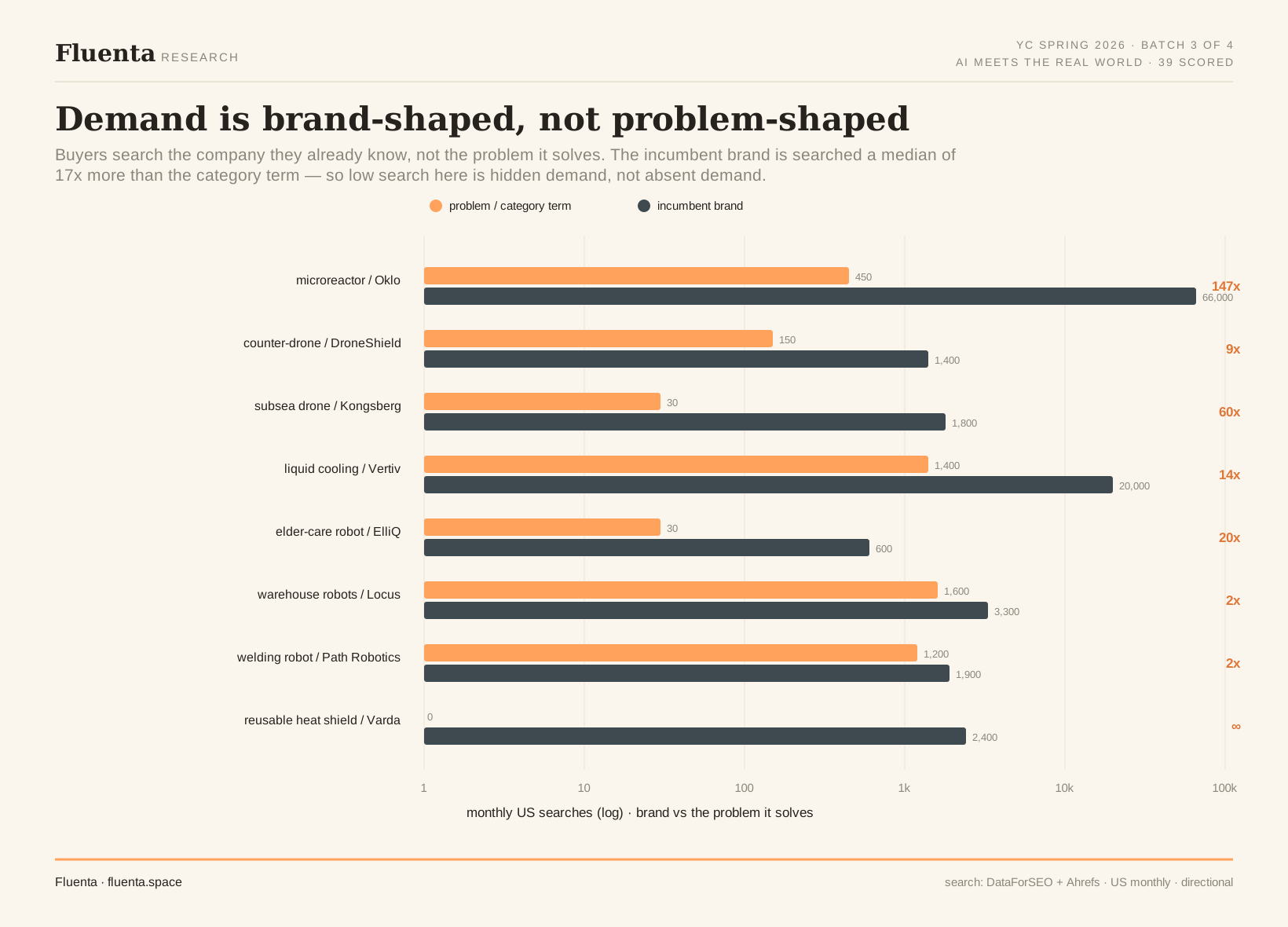
Batch 3: demand looks dead while pain runs hot

Atoms do not generate search; the buyer was never reachable by keyword.

Atoms do not generate search; the buyer was never reachable by keyword.

Source · Fluenta, YC Spring 2026

Nobody googles a warehouse robot. Demand here looks dead on paper while the pain scores run hot, and that gap is the whole story. The buyer for a reactor or an industrial robot was never going to be findable by a keyword. Low search is a measurement failure, not a verdict on the problem.
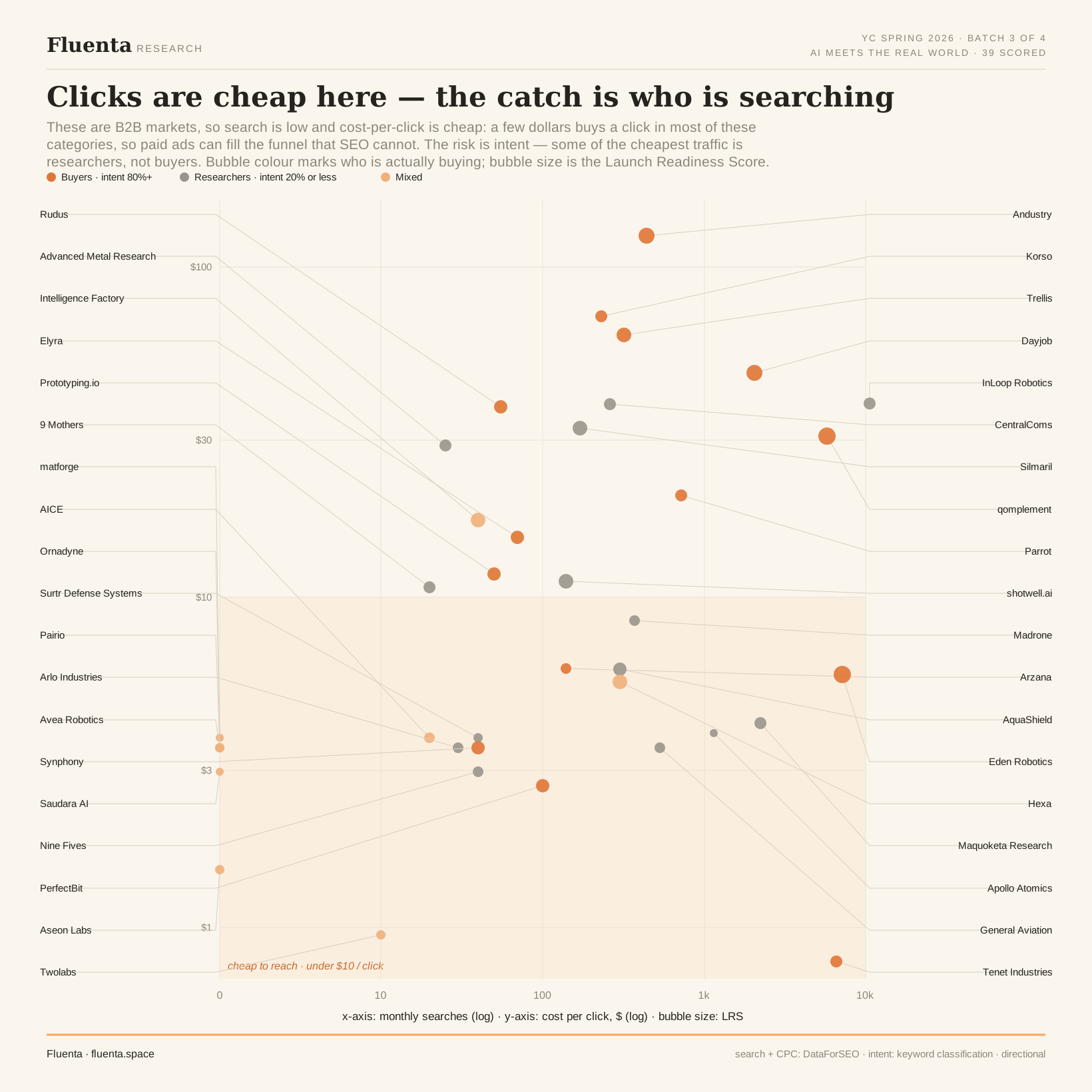
Batch 3: the buyers split in two

Half the group sells to curiosity, half to budget.

Half the group sells to curiosity, half to budget.

Source · Fluenta, YC Spring 2026

The payback number is the one to throw out. The cards claim a hardware company recovers a customer in about a month, which no hardware company does. That is a SaaS model run on a capex business. It counts the software and ignores what it costs to build the machine and bolt it to a customer's floor. Ask these founders about gross margin per unit, and ignore whatever the card says about payback.

Group 4: Care and Capital, the capital got here first

Forty-four companies in the two most regulated, most capital-intensive markets in venture: health and money. It is really two cohorts on one ruler, 19 in care and 25 in capital, and they fail for opposite reasons. Top: Taiga at 60.9, Gravy at 60.2, Arctic Health at 59.9. Bottom: Arden at 36.0.
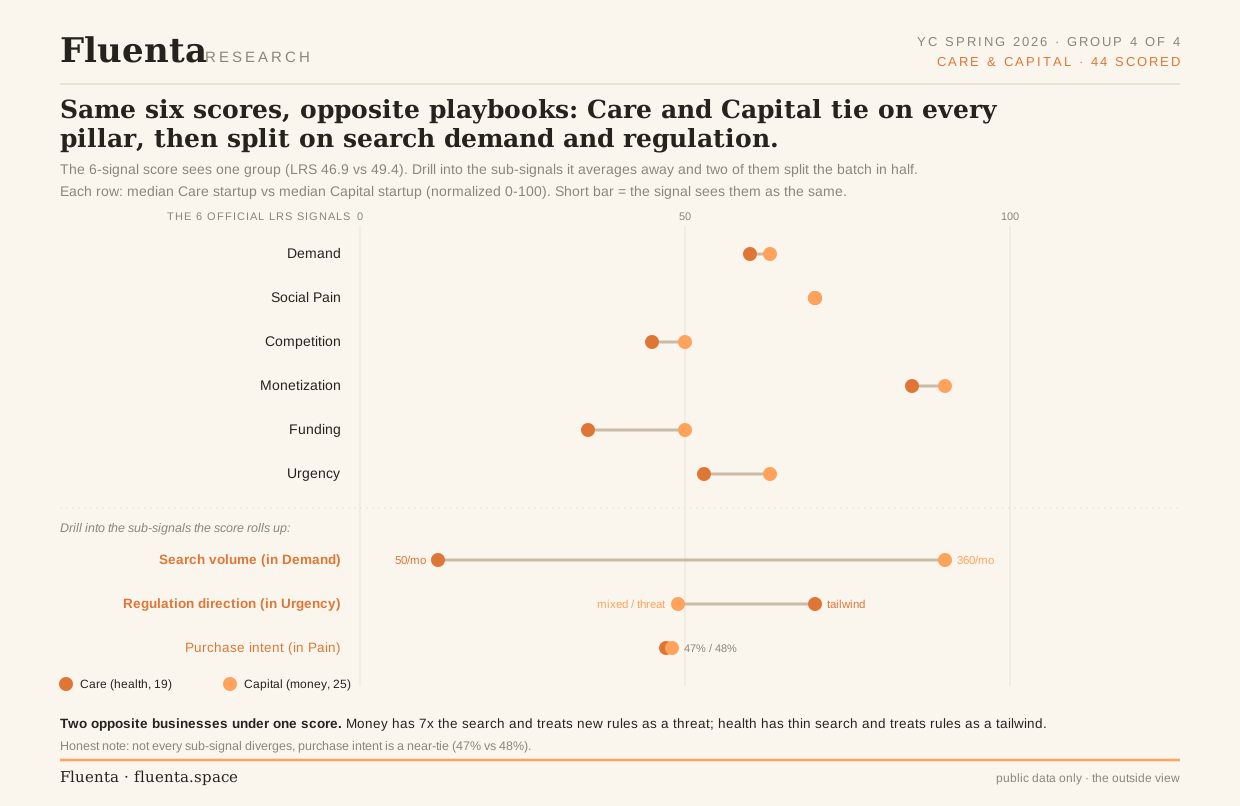
Batch 4: two cohorts on one ruler

Care and Capital fail for opposite reasons.

Care and Capital fail for opposite reasons.

Source · Fluenta, YC Spring 2026

Monetization is a non-question here. The pillar averages 89 percent, because health and money businesses make money by taking a slice of a transaction that already happens: a claim, a payment, a visit, a trade. So the two pillars that ask whether there is a way to make money stop discriminating. What separates the group is competition and capital.
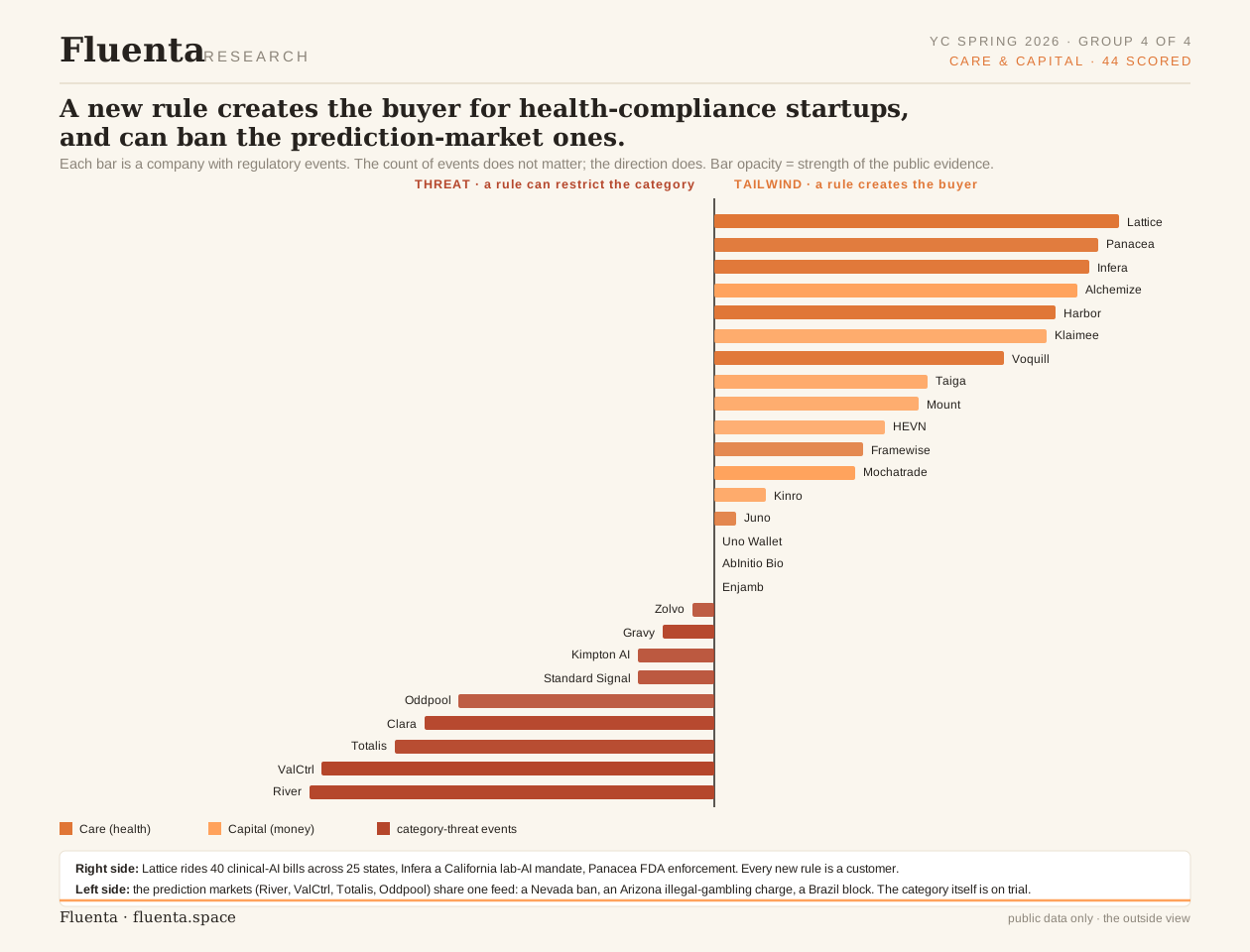
Batch 4: the regulatory wall the score cannot see

Eighteen of 19 health companies carry an FDA or reimbursement barrier.

Eighteen of 19 health companies carry an FDA or reimbursement barrier.

Source · Fluenta, YC Spring 2026

And the capital arrived years ago. Twenty-three of the 44 already face a competitor that raised more than 100 million dollars. Andco is up against EvenUp's 135 million. Clara is up against Forward, which raised 225 million and then shut down. Hedge is up against Nirvana's 100 million. Open lanes, common in the atoms group, are rare here. The care half hides a second problem the score cannot see at all: 18 of the 19 health companies carry an FDA, clinical-validation, or reimbursement barrier that no public signal measures.

Every company in the batch, scored

All 194 companies, searchable. Each row opens to the public-data read and the three questions a sharp investor would press on at Demo Day. Search by name, filter by group, and sort by score.

Tip: add this page to your home screen to use the board offline at Demo Day.

How we scored

Now the method, since you have seen what it found.

Six signals, fixed weights. Demand is worth 35 points, social pain 30, competition 24, monetization 20, funding 10, urgency 10. Each signal is built from a named public source. Search volume and purchase intent drive demand. Complaint threads on Reddit, Hacker News, Quora and the review sites drive pain. The count and concentration of direct competitors drive competition. Real pricing and payback comparables drive monetization. Dated funding rounds drive capital. News and hiring posts drive urgency. The six roll up to a single 0 to 100 Launch Readiness Score.

The score is a prior, not a verdict. A low score often means the demand is private, signed pilots and design partners that public data cannot see, not that the problem is fake. So the number is not the point. The three questions per company are.

What this is, and what it is not

This is the outside view and nothing more. Public data only, no interviews, so a quiet company with signed pilots can score low. Some sector tags are auto-generated and a few are wrong, flagged inline where they matter. The CAC, payback and gross-margin figures are model output, useful as a flag, not cited as fact. The funding extractor is noisy, so we cite only vetted competitor raises and treat unreadable records as "capital is hard to read here," never as a headline number.

The point of publishing it is not the scores. It is the questions. Every founder in the batch can find the three they will most likely get asked and prepare them. Every investor can find where to dig. And anyone can run the same six-signal read on their own idea inside Fluenta (fluenta.space).

Cite this article

Researchers and journalists: this article is freely citable. Click to copy the academic-format reference for your bibliography or footnote.

Ivanov, O. (2026). YC Spring 2026 Batch: All 194 Companies, Scored. Fluenta. Retrieved from https://fluenta.space/resources/reports/yc-spring-2026-batch-scored.

Related Resources

Score your idea in 20 minutes

Run Fluenta X-Ray on your idea. 25 live market + social feeds. Real demand data, real competition, real willingness-to-pay signals. From $7. 20 minutes.