惯性聚合 高效追踪和阅读你感兴趣的博客、新闻、科技资讯
阅读原文 在惯性聚合中打开

推荐订阅源

V
V2EX
人人都是产品经理
人人都是产品经理
WordPress大学
WordPress大学
博客园 - Franky
小众软件
小众软件
酷 壳 – CoolShell
酷 壳 – CoolShell
Apple Machine Learning Research
爱范儿
爱范儿
IT之家
IT之家
freeCodeCamp Programming Tutorials: Python, JavaScript, Git & More
V
Visual Studio Blog
S
SegmentFault 最新的问题
美团技术团队
OSCHINA 社区最新新闻
OSCHINA 社区最新新闻
有赞技术团队
有赞技术团队
B
Blog RSS Feed
Last Week in AI
Last Week in AI
Jina AI
Jina AI
博客园 - 司徒正美
The Cloudflare Blog
博客园_首页
博客园 - 聂微东
宝玉的分享
宝玉的分享
大猫的无限游戏
大猫的无限游戏

Hacker News: Show HN

PurrrrrFocus: Pomodoro Timer App - App Store Workflow Engine — Multi-Step Orchestration for Bun RapidPhoto: Pro Photo Editor App - App Store GitHub - DheerG/swarms: Achieve extraordinary results with claude code across a variety of tasks SPICE simulation → oscilloscope → verification with Claude Code — Lucas Gerads Show HN: VCoding – A 5 MB native Windows IDE with no dynamic dependencies Show HN: LLMs don't hallucinate because they're bad at math, it's the format GitHub - Agent-FM/agentfm-core: AgentFM is a peer-to-peer network that turns everyday computers into a decentralized AI supercomputer. AgentFM lets you run massive AI workloads directly across a global mesh of idle CPUs and GPUs. Show HN: Tracking Top US Science Olympiad Alumni over Last 25 Years GitHub - Potarix/agent-hub: One place to talk to all your agents Show HN: Runtime security for AI agents(injection,tool abuse, data exfiltration) GitHub - dubeyKartikay/lazyspotify: Terminal Spotify client for macOS and Linux GitHub - the-banana-tool/king-louie: Easy to use GUI Personal AI Assistant. Win/Linux/Mac. Show HN I made my vacation rental bookable by AI agents–no Airbnb, 0% commission GitHub - basteez/jsf-autoreload: maven plugin to enable hot reload on jsf projects uvm32/hosts/host-gdbstub at main · ringtailsoftware/uvm32 GitHub - labsai/EDDI: Config-driven engine that turns JSON into production-grade AI agents. Multi-agent orchestration, 12+ LLM providers, MCP/A2A protocols, RAG, persistent memory, and enterprise compliance (EU AI Act, GDPR, HIPAA). Built on Quarkus. GitHub - glitchnsec/fortyone-oss: AI Executive Assistant Platform Quickstart | Alien GitHub - muxshed/shed: One stream in, or many. Every destination, simultaneously. No cloud middleman, no per-channel fees, no limits. GitHub - ocrbase-hq/ocrbase: 📄 PDF/IMG ->.MD/JSON Document OCR API for PaddleOCR and GLMOCR. Self-hostable. GitHub - impactjo/home-memory: MCP server that lets your AI assistant remember everything about your home. GitHub - Sets88/dbcls: DbCls is a powerful terminal database client that supports various databases GitHub - neptun2000/heor-agent-mcp GitHub - SeanFDZ/macmind: Single-layer transformer in HyperTalk for the classic Macintosh RollQuation: Math Puzzles - Apps on Google Play GitHub - dropbox/witchcraft Show HN: Agent-cache – Multi-tier LLM/tool/session caching for Valkey and Redis GitHub - opentalon/opentalon: OpenTalon is an open-source platform built from the ground up in Go as a robust alternative to OpenClaw LinkedIn™ 职位抓取工具 - Chrome 应用商店
Scoring 500 Show HN pages for AI design patterns
hubraumhugo · 2026-04-19 · via Hacker News: Show HN

An attempt to detect 15 common design patterns in AI-generated landing pages.

When browsing Hacker News, I noted that many Show HN projects have a sterile feeling that tell me they are purely AI-generated. Initially I couldn’t tell what it was exactly, so I tried to quantify this feeling by scoring 500 Show HN pages for AI design patterns.

Accelerated by the vibe coding trend, there has been a large increase in Show HN projects. So much, that the moderators of HN had to restrict Show HN submissions for new accounts.

Here is how the Show HN submissions increased over the last few years: Monthly Show HN posts, 2022–2026
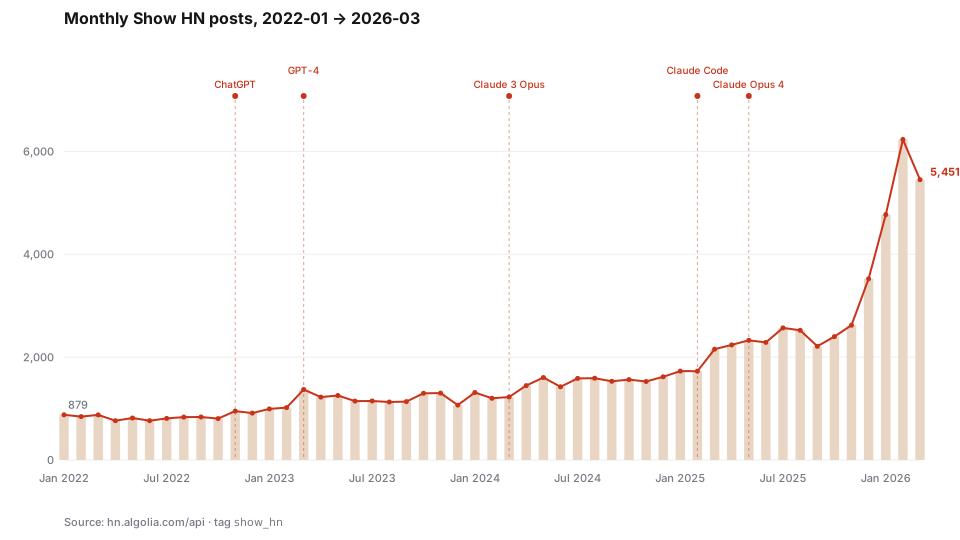
That should give us plenty of pages to score for AI design patterns.

AI design patterns

A designer recently told me that “colored left borders are almost as reliable a sign of AI-generated design as em-dashes for text”, so I started to notice them on many pages.

Then I asked some more designer friends what they think are common AI patterns. The answers can be roughly grouped into fonts, colors, layout quirks, and CSS patterns.

Fonts

  • Inter used for everything, but especially the centered hero headlines
  • LLM tend to use certain font combos like Space Grotesk, Instrument Serif and Geist
  • Serif italic for one accent word in an otherwise-Inter hero

Colors

  • “VibeCode Purple”
  • Perma dark mode with medium-grey body text and all-caps section labels
  • Barely passing body-text contrast in dark themes
  • Gradient everything
  • Large colored glows and colored box-shadows

Layout quirks

  • Centered hero set in a generic sans
  • Badge right above the hero H1
  • Colored borders on cards, on the top or left edge
  • Identical feature cards, each with an icon on top
  • Numbered “1, 2, 3” step sequences
  • Stat banner rows
  • Sidebar or nav with emoji icons
  • All-caps headings and section labels

CSS patterns

  • shadcn/ui
  • Glassmorphism

A few examples from the Show HN submissions:
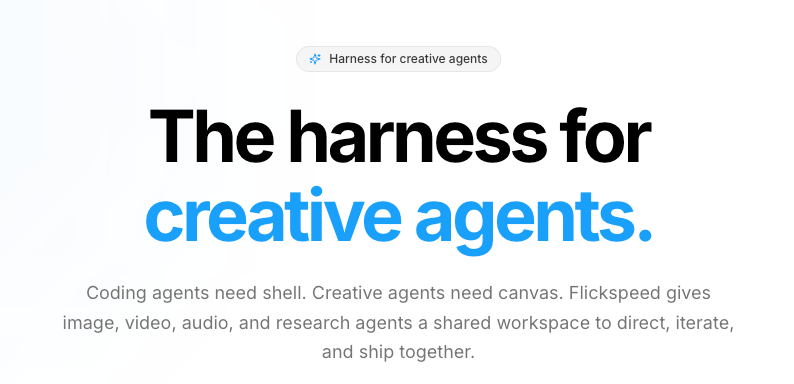
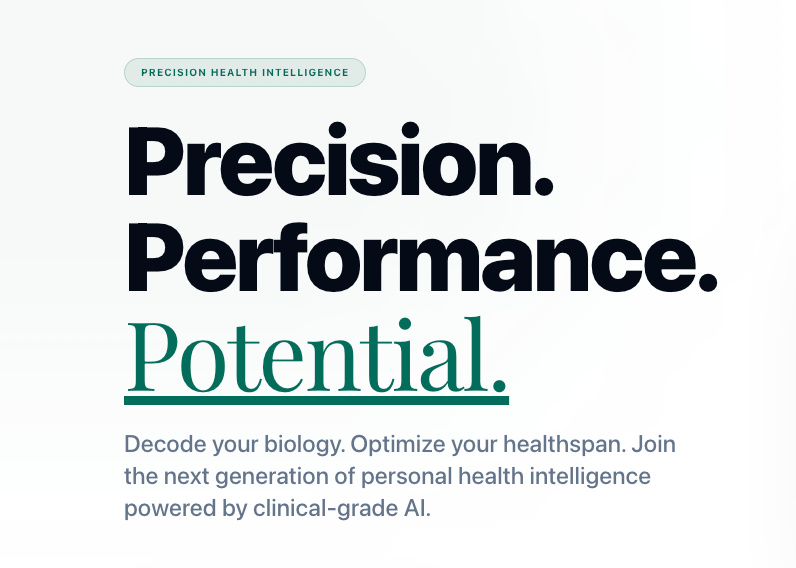
Uppercase badge above the hero H1
Badge above the Inter hero.
Another hero with an uppercase badge above the H1
Same, different page.
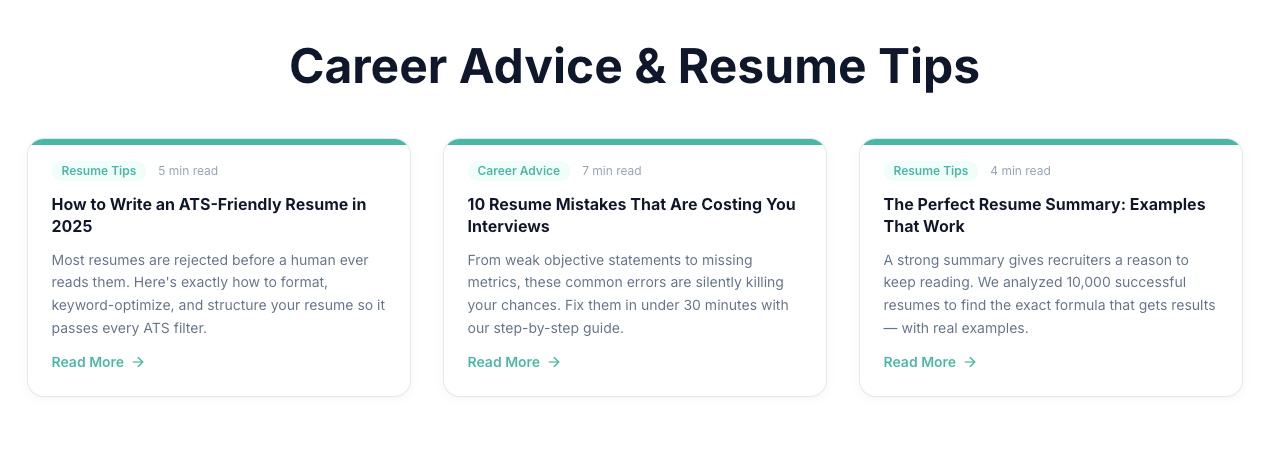
Cards with a colored top-border stripe and Inter copy
Colored border on top.
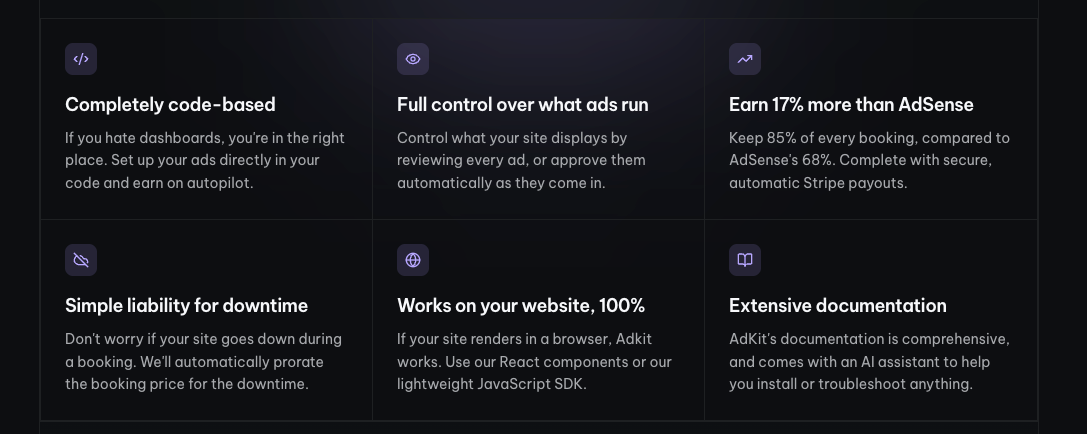
Templated feature grid of icon-topped cards
Icon-topped feature card grid.
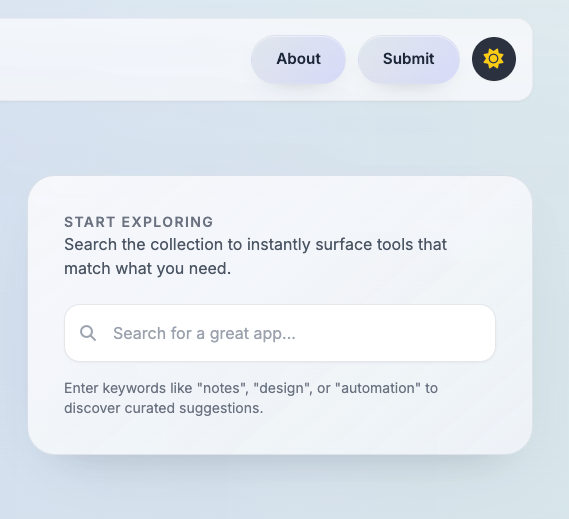
Gradient background with glassmorphism cards
Gradient background + glassmorphism cards.

Detecting AI design in Show HN submissions

Now we can try to systematically score for these patterns by going through 500 of the latest Show HN submissions and scoring their landing pages against the list above.

Here is the scoring method:

  • A headless browser loads each site (Playwright)
  • A small in-page script analyzes the DOM and reads computed styles
  • Every pattern is a deterministic CSS or DOM check. I intentionally do not take screenshots and let the LLM judge them.

This ultimately also leads to false positives, but my manual QA run verified it’s maybe 5-10%. If there is any interest in open sourcing the scoring code to replicate (and improve) the run or score your own site, let me know.

Results

A single pattern doesn’t necessarily make a site AI-generated, so I grouped them into three tiers based on how many of the 15 patterns they trigger:

Heavy slop (5+ patterns) · 105 sites · 21% Mild (2–4) · 230 sites · 46% Clean (0–1) · 165 sites · 33%

Is this bad? Not really, just uninspired. After all, validating a business idea was never about fancy design, and before the AI era, everything looked like Bootstrap or other web templates.

There is a difference between trying to craft your own design and just shipping with whatever defaults the LLMs output.

I guess people will get back to crafting beautiful designs to stand out from the slop. On the other hand, I’m not sure how much design will still matter once AI agents are the primary users of the web.


This post is human-written, the scoring and analysis were AI-assisted.