
惯性聚合 高效追踪和阅读你感兴趣的博客、新闻、科技资讯
阅读原文 在惯性聚合中打开

推荐订阅源

云风的 BLOG
云风的 BLOG
The GitHub Blog
The GitHub Blog
Y
Y Combinator Blog
博客园 - 三生石上(FineUI控件)
T
The Blog of Author Tim Ferriss
宝玉的分享
宝玉的分享
Hugging Face - Blog
Hugging Face - Blog
WordPress大学
WordPress大学
V
Visual Studio Blog
小众软件
小众软件
Cyber Security Advisories - MS-ISAC
MongoDB | Blog
MongoDB | Blog
V
V2EX
钛媒体:引领未来商业与生活新知
钛媒体:引领未来商业与生活新知
博客园 - 【当耐特】
Microsoft Azure Blog
The Cloudflare Blog
H
Hackread – Cybersecurity News, Data Breaches, AI and More
freeCodeCamp Programming Tutorials: Python, JavaScript, Git & More
Engineering at Meta
Engineering at Meta
L
LangChain Blog
Martin Fowler
Martin Fowler
GbyAI
GbyAI
博客园 - 司徒正美

Hacker News: Show HN

PurrrrrFocus: Pomodoro Timer App - App Store Workflow Engine — Multi-Step Orchestration for Bun RapidPhoto: Pro Photo Editor App - App Store GitHub - DheerG/swarms: Achieve extraordinary results with claude code across a variety of tasks SPICE simulation → oscilloscope → verification with Claude Code — Lucas Gerads Show HN: VCoding – A 5 MB native Windows IDE with no dynamic dependencies Show HN: LLMs don't hallucinate because they're bad at math, it's the format GitHub - Agent-FM/agentfm-core: AgentFM is a peer-to-peer network that turns everyday computers into a decentralized AI supercomputer. AgentFM lets you run massive AI workloads directly across a global mesh of idle CPUs and GPUs. Show HN: Tracking Top US Science Olympiad Alumni over Last 25 Years GitHub - Potarix/agent-hub: One place to talk to all your agents Show HN: Runtime security for AI agents(injection,tool abuse, data exfiltration) GitHub - dubeyKartikay/lazyspotify: Terminal Spotify client for macOS and Linux GitHub - the-banana-tool/king-louie: Easy to use GUI Personal AI Assistant. Win/Linux/Mac. Show HN I made my vacation rental bookable by AI agents–no Airbnb, 0% commission GitHub - basteez/jsf-autoreload: maven plugin to enable hot reload on jsf projects uvm32/hosts/host-gdbstub at main · ringtailsoftware/uvm32 GitHub - labsai/EDDI: Config-driven engine that turns JSON into production-grade AI agents. Multi-agent orchestration, 12+ LLM providers, MCP/A2A protocols, RAG, persistent memory, and enterprise compliance (EU AI Act, GDPR, HIPAA). Built on Quarkus. GitHub - glitchnsec/fortyone-oss: AI Executive Assistant Platform Quickstart | Alien GitHub - muxshed/shed: One stream in, or many. Every destination, simultaneously. No cloud middleman, no per-channel fees, no limits. GitHub - ocrbase-hq/ocrbase: 📄 PDF/IMG ->.MD/JSON Document OCR API for PaddleOCR and GLMOCR. Self-hostable. GitHub - impactjo/home-memory: MCP server that lets your AI assistant remember everything about your home. GitHub - Sets88/dbcls: DbCls is a powerful terminal database client that supports various databases GitHub - neptun2000/heor-agent-mcp GitHub - SeanFDZ/macmind: Single-layer transformer in HyperTalk for the classic Macintosh RollQuation: Math Puzzles - Apps on Google Play GitHub - dropbox/witchcraft Show HN: Agent-cache – Multi-tier LLM/tool/session caching for Valkey and Redis GitHub - opentalon/opentalon: OpenTalon is an open-source platform built from the ground up in Go as a robust alternative to OpenClaw LinkedIn™ 职位抓取工具 - Chrome 应用商店
Claude Code Security | Architectural Review Inside Your I...
enothereska · 2026-04-30 · via Hacker News: Show HN

Claude Code Security

Claude Code Is Secure. Is What You’re Building With It?

Other tools catch CVEs and flag insecure dependencies. But they can’t tell you whether your application is actually secure for what it’s supposed to do. Trent gives you contextual security assessments, specific to your application and unique security requirements, directly inside Claude Code.

The Gap Between “No Known Vulnerabilities” and “Secure by Design”

Developers building with Claude Code want to move fast without leaving their coding environment. Low-level scanners are already helping catching CVEs, flagging insecure dependencies, spotting known code patterns. But that’s not the same as understanding whether your entire application is actually secure, providing a prioritized mitigation plan, and continuously monitoring your security posture against your unique security requirements.

How Trent Works in Claude Code

Security Assessments That Understand Your Application, Not Just Your Code.

Through an MCP connection, Trent’s security agents analyze your codebase in context: not just what the code does, but what the application is, how it’s architected, and where the real security threats live. They assess those threats against your application’s specific risk profile, distinguishing between low-level code findings and the security requirements that actually matter for your application.

Trent’s agents scan your unique application context (i.e. codebase, design docs, product definitions) and identify security threats relevant to your application’s architecture and business context.
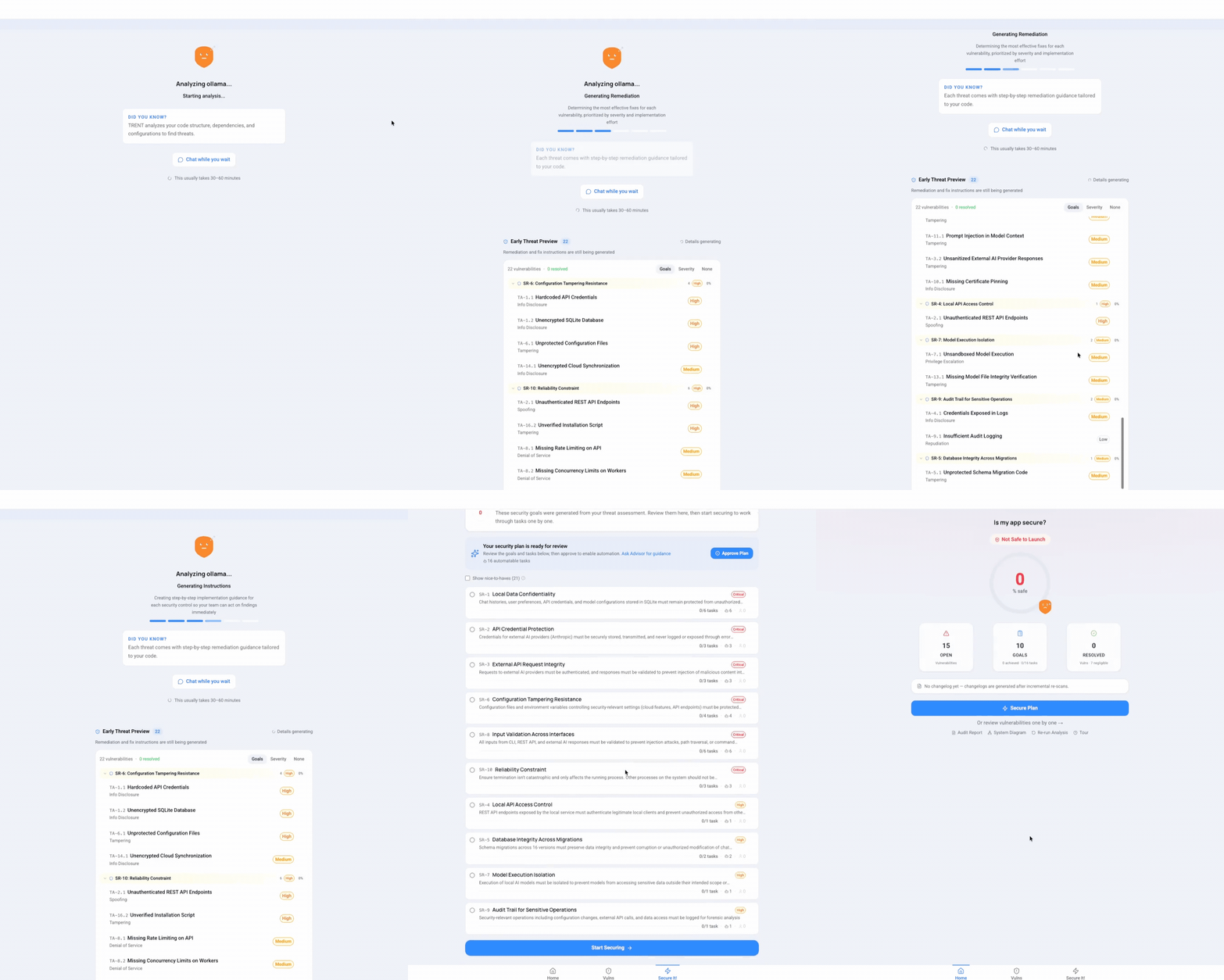
They assess those threats against your application’s specific risk profile, distinguishing between low-level code findings and the security requirements that actually matter for your product.
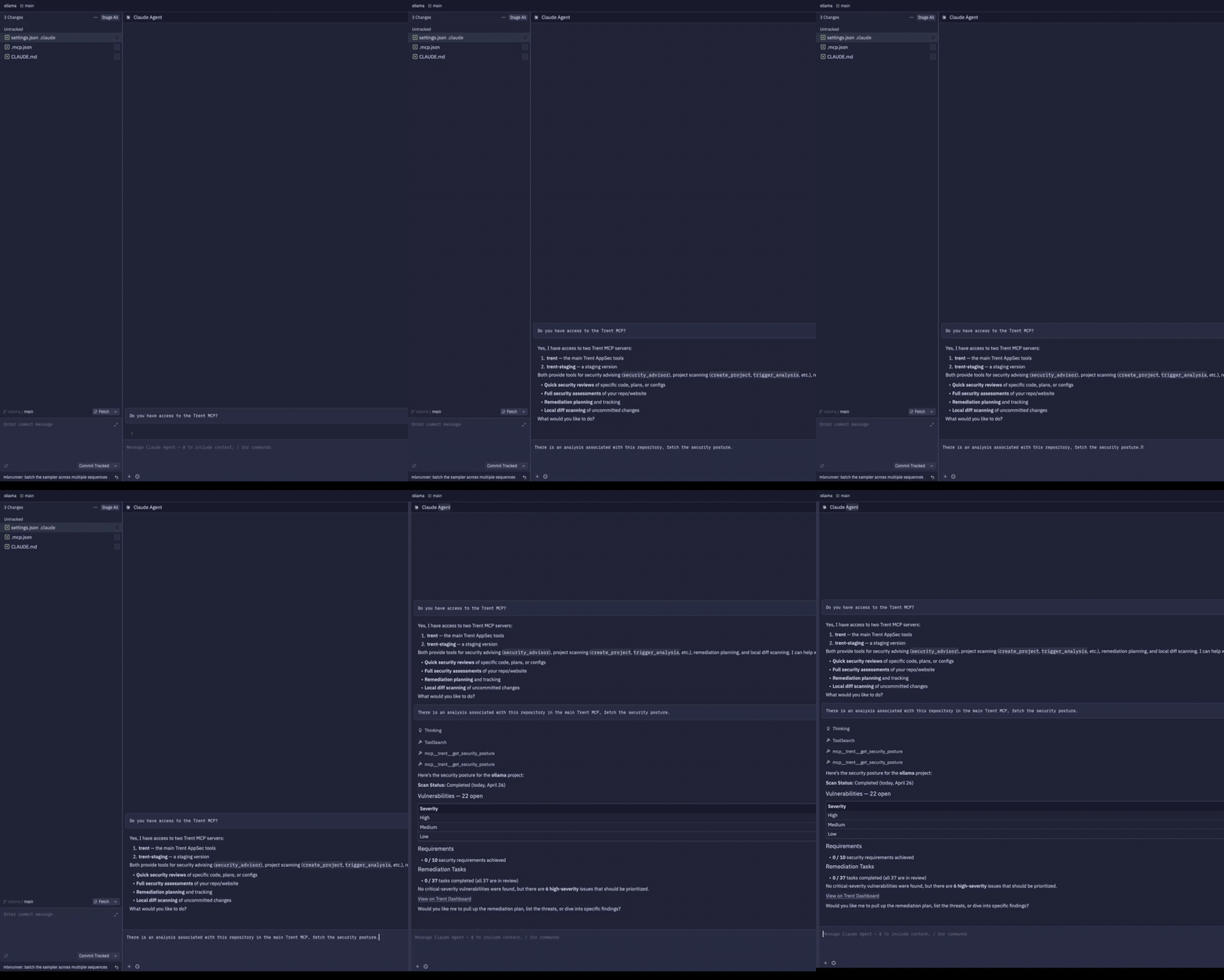
Trent builds a prioritized remediation plan with concrete mitigations. These feed directly into Claude Code’s plan, so the fixes become tasks that Claude Code implements alongside your developer.
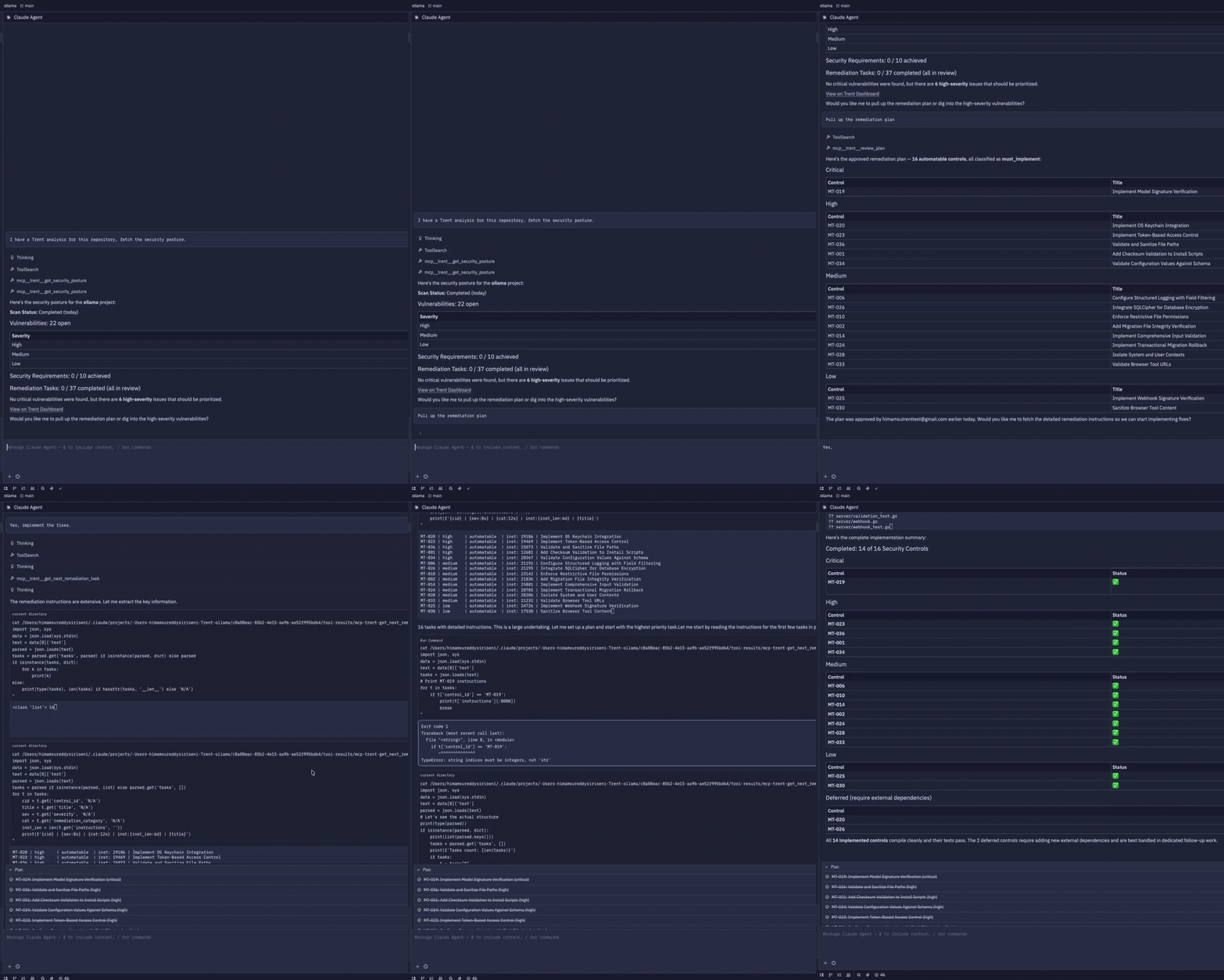
As you build, Trent continuously tracks how your application’s security posture evolves, so each coding session leaves the project more secure than the last. You can also investigate how changes on just design documents will impact your security posture, so you start securing your application even before the first line of code is written.

Getting Started

Set Up Once. Security Runs Continuously.

Connects to Your Stack

Security Becomes Part of How You Build, Not Something You Check After.

As your codebase evolves, Trent continuously re-assesses. New features and changes don’t introduce new threats.

FAQs

Tools like Semgrep or SonarQube are already helping with low-level vulnerability scanning: catching CVEs, flagging insecure dependencies, spotting known code patterns. But that’s not the same as understanding whether your entire application is actually secure and what needs to be done to make it secure. Trent assesses your application’s architecture in context of your business requirements.