
- tokens
- 0
- time
- 0s / 126s
- Ready. Click "Watch Replay" to start.







GitHits gives your agent the context it's missing using real implementations from open source. Stop the retries and keep moving forward.
Get Started
or just run:
npx githits@latest init
GitHits context
GitHits gives coding agents access to the implementation patterns, dependency behavior, and real examples that live across the open-source stack.
The Problem
AI coding agents read your local repo, but the open-source stack underneath stays invisible. Retries, fragility, and token burn follow.

AI coding agents can read your local repository.
Modern software depends on far more than that.
Under every application sits an open-source stack made of frameworks, SDKs, APIs, infrastructure tooling, dependency internals, and version-specific behavior spread across thousands of repositories.
That’s where agents lose visibility.

When an agent encounters undocumented behavior, dependency edge cases, or unfamiliar integrations, it keeps generating variations instead of grounding itself in working implementations.
It retries. It rewrites. It improvises. The output changes. The uncertainty remains.
What looks like progress is often just activity hiding missing context.
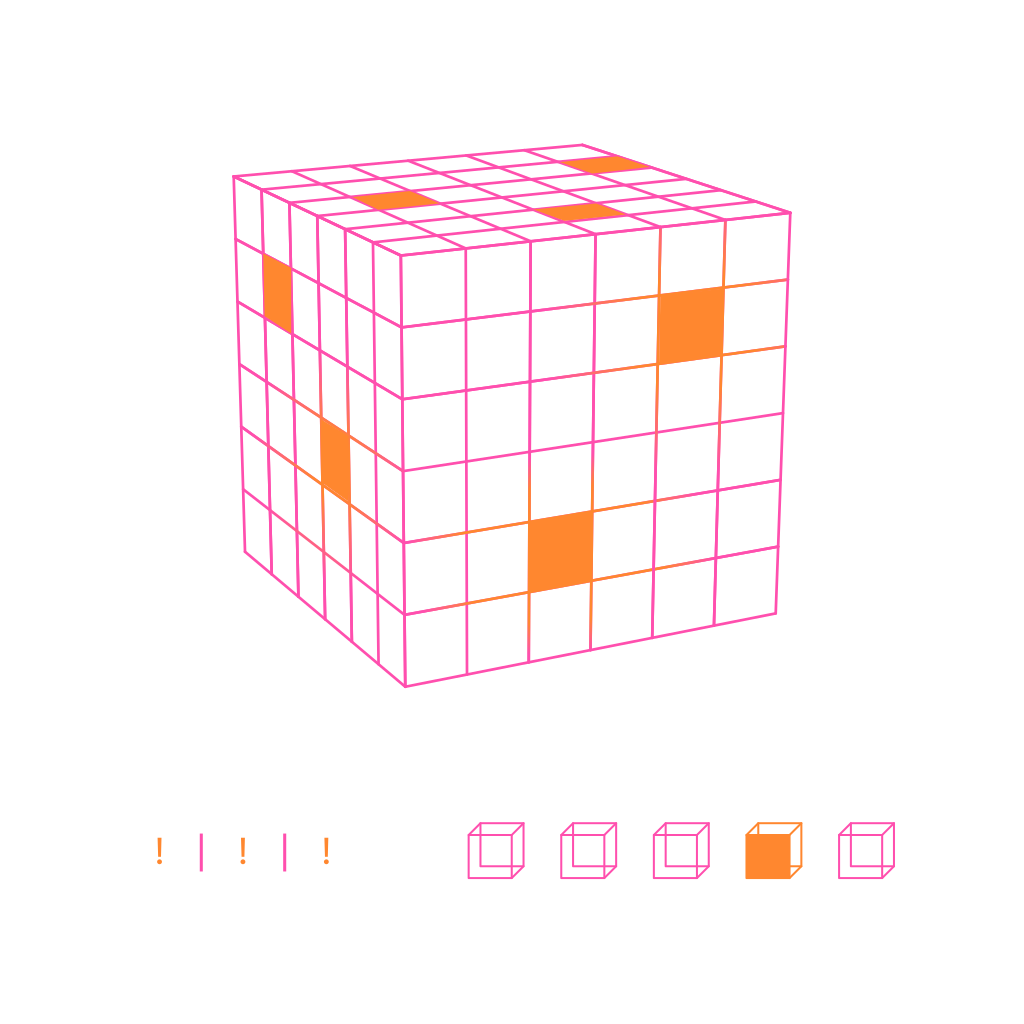
AI coding agents can generate code that appears correct while missing the implementation patterns real systems actually depend on.
Without grounded operational context, integrations become brittle, abstractions drift from ecosystem conventions, and edge cases surface later under real production pressure.
The code compiles. The system still fails.

Modern coding agents don’t fail instantly.
They retry, explore alternatives, spawn sub-agents, and keep searching for a path that still fails to converge.
Without grounded context, output tokens get spent generating variations instead of reaching working solutions.
Guess > run > error > retry > burn
The Solution
Version-aware access to real open-source code, docs, and dependency context so your coding agent navigates the actual code in your stack.
GitHits gives AI coding agents version-aware access to real open-source examples, dependency source code, docs, and package metadata so they can retrieve and navigate the actual code running in your stack.
The result is less retry churn, better ecosystem fit, and a shorter path from uncertainty to a working implementation.


Real implementations from repos, issues, discussions, and PRs linked to implementation code.
Search, grep, list files, and read exact line ranges across packages and repos.
Hosted docs and repo-backed documentation.
Dependencies, versions, vulnerabilities, changelogs, and upgrade changes.
Relationships and transitive dependencies across packages and versions.
Files, symbols, AST, imports, exports
Version history and changes
Markdown, MDX, HTML
Dependencies, relations, metadata
Vulnerabilities, CVEs, advisories
Changelogs, release notes, diffs
Find examples > inspect source > make the change
Why GitHits
GitHits gives AI coding agents access to real open-source examples, dependency source code, docs, and package metadata across the stack.
Every modern application is built on open source. AI coding agents need to understand that software to write correct code. GitHits gives them access to real open-source examples, dependency source code, docs, and package metadata across the stack your product is actually built on.
Without GitHits
AI coding agents can inspect your local repo, but dependency source code, docs, and package metadata stay out of reach. They hallucinate APIs, misuse libraries, and introduce bugs developers have to find and fix.
30% of the stack is visible
With GitHits
GitHits gives agents real open-source examples and code navigation across packages and repos, so they can ground implementation decisions in actual code.
100% of the stack is covered
GitHits changed my workflow because it's not a search engine, it's a discovery engine. A search engine is for when you already know what you're looking for. But a discovery engine helps you find solutions you didn't even know existed.
 Atharv Singh SDE
Source: Blog
Atharv Singh SDE
Source: Blog The Builders
How GitHits started, why we built it, and who it's for — from an open-source habit of searching GitHub to a tool that grounds AI coding agents in real code.
I’m sharing how I got the idea for GitHits, why we decided to build it, and who it is for.
By Olli-Pekka Heinisuo, GitHits Co-Founder and CTO
When documentation didn’t explain something clearly, I had a simple fallback: search GitHub.
If a problem has been solved before, there is usually code somewhere showing how it works. GitHub search often surfaces it, but finding the right example still requires digging through files, issues, and discussions.
One day, Softlandia’s co-founder Mikko asked in Slack:
Who can find the definition for TranscribeDefinition?
He was building a transcription pipeline using Azure’s Speech SDK and couldn’t figure out how to initialize the object.
The official documentation didn’t show it yet, but the definition was already present in Microsoft’s GitHub repository inside documentation files prepared for a future release.
After finding it, I wrote in Slack:
GitHub search solves a surprising number of problems if the project is open source.
Then I added:
You could probably build a coding assistant that answers questions by searching GitHub with some heuristics.
That message started a discussion inside Softlandia Venture Studio, and we decided to explore the idea. Jaakko also managed to buy githits.com for $9.
Much of the practical knowledge about how libraries are used already exists in open-source repositories.
Across millions of repositories, developers have already solved integration problems, handled edge cases, and figured out how libraries behave in practice. The difficulty is locating the relevant implementation.
Documentation is often incomplete. Search returns raw results. AI coding agents generate plausible answers but struggle with unfamiliar libraries and long-tail edge cases.
Developers usually resolve these situations by looking at how the problem was implemented in existing repositories. We believe AI coding agents should be able to learn from those implementations the same way developers do.
GitHits turns those examples into implementation guidance and source links that agents and developers can use directly. Over time, this creates a map of how software is actually built across the open-source ecosystem.
GitHits searches open-source repositories and distills implementation guidance from existing code.
Instead of returning a long list of search results, it analyzes code, issues, discussions, pull requests, and repository context to produce an example relevant to the problem being investigated.
This gives developers and AI coding agents a concrete starting point based on how similar problems were solved in open source.
Engineers working with tools such as Claude Code, Cursor, or Copilot who encounter problems that models cannot resolve.
Helping Claude Code find undocumented C++ APIs directly from the code.
— Onni Hakala, GitHits user
Engineers building in languages like Go, Rust, Kotlin, or C++, where documentation is thinner and training-data coverage is weaker.
I swapped my ritual of 20 browser tabs and stale Stack Overflow answers for a tool that actually understands what I’m trying to do.
— Atharv Singh, GitHits user

Co-founder, CTO
I created the opencv-python package. It has over 1B downloads. I wanted to keep contributing to the open source ecosystem. Now I'm building GitHits search agents and the reasoning layer.

Co-founder, Chief Architect
I thought I was done with startups, but I realized the AI coding revolution is just too big an opportunity to miss. I'm responsible for building the code indexing and intelligence engine that understands dependencies.

Co-founder, CPO
I was one of the first people to test Olli-Pekka's first prototype. I tried something hard: writing a CUDA kernel. Every other AI tool produced code that wouldn't compile. GitHits passed my tests on the first try. I wanted to join the team.

Co-founder, CEO
After bankrupting my first startup, I was on the hunt to find an idea I'd be excited about. When Olli-Pekka pitched “a coding problem solver using GitHub search with smart heuristics”, I was immediately hooked.

Founding Designer
20+ years shipping digital products across retail, fintech, and entertainment, used by millions. Joined GitHits after experiencing the frustration of AI giving answers that look right but don't actually work. Now I'm fixing that through design.

GTM Engineer
Built AI/LLM automation across multiple production systems — OpenAI, Gemini, Vertex. Awarded for rapid technical growth, strong ownership of complex systems, and continuous skills improvement at Mavric. Now building the GitHits GTM engine.
FAQ
Answers about who GitHits is for, how it works alongside your agent, supported stacks, license handling, and how to get access.
GitHits uses GitHub authentication to power code example search and metadata lookups. Example search runs against public open-source repositories using your GitHub access. GitHits does not index, search, or access your private repositories, and connecting GitHub does not give GitHits access to private code.
GitHits is useful when your coding agent needs context that it cannot get from your local codebase. That might be finding a current API implementation, researching an integration, understanding a dependency, investigating an error, or planning a change. It gives agents access to real implementations from open source through get_example, plus version-aware code, docs, and package navigation through tools like search, code_read, code_grep, pkg_info, and pkg_vulns.
To get started, run npx githits init. GitHits detects your coding tool, signs you in, and configures the MCP server automatically.
Agents use GitHits when they need information that isn't available in your local codebase. Common cases include researching an integration, understanding dependency internals, investigating version-specific behavior, or finding how similar problems are solved in open-source code. Some coding tools invoke GitHits automatically when needed, while others may require an explicit instruction.
GitHits builds an index of open-source code, whether it comes from a package dependency or a standalone repository. For each repository, we fetch a specific commit and extract files, symbols, imports, call relationships, and documentation into a code graph.
This lets agents do more than keyword search. They can search symbols, grep code, read exact files, trace how code is used, inspect dependencies, and check package metadata, all against the version or commit they're actually working with. The index is pinned to immutable commits and updates as repositories and packages change.
For a pinned version, yes. A package version like 0.2.5 or a specific commit always maps to the same source code, so the indexed content is stable and reproducible. Query it today or six months from now and you'll get results from the same code.
We may re-index that source to improve our parsing and code graph, but the underlying code never changes. Moving references, such as branches or HEAD, are different: they intentionally track the latest commit and will update as the repository changes.
We work to minimize that risk. GitHits retrieves code and examples from real open-source repositories, but it does not modify your code or inject anything into your project.
GitHits includes guardrails designed to reduce prompt injection and other malicious content risks in both our search infrastructure and MCP tools. Because agents retrieve structured code, documentation, and source references rather than browsing arbitrary web pages, GitHits generally provides a more controlled source of context than web search.
As with any third-party source, developers remain responsible for reviewing generated code before shipping it.
GitHits uses a process similar to how an experienced developer researches a problem. It starts by identifying potentially relevant repositories, then looks at signals such as project activity, adoption, maintenance, ownership, licensing, and repository health. From there, it analyzes the actual code, documentation, issues, discussions, and pull requests to determine which sources are most relevant to the task.
The goal is not to find the most popular repository, but the sources most likely to contain useful implementation patterns for the specific problem being solved. License filtering is applied before source selection, and all results include links back to their sources.
No. GitHits does not use customer code, prompts, outputs, or personal data to train foundational AI models. Customer data is processed only to provide the service and remains governed by our Privacy Policy and Data Processing Agreement.
No. GitHits does not access, index, or store your private source code.
GitHits is designed to complement coding agents that already have access to your local codebase. While those tools can inspect your application's code, they typically cannot see the open-source repositories, dependency source code, documentation, discussions, and package internals your application depends on. GitHits provides that external context without requiring access to your private repositories.
GitHits can be configured to exclude repositories with specific licenses. By default, example generation runs in strict mode, which excludes repositories with copyleft licenses and repositories that do not declare a license. If you prefer broader coverage, you can relax these restrictions or disable license filtering entirely.
GitHits also exposes license information through its package inspection tools, allowing agents to inspect licenses before recommending or using a dependency.
The Blog
Recent notes on agents, context, and how we build GitHits.
June 16, 2026
A look under the hood of GitHits, what a real open-source index requires, and why search-and-rerank depends on its source.
June 15, 2026
A measured Codex run fixing a persisted TanStack Query mutation by finding the default mutation function rule.
June 14, 2026
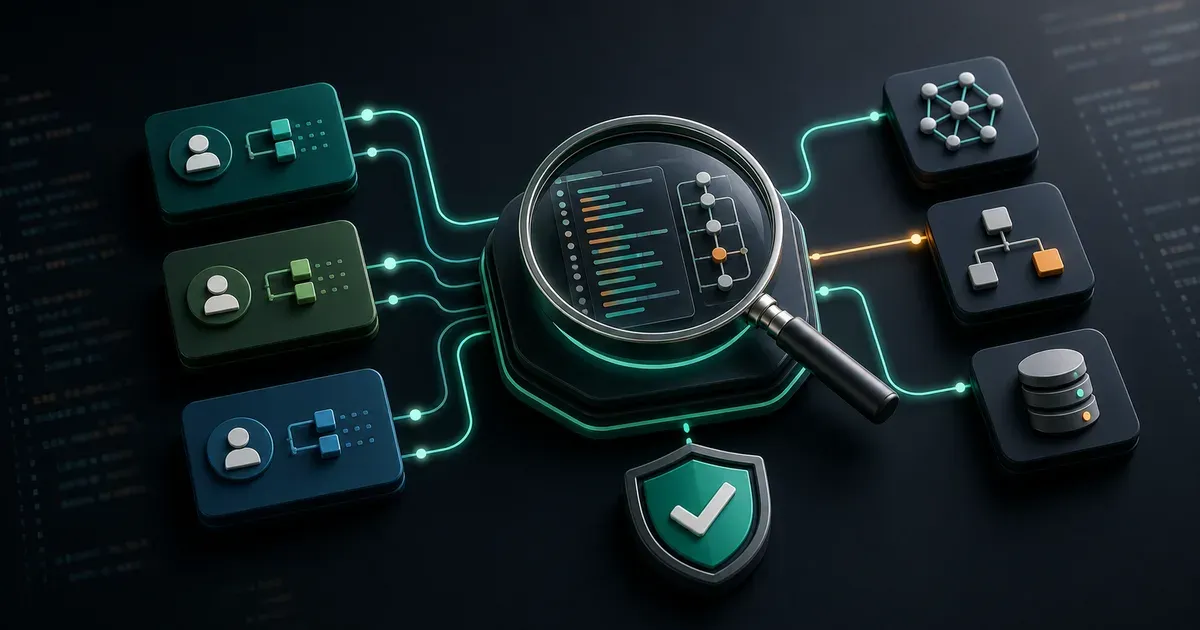
A measured Codex run fixing Pydantic AI tools that ignored per-run dependencies.

June 10, 2026
A new code navigation skill gives your agent search, file listing, read, and grep across a codebase, so its answers come from the actual code.
此内容由惯性聚合(RSS阅读器)自动聚合整理,仅供阅读参考。 原文来自 — 版权归原作者所有。