


Last November I spent a long weekend at a mountain-top hotel in Deer Valley, Utah. It was shoulder season: too cold for hiking, not yet cold enough for snow. On the first and last nights, I was pretty much the only guest.
But the hotel wasn’t empty. There were groundskeepers tending the topiary (sadly neither motile nor arranged into a maze), front desk staff (all from New Zealand, though I was too polite to ask why), kitchen workers and servers, and even a couple of archery instructors who waited fruitlessly by some pumpkin targets one afternoon in case anyone wanted to try their hand with a bow. The only place I felt truly alone was by the fireplace in the grand lounge, where drinks service was suspended until the skiers arrived in December, leaving me without a red-jacketed Lloyd to bore with stories about how much I already missed my then 18-month-old daughter.
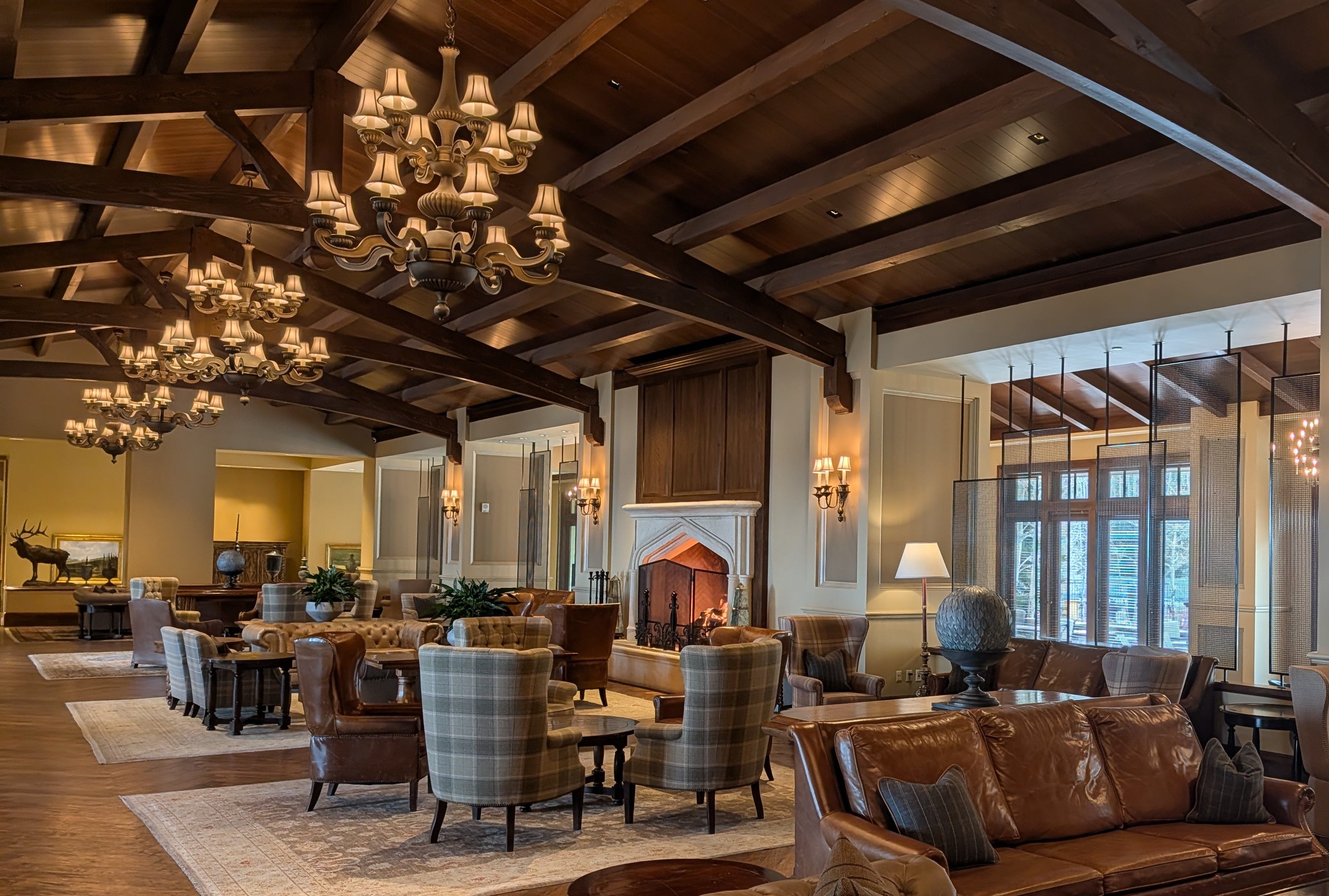
Luxury hotels offer a tantalising glimpse of what it’s like to be truly wealthy (after all, plenty of them occupy houses that once belonged to the truly wealthy.) Every need catered for, for every desire a place on the payroll. Unfortunately, it’s pay-as-you-go wealthiness: you pay and pay and pay, then you go.
Six years ago, my wife and I moved to Silicon Valley, where the wealth and the weather make Park City look relatively impoverished. The Palo Alto subreddit often shares ads from a job board that staffs the mansions of the local technocrats. Requirements are always stringent (sous chef at a minimum two-star restaurant, fluent in more than one language with an advanced degree in education), pay is always impressive. The only thing they don’t seem to hire for is security, which is presumably sourced from another, far more discreet board. In the billionaire estates of Atherton, Woodside and Los Altos Hills, living with more staff than residents—than family—is just how things are done.
And for centuries, this status quo has been the only vulnerability of the aristocracy. For the super rich, there is no such thing as safety in numbers. There just aren’t enough of them. Throughout history they’ve employed multitudes of the poor to clean their houses, cook their food, and shoot arrows at their enemies. The only thing they have to fear is the mob—specifically any mob that reaches a point of criticality where it starts to pull in people under their employ. The wealthy are like vampires, except their nemesis is the pitchfork rather than the wooden stake and they’re more interested in keeping you out of their houses than getting inside yours.
This fortunate minority have always accumulated more than their fair share, but history provides plenty of examples of what happens when their greed overtakes the moment. From France to Russia and on through various orgies of anti-aristocratic violence, there appears to be a threshold beyond which people will not tolerate the excesses of the rich. This is clearly something that has preyed on the minds of the current generation of tech plutocrats. For most of the internet boom, during which network effects, marginal costs and a shift in advertising revenue created an almost unprecedented concentration of wealth, VCs and tech CEOs competed to see who could name the most hospital wings and make the grandest progressive statements about levelling the playing field for everyone. But recently, much of that has stopped. Mark Zuckerberg has tacked on mass and has the manosphere talking points to prove it, Marc Andreessen advises those without billions of dollars to ‘retardmaxx’ and avoid introspection, while Elon Musk has become his father’s son in every respect. Of course, there’s still talk of Universal Basic Income and sharing the wealth, but at the same time, the tech overlords are spending fortunes buying and burrowing into the land in conspicuously hard-to-reach places like New Zealand and Hawaii.
The easiest explanation for this vibe shift is the second Trump administration. But with term limits and the ping-pong nature of US politics, it seems improbable that such well-advised people would nail their colors to such a gibbet-y mast if all they were expecting was four years of air cover. Instead, the answer for their newfound confidence can be found if you look at where their money has been flowing of late.
In the first quarter of 2026, almost $15bn of venture capital was invested in defense tech startups. Now it goes without saying that the only thing more lucrative than selling picks and shovels during a gold rush is selling bullets and guns during a war, but if you look at what is actually being funded, there appears to be a potential secondary interest. Companies like Anduril are building swarms of autonomous combat drones, Palantir is slurping up biometric and behavioral data, while Tesla, Boston Dynamics and a host of others compete to produce humanoid robots blessed with inhuman strength and speed. It might seem fantastical, but gated communities and work sites are already being patrolled by robot security guards, and you can buy the dog from Black Mirror’s ‘Metalhead’ episode if you have about $100k to spare.
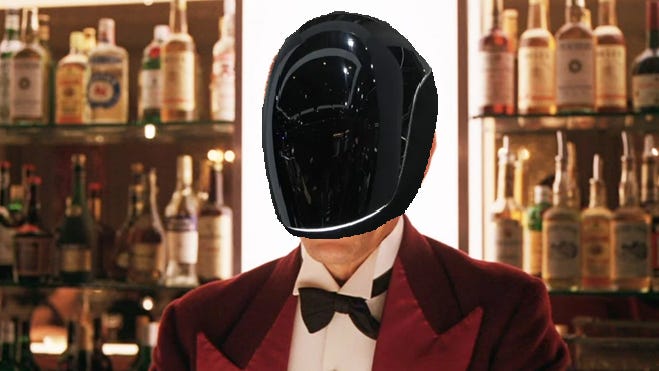
According to Douglas Rushkoff’s Survival of the Richest, maintaining loyalty among security and service personnel after social collapse is a pressing concern for the elite. And now the likes of Peter Thiel, Josh Kushner and Marc Andreessen are funnelling billions into the production of weaponised AI, lethal robots and drones. Is it really so far-fetched to imagine they’ll employ these same technologies as part of their own security arrangements once the investments pay off? And when they do, the mob’s power will finally be at an end. Those who own the means of production will also own the only means of suppression. The golden age will stretch on forever, at least for those who have hoarded enough gold. Their compounds will be impregnable, patrolled by faceless terminators who never miss a pitchfork, while inside, an Optimus-Lloyd serves the bourbon on ice.
No charge to you, Mr. Thiel. Your money’s no good here.
此内容由惯性聚合(RSS阅读器)自动聚合整理,仅供阅读参考。 原文来自 — 版权归原作者所有。