


Researchers found that using the technology helps at first, but "it comes at a heavy cognitive cost."
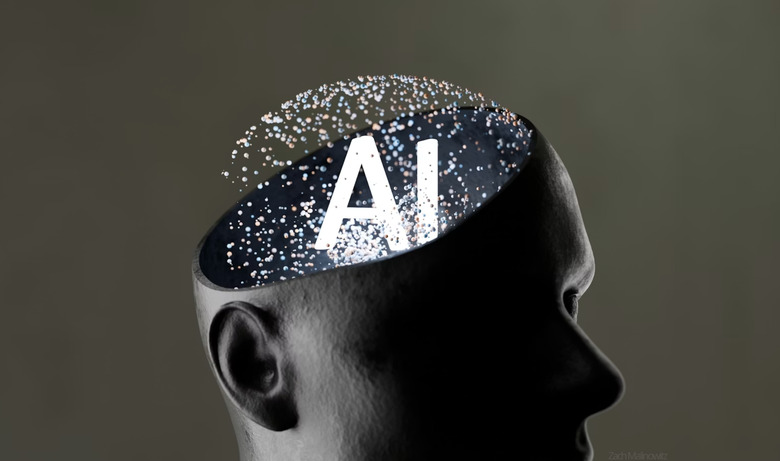
Unsplash / Zach M
A group of researchers from across the US and the UK have conducted a study on what AI does to our brains and the results are, in a word, grim. These results were published in a paper called "AI assistance reduces persistence and hurts independent performance" which kind of tells you everything you need to know.
"We find that AI assistance improves immediate performance, but it comes at a heavy cognitive cost," the study declares. Researchers went on to state that just ten minutes of using AI made people dependent on the technology, which led to worsening performance and burnout once the tools were removed.
The study followed people who use AI for "reasoning-intensive" cognitive labor. This refers to stuff like writing, coding and brainstorming new ideas, which are some of the most common use cases.
The researchers recruited 350 Americans, who were asked to complete some fraction-based equations. Half of the participants were randomly granted access to a specialized chatbot built on OpenAI's GPT-5 for help and the others had to go it alone. Halfway through the exam, the AI group had their access cut off.
This led to a steep decline in correct answers by the AI group and many instances of people simply giving up. This result, in which performance and perseverance both dropped, was repeated in a larger experiment with 670 people. Finally, the scientists performed one final experiment with reading comprehension questions, and not math. The results were more of the same.
"Once the AI is taken away from people, it's not that people are just giving wrong answers. They're also not willing to try without AI," Rachit Dubey, an assistant professor at the University of California and coauthor of the study, told Futurism. "People's persistence drops."
Dubey went on to warn that rapid deployment of AI in the education sector could lead to a "generation of learners and people who will not know what they're capable of, and then that will really dilute human innovation and creativity."
The study likens using the technology to the "boiling frog" effect, in which "sustained AI use erodes the motivation and persistence that drive long-term learning." These effects accumulate and "by the time they are visible, they will be difficult to reverse."
A recent study found that chatbots affected people's critical thinking performance differently depending on how users engaged with the bots.https://t.co/IBbLLqrNdG
— Science News (@ScienceNews) April 15, 2026
There are two caveats here. The study has yet to be peer-reviewed. Also, researchers found one tiny bright spot regarding the use of AI. People who used AI tools for hints and clarification had a much easier time once the chatbot was removed when compared to those who used the bot to essentially prompt the answers.
This is just the latest study trying to get to the bottom of what AI is doing to our collective noggins. It has been found to increase fatigue among full-time workers who rely on the tools, which led to the term "AI brain fry." To that end, researchers discovered that employees who use AI actually end up working harder and longer than those old-fashioned luddites.
The results are even starker in the world of education. Studies have found that AI use in school leads to poor social and intellectual development and that kids who rely on chatbots tend to do worse on tests.