
惯性聚合 高效追踪和阅读你感兴趣的博客、新闻、科技资讯
阅读原文 在惯性聚合中打开

推荐订阅源

博客园 - Franky
有赞技术团队
有赞技术团队
宝玉的分享
宝玉的分享
雷峰网
雷峰网
Hugging Face - Blog
Hugging Face - Blog
V
V2EX
大猫的无限游戏
大猫的无限游戏
博客园 - 司徒正美
D
Docker
T
The Blog of Author Tim Ferriss
罗磊的独立博客
博客园 - 叶小钗
酷 壳 – CoolShell
酷 壳 – CoolShell
Blog — PlanetScale
Blog — PlanetScale
月光博客
月光博客
J
Java Code Geeks
Jina AI
Jina AI
博客园 - 【当耐特】
C
Check Point Blog
OSCHINA 社区最新新闻
OSCHINA 社区最新新闻
腾讯CDC
Last Week in AI
Last Week in AI
freeCodeCamp Programming Tutorials: Python, JavaScript, Git & More
V
Visual Studio Blog

Hacker News - Newest: "AI"

AI can't read an investor deck AI as an attorney? Student uses ChatGPT, Gemini to sue UW over alleged racial discrimination Hacking MCP Servers in AI Systems – The Rug Pull: Tool Changes After Approval GitHub - MeepCastana/KubeezCut: Free Web based video editor Can AI judge journalism? A Thiel-backed startup says yes, even if it risks chilling whistleblowers Coming soon: 10 Things That Matter in AI Right Now DARPA built an AI to fact-check enemy weapons claims What explains heterogeneity in AI adoption? When AI Meets Muscle: Context-Aware Electrical Stimulation Promises a New Way to Guide Human Movements - Department of Computer Science AI Changed How We Build. It Did Not Change What Matters. Linux rules on using AI-generated code - Copilot is OK, but humans must take 'full responsibility for the… Meta spins up AI version of Mark Zuckerberg to engage with employees Code Mode: Let Your AI Write Programs, Not Just Call Tools | TanStack Blog GitHub - Delavalom/graft: Go framework for building AI agents. Type-safe tools, multi-provider (OpenAI, Anthropic, Gemini, Bedrock), zero vendor SDKs. India's TCS tops estimates, says new AI models did not dent services demand Gen Z's fading AI hype Strong feeling: we are in a folded AI reality GitHub - machinarii/total-recall-catalog: A reference catalog of latest knowledge retrieval, memory & RAG systems GitHub - mensfeld/code-on-incus: Give each AI agent its own isolated machine with root, Docker, and systemd. Active defense detects and stops threats automatically.. Quantization, LoRA, and the 8% Problem: Benchmarking Local LLMs for Production AI Iran war: We spoke to the man making Lego-style AI videos that experts say are powerful propaganda Powell, Bessent discussed Anthropic's Mythos AI cyber threat with major U.S. banks GitHub - immartian/bellamem: Persistent belief-graph memory for AI agents. Retrieves decisive context by importance — not recency, not RAG, not /compact. recursive-mode: The Repo-Native Operating System for AI Engineering After the attack on Sam Altman's home, will AI CEO's go on the offensive? The biggest advance in AI since the LLM Opus 4.6 vs GPT 5.4 One Prompt Unity World Generation Test “AI polls” are fake polls Client Challenge Can AI be a 'child of God'? Inside Anthropic's meeting with Christian leaders
The AI Great Leap Forward (a warning)
fagnerbrack · 2026-05-23 · via Hacker News - Newest: "AI"

I came across a piece by Lee Han Chung that offers a rather sobering frame for today’s AI moment: The AI Great Leap Forward

The title is not casual. It points directly to China’s Great Leap Forward of the late 1950s and early 1960s.
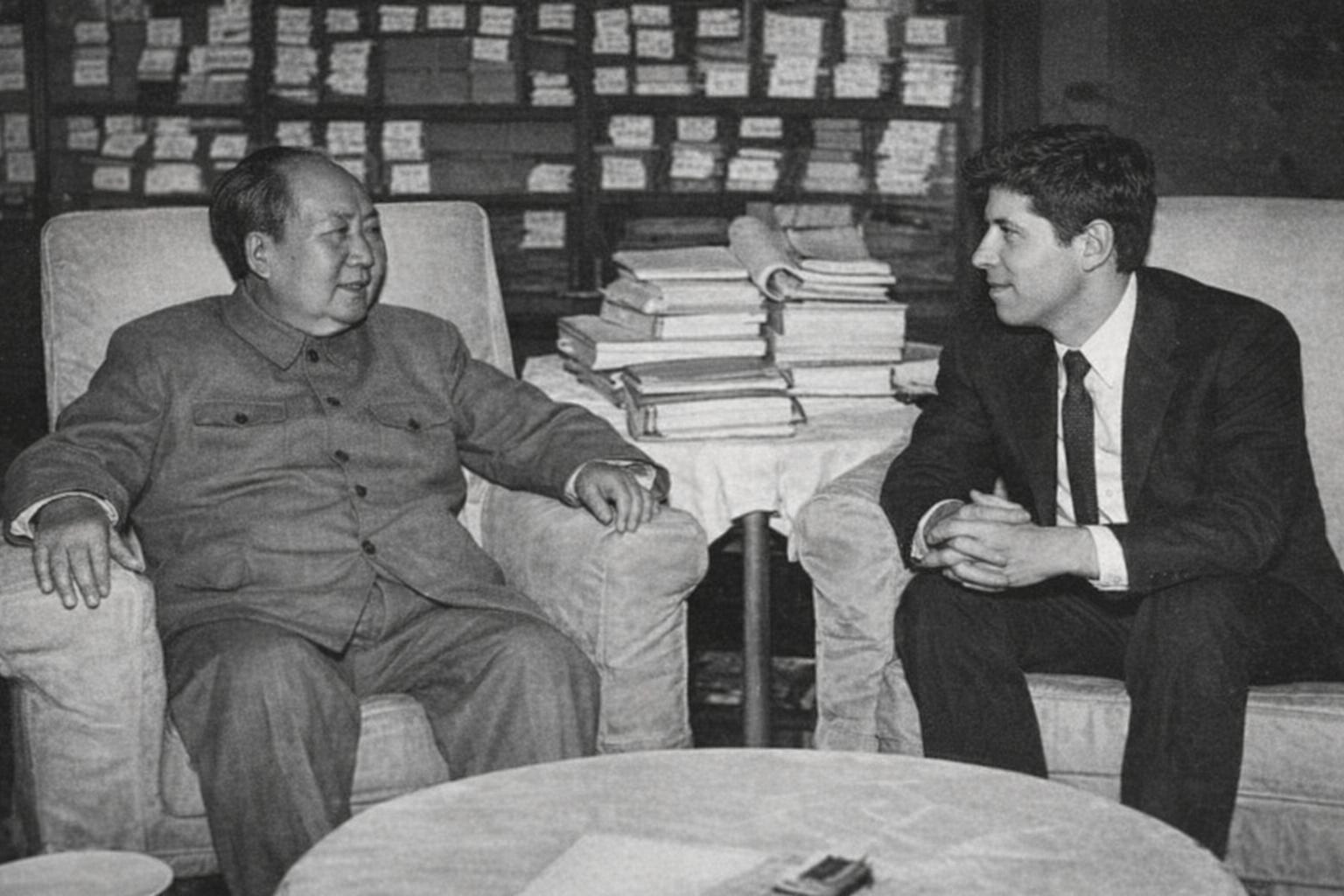
(photo generated by ChatGPT)

That effort was ambitious, fast-moving, and highly visible. It was also deeply performative. Local officials, under pressure to show success, inflated production numbers to protect their positions. Reports moved up the chain. Each layer reinforced the story. Signals replaced reality.

The eventual result was system collapse.

The article draws a parallel to current AI work. Not at the level of outcome, but at the level of behavior.

In the AI world, we are seeing systems that appear to reason, appear to understand, and appear to deliver results. And we are also seeing organizational pressure to “AI all the things.” That pressure does not land evenly. It concentrates in the middle, where managers are asked to show progress, demonstrate adoption, and justify investment up the chain.

And so the pattern starts to look familiar.

Dashboards improve. Demos succeed. Metrics move ever upward.

But underneath this performance, the question remains: what actually got better?

Generated output in place of understanding. Automation in place of judgment. Managed signals in place of ground truth.

This is how expectation drifts and systems break down. Not through designed failure, but through perceived success that is mistaken for real progress.

As Mark Twain is often credited with saying: “History does not repeat, but it often rhymes.”

Lee Han Chung is telling us this may be one of those moments.

Worth reading, especially if you are building or reporting on these systems.

No posts