





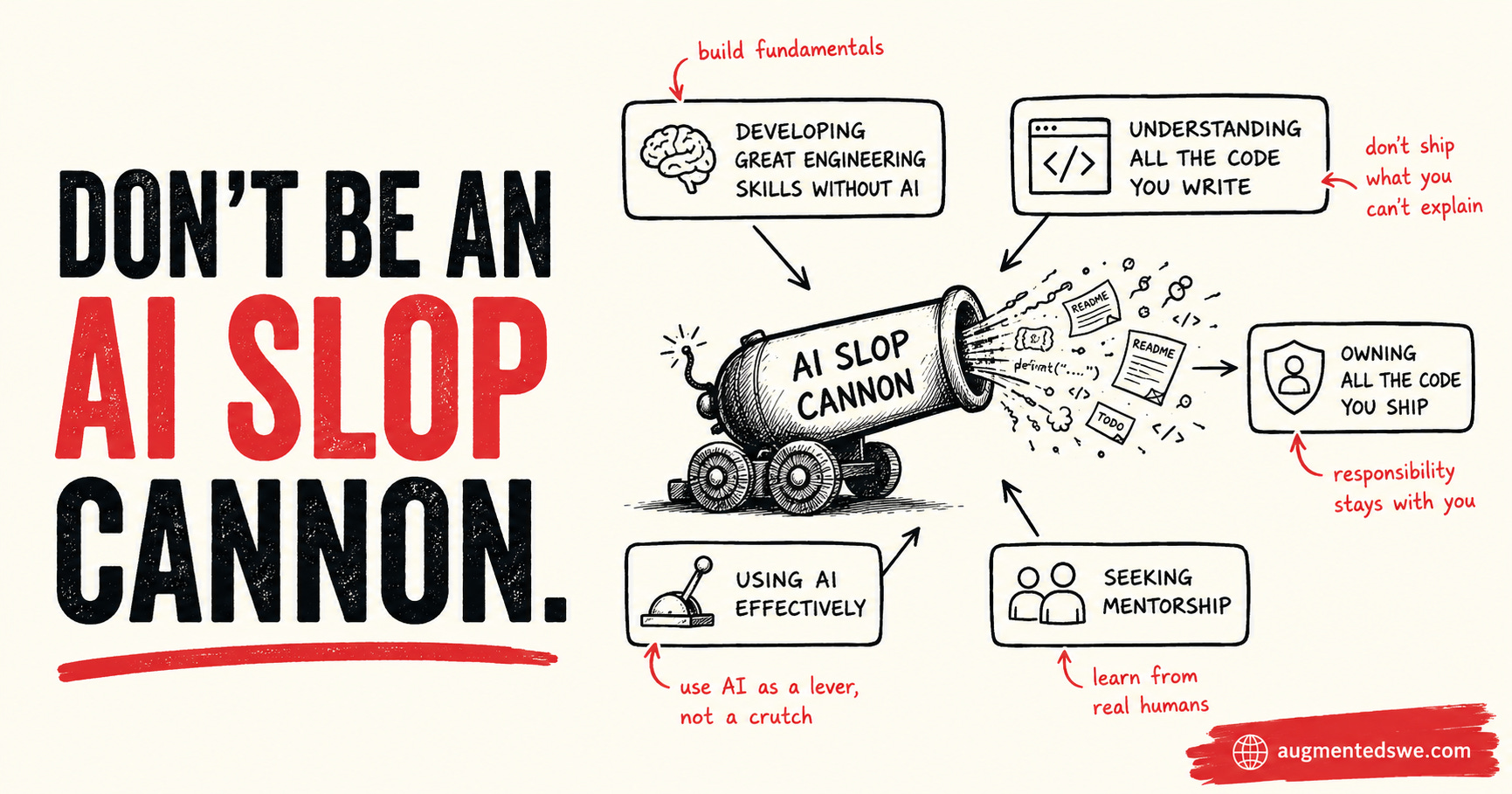
If AI is such an incredible tool, why aren’t we seeing an incredible explosion of useful software?
The answer isn’t too complicated. AI is just a force multiplier.
If you’re a great developer and use AI effectively, you’ll get increased productivity. If you have poor technical skills and lean on AI, you’ll ship more, but the outcomes will not be good. You ship slop, and lots of it, so much in fact, that you would rightfully be called an AI slop cannon.
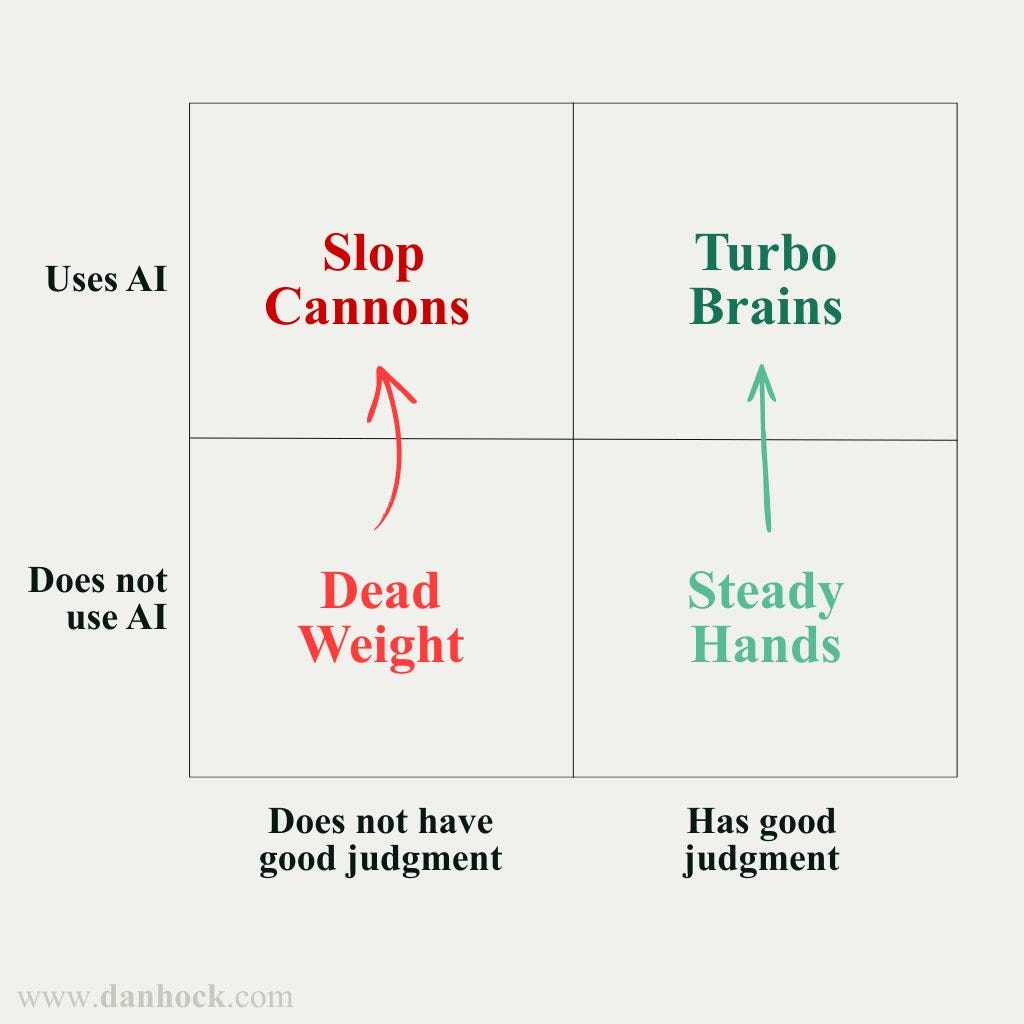
An AI slop cannon is a very high-output software engineer that doesn’t emphasize quality enough.
The weird part here is that in the short term, slop cannons seem productive. But code that is easy to produce can be hard to maintain and extend, so the productivity gains from the AI tool are eaten by technical debt.
If you’ve been a software engineer long enough, you’ve undoubtedly been bitten by a complexity dragon once or twice. Great software developers write code that is easy to understand and maintain, in addition to accomplishing the task. If you’re just feeding Claude Code Jira tickets to complete, you’re probably going to ship some AI slop.
So how do you avoid shipping slop? I’ll show you 5 guiding principles.
Today’s newsletter is generously sponsored by Friday, a powerful agent harness that connects to the software you already use.
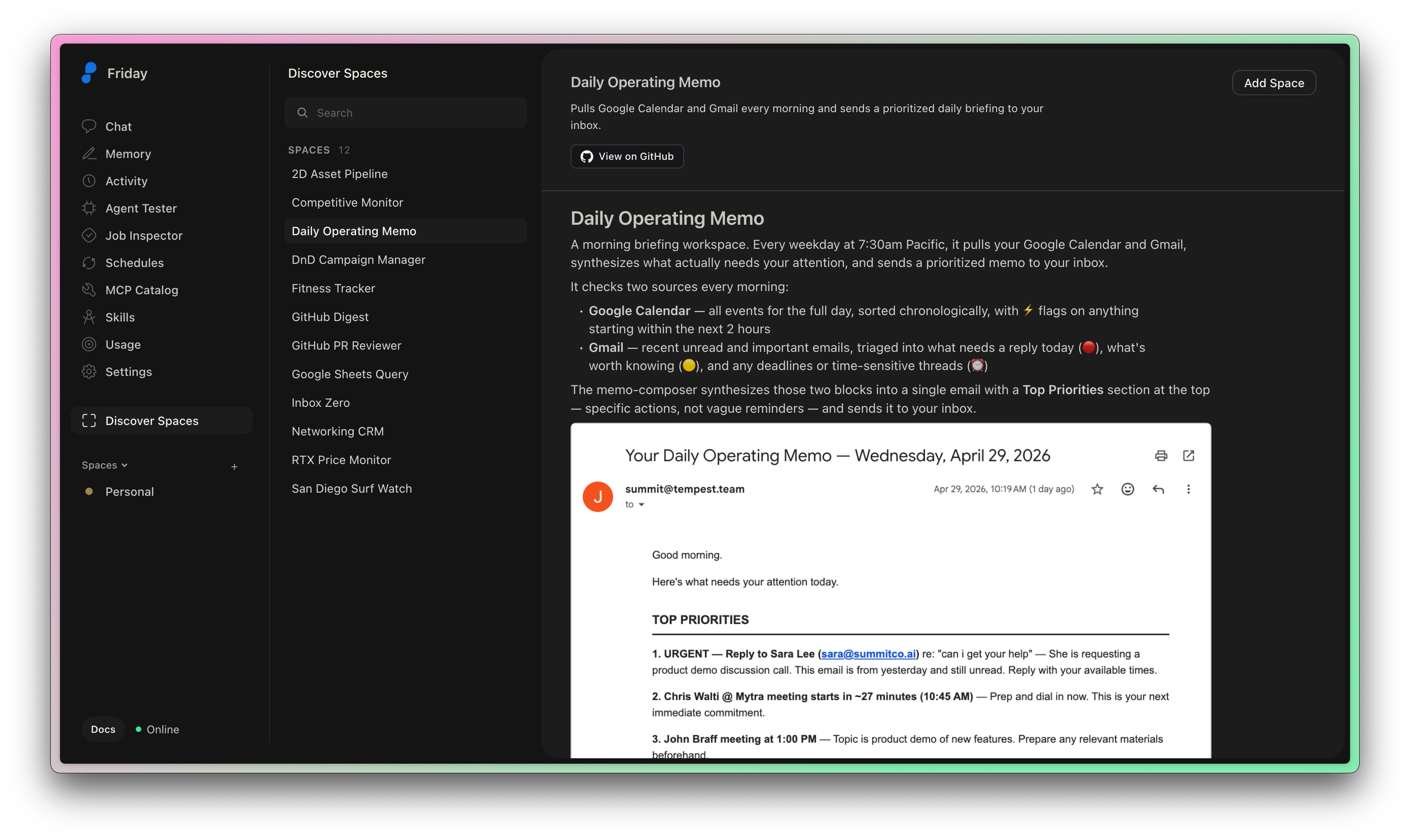
Friday helps you get more done with AI agents, without having to glue tools together. You can bring your own API key for your preferred models, bring your existing skills, and connect to the tools you need with MCPs.
One of my favorite things in Friday is the incredible support for scheduled jobs. Friday lets you describe recurring agentic workflows in plaintext but gives you the option to edit and extend them as code.
Check it out today!
If you’re already using AI, then your focus should be on becoming a great software engineer. If you’re a great software engineer, then put some time into becoming effective at using AI tools for your work.
One of the best things you can do for your career and output is to develop great engineering skills, isolated from AI.
This section is primarily about developing good judgment. Unfortunately, this takes time. There are things you can do to accelerate developing the technical skill and judgment of an effective senior+ contributor, but you’ll also have to be patient.
The first and most obvious thing to focus on is coding skill. Some folks are pushing the idea that you don’t need to know your programming syntax when AI is an effective means of producing code. I think this is a bit short-sighted.
It’s important that you become competent in at least 1 programming language (ideally 2) so that you can judge AI-produced code. I’ve been writing Ruby for years, and it gives me a keen eye for reading Ruby code that is overly complex or hard to change.
Speaking of complexity, it’s important to learn how to avoid unnecessary complexity. Learning this is increasingly important the more you use AI, and I recommend you read “A Philosophy of Software Design” by John Ousterhout to speedrun this.
If you’re shipping enough code, you’ll eventually need to develop an eye for system design. AI lacks in this area, mostly because coding agents often focus on an individual app instead of a whole system. Getting really good at system design is a huge life hack in the era of coding agents. I recommend Alex Xu’s system design book for this.
Good software engineering requires that you understand the code you write. That extends to the tools you use. In the AI era, that means you can’t ship code agents write without wrapping your head around it.
Skipping this part is generally what people call vibe coding. Vibe coding has it’s place, but it’s not software engineering.
If you ever find yourself saying “Claude wrote a PR that did x” or “Codex fixed this bug”, STOP.
I call this agentic passive voice.
When you use Claude Code or another AI tool to write code, even with an agent, you are simply using a tool. It’s an incredibly effective tool, but it’s still a tool.
It’s a bad look to abdicate all your responsibility to an LLM. You have a real human brain capable of unique insight, and it’s your responsibility to use it to add value to your work. Extend your expertise with AI. Don’t replace it.
Using AI effectively is an important part of becoming more useful in the AI era. It’s the whole thesis for this newsletter.
This is where learning to use the tools we have comes into play. Plan mode, goals, context engineering, skills, and more are all important concepts to wrap your head around if you want to get maximum value out of your tools.
If you’re not already, consider becoming a member of the newsletter to multiply your efforts here. Members get access to detailed technical guides in the Member Vault, which are the fastest way to level up your AI-assisted programming techniques.
The last piece of advice I’ll leave you with is to seek mentorship for all of the above. Find folks that are incredible at system design and learn from them. Identify the people in your org that are using AI tools effectively and ask to pair program with them.
The fastest way to level up is often 1:1 conversations with folks just a few steps ahead of you at a particular thing, so don’t miss out!