


Varsha Bansal is a fellow at Tech Policy Press.
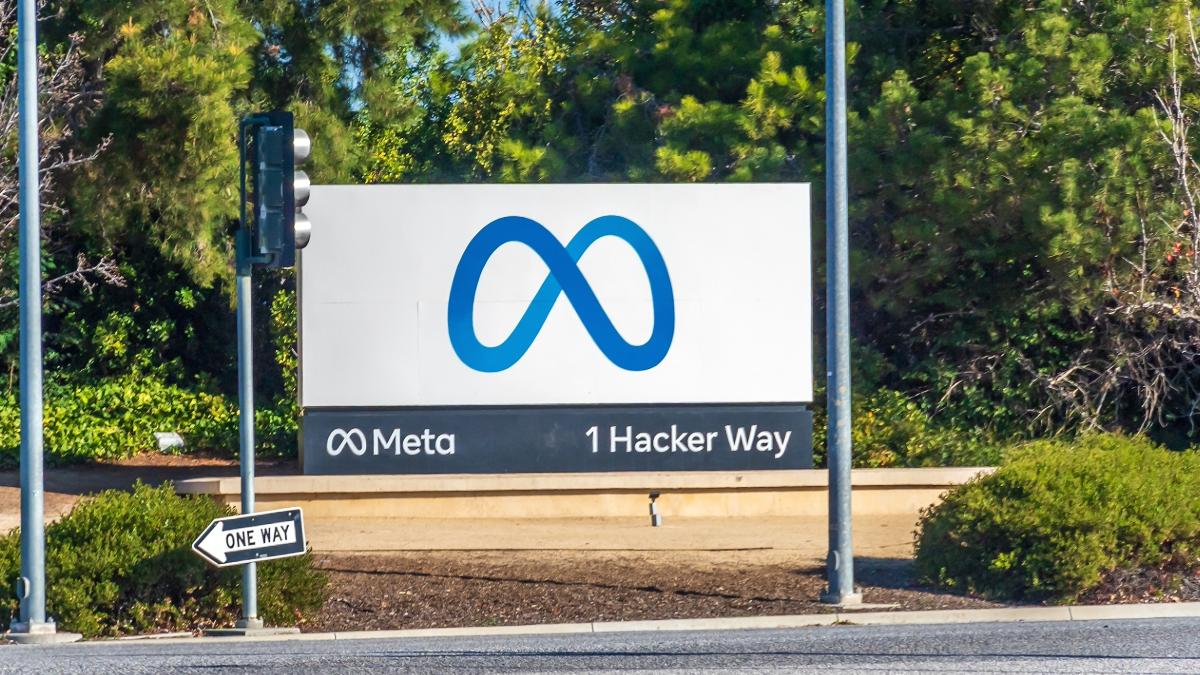
A Meta sign at Meta Headquarters in Menlo Park, California, in January 2025. Shutterstock
On May 12, Meta employees in at least five US offices posted flyers asking workers to come together and sign a petition against the company’s new Model Capability Initiative (MCI)—which allows Meta to collect its employees’ computer use data to train AI models. Over 1,600 workers have signed the petition. Earlier in May, Google DeepMind workers in the UK voted to unionize in a bid to fight against the company providing AI for military use. In April, over 600 of the laid off Oracle employees signed a letter asking the company for higher severance and longer healthcare — after they came together to discuss their issues. They claim that Oracle was using them to train AI systems, and then fired them.
Since 2025, close to 400,000 tech workers have been laid off — of which over 150,000 were let go this year alone, with several explicitly fired due their company’s increased focus on artificial intelligence. At the same time, many of these companies have reported increased profits. This paradox has shattered a long-held assumption: that white-collar tech workers don’t need unions.
There’s a tech worker movement brewing across companies and continents. As tech companies embrace AI — forcing workers to use it, using it to surveil them, or justify firing them because of it — more workers are coming together to organize and fight back as they feel they are losing influence over decisions that affect their jobs. This collective action is their way to get back the voice they used to have at their workplace, more than half a dozen tech workers told Tech Policy Press.
“Most people coming in right now are interested in unionizing,” said Kaitlin Cort, founder of a new organizing group for tech workers impacted by AI called What We Will. “That was not the case before.”
Meta, Alphabet and Oracle did not respond to a request for comment by Tech Policy Press.
The past few months have been demoralizing for Meta workers. First, they were told their computer usage including mouse movements and keystrokes will be tracked to train AI models. Then, thousands were forced to move to AI-specific teams just before the company let go of around 10% of its workforce in May. The morale is so low, that some of the workers drafted to an AI team, which they say involves data labelling work for Meta’s AI model, exchanged their frustration in internal chat conversations with their colleagues that they’d rather be laid off. “Getting drafted, can I switch with someone getting laid off instead?” posted a Meta worker on this internal chat, viewed by Tech Policy Press.
It was around this sentiment that one Meta worker in London realized that they had two options: they could either quit or do something about this situation. They chose the latter.
Even until recently, most of their colleagues didn’t feel the need to organize. “They just felt like high pay, chance of layoff, fair deal, I'll take it,” said this worker, who requested anonymity due to fear of professional reprisal. “But when it’s high pay, chance of layoff, and all the other stuff, invasive monitoring, training these various questionable models, and being treated with absolute disrespect and no dignity — now people are ready.”
This worker decided to band together with others to organize. They changed their name on internal online platforms to “Union Rep” and started discussing with colleagues about the options they had to fight back, and that they only need 500 people to get signed up and get recognized as a union. “We have a path,” this worker said. “Let's drive towards it.”
They reached out to all the unions possible, and teamed up with United Tech and Allied Workers (UTAW), a branch of the Communications Workers Union. “We're a few weeks in, we’ve got a good number of sign ups,” said this Meta worker. “It’s looking positive. Our next stage really is trying to just go from hundreds to thousands. My goal is to build large support that can actually change what the company is doing.”
Meanwhile, Meta workers’ pushback against MCI seemed to have had some impact: earlier this month, Meta said they will allow employees to pause data collection for up to 30 minutes at a time.
There have been a few waves of tech workers organizing in the past, says Emily Mazo, a tech labor collective action researcher at Columbia University, with two distinct periods in recent years. One took place from roughly 2014 to 2019, when workers mostly organized around external issues. Their concerns ranged from immigration policy and government contracts, to race and gender discrimination. That wave, Mazo explains, led into a second wave of organizing from 2019 to 2022 which took on a more labor-oriented form. “Tech workers who had engaged in workplace protest on social issues had largely either experienced retaliation or been ignored,” said Mazo. “And this led to an understanding that tech workers and their bosses were not aligned, and did not have the same goals.”
Join our newsletter on issues and ideas at the intersection of tech & democracy
Mazo explains that armed with this new understanding, tech workers began taking actions aimed at improving their own working conditions or attempts at exerting more control over their workplaces, such as salary transparency projects, open letters demanding reinstatement for fired workers, or organizing unions. The first recognized majority union of software engineers in the US was formed at HCL Technologies in Pittsburgh in 2019. Today, the largest tech worker unions in the US are the New York Times Tech Guild with over 700 members, and more recently, the tech workers of the University of California system, with around 2,100, who joined an existing university employees union.
This current wave of tech organizing is qualitatively different from the first two waves, according to Mazo. Even though there are similarities—with Google DeepMind unionization push being an effort to gain more control over the AI technology and Meta action being made up of technical workers standing together to protest changes to their working conditions, the current context of the tech labor market has changed significantly. “Because of the rolling layoffs since late 2022, and the permission structure for laying off workers created by AI companies promising productivity gains and automation of programmers, tech workers feel much more precarious now than they did five or ten years ago,” explains Mazo.
At Google, it’s this very precarity that has fueled workers to come together through the Alphabet Workers Union, which was formed in 2021.
According to Dan Freedman, a Google software engineer of 14 years and an AWU member, the company has changed dramatically: from being open to employee suggestions and questions, to now having an AI mandate that has dialed up the pressure immensely. “It just feels like it’s a vice from both sides of do more work and use this thing that doesn't work to do that work,” said Freedman about the pressure at work to use AI. What makes it worse for him is that their engineering culture that would pride in careful, deliberate work has now been replaced with this need for speed. “The guidance from leadership is: that doesn't matter anymore, ship it now.”
All this has led to feeling anxious about losing their job – even though it’s a job that doesn’t feel meaningful anymore. What makes this situation worse, Freedman explains, is the lack of a financial cushion because previously these workers had several job alternatives, but that’s not the same anymore. “Everything feels so much more fragile,” he said.
This kind of pressure at work has led to conversations around organizing double in the last year, said Freedman. The union has been focused on a job security campaign, asking the company to offer voluntary exit packages before forcing workers to leave. He said they are also asking the company to end performance rating quotas and protections for workers on visas. “Once we feel like we have a solid understanding with the company of how our jobs are going to be handled,” he said, “then we can start making more powerful demands.”
In April, when Oracle’s laid off workers started looking at ways to organize, they were flooded with challenges due to a lack of proper infrastructure and playbook. Through What We Will’s Cort, these workers from different countries formed a Slack channel that grew to having hundreds of members. They collectively drafted a letter to Oracle asking for better severance, which, they said, was lower than the industry standard. But, the company got back to them saying it would only accept individual letters. They sent those too, but nothing happened.
“You don't know who you're talking to that can actually make a decision,” said one organizer, who was laid off from Oracle, requesting anonymity. This worker explained that Oracle's internal system routes their requests through a ticketing portal and these workers would receive a reply from an anonymous HR representative with no explanation. “That's it,” he said.
Cort, who has been engaging with workers from different companies, including Oracle, says there is no established model for this kind of organizing. Each company presents a different set of issues and conditions. While Oracle workers are demanding better severance, Meta workers are fighting surveillance, and DeepMind workers are against AI military contracts. “Every company is kind of different,” Cort said, “and people are at very different stages.”
She talks to several workers each day. Some come to her with a single idea and no colleagues yet convinced; others have already quietly spoken to ten or more coworkers and are ready to move. “The materials that are out are often not specific to the tech worker context,” said Cort. “So we’re building materials that really help align with the broader movement in tech worker organizing.”
Mazo agrees. She explained that the private sector union membership in the tech industry hovers just under 6%. While self-organization is part of a healthy democracy, Mazo believes that organizing some policies can be implemented to improve the working conditions of these workers and create the guardrails against AI harms that they are protesting.
“Policies protecting workers from replacement from automation and policies preventing military use of AI would answer these workers’ demands,” she said, referring to Google DeepMind and Meta. “But we could go a step further, and implement policies requiring board seats filled by elected worker representatives, or other worker decision-making bodies inside of tech companies: these would also provide these workers the ability to make the changes they are demanding.”
Cort is hopeful about the future. “There’s just so many more people from various companies that are starting the process,” she said. “And we're hoping, a year from now, we'll have a very different looking industry.”
此内容由惯性聚合(RSS阅读器)自动聚合整理,仅供阅读参考。 原文来自 — 版权归原作者所有。