
惯性聚合 高效追踪和阅读你感兴趣的博客、新闻、科技资讯
阅读原文 在惯性聚合中打开

推荐订阅源

宝玉的分享
宝玉的分享
酷 壳 – CoolShell
酷 壳 – CoolShell
让小产品的独立变现更简单 - ezindie.com
S
Security @ Cisco Blogs
小众软件
小众软件
D
Docker
博客园_首页
A
About on SuperTechFans
P
Privacy International News Feed
freeCodeCamp Programming Tutorials: Python, JavaScript, Git & More
A
Arctic Wolf
Spread Privacy
Spread Privacy
有赞技术团队
有赞技术团队
T
Tailwind CSS Blog
Latest news
Latest news
WordPress大学
WordPress大学
CTFtime.org: upcoming CTF events
T
The Exploit Database - CXSecurity.com
C
Cybersecurity and Infrastructure Security Agency CISA
大猫的无限游戏
大猫的无限游戏
cs.CV updates on arXiv.org
OSCHINA 社区最新新闻
OSCHINA 社区最新新闻
K
Kaspersky official blog
V2EX - 技术
V2EX - 技术
SecWiki News
SecWiki News
U
Unit 42
GbyAI
GbyAI
H
Hackread – Cybersecurity News, Data Breaches, AI and More
L
LINUX DO - 热门话题
S
Security Affairs
Y
Y Combinator Blog
aimingoo的专栏
aimingoo的专栏
Blog — PlanetScale
Blog — PlanetScale
MongoDB | Blog
MongoDB | Blog
博客园 - 【当耐特】
The GitHub Blog
The GitHub Blog
T
Tenable Blog
W
WeLiveSecurity
Cloudbric
Cloudbric
Cyber Security Advisories - MS-ISAC
G
Google Developers Blog
Application and Cybersecurity Blog
N
Netflix TechBlog - Medium
F
Full Disclosure
N
News and Events Feed by Topic
D
DataBreaches.Net
P
Proofpoint News Feed
B
Blog RSS Feed
B
Blog
cs.CL updates on arXiv.org

Hacker News - Newest: "AI"

AI can't read an investor deck AI as an attorney? Student uses ChatGPT, Gemini to sue UW over alleged racial discrimination Hacking MCP Servers in AI Systems – The Rug Pull: Tool Changes After Approval GitHub - MeepCastana/KubeezCut: Free Web based video editor GitHub - GenAI-Gurus/awesome-eu-ai-act: Curated tools, official sources, OSS, templates, and guides for EU AI Act compliance. Can AI judge journalism? A Thiel-backed startup says yes, even if it risks chilling whistleblowers Coming soon: 10 Things That Matter in AI Right Now DARPA built an AI to fact-check enemy weapons claims What explains heterogeneity in AI adoption? When AI Meets Muscle: Context-Aware Electrical Stimulation Promises a New Way to Guide Human Movements - Department of Computer Science AI Changed How We Build. It Did Not Change What Matters. Linux rules on using AI-generated code - Copilot is OK, but humans must take 'full responsibility for the… Meta spins up AI version of Mark Zuckerberg to engage with employees Code Mode: Let Your AI Write Programs, Not Just Call Tools | TanStack Blog GitHub - Delavalom/graft: Go framework for building AI agents. Type-safe tools, multi-provider (OpenAI, Anthropic, Gemini, Bedrock), zero vendor SDKs. India's TCS tops estimates, says new AI models did not dent services demand Gen Z's fading AI hype Strong feeling: we are in a folded AI reality GitHub - machinarii/total-recall-catalog: A reference catalog of latest knowledge retrieval, memory & RAG systems GitHub - mensfeld/code-on-incus: Give each AI agent its own isolated machine with root, Docker, and systemd. Active defense detects and stops threats automatically.. Quantization, LoRA, and the 8% Problem: Benchmarking Local LLMs for Production AI Iran war: We spoke to the man making Lego-style AI videos that experts say are powerful propaganda Powell, Bessent discussed Anthropic's Mythos AI cyber threat with major U.S. banks GitHub - immartian/bellamem: Persistent belief-graph memory for AI agents. Retrieves decisive context by importance — not recency, not RAG, not /compact. recursive-mode: The Repo-Native Operating System for AI Engineering After the attack on Sam Altman's home, will AI CEO's go on the offensive? The biggest advance in AI since the LLM Opus 4.6 vs GPT 5.4 One Prompt Unity World Generation Test “AI polls” are fake polls Client Challenge Can AI be a 'child of God'? Inside Anthropic's meeting with Christian leaders How to Switch AI Chatbots and Why You Might Want To GitHub - MattMessinger1/agentic_refund_guardrail: Safe refund policy layer for AI agents — Python + TypeScript. Same behavior, shared tests. Adam/papers/emergent_values_whitepaper.md at master · strangeadvancedmarketing/Adam Ask HN: How do you stop playing 20 questions with your AI coding tools How far can automation and AI support psychotherapy? - @theU GitHub - stagas/rtdiff: realtime git diff gui and AI-assisted commits A Mac Studio for Local AI — 6 Months Later A History of the Early Years of AI at the University of Edinburgh Why AI Coding Tools Still Feel Stuck on Localhost MSN AI Datacenters Are Becoming Strategic Targets twitter.com Penn Researchers Use AI to Surface Unreported GLP-1 Side Effects in Reddit Posts Show HN: MoodSense AI (ML and FastAPI and Gradio, Deployed on Hugging Face) Moodsense Ai - a Hugging Face Space by aman179102 AI models are terrible at betting on soccer—especially xAI Grok GitHub - xialeistudio/echoic GitHub - HimashaHerath/github-dev-wrapped: AI-powered weekly GitHub activity reports deployed to GitHub Pages GitHub - alejandrobalderas/claude-code-from-source: Architecture, patterns & internals of Anthropic's AI coding agent — reverse-engineered from source maps AI and Tech brief: Ireland ascendant GitHub - Titovilal/context0: Context0 - Never Surrender Training for a Marathon with an AI Coach: What Worked and What Didn't Cyber Pulse: Agentic Intel - Apps on Google Play I Built an AI PR Reviewer That Catches Bugs by Not Looking for Bugs Gen Z workers are so fearful AI will take their job they’re intentionally sabotaging their company’s AI rollout | Fortune How AI Is Reimagining the Game of Golf–For Both Players and Courses GitHub - nattergabriel/reseed: A CLI tool for managing and distributing agent skills across projects Is SVG the final frontier? My AI workflow evolved from prompts to a near-autonomous workflow MLSharp Help - 3DGS Viewer & Generator I put my cognitive field based AI's runtime on GitHub Is Numble the first AI-proof game? A3: Kubernetes for autonomous AI agent fleets | Emergent Principles Deepali Vyas ("The Elite Recruiter") GitHub - msmarkgu/RelayFreeLLM: A restful API designed to route user prompts to various AI model providers. Unionized ProPublica staff are on strike over AI, layoffs, and wages Unleashing the Advantage of Quantum AI We're heading for an AI-fueled 'dementia crisis,' brain scientist warns The AI-Assisted Breach of Mexico's Government Infrastructure [pdf] GitHub - stef41/lmscan: 🔍 Detect AI-generated text and fingerprint which LLM wrote it. Open-source GPTZero alternative. Zero dependencies, works offline. MSN GitHub - visionscaper/collabmem: Enabling long-term collaboration with Agentic AI - building up episodic and world model memory over time with in-context awareness We gave an AI a 3 year retail lease in SF and asked it to make a profit | Andon Labs AI Code is Hollowing Out Open Source, and Maintainers are Looking the Other Way What leaked "SteamGPT" files could mean for the PC gaming platform's use of AI AI is the boss at this retail store. What could go wrong? GitHub - Wuzu11517/agentic-proxy: Local proxy meant to help reduce With Drones, Geophysics and ArtificiaI Intelligence, Researchers Prepare to Do Battle Against Land Mines A Single Operator, Two AI Platforms, Nine Government Agencies: The Full Technical Report 在 Steam 上购买 FriedrichAI: Offline AI 立省 10% GitHub - inevolin/resume-cli: Hit Claude usage limits? Resume any AI coding session elsewhere. Switch tools at zero friction. GitHub - atripati/ark: AI Runtime Kernel — a context operating system for AI agents. Eliminates tool bloat, loads only what’s needed, and gives LLMs their reasoning space back. How to Build a Secure AI PR Reviewer with Claude, GitHub Actions, and JavaScript This Startup Wants You to Pay Up to Talk With AI Versions of Human Experts Intel Arc Pro B70 Brings 32GB VRAM to Local AI for $949 WordPress 7.0: The Good, the AI, and the Still Missing AI on the couch: Anthropic gives Claude 20 hours of psychiatry IatroBench: Pre-Registered Evidence of Iatrogenic Harm from AI Safety Measures AI Agents Know About Supabase. They Don't Always Use It Right. The history and future of AI at Google, with Sundar Pichai Inside an AI‑enabled device code phishing campaign How Meta Used AI to Map Tribal Knowledge in Large-Scale Data Pipelines AI for Systems: Using LLMs to Optimize Database Query Execution Forecasting the Economic Effects of AI Introducing Tinker: Play with AI, bring your ideas to life AI sheds light on an ancient gaming mystery People really hate AI but not as much as Iran—or Democrats | Fortune What is an AI Product Engineer? Phoebe Gates wants her $185 million AI startup to succeed with 'no ties to my privilege or my last name': 'I have a chip on my shoulder' | Fortune
The AI Treadmill
Deb Liu · 2026-06-05 · via Hacker News - Newest: "AI"

A few weeks ago, I sat down to dinner with a group of executives, founders, and investors in San Francisco, hosted by my friends at MediaMint. It was the kind of dinner that feels completely ordinary here and utterly surreal everywhere else.

We went around the table to introduce ourselves and share how we were using AI. Someone was building an agent to manage their household. Another person was running three agents in parallel before leaving the house, so there would be results waiting when they got home. One executive was using NotebookLM to generate custom podcasts about AI news so she could stay current during her commute. Someone else was using AI to summarize long documents that, as it turned out, may have been written largely by AI in the first place.

There was real excitement in that room. But underneath it, something else was running quietly, like a current.

Fear.

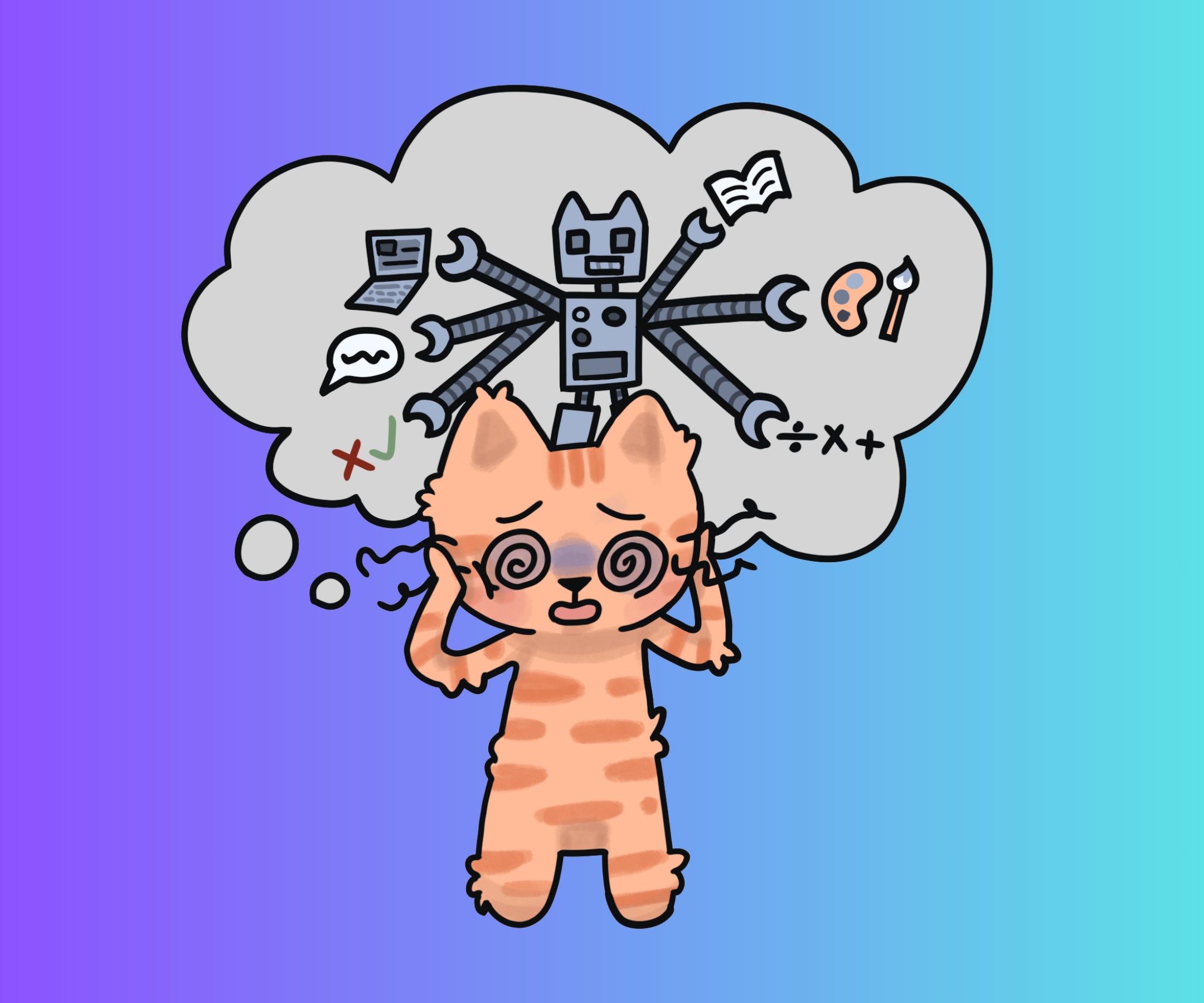
Not fear that AI was coming. Everyone at that table knew it was already here. It was the fear of falling behind. The fear that every moment you weren’t building, automating, testing, or optimizing was a moment wasted. Walking down the street and noticing the trees had somehow become an opportunity cost.

At some point, I looked around and said what I was thinking: “This is very normal for San Francisco. But this is not normal for the rest of the world.”

One investor called it AI psychosis. It’s a dramatic phrase, but I understood exactly what he meant. It’s that feeling that every minute not spent learning, building, or automating is a minute permanently lost. And the strange part is that the people most affected are often the ones who are furthest ahead. Everyone in that room was likely in the top fraction of a percent in their understanding of AI, and yet no one felt calm. No one felt like they had enough time.

My friend George Lee, who has spent years working inside some of the fastest-moving companies in tech, described it perfectly. He said working at a cutting-edge tech company is like being a kid in a candy store. Everything looks exciting, new, and delicious. The danger isn’t that you try something. The danger is that you overdo it.

I found myself doing exactly that.

I subscribed to a dozen AI newsletters. I checked LinkedIn and Threads constantly to see what was happening. I tried to follow every new trend and learn every new technique. I told myself I was staying current. I told myself this was what staying relevant looked like.

But I didn’t feel smarter. I felt more behind than ever. As if knowing more had somehow made me more aware of how much I didn’t know. The ocean kept getting bigger the further I swam into it.

That’s the paradox no one talks about. The more you consume, the more there is to consume. The faster the field moves, the faster you have to run just to stay in place.

Someone told me recently that AI had made them significantly more efficient, but also significantly more busy. It was almost as if being able to do more created more to do.

I haven’t stopped thinking about that.

Because it might be the central tension of this moment. AI can help you do more. But doing more doesn’t automatically mean doing it better. When you clear the pile in front of you, you often discover a longer pile hiding behind it. When you remove the friction of starting something, you also remove the natural stopping points that used to make you ask whether it was worth doing at all.

Before AI, if a task took ten hours, you had to make a decision. Is this worth ten hours of my life?

Now, if it takes ten minutes, you just do it. And then you do ten more things like it.

I think about it like a treadmill. You keep adding speed because you can. But a faster treadmill isn’t taking you somewhere different. It’s taking you to the same place, only more breathlessly.

We tell ourselves we’re saving time. But sometimes we’re just filling the saved time with more motion.

Share Perspectives

Here’s something worth remembering: most people are not doing any of this.

Most people are not spending their evenings setting up their Mac Minis to run OpenClaw. Most people are not using AI to generate podcasts about AI so they can discuss AI at the next event about AI. Most people are not kicking off multiple agents to run tasks while they walk their dog.

Most people are working their jobs, raising kids, caring for aging parents, paying bills, managing a household, and occasionally trying to figure out what everyone keeps talking about. For them, AI is something they’ve heard is important but don’t know where to start. It’s a technology that feels both magical and completely alien.

ChatGPT launched in November 2022. That’s less than three years ago.

Three years after the consumer internet started breaking into broader awareness, it was 1998. Google had just been founded. Amazon was still mostly selling books. Facebook didn’t exist. YouTube didn’t exist. The iPhone didn’t exist. The behaviors and companies that now define our digital lives hadn’t taken shape yet.

We were right that the internet would change everything. We were often very wrong about how, when, and who would lead it.

That’s where we are with AI. We are not at the end of this story. We are in the first chapter. And most of the world hasn’t started reading yet.

Leave a comment

I believe deeply in what AI can do. I spend my days thinking about how it can transform how we work, remove the drudgery from our jobs, and help people do things that used to feel out of reach.

But I also know what I don’t want.

I don’t want my life to be about hyper-optimization. I don’t want to measure my days by how many agents I ran or how many things I’ve successfully automated away. I don’t want every walk to become a learning session and every quiet moment to become a productivity problem to solve.

I want time to think, to consider, and to strategize. I want scarcity to drive prioritization and prioritization to drive decision-making. I want to sit with a hard question long enough that a real answer emerges, not just the first one.

That is what makes us human. And it is what AI cannot replace.

The most important decisions and epiphanies of my career were not made faster with better tools. They were made in the margins — on a long flight, during a quiet walk, in a conversation I almost skipped, while reading something on a whim. Those moments don’t show up in any workflow. But they are the ones that have mattered most.

There’s a difference between staying curious and staying frantic. You can engage seriously with AI without being consumed by it. You can be thoughtful about what’s coming without making it the organizing principle of your entire life.

So here’s what I want to offer you, because I needed someone to say it to me.

It’s okay to let some things go. You don’t have to have an opinion on every model release or try every tool. The important developments will find you. It’s okay to protect the pauses, because not every idle moment is wasted — some of your best thinking happens in the gaps. It’s okay to go deep on fewer things, because one tool that actually changes how you work is worth more than ten you sampled and abandoned. And it’s okay to ignore the bubble. San Francisco is not the world. LinkedIn is not reality. Measure yourself against your own goals, not someone else’s performance.

The stillness isn’t a bug in your productivity. It’s a feature.

AI will make us better at many things. It will reduce repetitive, tedious work. It will change jobs and create new ones. It will help some people do things that used to require an entire team.

But the question was never whether AI can help us do more. It can. The question is what we choose to do with the space it creates.

Will we use every gain in efficiency to add one more thing to the treadmill? Or will we use it to unleash what humans are uniquely suited for — thinking carefully, connecting meaningfully, and spending our time on the things that actually matter?

AI should not make you feel like you’re always behind. Sometimes the most powerful thing you can do is stop running for a minute. Creativity and ingenuity have never come from doing more. They come from making space to think, daydream, and wonder.

That is something AI can’t take away.

No posts