



惯性聚合 高效追踪和阅读你感兴趣的博客、新闻、科技资讯
阅读原文 在惯性聚合中打开

推荐订阅源

K
Kaspersky official blog
G
Google Developers Blog
Apple Machine Learning Research
V
Visual Studio Blog
WordPress大学
WordPress大学
博客园 - Franky
雷峰网
雷峰网
钛媒体:引领未来商业与生活新知
钛媒体:引领未来商业与生活新知
博客园 - 【当耐特】
人人都是产品经理
人人都是产品经理
月光博客
月光博客
V
V2EX
freeCodeCamp Programming Tutorials: Python, JavaScript, Git & More
IT之家
IT之家
小众软件
小众软件
Cloudbric
Cloudbric
量子位
N
News and Events Feed by Topic
Vercel News
Vercel News
Security Archives - TechRepublic
www.infosecurity-magazine.com
C
Check Point Blog
The Cloudflare Blog
Hugging Face - Blog
Hugging Face - Blog
T
Tenable Blog
S
Secure Thoughts
Know Your Adversary
Know Your Adversary
C
CXSECURITY Database RSS Feed - CXSecurity.com
C
Cyber Attacks, Cyber Crime and Cyber Security
Stack Overflow Blog
Stack Overflow Blog
Help Net Security
Help Net Security
L
LINUX DO - 最新话题
Google DeepMind News
云风的 BLOG
云风的 BLOG
OSCHINA 社区最新新闻
OSCHINA 社区最新新闻
cs.AI updates on arXiv.org
N
News | PayPal Newsroom
PCI Perspectives
PCI Perspectives
T
Troy Hunt's Blog
GbyAI
GbyAI
Attack and Defense Labs
C
Cybersecurity and Infrastructure Security Agency CISA
Y
Y Combinator Blog
美团技术团队
爱范儿
爱范儿
Martin Fowler
Martin Fowler
Last Week in AI
Last Week in AI
P
Privacy International News Feed
T
The Blog of Author Tim Ferriss
F
Full Disclosure

Hacker News - Newest: "AI"

AI can't read an investor deck AI as an attorney? Student uses ChatGPT, Gemini to sue UW over alleged racial discrimination Hacking MCP Servers in AI Systems – The Rug Pull: Tool Changes After Approval GitHub - MeepCastana/KubeezCut: Free Web based video editor GitHub - GenAI-Gurus/awesome-eu-ai-act: Curated tools, official sources, OSS, templates, and guides for EU AI Act compliance. Can AI judge journalism? A Thiel-backed startup says yes, even if it risks chilling whistleblowers Coming soon: 10 Things That Matter in AI Right Now DARPA built an AI to fact-check enemy weapons claims What explains heterogeneity in AI adoption? When AI Meets Muscle: Context-Aware Electrical Stimulation Promises a New Way to Guide Human Movements - Department of Computer Science AI Changed How We Build. It Did Not Change What Matters. Linux rules on using AI-generated code - Copilot is OK, but humans must take 'full responsibility for the… Meta spins up AI version of Mark Zuckerberg to engage with employees Code Mode: Let Your AI Write Programs, Not Just Call Tools | TanStack Blog GitHub - Delavalom/graft: Go framework for building AI agents. Type-safe tools, multi-provider (OpenAI, Anthropic, Gemini, Bedrock), zero vendor SDKs. India's TCS tops estimates, says new AI models did not dent services demand Gen Z's fading AI hype Strong feeling: we are in a folded AI reality GitHub - machinarii/total-recall-catalog: A reference catalog of latest knowledge retrieval, memory & RAG systems GitHub - mensfeld/code-on-incus: Give each AI agent its own isolated machine with root, Docker, and systemd. Active defense detects and stops threats automatically.. Quantization, LoRA, and the 8% Problem: Benchmarking Local LLMs for Production AI Iran war: We spoke to the man making Lego-style AI videos that experts say are powerful propaganda Powell, Bessent discussed Anthropic's Mythos AI cyber threat with major U.S. banks GitHub - immartian/bellamem: Persistent belief-graph memory for AI agents. Retrieves decisive context by importance — not recency, not RAG, not /compact. recursive-mode: The Repo-Native Operating System for AI Engineering After the attack on Sam Altman's home, will AI CEO's go on the offensive? The biggest advance in AI since the LLM Opus 4.6 vs GPT 5.4 One Prompt Unity World Generation Test “AI polls” are fake polls Client Challenge Can AI be a 'child of God'? Inside Anthropic's meeting with Christian leaders How to Switch AI Chatbots and Why You Might Want To GitHub - MattMessinger1/agentic_refund_guardrail: Safe refund policy layer for AI agents — Python + TypeScript. Same behavior, shared tests. Adam/papers/emergent_values_whitepaper.md at master · strangeadvancedmarketing/Adam Ask HN: How do you stop playing 20 questions with your AI coding tools How far can automation and AI support psychotherapy? - @theU GitHub - stagas/rtdiff: realtime git diff gui and AI-assisted commits A Mac Studio for Local AI — 6 Months Later A History of the Early Years of AI at the University of Edinburgh Why AI Coding Tools Still Feel Stuck on Localhost MSN AI Datacenters Are Becoming Strategic Targets twitter.com Penn Researchers Use AI to Surface Unreported GLP-1 Side Effects in Reddit Posts Show HN: MoodSense AI (ML and FastAPI and Gradio, Deployed on Hugging Face) Moodsense Ai - a Hugging Face Space by aman179102 AI models are terrible at betting on soccer—especially xAI Grok GitHub - xialeistudio/echoic GitHub - HimashaHerath/github-dev-wrapped: AI-powered weekly GitHub activity reports deployed to GitHub Pages GitHub - alejandrobalderas/claude-code-from-source: Architecture, patterns & internals of Anthropic's AI coding agent — reverse-engineered from source maps AI and Tech brief: Ireland ascendant GitHub - Titovilal/context0: Context0 - Never Surrender Training for a Marathon with an AI Coach: What Worked and What Didn't Cyber Pulse: Agentic Intel - Apps on Google Play I Built an AI PR Reviewer That Catches Bugs by Not Looking for Bugs Gen Z workers are so fearful AI will take their job they’re intentionally sabotaging their company’s AI rollout | Fortune How AI Is Reimagining the Game of Golf–For Both Players and Courses GitHub - nattergabriel/reseed: A CLI tool for managing and distributing agent skills across projects Is SVG the final frontier? My AI workflow evolved from prompts to a near-autonomous workflow MLSharp Help - 3DGS Viewer & Generator I put my cognitive field based AI's runtime on GitHub Is Numble the first AI-proof game? A3: Kubernetes for autonomous AI agent fleets | Emergent Principles Deepali Vyas ("The Elite Recruiter") GitHub - msmarkgu/RelayFreeLLM: A restful API designed to route user prompts to various AI model providers. Unionized ProPublica staff are on strike over AI, layoffs, and wages Unleashing the Advantage of Quantum AI We're heading for an AI-fueled 'dementia crisis,' brain scientist warns The AI-Assisted Breach of Mexico's Government Infrastructure [pdf] GitHub - stef41/lmscan: 🔍 Detect AI-generated text and fingerprint which LLM wrote it. Open-source GPTZero alternative. Zero dependencies, works offline. MSN GitHub - visionscaper/collabmem: Enabling long-term collaboration with Agentic AI - building up episodic and world model memory over time with in-context awareness We gave an AI a 3 year retail lease in SF and asked it to make a profit | Andon Labs AI Code is Hollowing Out Open Source, and Maintainers are Looking the Other Way What leaked "SteamGPT" files could mean for the PC gaming platform's use of AI AI is the boss at this retail store. What could go wrong? GitHub - Wuzu11517/agentic-proxy: Local proxy meant to help reduce With Drones, Geophysics and ArtificiaI Intelligence, Researchers Prepare to Do Battle Against Land Mines A Single Operator, Two AI Platforms, Nine Government Agencies: The Full Technical Report 在 Steam 上购买 FriedrichAI: Offline AI 立省 10% GitHub - inevolin/resume-cli: Hit Claude usage limits? Resume any AI coding session elsewhere. Switch tools at zero friction. GitHub - atripati/ark: AI Runtime Kernel — a context operating system for AI agents. Eliminates tool bloat, loads only what’s needed, and gives LLMs their reasoning space back. How to Build a Secure AI PR Reviewer with Claude, GitHub Actions, and JavaScript This Startup Wants You to Pay Up to Talk With AI Versions of Human Experts Intel Arc Pro B70 Brings 32GB VRAM to Local AI for $949 WordPress 7.0: The Good, the AI, and the Still Missing AI on the couch: Anthropic gives Claude 20 hours of psychiatry IatroBench: Pre-Registered Evidence of Iatrogenic Harm from AI Safety Measures AI Agents Know About Supabase. They Don't Always Use It Right. The history and future of AI at Google, with Sundar Pichai Inside an AI‑enabled device code phishing campaign How Meta Used AI to Map Tribal Knowledge in Large-Scale Data Pipelines AI for Systems: Using LLMs to Optimize Database Query Execution Forecasting the Economic Effects of AI Introducing Tinker: Play with AI, bring your ideas to life AI sheds light on an ancient gaming mystery People really hate AI but not as much as Iran—or Democrats | Fortune What is an AI Product Engineer? Phoebe Gates wants her $185 million AI startup to succeed with 'no ties to my privilege or my last name': 'I have a chip on my shoulder' | Fortune
The Interface for AI Hasn't Been Invented Yet
Iris · 2026-06-03 · via Hacker News - Newest: "AI"

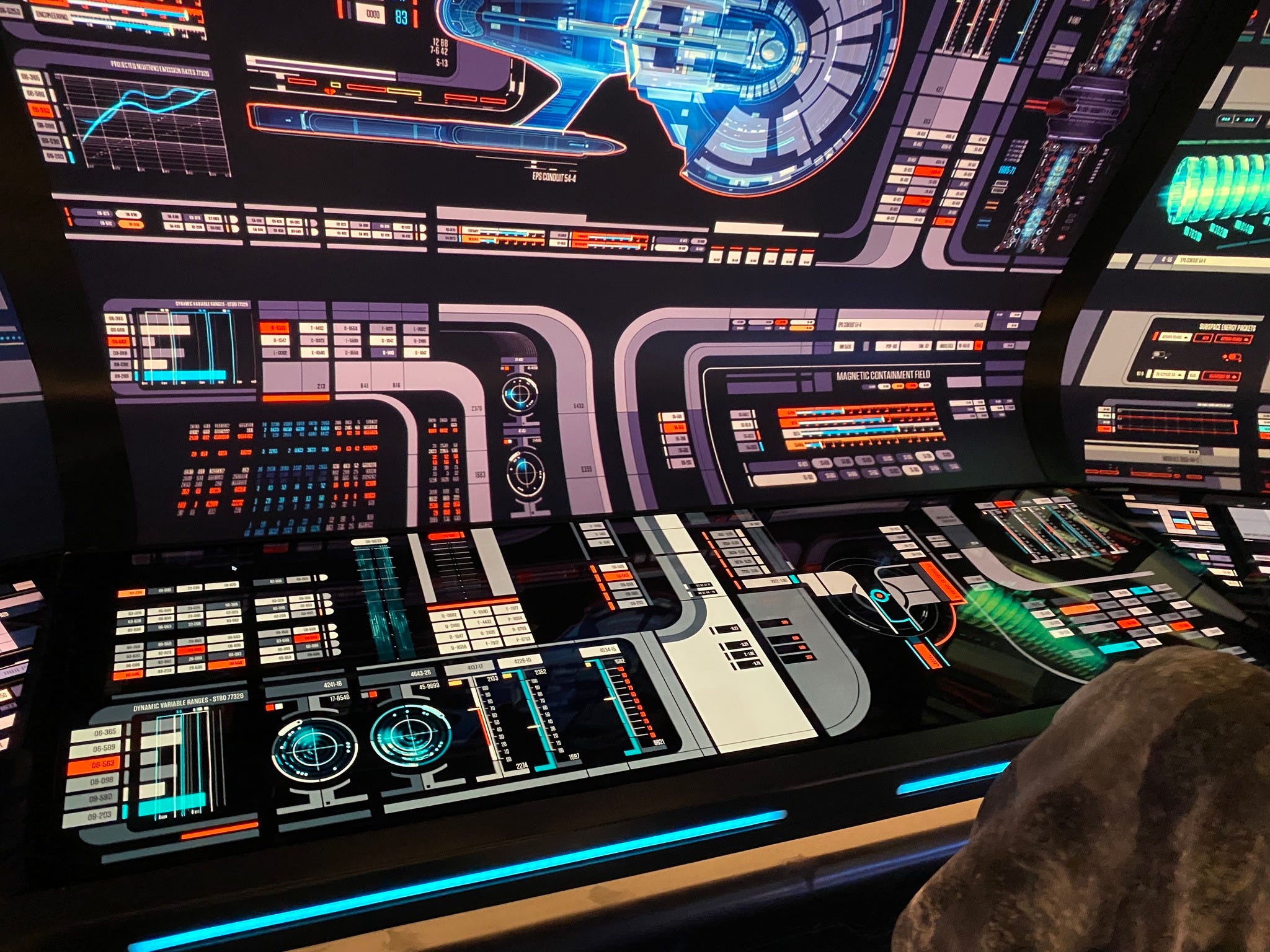
There is a story Stephen Hood likes to tell about the set of Star Trek: The Next Generation.

It is 1989. Actor Wil Wheaton, who plays the teenage prodigy Wesley Crusher, occasionally pilots the Enterprise. On the show that means sitting at the helm and tapping a flat black panel covered in glassy slabs and abstract symbols. Star Trek’s famous LCARS interface. There is no stick, no yoke, no instruction manual. So Wheaton invents his own gestures: a flick here, a tap there, a small flourish to indicate course correction. After a while, he starts to wonder if he is doing it wrong.

He finds the production designer, Michael Okuda, and asks. Okuda has spent years building Star Trek’s visual language; if anyone knows the right way to fly a starship, it is him.

Okuda tells him there is no right way. In the future, the interface will adapt to the user. Wheaton’s gestures are correct because they are Wesley’s gestures. When other actors take the helm, theirs will be different, and that won’t matter.

That was 1989. The Mac was five years old. The web was two years away. There were no smartphones, no broadband, no machine learning to speak of. And a television production designer, working out the logic of a fictional starship, had articulated something that most of the actual computing industry would spend the next thirty-seven years reaching for.

Telepath Founders Josh Whiting, Stephen Hood & Rupert Manfredi

Stephen Hood thinks about this story a lot. Telepath, his fourth startup, was founded late last year with Rupert Manfredi and Josh Whiting, two former colleagues from Mozilla, where he had previously led open source AI work and helped ship a project called Llamafile. He keeps vintage computers on his desk. He talks about the history of personal computing the way some people talk about jazz.

What he sees, when he looks at the modern computer, is a Jenga tower.

“It’s an unstable, wobbly, tall structure that we built over decades of accrued assumptions and decisions,” he says. The desktop, the windows, the icons, the menus. None of it is the platonic ideal of how humans and machines should interact. It’s just what got built, decision by decision, working around the limitations of the machines available at each step.

It was also working around the fact that people did not know what a computer could do, and were a little afraid of it. Designers borrowed from the physical world to make the machine feel familiar: the screen became a desk, files became paper documents stacked in folders, deletion became a trash can you dragged things into. The conceit was that you were not really using a computer. You were sitting at a desk, moving objects around. It made the machine discoverable for people who had never used one.

One of Hood’s advisors is Scott Jenson, who joined Apple’s Human Interface group in the late 1980s and went on to work on design for Google, and Frog Design. At the Ubuntu Summit last year, Jenson argued that desktop UX has not meaningfully changed in twenty years. The interface most of us still use, he pointed out, traces back to the Xerox Star prototype from 1981; everything since has been a copy of a copy. His complaint was not that the metaphor was wrong. It was that desktop design had always evolved by copying the previous generation, and the field has now spent two decades copying itself.

Hood’s argument goes further. He thinks the conditions that produced the desktop metaphor in the first place no longer hold. Most computer users today have grown up with computers; they don’t need a metaphor to picture what a file is. The metaphor solved problems we mostly don’t have anymore. And the machine can now respond, observe, and adjust in ways it couldn’t in 1984.

But the industry’s first instinct, having been handed this new capability, has been to put it inside a chat box.

Hood finds this insufficient. “Everything is based around chat today,” he says. “Even things like Cowork, which is a great, amazing project. It’s still fundamentally a chat experience.” He is not knocking the projects. He is pointing out that chat is what we have because it is the easiest thing to ship, not because it is the right interface for what is actually happening underneath. He calls it a return to the command line.

The problem with a chat log, in Hood’s view, is that it flattens everything. Every project, every task, every half-finished thought becomes a line in the same scrolling ticker. A linear scrolling log. People try to use chat threads as projects, but threads don’t really map to projects. They accumulate, drift, get abandoned, mix together. Information you needed an hour ago becomes hard to find again. Context evaporates.

He thinks the next interface will be non-linear and persistent. A visual space, not a transcript. A canvas where information can be pinned, organized, and revisited; where the agent and the user share a workspace that keeps existing whether or not anyone is currently looking at it. Some projects don’t get finished in a single sitting.

This is also where Wheaton’s hand gestures come back. The interface, Hood argues, should be built from primitives that are common across users, but how those primitives are arranged, what stays open, what gets surfaced when, should be tuned to the individual. Not because the user vibe-codes a new layout from scratch every morning, but because the system has long-term memory that accrues. It remembers what you do. It anticipates. It rearranges itself, slowly, to fit you.

Mike Okuda asserted in 1989, with no machine learning and no LLMs and a budget for plywood and gel filters, that interfaces would one day work this way. What Hood is building, as a first product, is narrower than what Okuda imagined: a screen that rearranges itself around how you work. The fuller vision is multimodality, voice, a computer that meets you wherever you are, but the visual interface is where you start, because today’s personal agents are the closest thing to a runtime for it. Importantly, it is the first time the underlying claim, that the interface should bend toward the user rather than the other way around, has been a buildable claim rather than a science-fiction conceit.

Telepath’s first product is called Television. It is narrow — a visual client for agents like OpenClaw, Hermes and Claude Code currently — but it points at the larger idea. As you talk to the agent, the agent generates visual artifacts in a persistent canvas. Things you can move around, resize, return to. Not a chat log dressed up as a UI, but a workspace that the agent and the user manipulate together.
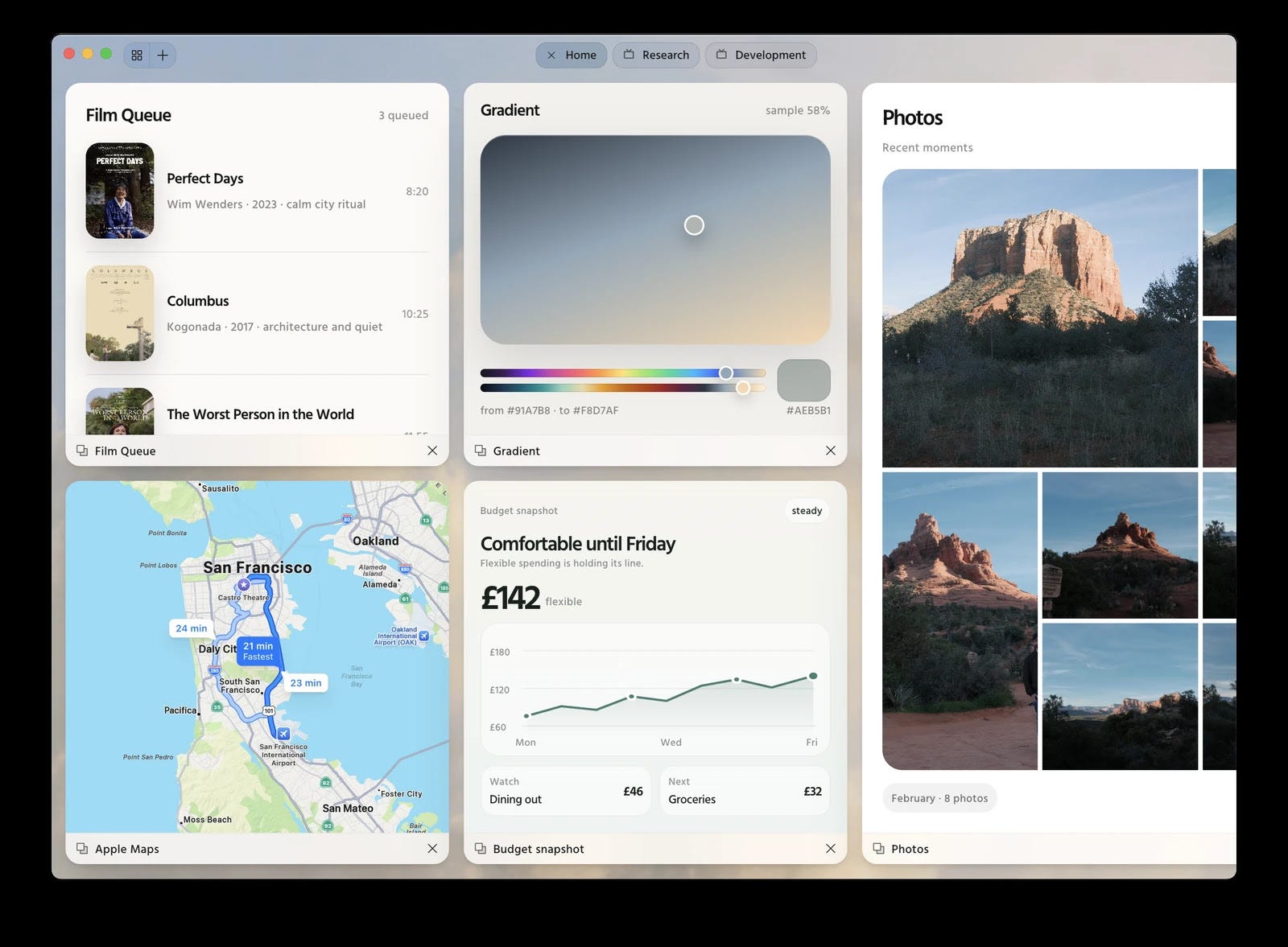
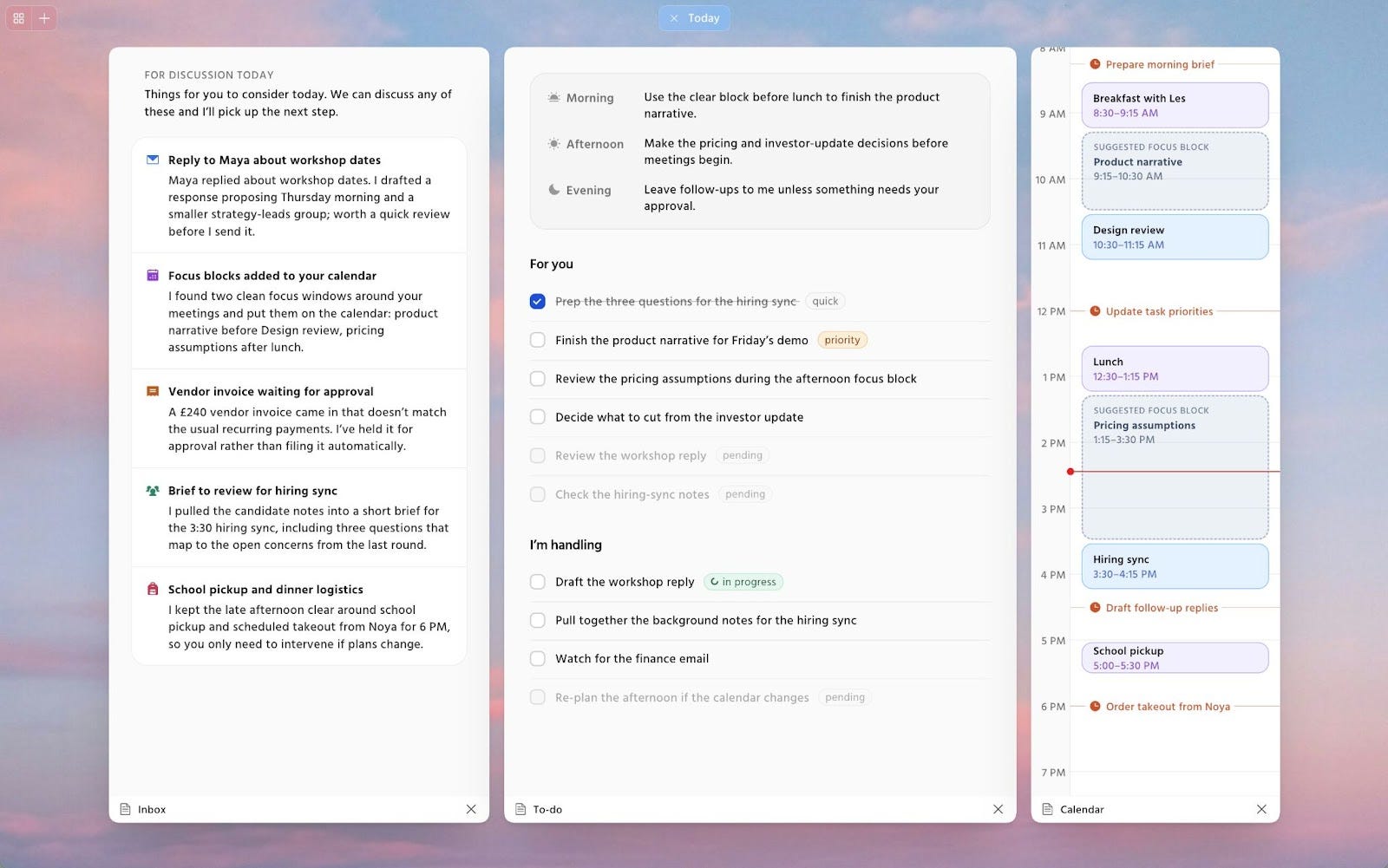
Preview of Television

Hood is clear that Television is a starting point. It is built for developers and enthusiasts; the mass market version is a much longer road. He compares the current state of personal AI agents to the Altair 8800, the 1975 kit computer that was, in some sense, the first personal computer you could buy in a box. The Altair had no keyboard and no display. You programmed it by flipping switches on the front panel and reading lights. It was unapproachable and prone to behaving in unexpected ways. It was also a turning point.

The other comparison Hood reaches for is the Apple I, which Steve Wozniak demoed at the Homebrew Computer Club in 1976 as a bare motherboard. You had to supply your own monitor, your own keyboard, your own case. The initial audience was enthusiasts. The trajectory was everyone. Hood is betting on the same arc.

The shape of what they’re building has shifted once already. When Hood founded the company, the plan was to build a series of standalone apps that worked alongside existing tools, hedging against the slow arrival of better infrastructure. Then, in the months that followed, model capabilities and agent harnesses improved enough that the hedge stopped being necessary. They could move higher up the stack faster.

Telepath is one of a handful of teams trying to figure out what comes after the chat box. The reason this matters is that interfaces are sticky. The desktop metaphor was built for people who had never used a computer, and we are still using it in 2026, because once a few hundred million people learn an interface, replacing it is a massive challenge. Whatever paradigm gets locked in for AI agents over the next few years is likely to shape how people interact with computers for the next thirty.

If that paradigm turns out to be the chat box, we will have replicated the command line and called it progress. If it turns out to be something else - persistent, visual, adapted to the user - we will have done something the industry has been theorizing about for nearly forty years and has never actually shipped.

The labs building the underlying models are clearly aware the chat box is a stopgap, as are the application companies trying to wrap agents in something more usable. Which paradigm wins will be decided in the next few years, mostly by which early products people actually keep using. The chat box is the incumbent. So was the command line.

Discussion about this post

Ready for more?