惯性聚合 高效追踪和阅读你感兴趣的博客、新闻、科技资讯
阅读原文 在惯性聚合中打开

推荐订阅源

V
V2EX
博客园 - 叶小钗
WordPress大学
WordPress大学
N
Netflix TechBlog - Medium
M
MIT News - Artificial intelligence
美团技术团队
aimingoo的专栏
aimingoo的专栏
博客园_首页
奇客Solidot–传递最新科技情报
奇客Solidot–传递最新科技情报
Microsoft Security Blog
Last Week in AI
Last Week in AI
The GitHub Blog
The GitHub Blog
小众软件
小众软件
T
Tailwind CSS Blog
Martin Fowler
Martin Fowler
B
Blog RSS Feed
月光博客
月光博客
量子位
H
Hackread – Cybersecurity News, Data Breaches, AI and More
Hugging Face - Blog
Hugging Face - Blog
IT之家
IT之家
Y
Y Combinator Blog
B
Blog
MyScale Blog
MyScale Blog

Hacker News - Newest: "AI"

AI can't read an investor deck AI as an attorney? Student uses ChatGPT, Gemini to sue UW over alleged racial discrimination Hacking MCP Servers in AI Systems – The Rug Pull: Tool Changes After Approval GitHub - MeepCastana/KubeezCut: Free Web based video editor Can AI judge journalism? A Thiel-backed startup says yes, even if it risks chilling whistleblowers Coming soon: 10 Things That Matter in AI Right Now DARPA built an AI to fact-check enemy weapons claims What explains heterogeneity in AI adoption? When AI Meets Muscle: Context-Aware Electrical Stimulation Promises a New Way to Guide Human Movements - Department of Computer Science AI Changed How We Build. It Did Not Change What Matters. Linux rules on using AI-generated code - Copilot is OK, but humans must take 'full responsibility for the… Meta spins up AI version of Mark Zuckerberg to engage with employees Code Mode: Let Your AI Write Programs, Not Just Call Tools | TanStack Blog GitHub - Delavalom/graft: Go framework for building AI agents. Type-safe tools, multi-provider (OpenAI, Anthropic, Gemini, Bedrock), zero vendor SDKs. India's TCS tops estimates, says new AI models did not dent services demand Gen Z's fading AI hype Strong feeling: we are in a folded AI reality GitHub - machinarii/total-recall-catalog: A reference catalog of latest knowledge retrieval, memory & RAG systems GitHub - mensfeld/code-on-incus: Give each AI agent its own isolated machine with root, Docker, and systemd. Active defense detects and stops threats automatically.. Quantization, LoRA, and the 8% Problem: Benchmarking Local LLMs for Production AI Iran war: We spoke to the man making Lego-style AI videos that experts say are powerful propaganda Powell, Bessent discussed Anthropic's Mythos AI cyber threat with major U.S. banks GitHub - immartian/bellamem: Persistent belief-graph memory for AI agents. Retrieves decisive context by importance — not recency, not RAG, not /compact. recursive-mode: The Repo-Native Operating System for AI Engineering After the attack on Sam Altman's home, will AI CEO's go on the offensive? The biggest advance in AI since the LLM Opus 4.6 vs GPT 5.4 One Prompt Unity World Generation Test “AI polls” are fake polls Client Challenge Can AI be a 'child of God'? Inside Anthropic's meeting with Christian leaders
Scoring 500 Show HN pages for AI design patterns
hubraumhugo · 2026-04-19 · via Hacker News - Newest: "AI"

An attempt to detect 15 common design patterns in AI-generated landing pages.

When browsing Hacker News, I noted that many Show HN projects have a sterile feeling that tell me they are purely AI-generated. Initially I couldn’t tell what it was exactly, so I tried to quantify this feeling by scoring 500 Show HN pages for AI design patterns.

Accelerated by the vibe coding trend, there has been a large increase in Show HN projects. So much, that the moderators of HN had to restrict Show HN submissions for new accounts.

Here is how the Show HN submissions increased over the last few years: Monthly Show HN posts, 2022–2026
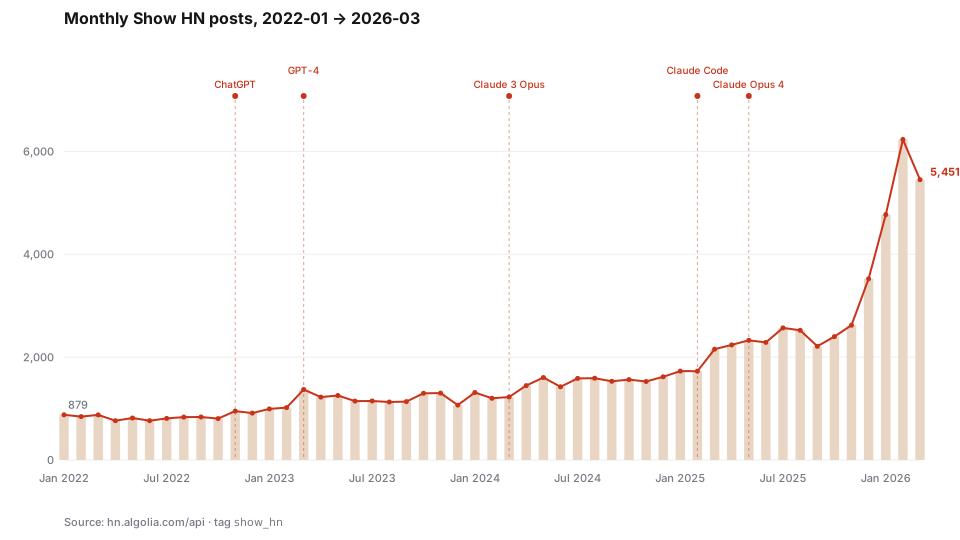
That should give us plenty of pages to score for AI design patterns.

AI design patterns

A designer recently told me that “colored left borders are almost as reliable a sign of AI-generated design as em-dashes for text”, so I started to notice them on many pages.

Then I asked some more designer friends what they think are common AI patterns. The answers can be roughly grouped into fonts, colors, layout quirks, and CSS patterns.

Fonts

  • Inter used for everything, but especially the centered hero headlines
  • LLM tend to use certain font combos like Space Grotesk, Instrument Serif and Geist
  • Serif italic for one accent word in an otherwise-Inter hero

Colors

  • “VibeCode Purple”
  • Perma dark mode with medium-grey body text and all-caps section labels
  • Barely passing body-text contrast in dark themes
  • Gradient everything
  • Large colored glows and colored box-shadows

Layout quirks

  • Centered hero set in a generic sans
  • Badge right above the hero H1
  • Colored borders on cards, on the top or left edge
  • Identical feature cards, each with an icon on top
  • Numbered “1, 2, 3” step sequences
  • Stat banner rows
  • Sidebar or nav with emoji icons
  • All-caps headings and section labels

CSS patterns

  • shadcn/ui
  • Glassmorphism

A few examples from the Show HN submissions:
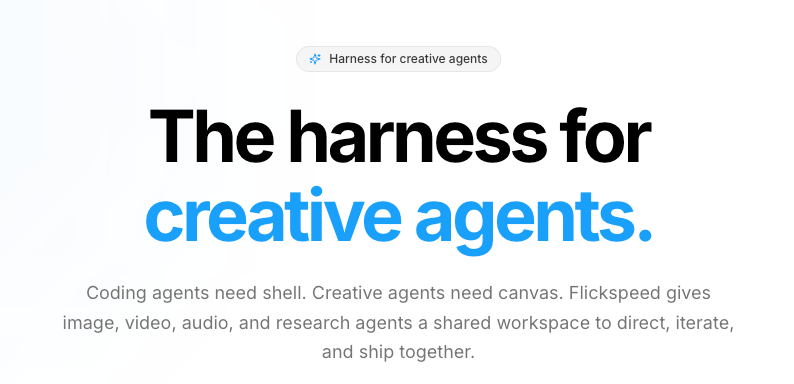
Uppercase badge above the hero H1
Badge above the Inter hero.
Another hero with an uppercase badge above the H1
Same, different page.
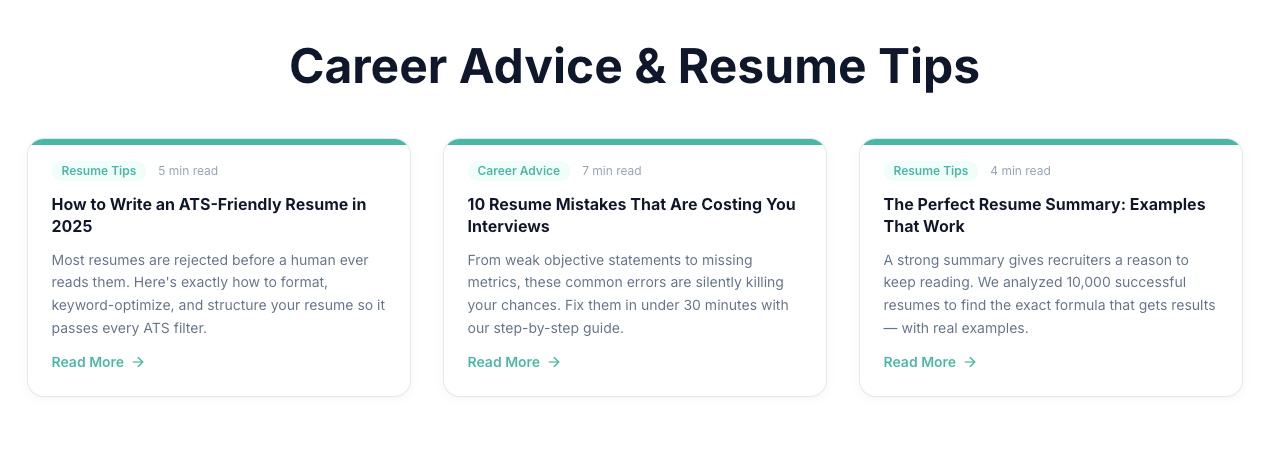
Cards with a colored top-border stripe and Inter copy
Colored border on top.
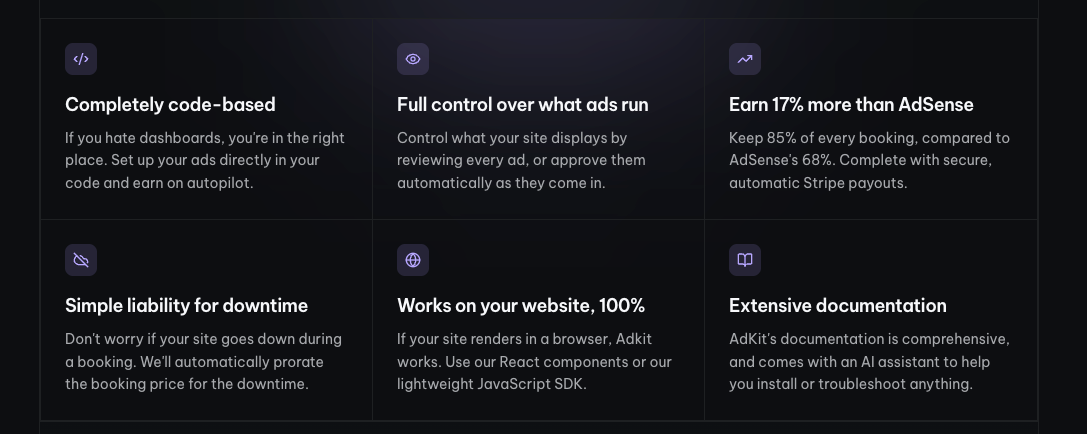
Templated feature grid of icon-topped cards
Icon-topped feature card grid.
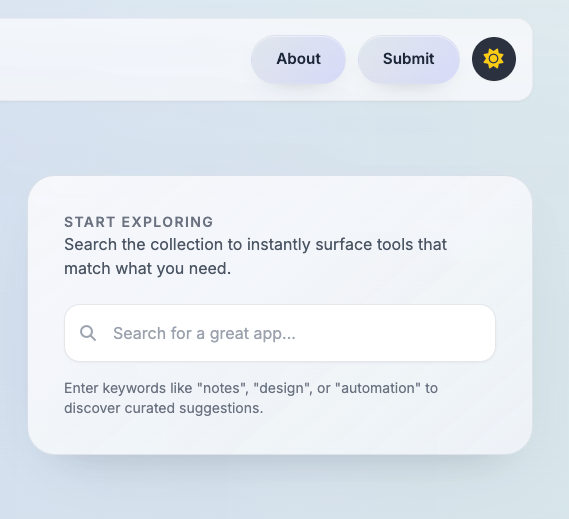
Gradient background with glassmorphism cards
Gradient background + glassmorphism cards.

Detecting AI design in Show HN submissions

Now we can try to systematically score for these patterns by going through 500 of the latest Show HN submissions and scoring their landing pages against the list above.

Here is the scoring method:

  • A headless browser loads each site (Playwright)
  • A small in-page script analyzes the DOM and reads computed styles
  • Every pattern is a deterministic CSS or DOM check. I intentionally do not take screenshots and let the LLM judge them.

This ultimately also leads to false positives, but my manual QA run verified it’s maybe 5-10%. If there is any interest in open sourcing the scoring code to replicate (and improve) the run or score your own site, let me know.

Results

A single pattern doesn’t necessarily make a site AI-generated, so I grouped them into three tiers based on how many of the 15 patterns they trigger:

Heavy slop (5+ patterns) · 105 sites · 21% Mild (2–4) · 230 sites · 46% Clean (0–1) · 165 sites · 33%

Is this bad? Not really, just uninspired. After all, validating a business idea was never about fancy design, and before the AI era, everything looked like Bootstrap or other web templates.

There is a difference between trying to craft your own design and just shipping with whatever defaults the LLMs output.

I guess people will get back to crafting beautiful designs to stand out from the slop. On the other hand, I’m not sure how much design will still matter once AI agents are the primary users of the web.


This post is human-written, the scoring and analysis were AI-assisted.