
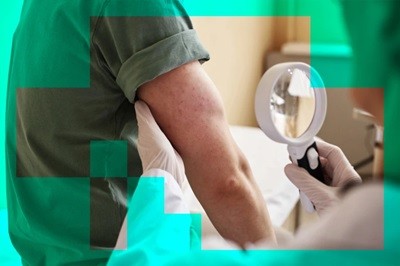
Google AI better than human doctors at diagnosing rashes from pictures








Physicians’ own ability to spot pre-cancerous growths during colonoscopies declined after they had grown accustomed to using an artificial-intelligence tool to help with the task.Credit: Gabrielle Voinot/Look at Sciences/Science Photo Library
As more professionals begin to rely on artificial-intelligence tools in their work, could their hard-earned skills atrophy?
That possibility is a growing concern for medical specialists, computer scientists and other workers. Seventy per cent of nurses and 77% of physicians, for example, are worried about losing their skills because of over-reliance on AI systems, according to a survey of US health-care workers published earlier this month1.
Their fear might be justified. Evidence suggests that AI-driven ‘deskilling’ is starting to happen in medicine, computer science and other fields. Researchers are now discussing how to preserve important human expertise in the age of AI.
“Just being aware that this phenomenon exists hopefully provokes some self-reflection about which skills people want to maintain and which they’re willing to outsource” to AI tools, says Kevin Crowston, an information scientist at Syracuse University in New York.
A study2 of physicians in Poland who specialize in endoscopy — the use of flexible probes to examine the inside of the human body — shows how quickly AI tools can erode human abilities. The physicians, who had all performed at least 2,000 colonoscopies during their careers, were given access to an AI system that analyses colonoscopy images in real time and flags a type of precancerous intestinal lesion called an adenoma. The tool was available to the specialists on some days but not on others.
Once physicians began using it, their performance dropped significantly whenever the system was unavailable. During the three-month period before the AI tool was introduced, the specialists found at least one adenoma during 28.4% of colonoscopies. During the three-month period after the tool was introduced, the adenoma detection rate for colonoscopies performed without AI assistance decreased to 22.4%.
Google AI better than human doctors at diagnosing rashes from pictures
The findings, published last October in The Lancet Gastroenterology and Hepatology, suggest that even highly skilled professionals might get worse at tasks that their job requires as they become more dependent on AI tools, says Robert Wachter, a physician at the University of California, San Francisco, who is the author of a book on how AI tools are transforming health care. The study authors say that continuous exposure to such tools can cause clinicians to become “less motivated, less focused, and less responsible when making cognitive decisions without AI assistance”.
Co-author Yuichi Mori, a physician-researcher at the University of Oslo, says that more studies are needed to confirm the phenomenon. But people who use AI tools should be aware that they risk losing some of their skills, he adds. “There is no established solution against deskilling right now. It should be a very hot research topic in the next decade.”
To investigate whether skills are being lost in the field of computer science, researchers at the AI firm Anthropic in San Francisco, California, designed a randomized controlled trial in which 52 software engineers were asked to perform a basic coding task3. During the exercise, all 52 participants could search the web and access instructions on how to do the task. Half of the participants were prompted to use an AI assistant as well.
此内容由惯性聚合(RSS阅读器)自动聚合整理,仅供阅读参考。 原文来自 — 版权归原作者所有。