




惯性聚合 高效追踪和阅读你感兴趣的博客、新闻、科技资讯
阅读原文 在惯性聚合中打开

推荐订阅源

L
LangChain Blog
小众软件
小众软件
Apple Machine Learning Research
Webroot Blog
Webroot Blog
T
The Blog of Author Tim Ferriss
S
Schneier on Security
罗磊的独立博客
P
Privacy & Cybersecurity Law Blog
阮一峰的网络日志
阮一峰的网络日志
F
Fortinet All Blogs
P
Palo Alto Networks Blog
月光博客
月光博客
MongoDB | Blog
MongoDB | Blog
Threat Intelligence Blog | Flashpoint
Simon Willison's Weblog
量子位
NISL@THU
NISL@THU
C
CERT Recently Published Vulnerability Notes
Cisco Talos Blog
Cisco Talos Blog
Stack Overflow Blog
Stack Overflow Blog
Recorded Future
Recorded Future
K
Kaspersky official blog
cs.CV updates on arXiv.org
Hacker News - Newest:
Hacker News - Newest: "LLM"
L
Lohrmann on Cybersecurity
酷 壳 – CoolShell
酷 壳 – CoolShell
GbyAI
GbyAI
L
LINUX DO - 热门话题
Help Net Security
Help Net Security
B
Blog RSS Feed
www.infosecurity-magazine.com
I
InfoQ
CTFtime.org: upcoming CTF events
The Cloudflare Blog
H
Heimdal Security Blog
Last Week in AI
Last Week in AI
美团技术团队
云风的 BLOG
云风的 BLOG
C
Check Point Blog
cs.AI updates on arXiv.org
W
WeLiveSecurity
V
Visual Studio Blog
G
GRAHAM CLULEY
AI
AI
Security Latest
Security Latest
OSCHINA 社区最新新闻
OSCHINA 社区最新新闻
雷峰网
雷峰网
Cyberwarzone
Cyberwarzone
Microsoft Security Blog
P
Proofpoint News Feed

Hacker News - Newest: "AI"

AI can't read an investor deck AI as an attorney? Student uses ChatGPT, Gemini to sue UW over alleged racial discrimination Hacking MCP Servers in AI Systems – The Rug Pull: Tool Changes After Approval GitHub - MeepCastana/KubeezCut: Free Web based video editor GitHub - GenAI-Gurus/awesome-eu-ai-act: Curated tools, official sources, OSS, templates, and guides for EU AI Act compliance. Can AI judge journalism? A Thiel-backed startup says yes, even if it risks chilling whistleblowers Coming soon: 10 Things That Matter in AI Right Now DARPA built an AI to fact-check enemy weapons claims What explains heterogeneity in AI adoption? When AI Meets Muscle: Context-Aware Electrical Stimulation Promises a New Way to Guide Human Movements - Department of Computer Science AI Changed How We Build. It Did Not Change What Matters. Linux rules on using AI-generated code - Copilot is OK, but humans must take 'full responsibility for the… Meta spins up AI version of Mark Zuckerberg to engage with employees Code Mode: Let Your AI Write Programs, Not Just Call Tools | TanStack Blog GitHub - Delavalom/graft: Go framework for building AI agents. Type-safe tools, multi-provider (OpenAI, Anthropic, Gemini, Bedrock), zero vendor SDKs. India's TCS tops estimates, says new AI models did not dent services demand Gen Z's fading AI hype Strong feeling: we are in a folded AI reality GitHub - machinarii/total-recall-catalog: A reference catalog of latest knowledge retrieval, memory & RAG systems GitHub - mensfeld/code-on-incus: Give each AI agent its own isolated machine with root, Docker, and systemd. Active defense detects and stops threats automatically.. Quantization, LoRA, and the 8% Problem: Benchmarking Local LLMs for Production AI Iran war: We spoke to the man making Lego-style AI videos that experts say are powerful propaganda Powell, Bessent discussed Anthropic's Mythos AI cyber threat with major U.S. banks GitHub - immartian/bellamem: Persistent belief-graph memory for AI agents. Retrieves decisive context by importance — not recency, not RAG, not /compact. recursive-mode: The Repo-Native Operating System for AI Engineering After the attack on Sam Altman's home, will AI CEO's go on the offensive? The biggest advance in AI since the LLM Opus 4.6 vs GPT 5.4 One Prompt Unity World Generation Test “AI polls” are fake polls Client Challenge Can AI be a 'child of God'? Inside Anthropic's meeting with Christian leaders How to Switch AI Chatbots and Why You Might Want To GitHub - MattMessinger1/agentic_refund_guardrail: Safe refund policy layer for AI agents — Python + TypeScript. Same behavior, shared tests. Adam/papers/emergent_values_whitepaper.md at master · strangeadvancedmarketing/Adam Ask HN: How do you stop playing 20 questions with your AI coding tools How far can automation and AI support psychotherapy? - @theU GitHub - stagas/rtdiff: realtime git diff gui and AI-assisted commits A Mac Studio for Local AI — 6 Months Later A History of the Early Years of AI at the University of Edinburgh Why AI Coding Tools Still Feel Stuck on Localhost MSN AI Datacenters Are Becoming Strategic Targets twitter.com Penn Researchers Use AI to Surface Unreported GLP-1 Side Effects in Reddit Posts Show HN: MoodSense AI (ML and FastAPI and Gradio, Deployed on Hugging Face) Moodsense Ai - a Hugging Face Space by aman179102 AI models are terrible at betting on soccer—especially xAI Grok GitHub - xialeistudio/echoic GitHub - HimashaHerath/github-dev-wrapped: AI-powered weekly GitHub activity reports deployed to GitHub Pages GitHub - alejandrobalderas/claude-code-from-source: Architecture, patterns & internals of Anthropic's AI coding agent — reverse-engineered from source maps AI and Tech brief: Ireland ascendant GitHub - Titovilal/context0: Context0 - Never Surrender Training for a Marathon with an AI Coach: What Worked and What Didn't Cyber Pulse: Agentic Intel - Apps on Google Play I Built an AI PR Reviewer That Catches Bugs by Not Looking for Bugs Gen Z workers are so fearful AI will take their job they’re intentionally sabotaging their company’s AI rollout | Fortune How AI Is Reimagining the Game of Golf–For Both Players and Courses GitHub - nattergabriel/reseed: A CLI tool for managing and distributing agent skills across projects Is SVG the final frontier? My AI workflow evolved from prompts to a near-autonomous workflow MLSharp Help - 3DGS Viewer & Generator I put my cognitive field based AI's runtime on GitHub Is Numble the first AI-proof game? A3: Kubernetes for autonomous AI agent fleets | Emergent Principles Deepali Vyas ("The Elite Recruiter") GitHub - msmarkgu/RelayFreeLLM: A restful API designed to route user prompts to various AI model providers. Unionized ProPublica staff are on strike over AI, layoffs, and wages Unleashing the Advantage of Quantum AI We're heading for an AI-fueled 'dementia crisis,' brain scientist warns The AI-Assisted Breach of Mexico's Government Infrastructure [pdf] GitHub - stef41/lmscan: 🔍 Detect AI-generated text and fingerprint which LLM wrote it. Open-source GPTZero alternative. Zero dependencies, works offline. MSN GitHub - visionscaper/collabmem: Enabling long-term collaboration with Agentic AI - building up episodic and world model memory over time with in-context awareness We gave an AI a 3 year retail lease in SF and asked it to make a profit | Andon Labs AI Code is Hollowing Out Open Source, and Maintainers are Looking the Other Way What leaked "SteamGPT" files could mean for the PC gaming platform's use of AI AI is the boss at this retail store. What could go wrong? GitHub - Wuzu11517/agentic-proxy: Local proxy meant to help reduce With Drones, Geophysics and ArtificiaI Intelligence, Researchers Prepare to Do Battle Against Land Mines A Single Operator, Two AI Platforms, Nine Government Agencies: The Full Technical Report 在 Steam 上购买 FriedrichAI: Offline AI 立省 10% GitHub - inevolin/resume-cli: Hit Claude usage limits? Resume any AI coding session elsewhere. Switch tools at zero friction. GitHub - atripati/ark: AI Runtime Kernel — a context operating system for AI agents. Eliminates tool bloat, loads only what’s needed, and gives LLMs their reasoning space back. How to Build a Secure AI PR Reviewer with Claude, GitHub Actions, and JavaScript This Startup Wants You to Pay Up to Talk With AI Versions of Human Experts Intel Arc Pro B70 Brings 32GB VRAM to Local AI for $949 WordPress 7.0: The Good, the AI, and the Still Missing AI on the couch: Anthropic gives Claude 20 hours of psychiatry IatroBench: Pre-Registered Evidence of Iatrogenic Harm from AI Safety Measures AI Agents Know About Supabase. They Don't Always Use It Right. The history and future of AI at Google, with Sundar Pichai Inside an AI‑enabled device code phishing campaign How Meta Used AI to Map Tribal Knowledge in Large-Scale Data Pipelines AI for Systems: Using LLMs to Optimize Database Query Execution Forecasting the Economic Effects of AI Introducing Tinker: Play with AI, bring your ideas to life AI sheds light on an ancient gaming mystery People really hate AI but not as much as Iran—or Democrats | Fortune What is an AI Product Engineer? Phoebe Gates wants her $185 million AI startup to succeed with 'no ties to my privilege or my last name': 'I have a chip on my shoulder' | Fortune
The 8 AI Coding Traps Every Engineering Team Should Know
JavaScript Development Space · 2026-06-23 · via Hacker News - Newest: "AI"

AI coding assistants have become a permanent part of modern software development.

Developers use them to generate boilerplate, write tests, create database queries, refactor legacy systems, and even implement entire features. According to recent industry surveys, the majority of engineers now rely on AI tools in some form during their daily workflow.

Yet many teams are learning an uncomfortable lesson:

The biggest risk of AI-generated code is not obvious bugs.

The real danger is code that looks correct.

It passes review.

It passes CI.

It passes automated tests.

And then it fails in production.

The problem isn’t that AI is inherently unreliable. The problem is that most development processes were designed for humans and have not yet adapted to AI-generated output.

What follows are eight recurring anti-patterns that appear across teams using AI-assisted development—and practical ways to prevent them before they become expensive incidents.

The first trap is psychological.

When developers know that code was generated by an AI assistant, they often review it differently.

The pull request looks clean.

Variable names follow conventions.

Formatting is perfect.

Nothing immediately appears suspicious.

As a result, reviewers unconsciously assume the implementation is safe.

This phenomenon is known as automation bias—the tendency to trust automated systems more than our own judgment.

Unfortunately, clean syntax does not guarantee correct behavior.

An AI-generated implementation may still contain subtle authorization flaws, incomplete validation logic, unsafe assumptions, or incorrect business rules.

The solution is simple:

AI-generated code should receive more scrutiny, not less.

Teams should explicitly review business logic, data handling, and security-critical paths regardless of how polished the code appears.

One of the most dangerous AI failure modes has little to do with code itself.

It involves packages.

AI models occasionally invent dependency names that sound legitimate.

Developers see an import statement or installation command, assume the package exists, and continue.

Attackers have already realized this creates an opportunity.

If an AI repeatedly invents the same package name, someone can register that package and distribute malicious code through it.

This attack pattern has become known as slopsquatting.

The defense is process-driven:

  • Verify every new dependency.

  • Require human approval for package installation.

  • Use lockfiles and integrity verification.

  • Review package provenance, maintainers, download history, and signatures.

Treat AI-suggested dependencies exactly as you would treat links received from an unknown sender.
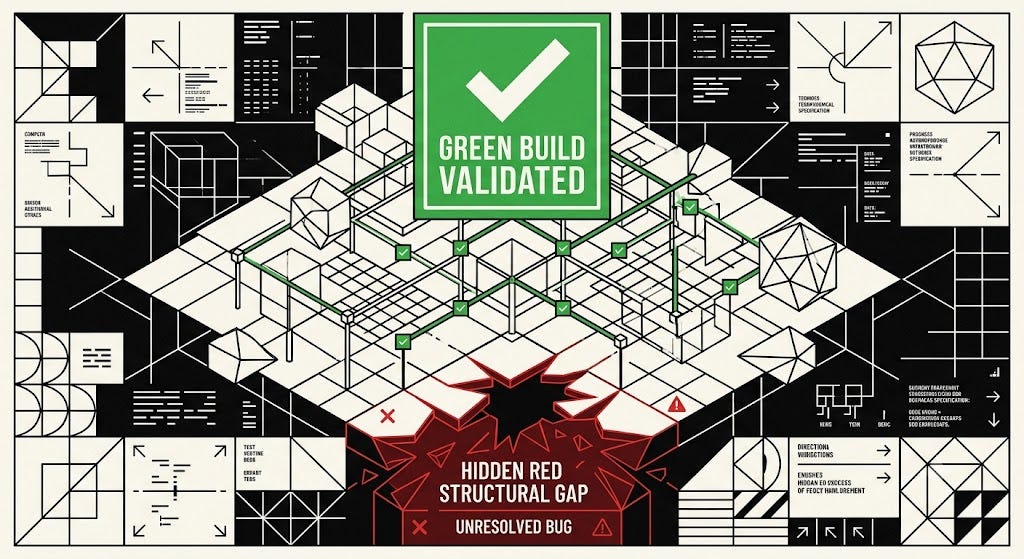
Coverage is one of the most misunderstood metrics in software engineering.

AI-generated tests often maximize coverage numbers while minimizing actual verification.

Common patterns include:

  • Assertions that only check for non-null values.

  • Tests that merely verify execution completed.

  • Excessive mocking.

  • Snapshot tests that preserve incorrect behavior.

The result is a green pipeline that provides false confidence.

Effective tests validate business behavior, edge cases, and expected outcomes.

A useful technique is mutation testing:

Intentionally break the implementation.

If no test fails, the test suite is providing little protection.

AI performs best when the generated output is easy to verify.

Problems emerge when teams apply it to areas where correctness is difficult to validate.

Examples include:

  • Financial calculations

  • Concurrency systems

  • Security controls

  • Database optimization

  • Distributed infrastructure

The issue isn’t model capability.

The issue is verification cost.

If validating correctness requires deep expertise, AI should be treated as a brainstorming tool rather than a source of truth.

Most developers have experienced this.

A simple request becomes:

“While we’re here, let’s improve this.”

Then:

“Let’s refactor this section too.”

A small change gradually becomes a massive pull request spanning multiple modules.

AI assistants encourage this behavior because they naturally suggest additional improvements.

The result is larger diffs, reduced review quality, and increased risk.

The fix is disciplined scoping:

One problem.

One change.

One pull request.

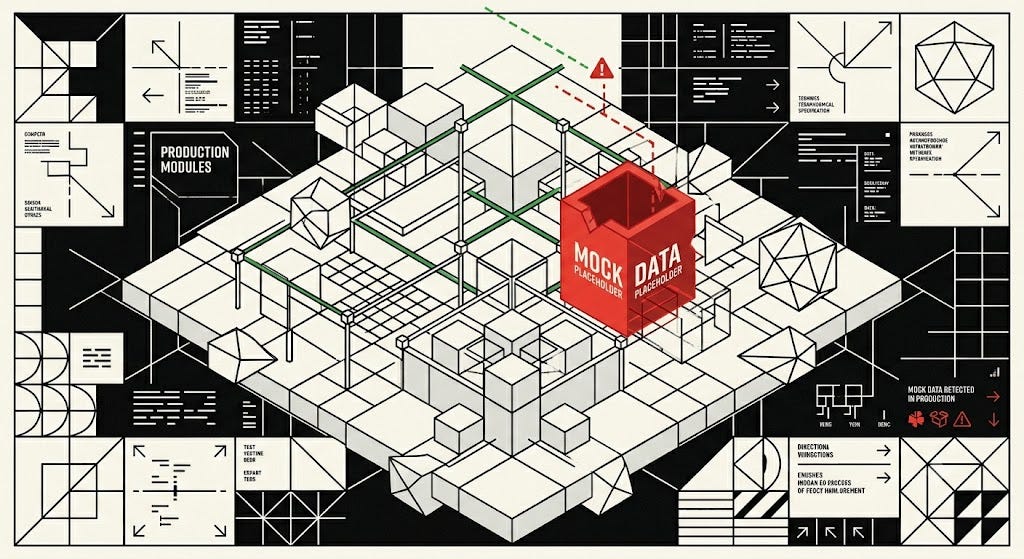
Mock data is useful during development.

It becomes dangerous when it survives deployment.

AI-generated prototypes frequently contain placeholder values, fake responses, and temporary shortcuts.

Because everything appears to work locally, these artifacts are easy to overlook.

Teams should establish automated checks that detect temporary markers and prevent them from reaching production environments.

If a feature has only been validated against mocks, it has not truly been validated.
AI assistants do not remember project rules the way humans do.

In long conversations, earlier constraints gradually lose influence.

Toward the end of a session, the model may begin suggesting:

  • Deprecated APIs

  • Old architecture patterns

  • Previously rejected solutions

The longer the interaction, the more likely this becomes.

Successful teams avoid relying on conversational memory.

Instead, they store critical rules in persistent project documentation such as:

  • CLAUDE.md

  • AGENTS.md

  • Cursor rules

  • Architecture guides

The source of truth should live outside the chat.

Perhaps the most subtle AI anti-pattern is architectural degradation.

Every pull request looks reasonable.

Every function appears well written.

Yet over time the system becomes increasingly fragmented.

Why?

Because AI optimizes locally.

Architecture requires global thinking.

Without explicit boundaries, systems slowly drift toward:

  • God services

  • Duplicate logic

  • Blurred module ownership

  • Increasing coupling

This is why architectural decisions should be documented and reviewed independently of feature implementation.

AI can build inside boundaries.

Humans must define those boundaries.

The biggest misconception about AI-generated code is that its primary risk is bad code.

In reality, its greatest danger is believable code.

Code that looks professional.

Code that feels finished.

Code that earns quick approval.

Modern engineering is no longer about generating software faster.

AI already does that.

The new challenge is determining which generated changes deserve trust.

The strongest teams are not the ones using the most AI.

They are the ones that have built the best systems for questioning it.