


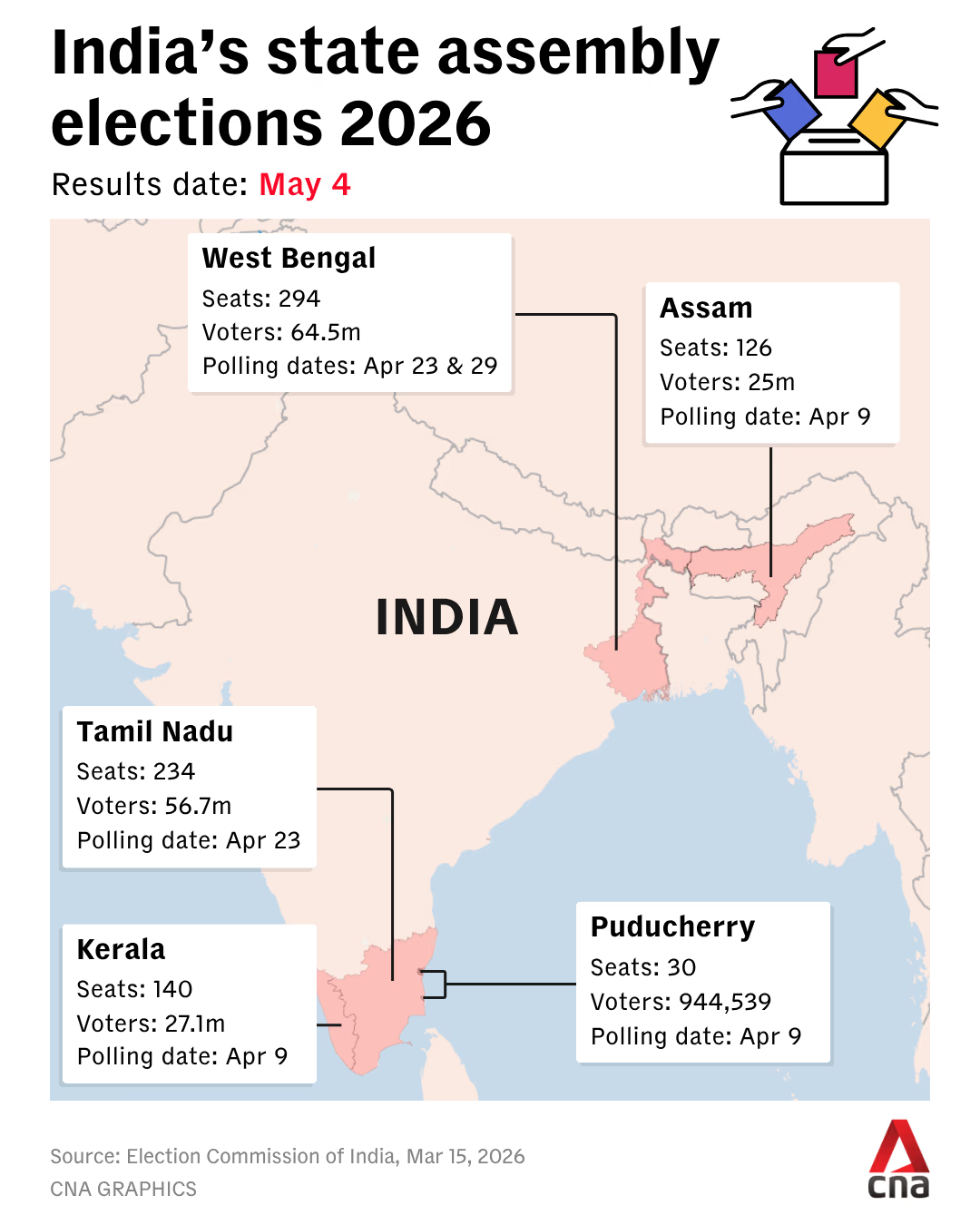
SINGAPORE: In April, the Indian states of Tamil Nadu, Kerala, West Bengal and Assam, along with the Union Territory of Puducherry, are in the midst of legislative assembly elections that will determine which political parties form their next governments.
But the polls have also produced the clearest sign that artificial intelligence (AI) has moved from novelty to necessity in Indian politics, say experts, who add that AI is no longer a gimmick at the edges of campaigning but a key component.
“Artificial intelligence has moved from the margins to the mainstream of political campaigning in India’s 2026 (state) assembly elections,” Prachir Singh, a senior research analyst at Counterpoint Research, told CNA.
“Compared to the 2024 Lok Sabha elections (India’s national elections), which was largely an AI pilot phase, 2026 marks a step change in scale and sophistication,” he added, citing how Tamil Nadu is leading adoption and states such as West Bengal, Assam and Kerala also scaling up dedicated digital war rooms.
Digital war rooms are campaign command centres built by political parties, where teams monitor voter sentiment, create content and coordinate rapid online messaging.
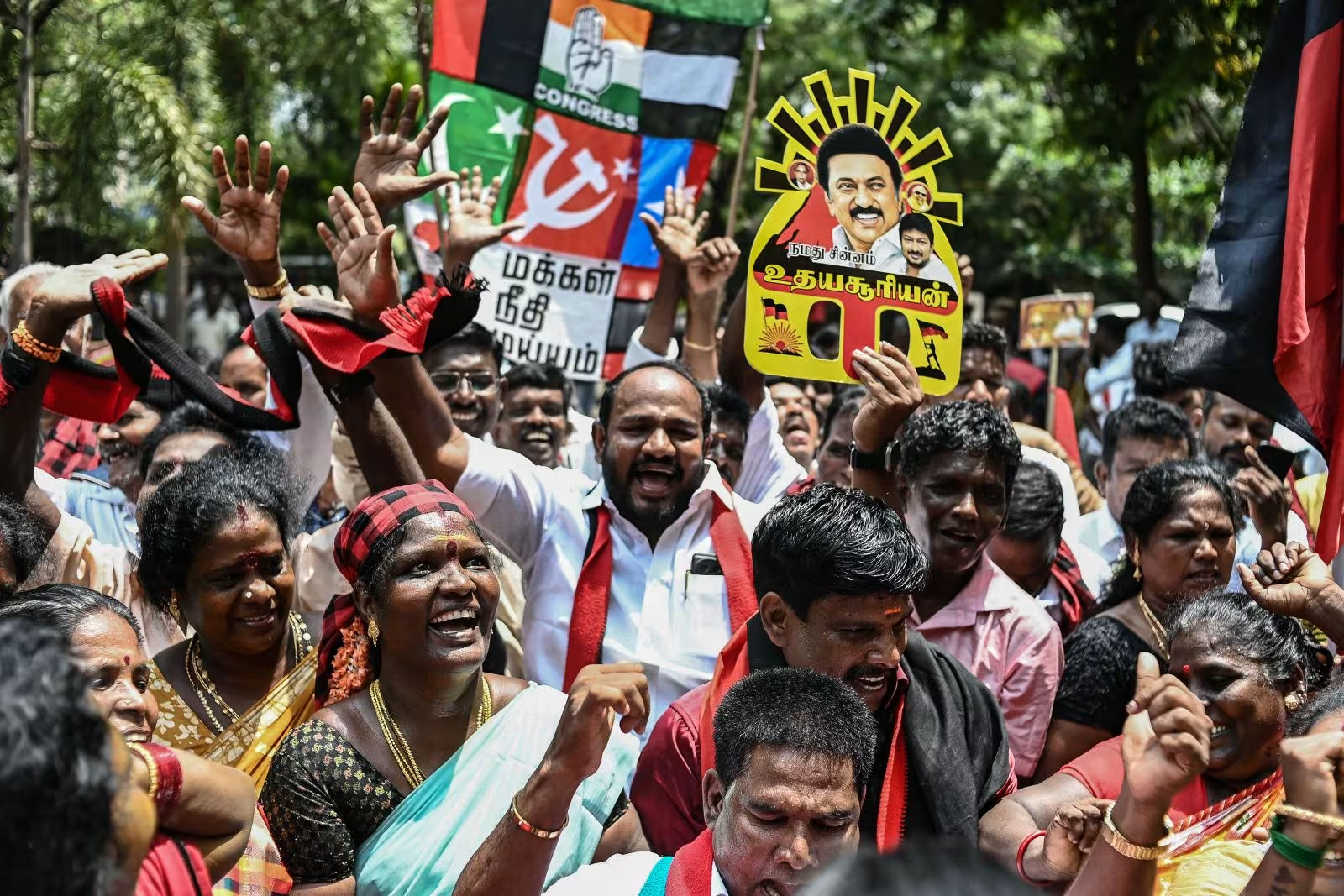
That shift is clearly visible in the southernmost state of Tamil Nadu, the sixth most populous in India, where a digital war room equipped with AI is now “very much equal” to the grassroots campaign team, said Pramila Krishnan, a senior journalist who has been reporting on the ground for Chennai-based outlet The Federal.
She said political parties were no longer treating AI operations as an add-on, but were using them to shape campaign messaging and strategy, amplify leaders’ speeches and turn campaign moments into AI content.
Prateek Waghre, a tech researcher and head of programs and partnerships at non-profit outfit Tech Global Institute, said that along with rising prevalence of AI use in the state elections, it is also harder now to tell what is AI-generated content compared to during the 2024 national election.
In these state elections, AI is being used to speed up content production, enable regional-language outreach, clone voices, create avatars, sharpen satire and help target messaging.
Tamil Nadu appears to be one of the clearest examples of that shift, said experts.
The bigger question is not just whether AI is spreading, but what it is changing: whether it is simply making campaigns faster and louder, or starting to reshape how voters are targeted, misled and persuaded.
From resurrected dead leaders and AI phone calls - calls in which a politician’s voice is synthetically recreated and used to speak and respond to voters in real time using AI - to personalised WhatsApp videos and real-time speech translation, AI became a visible campaign tool in India’s 2024 national election.
What looks different in these state elections is not just the visibility of AI, but how deeply embedded it has become in the campaign machinery.
Vivek Singh Bagri, a political strategist and director at political consulting firm Leadtech, told CNA that the use of AI in election campaigns has increased from 2024 and spread beyond party headquarters to “normal constituency level campaign managers”, local operators, personal assistants and smaller campaign units.
He said these teams are not only using AI tools to generate content, voiceovers, avatars and reels, but also to analyse voter data and sharpen campaign strategy.
“The new frontier is hyper-personalised micro-targeting using voter roll data, welfare beneficiary lists, and social media behaviour to deliver tailored messages in real time,” said Singh of Counterpoint Research.
Experts said micro-targeting now works by using AI to sift voter and booth-level data, identify persuadable voters, and send them tailored messages based on local issues, demographics, welfare status or political leanings.
AI cannot know with certainty who is persuadable, but it can predict which voters may be more open to influence by analysing booth-level voting patterns from past elections, surveys and canvassing data, and even signals from social media or local grievances, said experts.
Bagri said that “micro targeting (voters) is better with AI”.
His firm is working on election campaigns in multiple states, including at the party level in Uttar Pradesh, and with individual candidate clients in Assam, Tamil Nadu and Kerala. He did not disclose the names of the parties or clients.
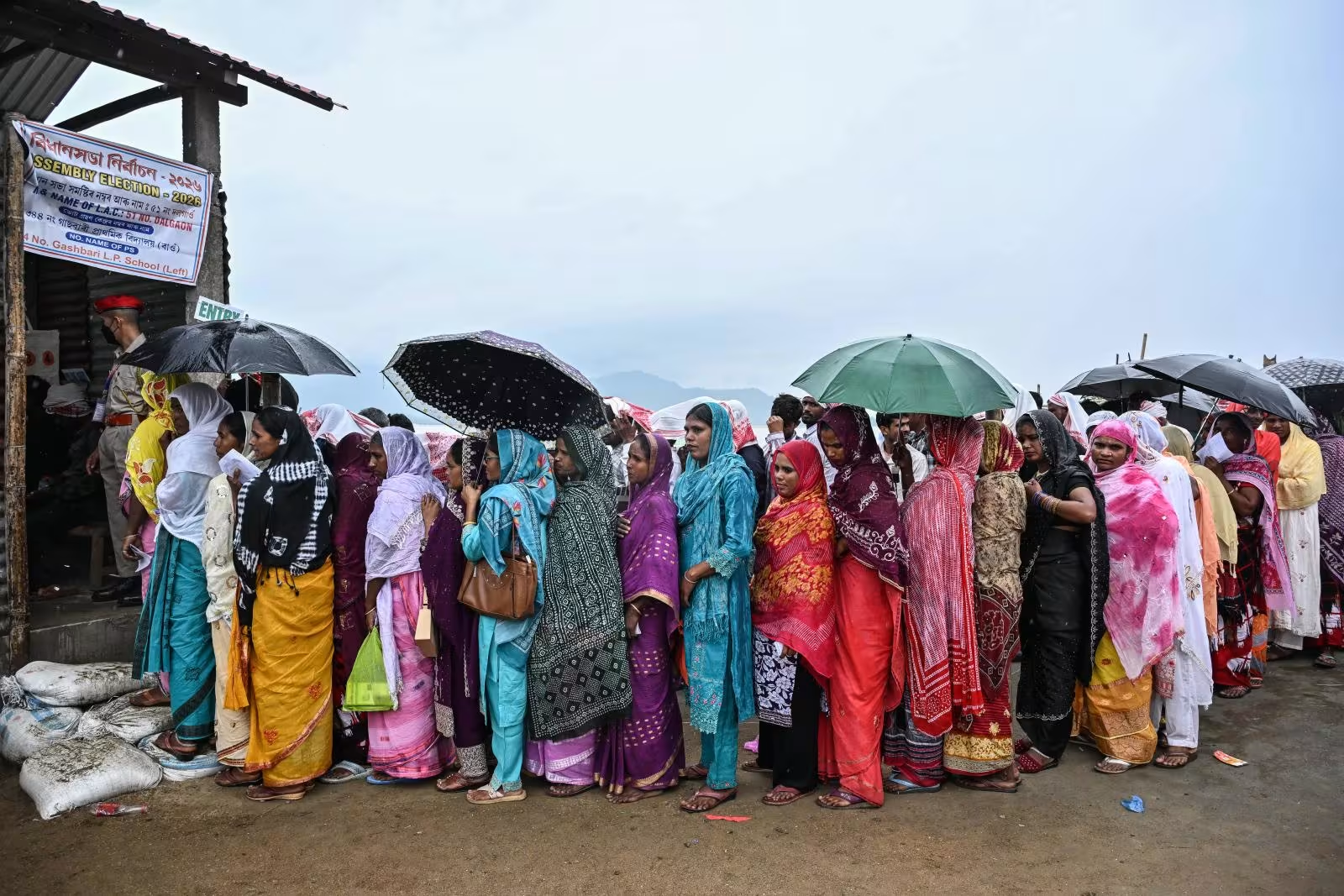
Polling in Assam, Kerala and Puducherry was held on Apr 9. Tamil Nadu votes on Apr 23, while West Bengal votes in two phases on Apr 23 and Apr 29. Results for all five regions will be declared on May 4.
Uttar Pradesh, India’s most populous state, is expected to hold its election between February and March 2027.
That said, AI is not only being used by political parties and candidates.
The Election Commission of India (ECI), the constitutional body responsible for conducting and supervising the country’s elections, for the first time deployed AI-powered surveillance monitoring systems at polling booths in Kerala on Apr 9, according to local reports.
The system was used to track crowd levels and manage long queues.
The ECI also deployed AI-generated videos as part of voter awareness campaigns for the first time during these elections in April, local media reported.
But the ECI has also come under fire for using AI in a voter-roll clean-up exercise that, according to local reports, deleted nearly 52 million names across 12 states and one Union Territory ahead of the polls, including about 9.1 million in West Bengal.
Many voters claimed they were wrongly removed over minor spelling errors and data mismatches, the reports added.
On Feb 9, the Supreme Court questioned the use of AI to flag “logical discrepancies”, saying it did not reflect ground realities in India.
On Apr 17, the court declined to order a blanket restoration of names, but told the ECI to publish supplementary voter lists for those cleared by 19 appellate tribunals before polling in West Bengal.
Experts said that beyond headline-grabbing gimmicks, AI is now becoming part of the everyday workflow of campaigning.
In Tamil Nadu, local political parties now see AI as essential to their operations, not optional, Krishnan told CNA.
She said all political parties in the state had hired AI engineers and other digital staff for campaign work, describing them as “highly professional, highly paid people”.
Experts said these engineers are paid between 80,000 rupees (US$860) and 90,000 rupees a month. The average monthly salary in Tamil Nadu is 19,600 rupees in 2026, according to a Forbes report.
Among the states, Tamil Nadu stands out for AI use, appearing to be the most organised, visible and normalised, experts said.
The ruling Dravida Munnetra Kazhagam (DMK) party and debutant Tamilaga Vettri Kazhagam (TVK) - led by actor-turned-politician C Joseph Vijay, better known as Vijay - have been churning out AI-generated short videos and memes on a near-daily basis, according to a report by local media outlet The Federal.
It described them as having one of the “most intense online rivalries” in the campaign for Tamil Nadu.
One of the campaign’s most controversial moments came when an AI-generated video of late Tamil Nadu Chief Minister and DMK founder C N Annadurai went viral.
It recreated his voice and portrayed him as endorsing TVK’s Vijay as the state’s future Chief Minister while criticising the current DMK leadership, The Federal reported.
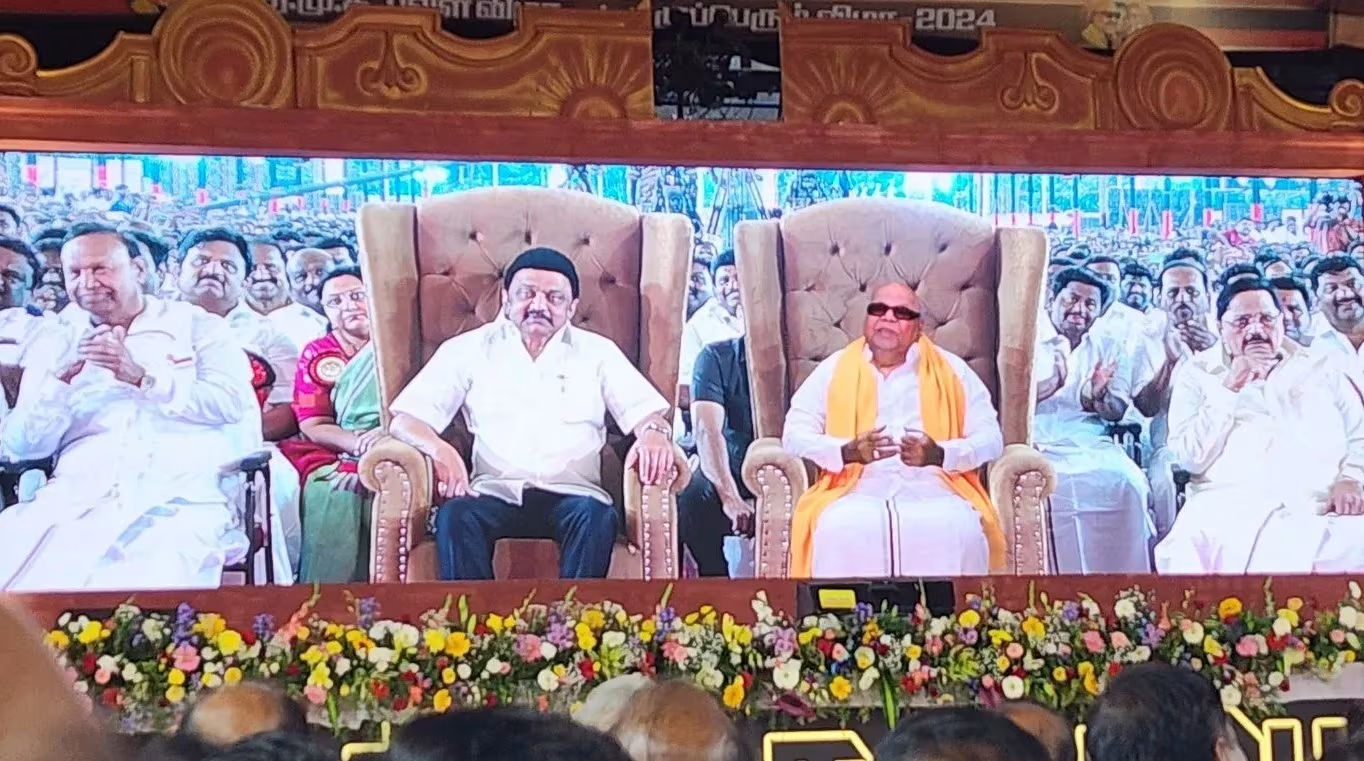
While not controversial, the DMK also used AI to resurrect one of its dead leaders.
The Federal reported that during the party’s 75th anniversary celebrations, AI was used to digitally recreate late Tamil Nadu Chief Minister M Karunanidhi, showing him delivering a speech on stage beside his son M K Stalin, who is the state’s current chief minister.
Beyond that, the DMK also launched an AI-powered portal and a special app to crowdsource suggestions for its election manifesto, according to local reports. The party reportedly received more than 14,000 suggestions on the day the campaign was launched.
Krishnan said voice cloning, political satire, rapid-response rebuttals and AI-generated visuals have all been part of the campaign environment in Tamil Nadu.
Kerala and Puducherry appeared to show a more playful use of AI, featuring AI avatars, satire and memes against opposition parties, said experts.
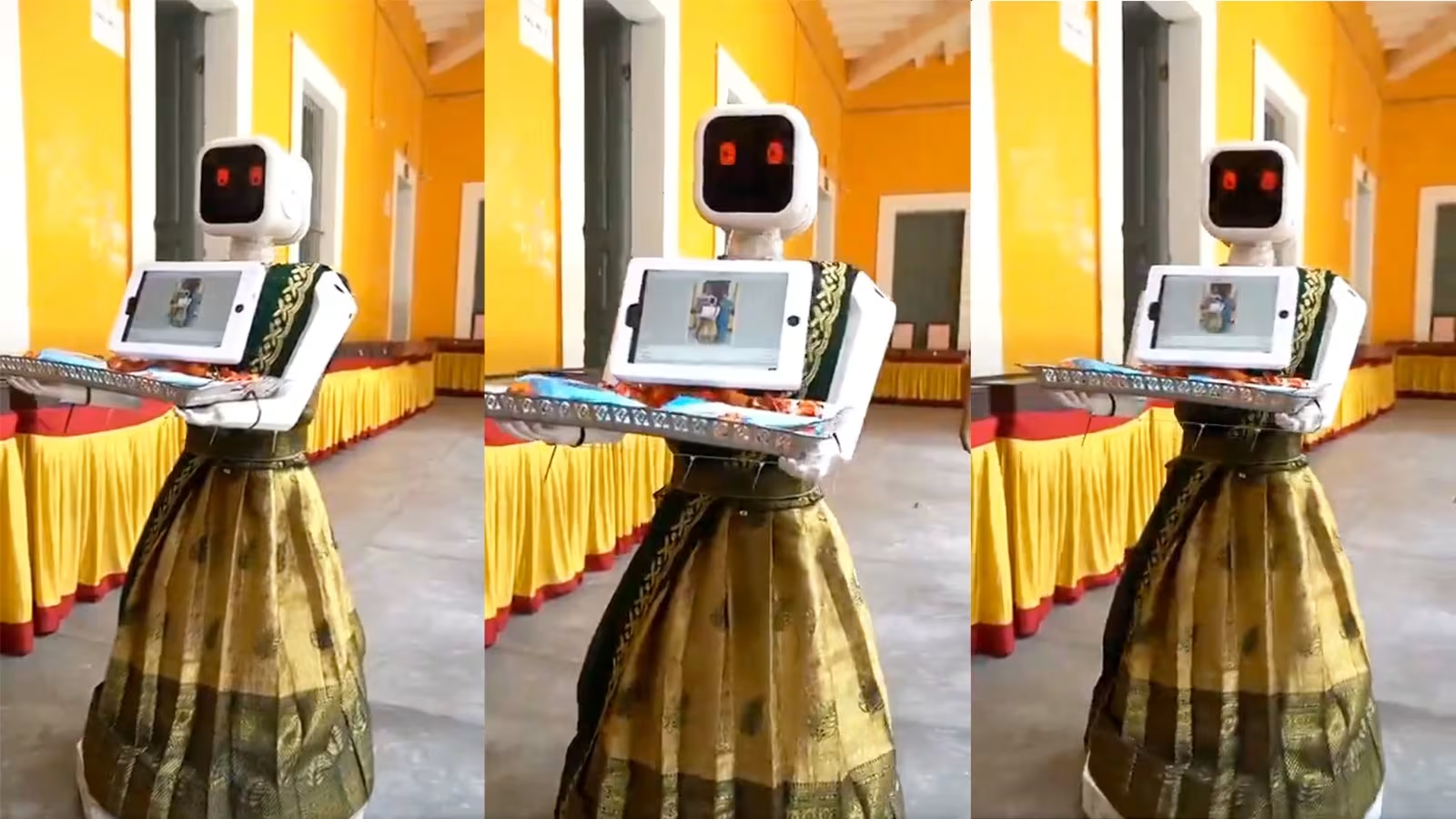
In Puducherry, a robot in a saree welcomed voters at a booth on polling day on April 9, according to local reports.
Experts said that in such cases, AI can make politics feel more accessible, even if it is not necessarily more persuasive.
They added that while there was nothing dramatically new from the 2024 Indian election, AI use is now more widespread and harder to detect in Kerala and Puducherry.
Assam and West Bengal, however, present a different picture. There, experts said AI was being plugged into already polarised politics around religion, identity and immigration.
Bellingcat, an independent investigative journalism group known for open-source research, reported that it had identified several dozen AI-generated videos posted by Bharatiya Janata Party (BJP) accounts in Assam and West Bengal carrying alleged anti-Muslim and anti-Bangladeshi messaging in December 2025, ahead of the two states’ April 2026 assembly elections.
The BJP leads the National Democratic Alliance, the ruling coalition that forms India’s national government.
Both states share a border with Bangladesh, and the Bellingcat report said AI-linked campaign content in Assam and West Bengal often allegedly portrayed Bangladeshi or Bengali-origin Muslims as “infiltrators” or “foreigners” - tropes long used to suggest they are illegal immigrants.
Analyst Singh warned that in states with “pre-existing social fault lines”, AI-amplified misinformation poses a heightened risk.
Pamposh Raina, head of Deepfakes Analysis Unit (DAU) at the Trusted Information Alliance - an Indian cross-sector coalition of organisations focused on credibility of digital information - told CNA that since the 2024 Indian general election, one of the biggest shifts had been towards more AI-manipulated content, particularly audio.
She added that such audio content was “very easy to create” and “very difficult to detect”.
A recent public example came in the Maharashtra state election in November 2024, when the DAU team reported that a viral audio clip allegedly targeting politician Supriya Sule, released a day before the vote, was generated with AI.
It underscored how AI-manipulated audio can be deployed at politically sensitive moments and still be difficult to verify quickly.
“Audio clips and WhatsApp-forwarded videos remain the hardest content to verify in real time, spreading far faster than any fact-check can travel,” said Counterpoint Research’s Singh.
Experts have differing takes on whether AI actually helps politicians sway voters.
Some argued that AI-driven micro-targeting and tailored messaging are helping shape how people vote.
Neil Shah, vice-president of research at Counterpoint Research, said the technology has reached a point where it was being used not just for content creation, but to “precisely influence the demographics”.
“This is effective considering most of the voters' perception is shaped by the content they are being fed in the palm of their hands rather than through public square speeches,” he added.
Others are much more cautious about claiming direct persuasion.
Tech researcher Waghre said the unanswered question is whether AI is actually persuading new voters or simply reinforcing existing loyalties, even as improved tools have made synthetic content harder to distinguish from real material.
Sanjay Kumar, director at the Centre for the Study of Developing Societies and a psephologist, said Indian elections are still “being contested on the ground” and that the “traditional mode of campaign” has “no substitute”.
“Social media (and digital campaigning) is an echo chamber, in my opinion. It only reinforces your own beliefs, rather than shaping your political opinions in a different manner,” he added.
The impact of AI on voter behaviour remains “a bit of a black box” for analysts, political scientists and journalists, said Ronojoy Sen, a political scientist and senior research fellow at the National University of Singapore’s Institute of South Asian Studies (ISAS).
He added that while voter surveys may offer some data, they are still “kind of imprecise and no one really knows for sure”.
That said, studies conducted by Cornell University in 2025 in three countries - the United States, Canada and Poland - found that AI chatbots can influence voters and even make them switch support.
While acknowledging that studies exist on AI’s influence in swaying voters, Sen said these experiments were done with a “sample group” and in a “controlled setting”.
“I’m trained in political science, but I’m quite sceptical of whether they really give you a sense of how accurate the results are,” said Sen.
The broad direction in Indian elections looks clear: more AI, not less.
Waghre said political parties are likely to invest more in AI because it helps automate labour-intensive campaign work, from outreach calls to content creation and multilingual campaigns.
Campaign strategist Bagri also said AI is lowering the barrier to entry for smaller political parties and individual politicians.
Even where it does not replace on-ground mobilisation, experts said it makes campaign operations faster, easier and more sustained.
However, with the rise in deepfakes and synthetic content, authorities in India are trying to respond. But analysts said the gap between rule-making and enforcement remains wide.
Singh said the ECI had taken “meaningful steps” by requiring disclosure labels on AI-generated content and deploying nodal officers to pursue takedowns and reporting to the police.
Waghre, however, said adherence to disclosure and watermarking rules have been “broadly inconsistent”, especially when content comes from supporters or anonymous accounts rather than official party handles.
Experts said politicians and parties are often not penalised even when they share manipulated content that should not be allowed to circulate unchecked. They added that enforcement by authorities remains weak.
The bigger democratic problem is no longer only whether a deepfake is identified quickly enough.
It is whether voters can tell the difference quickly enough, whether platforms and authorities can respond fast enough, and whether repeated exposure erodes trust in everything, said experts.
“In subsequent election campaign cycles, voters will become more cognisant, aware and actually AI fatigued to start distinguishing between reel and real messaging,” Counterpoint Research’s Shah said.
Krishnan said many voters in Tamil Nadu are already alert to AI-driven campaign content, noting that while people may not know the technical term, they are “quietly aware” that AI is being used and now often fact-check videos they suspect are fake.
However, DAU’s Raina said that India needs far more AI literacy at the grassroots level, including community-led education and faster “first responders” to debunk falsehoods before they spread.
In her framing, bad actors will only improve, while the rest of the system is still playing catch-up.
“AI will shape the future election campaigns and voter psyche in a big way, and it will remain a slippery slope without proper governance framework,” concluded Counterpoint Research’s Shah.
Source: CNA/cf(js)
此内容由惯性聚合(RSS阅读器)自动聚合整理,仅供阅读参考。 原文来自 — 版权归原作者所有。