

惯性聚合 高效追踪和阅读你感兴趣的博客、新闻、科技资讯
阅读原文 在惯性聚合中打开

推荐订阅源

有赞技术团队
有赞技术团队
Martin Fowler
Martin Fowler
N
Netflix TechBlog - Medium
WordPress大学
WordPress大学
罗磊的独立博客
H
Help Net Security
MongoDB | Blog
MongoDB | Blog
A
About on SuperTechFans
让小产品的独立变现更简单 - ezindie.com
D
Docker
云风的 BLOG
云风的 BLOG
Microsoft Security Blog
Blog — PlanetScale
Blog — PlanetScale
P
Proofpoint News Feed
钛媒体:引领未来商业与生活新知
钛媒体:引领未来商业与生活新知
I
InfoQ
J
Java Code Geeks
博客园 - 聂微东
大猫的无限游戏
大猫的无限游戏
Engineering at Meta
Engineering at Meta
美团技术团队
小众软件
小众软件
Stack Overflow Blog
Stack Overflow Blog
C
Check Point Blog

Hacker News - Newest: "AI"

AI can't read an investor deck AI as an attorney? Student uses ChatGPT, Gemini to sue UW over alleged racial discrimination Hacking MCP Servers in AI Systems – The Rug Pull: Tool Changes After Approval GitHub - MeepCastana/KubeezCut: Free Web based video editor Can AI judge journalism? A Thiel-backed startup says yes, even if it risks chilling whistleblowers Coming soon: 10 Things That Matter in AI Right Now DARPA built an AI to fact-check enemy weapons claims What explains heterogeneity in AI adoption? When AI Meets Muscle: Context-Aware Electrical Stimulation Promises a New Way to Guide Human Movements - Department of Computer Science AI Changed How We Build. It Did Not Change What Matters. Linux rules on using AI-generated code - Copilot is OK, but humans must take 'full responsibility for the… Meta spins up AI version of Mark Zuckerberg to engage with employees Code Mode: Let Your AI Write Programs, Not Just Call Tools | TanStack Blog GitHub - Delavalom/graft: Go framework for building AI agents. Type-safe tools, multi-provider (OpenAI, Anthropic, Gemini, Bedrock), zero vendor SDKs. India's TCS tops estimates, says new AI models did not dent services demand Gen Z's fading AI hype Strong feeling: we are in a folded AI reality GitHub - machinarii/total-recall-catalog: A reference catalog of latest knowledge retrieval, memory & RAG systems GitHub - mensfeld/code-on-incus: Give each AI agent its own isolated machine with root, Docker, and systemd. Active defense detects and stops threats automatically.. Quantization, LoRA, and the 8% Problem: Benchmarking Local LLMs for Production AI Iran war: We spoke to the man making Lego-style AI videos that experts say are powerful propaganda Powell, Bessent discussed Anthropic's Mythos AI cyber threat with major U.S. banks GitHub - immartian/bellamem: Persistent belief-graph memory for AI agents. Retrieves decisive context by importance — not recency, not RAG, not /compact. recursive-mode: The Repo-Native Operating System for AI Engineering After the attack on Sam Altman's home, will AI CEO's go on the offensive? The biggest advance in AI since the LLM Opus 4.6 vs GPT 5.4 One Prompt Unity World Generation Test “AI polls” are fake polls Client Challenge Can AI be a 'child of God'? Inside Anthropic's meeting with Christian leaders
UAE Plans to Run 50% of Government on Agentic AI Within T...
andsoitis · 2026-05-04 · via Hacker News - Newest: "AI"

Agentic systems will analyze, decide, and execute across ministries under centralized oversight.
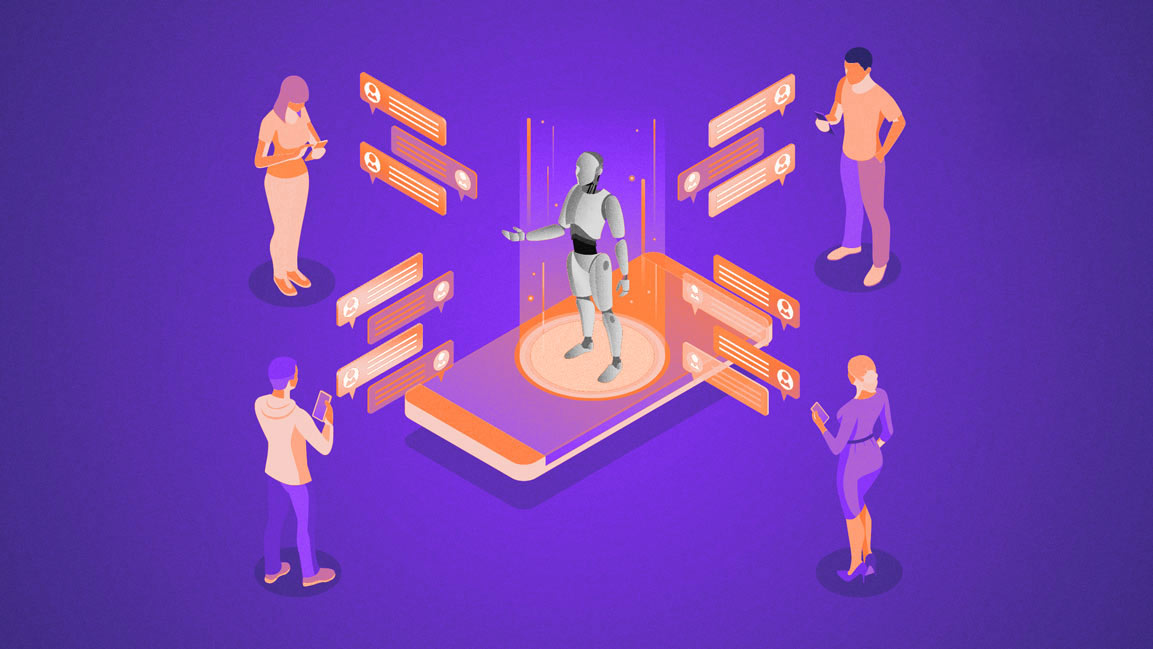
[Image source: ChetanJha/MITSMR Middle East]

The United Arab Emirates is moving to embed autonomous decision-making systems at the core of government. In a directive announced by UAE Prime Minister Sheikh Mohammed bin Rashid Al Maktoum, the country aims to have 50% of federal government operations powered by “agentic AI” within two years. If the timeline is met, it would position the UAE as the first state to deploy such systems at scale across public administration.

The initiative, launched under the leadership of UAE President Sheikh Mohamed bin Zayed Al Nahyan, reflects a shift from digitization to autonomy. Where earlier waves of e-government focused on service access and efficiency, agentic AI introduces systems capable of analyzing data, making decisions, executing actions, and iterating in real time. “AI is no longer a tool,” Sheikh Mohammed said, describing it instead as an “executive partner” embedded within the machinery of governance.

The policy sets explicit performance metrics: speed of adoption, quality of implementation, and the extent to which agencies can redesign workflows around AI capabilities. Oversight will sit with UAE Vice President Sheikh Mansour bin Zayed, while execution will be coordinated by a task force chaired by Minister of Cabinet Affairs of the UAE Mohammad Al Gergawi.

At its core, the program attempts to resolve a persistent bottleneck in public-sector AI adoption: institutional capacity. Rather than treating automation as a layer atop existing bureaucracy, the UAE plans to retrain its federal workforce, positioning civil servants as operators and supervisors of AI systems. Every federal employee is expected to undergo training in generative AI tools and applications, signaling a transition toward hybrid human-machine governance.

This ambition builds on a two-decade trajectory of digital transformation. The UAE’s early investments in eGovernment infrastructure evolved into mobile-first service delivery and integrated platforms such as the UAE Pass digital identity system. More recent programs, including Government Services 2.0, introduced proactive and data-driven service models — precursors to the predictive and autonomous capabilities envisioned under agentic AI.

Institutionally, the country has already laid the groundwork for centralized AI governance. In 2017, it became the first nation to appoint a dedicated minister for artificial intelligence, followed by the launch of the UAE Artificial Intelligence Strategy 2031 under the Centennial 2071 framework. The creation of the Ministry of Artificial Intelligence, Digital Economy, and Remote Work Applications in 2020 further consolidated this direction.

What distinguishes the current initiative is not the adoption of AI per se, but the attempt to reorganize government around it. The two-year deadline compresses what has historically been a gradual, uneven process into a bounded, performance-driven transformation.