


Education has four main dimensions: meaning, motivation, mechanics, and measurement. That also happens to be the natural order of things when it comes to learning. Everything we do is to do justice to this natural order.
Conventional schooling has it exactly backwards because of a well-intentioned, but ultimately counterproductive focus on measurement: what are they learning.
Everything we know about learning, whether it is from practical sensible empirical knowledge, or the latest neuroscience screams out that we need to find meaning first.
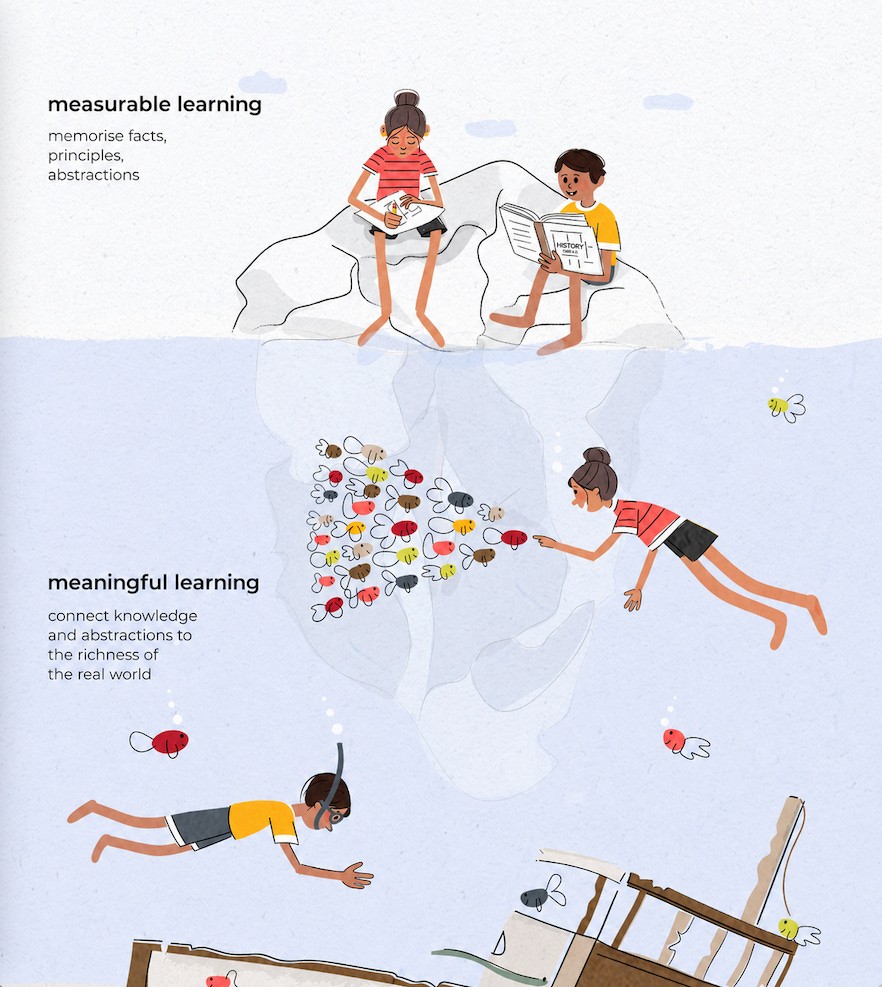
“The effect of the early introduction of arithmetic had been to dull and almost chloroform the child’s reasoning faculties.”
“What possible needs has a ten-year-old child for knowledge of long division? The whole subject of arithmetic could be postponed until the seventh year of school, and it could be mastered in two years’ study by any normal child.”
These were the words written by Louis P. Benezet, a school superintendent in a small city in the US, in 1929. Precisely my sentiments now, about a hundred years later, when I do my weekly maths class. But he went on to do something that sounds pretty radical even now. He eliminated formal arithmetic instruction from the first six years of school.
He experimented with a few schools in his district where students spent those years reading, talking, reasoning, and measuring when measurement came up naturally. But they did not sit down and practise long division as an isolated skill.
The results were striking. By seventh grade, after just one year of formal arithmetic, Benezet’s students had caught up with and, on many measures, surpassed students who had been drilled since first grade. More importantly, they could think mathematically.
He went on to write in an article about his experiment that the “ability to read problems intelligently and explain how they should be attacked is far more important than the ability to add large columns of figures without an error”.
Nearly a hundred years before our time! But of course we’ve never heard of Benezet, and this lesson that less is often more has been discovered and lost presumably a few hundred thousand times. It’s lost in the jargon thicket of educational psychology because we’ve not asked the most important question of all.
Why?
Why does all this matter? Why do I care about this? Why do any of this at all?
One could argue we systematically prevent the question from surfacing until adulthood when it finally bursts through and emerges as what we label a midlife crisis.
That’s just the meaning vacuum finally caving in.
Without the why, what we end up with is a crisis of meaning.
Without meaning, there is no motivation.
Our education system, with all its anxiety-inducing measurements, morphs "No Child Left Behind" into "Cannot Leave a Child Alone." The kids must be doing something where the learning is measurable.
And in that immense urge to measure, we allow for the most malicious malaise of all to slither in: learning as a carefully titrated mechanical act.
We create curricula and age-based levels and checkpoints and concepts to cover in a calendar year. Because we must measure how kids are learning, we reduce learning to what is measurable. In education circles that’s known as “teaching to test” and it’s really insidious because the test or measure tells us the kid is learning something. But this is illusory learning. Mechanically multiplying numbers or learning how to write compound clauses is not learning. It is performance that leads to shallow, surface level memory that just fades as soon you exit the classroom or school.
Think about how a young child learns to speak. No one hands them a grammar textbook. No one drills them on verb conjugation. They are immersed in a world where language matters. Saying “more” gets you more food. Crying out “Mama” brings comfort. Telling a story earns the rapt attention of people you love. Language is a living tool, steeped in purpose.
Now look at what we do to children in the name of education.
First, we take them out of their natural world. From a joyful, meaningful world of play, exploration, physical engagement, social negotiation. We seal them in classrooms. The world is distilled down to spare lines on a whiteboard. The kid who was navigating the rough and tumble politics of the playground now sits through an SEL (social emotional learning) lesson on “conflict resolution.” Richly human stories from our past, the many currents that shaped us, are reduced to neat, confident little chapters about empires and dynasties with tidy takeaways. The hidden lesson here is that life is this sanitized, clearly marked journey if you allow the expert teacher to impart the right wisdom to you, who would otherwise be lost without it.
It doesn't stop here. We now give them screens. (We don't at our school, but it's the norm in the United States and coming here fast.) The world narrows further. Three dimensions become two. Multi-sensory becomes visual-only.
Each time we narrow the world, flatten it, squish it into a standardised format, we drain out meaning. And without meaning, there can be no learning.
This is not an esoteric or spiritual claim (but it does pave the path to it). It is the neurological basis of how we learn.
Everything I had done in neuroscience for my PhD was in the service of mechanics and measurement. What are the techniques used to measure neural activity? What sequence of sciency things will lead to a journal article or two, and then a doctoral thesis? I didn’t really make sense of anything except knowing which parts of the brain light up when someone’s talking or doing something. It’s easy to make that sound fancy, but it’s like knowing where pasta or paneer bhurji get made in the kitchen, but nothing else about cooking.
A decade later, working on Journey of the Mind, we started with a simple question: what actually goes on in that pizza-sized sliver of meat scrunched up in our skulls when we are thinking?
What is thinking, really? What is the self that does this thinking? The story that emerged in the book has immense resonance in education.
We cannot have thinking without feeling, that we cannot have thinking and feeling without a self, and that we cannot have a self without discovering and extracting meaning from everything around us.
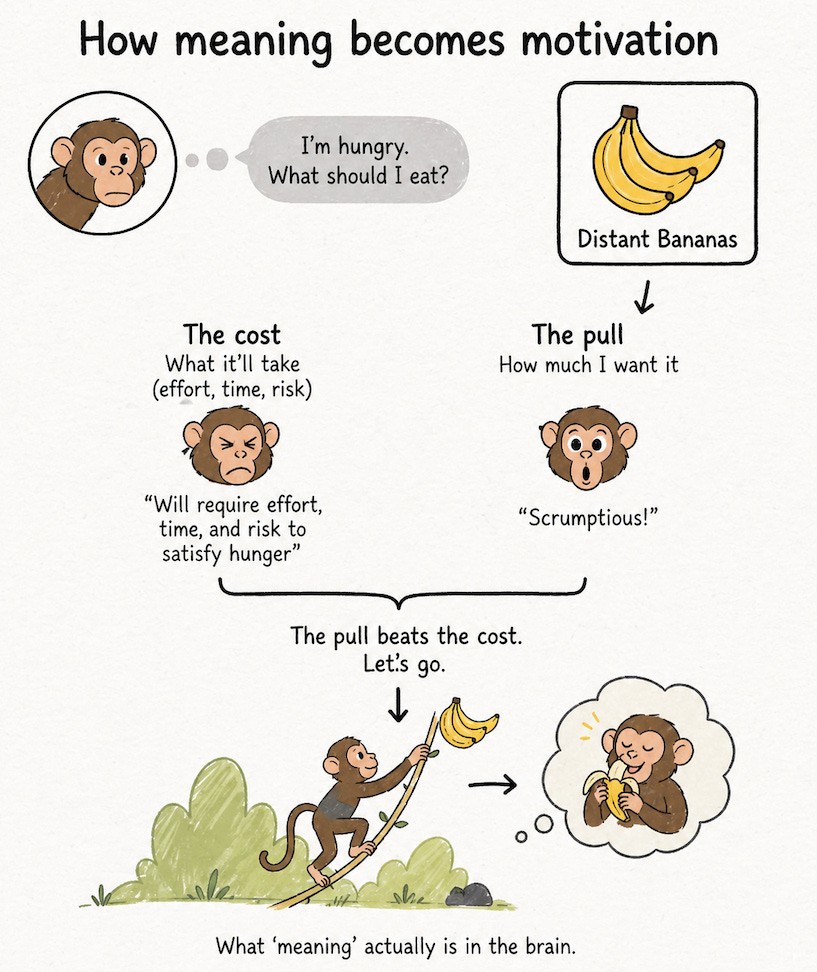
A rephrased example from Journey of the Mind
How do we make sure that what we do every day in school is centered on meaning? By remembering that when we go too narrow, we suffer from elementitis. We need the whole game. Or at least a simpler junior version of it, still whole, not diced down to the mechanical parts.
But meaning is so preciously personal. How do we do this at scale, or even with seven kids who are all completely different?
This is where AI can help. You are probably thinking, ah here’s where our tech-bro tells us this new shiny AI is the educational panacea. Unlike the last few false dawns. No. It can absolutely be used counterproductively, and those uses are easy to spot.
They wrongly emphasize the mechanics first.
We love what Khan Academy has done for access to education, but their chatbot approach was exactly this. Starting with the mechanics and hoping that kids can socratically find their way to meaning. We didn’t have the terminology then, but we saw this coming. Chatbots built this way were always going to fail.
The way to use any technological tool well is in the service of meaning discovery.
Large language models, for all their current jagged edges, are the world’s most powerful meaning mappers. They can discover and transfer patterns from one domain to another. They can take a mathematical concept and find its structural echo in commerce, in cooking, in sport, in storytelling, in anything. You give them the right inputs (here is the concept, here is the child’s world) and they generate the bridge.
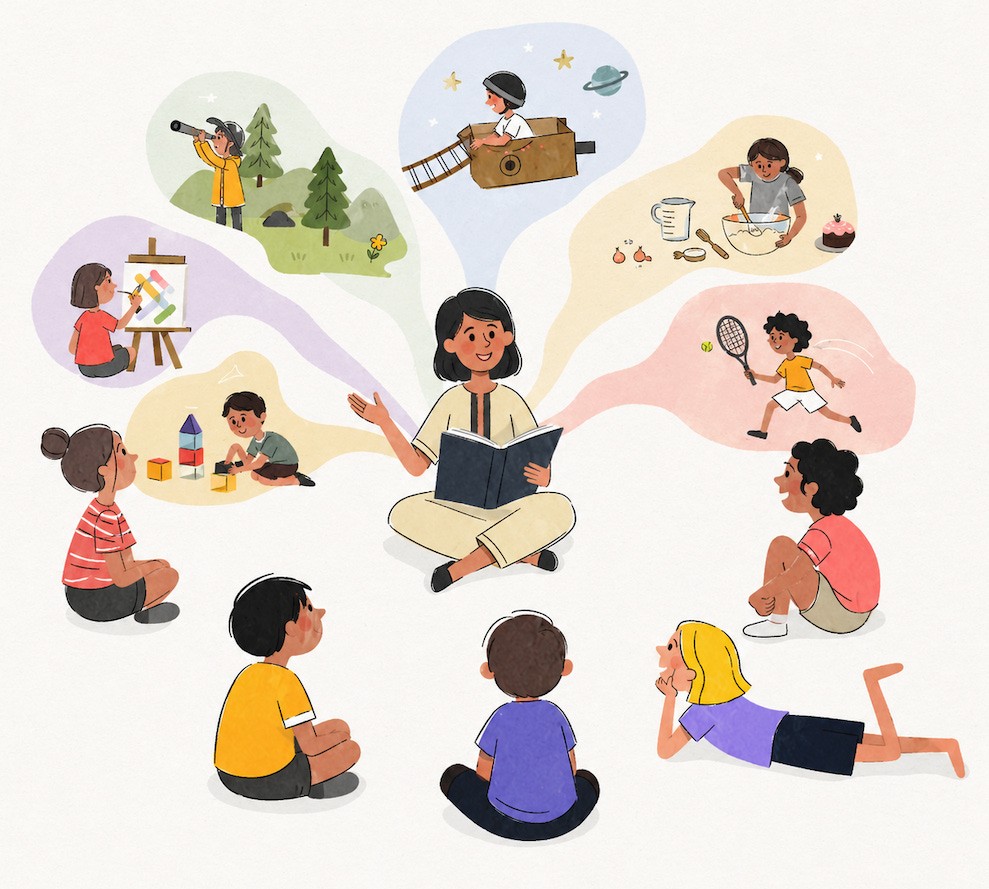
build meaning bridges to connect with each child
Want to make basic arithmetic operations mean something? Connect them to what they love. Don’t start with the mechanics. Paint them a world where these matter.
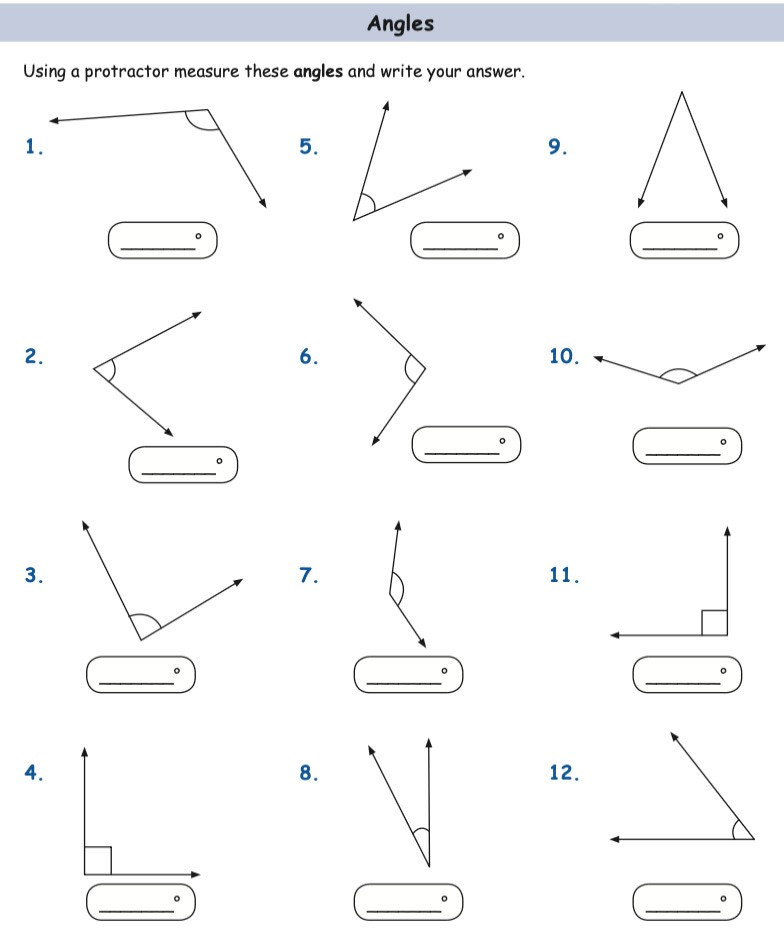
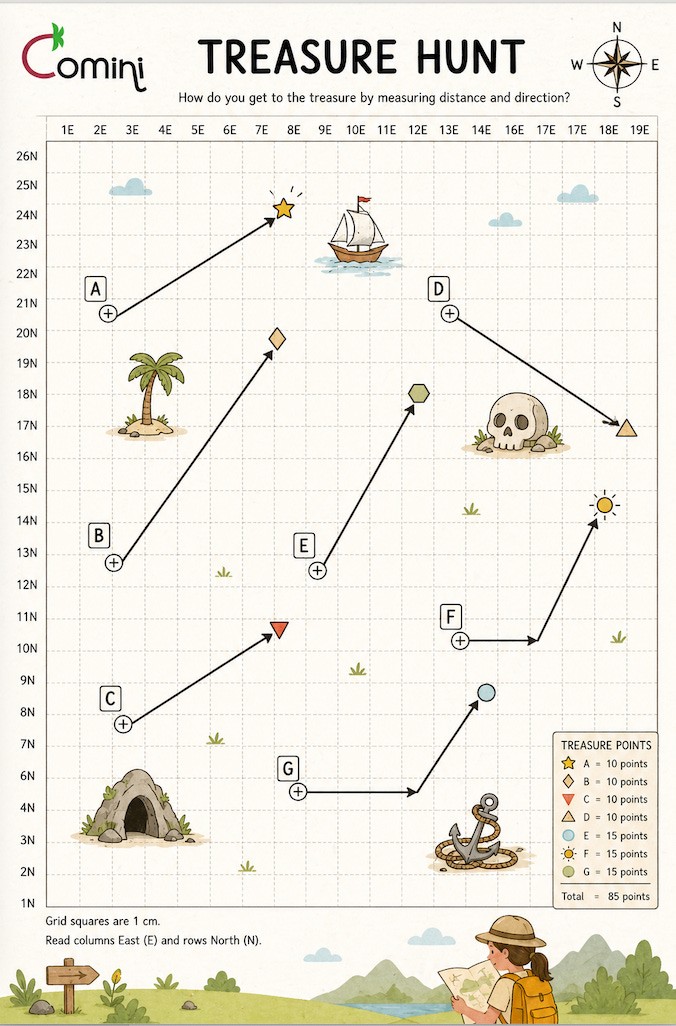
Here is the kind of boring introduction that’s unfortunately common. It introduces angles with this rather pointless mechanical act of measuring them. Why does it matter? Why should a child care at all? What’s the story behind these?
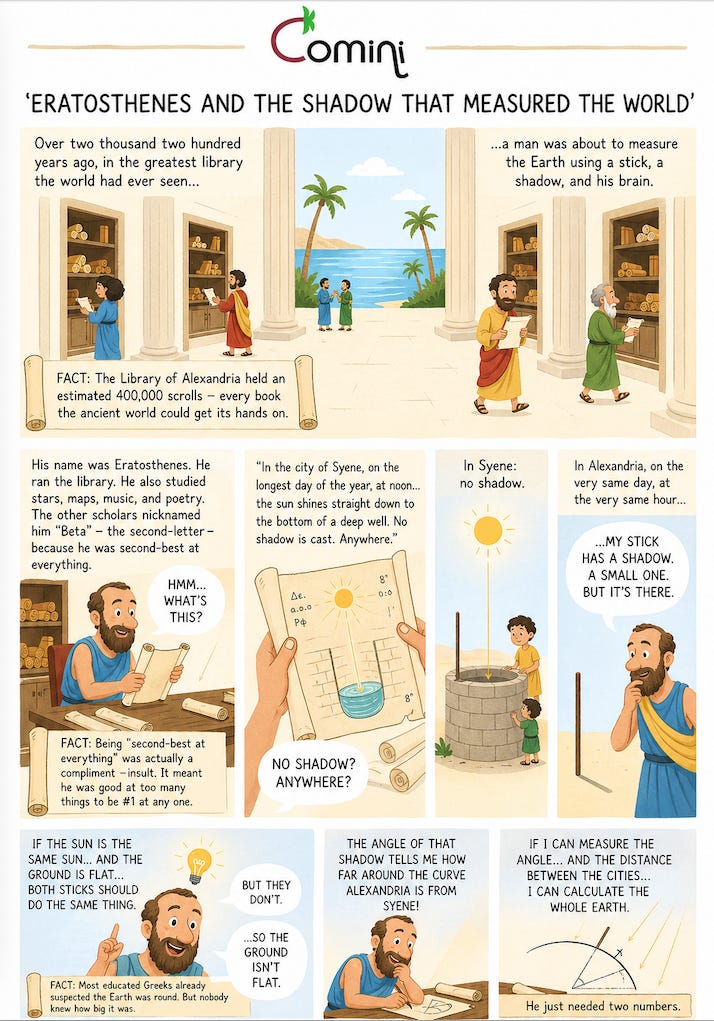
The story of measurement of distances and direction is wonderfully interesting and a window into history, geography, trade, drama, intrigue. All of it left out, in favor of getting kids to measure angles to answer worksheet questions.
We could introduce these with stories that start with meaning.
We could also redesign the worksheets themselves to infuse meaning.
These ideas aren’t new. The ability to translate them into tangible things in an afternoon is.
Here’s an example of a game we created to explore designing a website for a yard sale the kids wanted to run. We don’t start with the mechanics of code. Instead, we looked at what is different and interesting about selling and trading online versus offline. You cannot speak to the customers directly. That spark of an idea was fleshed out into a game in a few hours. And it was a ton of fun.
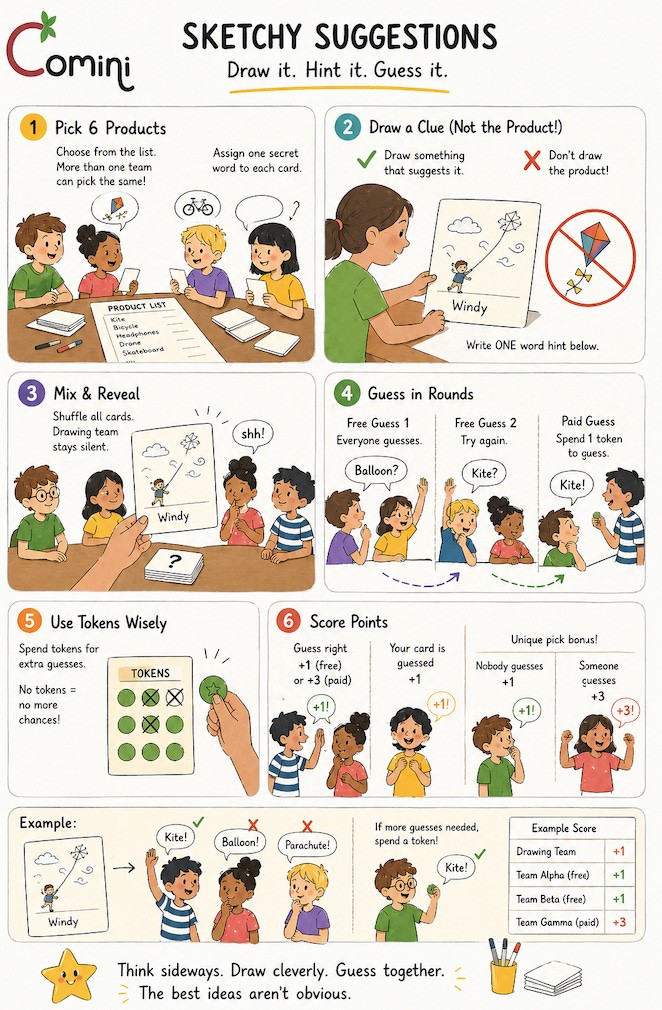
Notice something interesting here. The AI never enters the classroom directly. It works behind the scenes to build the bridge between knowledge and the kids’ world, and then it is for the teacher and the kids to cross that bridge together.
AI still needs steering and human creativity. It doesn’t know your particular children, their particular obsessions, the particular dynamics of your classroom. But it lets you go from identifying a lack of meaning to generating a potential solution in half an hour. What used to take weeks of creative work can happen in an afternoon.
This has transformational potential.
But only if used well. Used well.
Most AI-for-education products being built right now make the meaning problem worse.
More of the same monotonous symbol-manipulation, delivered by a chatbot that tracks your child and sends you a dashboard. It is just more precisely targeted meaninglessness.
If you believe learning is the transfer of information from teacher to student, and the problem is just one of efficiency, then AI can be a lethal delivery mechanism for the same broken approach. If you understand that learning is the active and ceaseless construction of meaning, that the brain learns only what it feels, then AI is already a wonderful tool (which still needs adult supervision) for connecting abstract knowledge and our current lived reality.
AI gives us, for the first time, the practical means to put meaning back at the centre of education at scale and without standardization.
It can be the most powerful tool we’ve ever had for mapping abstract knowledge onto the real worlds of real children.
It can also be the most efficient engine ever built for producing meaningless busywork at industrial scale. Learning Slop, in other words.
Which one we get depends on what we believe education is for.
(cross-posted from the Comini Learning blog)
Education has four main dimensions: meaning, motivation, mechanics, and measurement. That also happens to be the natural order of things when it comes to learning. Everything we do is to do justice to this natural order.
Conventional schooling has it exactly backwards because of a well-intentioned, but ultimately counterproductive focus on measurement: what are they learning.
Everything we know about learning, whether it is from practical sensible empirical knowledge, or the latest neuroscience screams out that we need to find meaning first.
“The effect of the early introduction of arithmetic had been to dull and almost chloroform the child’s reasoning faculties.”
“What possible needs has a ten-year-old child for knowledge of long division? The whole subject of arithmetic could be postponed until the seventh year of school, and it could be mastered in two years’ study by any normal child.”
These were the words written by Louis P. Benezet, a school superintendent in a small city in the US, in 1929. Precisely my sentiments now, about a hundred years later, when I do my weekly maths class. But he went on to do something that sounds pretty radical even now. He eliminated formal arithmetic instruction from the first six years of school.
He experimented with a few schools in his district where students spent those years reading, talking, reasoning, and measuring when measurement came up naturally. But they did not sit down and practise long division as an isolated skill.
The results were striking. By seventh grade, after just one year of formal arithmetic, Benezet’s students had caught up with and, on many measures, surpassed students who had been drilled since first grade. More importantly, they could think mathematically.
He went on to write in an article about his experiment that the “ability to read problems intelligently and explain how they should be attacked is far more important than the ability to add large columns of figures without an error”.
Nearly a hundred years before our time! But of course we’ve never heard of Benezet, and this lesson that less is often more has been discovered and lost presumably a few hundred thousand times. It’s lost in the jargon thicket of educational psychology because we’ve not asked the most important question of all.
Why?
Why does all this matter? Why do I care about this? Why do any of this at all?
One could argue we systematically prevent the question from surfacing until adulthood when it finally bursts through and emerges as what we label a midlife crisis.
That’s just the meaning vacuum finally caving in.
Without the why, what we end up with is a crisis of meaning.
Without meaning, there is no motivation.
Our education system, with all its anxiety-inducing measurements, morphs "No Child Left Behind" into "Cannot Leave a Child Alone." The kids must be doing something where the learning is measurable.
And in that immense urge to measure, we allow for the most malicious malaise of all to slither in: learning as a carefully titrated mechanical act.
We create curricula and age-based levels and checkpoints and concepts to cover in a calendar year. Because we must measure how kids are learning, we reduce learning to what is measurable. In education circles that’s known as “teaching to test” and it’s really insidious because the test or measure tells us the kid is learning something. But this is illusory learning. Mechanically multiplying numbers or learning how to write compound clauses is not learning. It is performance that leads to shallow, surface level memory that just fades as soon you exit the classroom or school.
Think about how a young child learns to speak. No one hands them a grammar textbook. No one drills them on verb conjugation. They are immersed in a world where language matters. Saying “more” gets you more food. Crying out “Mama” brings comfort. Telling a story earns the rapt attention of people you love. Language is a living tool, steeped in purpose.
Now look at what we do to children in the name of education.
First, we take them out of their natural world. From a joyful, meaningful world of play, exploration, physical engagement, social negotiation. We seal them in classrooms. The world is distilled down to spare lines on a whiteboard. The kid who was navigating the rough and tumble politics of the playground now sits through an SEL (social emotional learning) lesson on “conflict resolution.” Richly human stories from our past, the many currents that shaped us, are reduced to neat, confident little chapters about empires and dynasties with tidy takeaways. The hidden lesson here is that life is this sanitized, clearly marked journey if you allow the expert teacher to impart the right wisdom to you, who would otherwise be lost without it.
It doesn't stop here. We now give them screens. (We don't at our school, but it's the norm in the United States and coming here fast.) The world narrows further. Three dimensions become two. Multi-sensory becomes visual-only.
Each time we narrow the world, flatten it, squish it into a standardised format, we drain out meaning. And without meaning, there can be no learning.
This is not an esoteric or spiritual claim (but it does pave the path to it). It is the neurological basis of how we learn.
Everything I had done in neuroscience for my PhD was in the service of mechanics and measurement. What are the techniques used to measure neural activity? What sequence of sciency things will lead to a journal article or two, and then a doctoral thesis? I didn’t really make sense of anything except knowing which parts of the brain light up when someone’s talking or doing something. It’s easy to make that sound fancy, but it’s like knowing where pasta or paneer bhurji get made in the kitchen, but nothing else about cooking.
A decade later, working on Journey of the Mind, we started with a simple question: what actually goes on in that pizza-sized sliver of meat scrunched up in our skulls when we are thinking?
What is thinking, really? What is the self that does this thinking? The story that emerged in the book has immense resonance in education.
We cannot have thinking without feeling, that we cannot have thinking and feeling without a self, and that we cannot have a self without discovering and extracting meaning from everything around us.
A rephrased example from Journey of the Mind
How do we make sure that what we do every day in school is centered on meaning? By remembering that when we go too narrow, we suffer from elementitis. We need the whole game. Or at least a simpler junior version of it, still whole, not diced down to the mechanical parts.
But meaning is so preciously personal. How do we do this at scale, or even with seven kids who are all completely different?
This is where AI can help. You are probably thinking, ah here’s where our tech-bro tells us this new shiny AI is the educational panacea. Unlike the last few false dawns. No. It can absolutely be used counterproductively, and those uses are easy to spot.
They wrongly emphasize the mechanics first.
We love what Khan Academy has done for access to education, but their chatbot approach was exactly this. Starting with the mechanics and hoping that kids can socratically find their way to meaning. We didn’t have the terminology then, but we saw this coming. Chatbots built this way were always going to fail.
The way to use any technological tool well is in the service of meaning discovery.
Large language models, for all their current jagged edges, are the world’s most powerful meaning mappers. They can discover and transfer patterns from one domain to another. They can take a mathematical concept and find its structural echo in commerce, in cooking, in sport, in storytelling, in anything. You give them the right inputs (here is the concept, here is the child’s world) and they generate the bridge.
build meaning bridges to connect with each child
Want to make basic arithmetic operations mean something? Connect them to what they love. Don’t start with the mechanics. Paint them a world where these matter.
Here is the kind of boring introduction that’s unfortunately common. It introduces angles with this rather pointless mechanical act of measuring them. Why does it matter? Why should a child care at all? What’s the story behind these?
The story of measurement of distances and direction is wonderfully interesting and a window into history, geography, trade, drama, intrigue. All of it left out, in favor of getting kids to measure angles to answer worksheet questions.
We could introduce these with stories that start with meaning.
We could also redesign the worksheets themselves to infuse meaning.
These ideas aren’t new. The ability to translate them into tangible things in an afternoon is.
Here’s an example of a game we created to explore designing a website for a yard sale the kids wanted to run. We don’t start with the mechanics of code. Instead, we looked at what is different and interesting about selling and trading online versus offline. You cannot speak to the customers directly. That spark of an idea was fleshed out into a game in a few hours. And it was a ton of fun.
Notice something interesting here. The AI never enters the classroom directly. It works behind the scenes to build the bridge between knowledge and the kids’ world, and then it is for the teacher and the kids to cross that bridge together.
AI still needs steering and human creativity. It doesn’t know your particular children, their particular obsessions, the particular dynamics of your classroom. But it lets you go from identifying a lack of meaning to generating a potential solution in half an hour. What used to take weeks of creative work can happen in an afternoon.
This has transformational potential.
But only if used well. Used well.
Most AI-for-education products being built right now make the meaning problem worse.
More of the same monotonous symbol-manipulation, delivered by a chatbot that tracks your child and sends you a dashboard. It is just more precisely targeted meaninglessness.
If you believe learning is the transfer of information from teacher to student, and the problem is just one of efficiency, then AI can be a lethal delivery mechanism for the same broken approach. If you understand that learning is the active and ceaseless construction of meaning, that the brain learns only what it feels, then AI is already a wonderful tool (which still needs adult supervision) for connecting abstract knowledge and our current lived reality.
AI gives us, for the first time, the practical means to put meaning back at the centre of education at scale and without standardization.
It can be the most powerful tool we’ve ever had for mapping abstract knowledge onto the real worlds of real children.
It can also be the most efficient engine ever built for producing meaningless busywork at industrial scale. Learning Slop, in other words.
Which one we get depends on what we believe education is for.
(cross-posted from the Comini Learning blog)
此内容由惯性聚合(RSS阅读器)自动聚合整理,仅供阅读参考。 原文来自 — 版权归原作者所有。