
惯性聚合 高效追踪和阅读你感兴趣的博客、新闻、科技资讯
阅读原文 在惯性聚合中打开

推荐订阅源

P
Palo Alto Networks Blog
大猫的无限游戏
大猫的无限游戏
Martin Fowler
Martin Fowler
GbyAI
GbyAI
CTFtime.org: upcoming CTF events
量子位
T
The Blog of Author Tim Ferriss
Y
Y Combinator Blog
Microsoft Azure Blog
C
CERT Recently Published Vulnerability Notes
Recent Announcements
A
About on SuperTechFans
aimingoo的专栏
aimingoo的专栏
P
Privacy International News Feed
cs.CL updates on arXiv.org
博客园 - 叶小钗
L
Lohrmann on Cybersecurity
G
GRAHAM CLULEY
T
The Exploit Database - CXSecurity.com
Hugging Face - Blog
Hugging Face - Blog
P
Proofpoint News Feed
NISL@THU
NISL@THU
博客园 - Franky
C
Cybersecurity and Infrastructure Security Agency CISA
The Register - Security
M
MIT News - Artificial intelligence
Know Your Adversary
Know Your Adversary
A
Arctic Wolf
F
Full Disclosure
T
Threat Research - Cisco Blogs
P
Privacy & Cybersecurity Law Blog
The Hacker News
The Hacker News
博客园 - 【当耐特】
D
Docker
T
Tailwind CSS Blog
S
SegmentFault 最新的问题
Cyber Security Advisories - MS-ISAC
Jina AI
Jina AI
Help Net Security
Help Net Security
V
Visual Studio Blog
小众软件
小众软件
B
Blog
Vercel News
Vercel News
云风的 BLOG
云风的 BLOG
N
News and Events Feed by Topic
Forbes - Security
Forbes - Security
N
Netflix TechBlog - Medium
让小产品的独立变现更简单 - ezindie.com
C
Cisco Blogs
Security Archives - TechRepublic

Hacker News - Newest: "AI"

AI can't read an investor deck AI as an attorney? Student uses ChatGPT, Gemini to sue UW over alleged racial discrimination Hacking MCP Servers in AI Systems – The Rug Pull: Tool Changes After Approval GitHub - MeepCastana/KubeezCut: Free Web based video editor GitHub - GenAI-Gurus/awesome-eu-ai-act: Curated tools, official sources, OSS, templates, and guides for EU AI Act compliance. Can AI judge journalism? A Thiel-backed startup says yes, even if it risks chilling whistleblowers Coming soon: 10 Things That Matter in AI Right Now DARPA built an AI to fact-check enemy weapons claims What explains heterogeneity in AI adoption? When AI Meets Muscle: Context-Aware Electrical Stimulation Promises a New Way to Guide Human Movements - Department of Computer Science AI Changed How We Build. It Did Not Change What Matters. Linux rules on using AI-generated code - Copilot is OK, but humans must take 'full responsibility for the… Meta spins up AI version of Mark Zuckerberg to engage with employees Code Mode: Let Your AI Write Programs, Not Just Call Tools | TanStack Blog GitHub - Delavalom/graft: Go framework for building AI agents. Type-safe tools, multi-provider (OpenAI, Anthropic, Gemini, Bedrock), zero vendor SDKs. India's TCS tops estimates, says new AI models did not dent services demand Gen Z's fading AI hype Strong feeling: we are in a folded AI reality GitHub - machinarii/total-recall-catalog: A reference catalog of latest knowledge retrieval, memory & RAG systems GitHub - mensfeld/code-on-incus: Give each AI agent its own isolated machine with root, Docker, and systemd. Active defense detects and stops threats automatically.. Quantization, LoRA, and the 8% Problem: Benchmarking Local LLMs for Production AI Iran war: We spoke to the man making Lego-style AI videos that experts say are powerful propaganda Powell, Bessent discussed Anthropic's Mythos AI cyber threat with major U.S. banks GitHub - immartian/bellamem: Persistent belief-graph memory for AI agents. Retrieves decisive context by importance — not recency, not RAG, not /compact. recursive-mode: The Repo-Native Operating System for AI Engineering After the attack on Sam Altman's home, will AI CEO's go on the offensive? The biggest advance in AI since the LLM Opus 4.6 vs GPT 5.4 One Prompt Unity World Generation Test “AI polls” are fake polls Client Challenge Can AI be a 'child of God'? Inside Anthropic's meeting with Christian leaders How to Switch AI Chatbots and Why You Might Want To GitHub - MattMessinger1/agentic_refund_guardrail: Safe refund policy layer for AI agents — Python + TypeScript. Same behavior, shared tests. Adam/papers/emergent_values_whitepaper.md at master · strangeadvancedmarketing/Adam Ask HN: How do you stop playing 20 questions with your AI coding tools How far can automation and AI support psychotherapy? - @theU GitHub - stagas/rtdiff: realtime git diff gui and AI-assisted commits A Mac Studio for Local AI — 6 Months Later A History of the Early Years of AI at the University of Edinburgh Why AI Coding Tools Still Feel Stuck on Localhost MSN AI Datacenters Are Becoming Strategic Targets twitter.com Penn Researchers Use AI to Surface Unreported GLP-1 Side Effects in Reddit Posts Show HN: MoodSense AI (ML and FastAPI and Gradio, Deployed on Hugging Face) Moodsense Ai - a Hugging Face Space by aman179102 AI models are terrible at betting on soccer—especially xAI Grok GitHub - xialeistudio/echoic GitHub - HimashaHerath/github-dev-wrapped: AI-powered weekly GitHub activity reports deployed to GitHub Pages GitHub - alejandrobalderas/claude-code-from-source: Architecture, patterns & internals of Anthropic's AI coding agent — reverse-engineered from source maps AI and Tech brief: Ireland ascendant GitHub - Titovilal/context0: Context0 - Never Surrender Training for a Marathon with an AI Coach: What Worked and What Didn't Cyber Pulse: Agentic Intel - Apps on Google Play I Built an AI PR Reviewer That Catches Bugs by Not Looking for Bugs Gen Z workers are so fearful AI will take their job they’re intentionally sabotaging their company’s AI rollout | Fortune How AI Is Reimagining the Game of Golf–For Both Players and Courses GitHub - nattergabriel/reseed: A CLI tool for managing and distributing agent skills across projects Is SVG the final frontier? My AI workflow evolved from prompts to a near-autonomous workflow MLSharp Help - 3DGS Viewer & Generator I put my cognitive field based AI's runtime on GitHub Is Numble the first AI-proof game? A3: Kubernetes for autonomous AI agent fleets | Emergent Principles Deepali Vyas ("The Elite Recruiter") GitHub - msmarkgu/RelayFreeLLM: A restful API designed to route user prompts to various AI model providers. Unionized ProPublica staff are on strike over AI, layoffs, and wages Unleashing the Advantage of Quantum AI We're heading for an AI-fueled 'dementia crisis,' brain scientist warns The AI-Assisted Breach of Mexico's Government Infrastructure [pdf] GitHub - stef41/lmscan: 🔍 Detect AI-generated text and fingerprint which LLM wrote it. Open-source GPTZero alternative. Zero dependencies, works offline. MSN GitHub - visionscaper/collabmem: Enabling long-term collaboration with Agentic AI - building up episodic and world model memory over time with in-context awareness We gave an AI a 3 year retail lease in SF and asked it to make a profit | Andon Labs AI Code is Hollowing Out Open Source, and Maintainers are Looking the Other Way What leaked "SteamGPT" files could mean for the PC gaming platform's use of AI AI is the boss at this retail store. What could go wrong? GitHub - Wuzu11517/agentic-proxy: Local proxy meant to help reduce With Drones, Geophysics and ArtificiaI Intelligence, Researchers Prepare to Do Battle Against Land Mines A Single Operator, Two AI Platforms, Nine Government Agencies: The Full Technical Report 在 Steam 上购买 FriedrichAI: Offline AI 立省 10% GitHub - inevolin/resume-cli: Hit Claude usage limits? Resume any AI coding session elsewhere. Switch tools at zero friction. GitHub - atripati/ark: AI Runtime Kernel — a context operating system for AI agents. Eliminates tool bloat, loads only what’s needed, and gives LLMs their reasoning space back. How to Build a Secure AI PR Reviewer with Claude, GitHub Actions, and JavaScript This Startup Wants You to Pay Up to Talk With AI Versions of Human Experts Intel Arc Pro B70 Brings 32GB VRAM to Local AI for $949 WordPress 7.0: The Good, the AI, and the Still Missing AI on the couch: Anthropic gives Claude 20 hours of psychiatry IatroBench: Pre-Registered Evidence of Iatrogenic Harm from AI Safety Measures AI Agents Know About Supabase. They Don't Always Use It Right. The history and future of AI at Google, with Sundar Pichai Inside an AI‑enabled device code phishing campaign How Meta Used AI to Map Tribal Knowledge in Large-Scale Data Pipelines AI for Systems: Using LLMs to Optimize Database Query Execution Forecasting the Economic Effects of AI Introducing Tinker: Play with AI, bring your ideas to life AI sheds light on an ancient gaming mystery People really hate AI but not as much as Iran—or Democrats | Fortune What is an AI Product Engineer? Phoebe Gates wants her $185 million AI startup to succeed with 'no ties to my privilege or my last name': 'I have a chip on my shoulder' | Fortune
‘The biggest decision yet’: Jared Kaplan on allowing AI to train itself
reducesuffer · 2026-04-30 · via Hacker News - Newest: "AI"
Kaplan leans on a desk near large windows that face a skyscraper

Humanity will have to decide by 2030 whether to take the “ultimate risk” of letting artificial intelligence systems train themselves to become more powerful, one of the world’s leading AI scientists has said.

Jared Kaplan, the chief scientist and co-owner of the $180bn (£135bn) US startup Anthropic, said a choice was looming about how much autonomy the systems should be given to evolve.

The move could trigger a beneficial “intelligence explosion” – or be the moment humans end up losing control.

In an interview about the intensely competitive race to reach artificial general intelligence (AGI) – sometimes called superintelligence – Kaplan urged international governments and society to engage in what he called “the biggest decision”.

Anthropic is part of a pack of frontier AI companies including OpenAI, Google DeepMind, xAI, Meta and Chinese rivals led by DeepSeek, racing for AI dominance. Its widely used AI assistant, Claude, has become particularly popular among business customers.
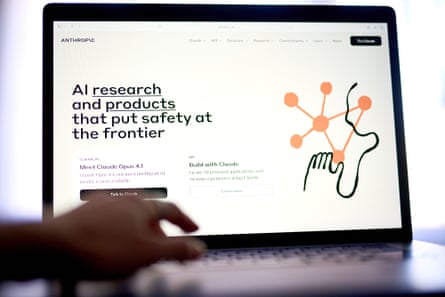
A tablet screen that reads: ‘AI research and products that put safety at the frontier’
The decision to ‘let go’ of the reins on AI is likely to come between 2027 and 2030, Kaplan says. Photograph: Bloomberg/Getty Images

Kaplan said that while efforts to align the rapidly advancing technology to human interests had to date been successful, freeing it to recursively self-improve “is in some ways the ultimate risk, because it’s kind of like letting AI kind of go”. The decision could come between 2027 and 2030, he said.
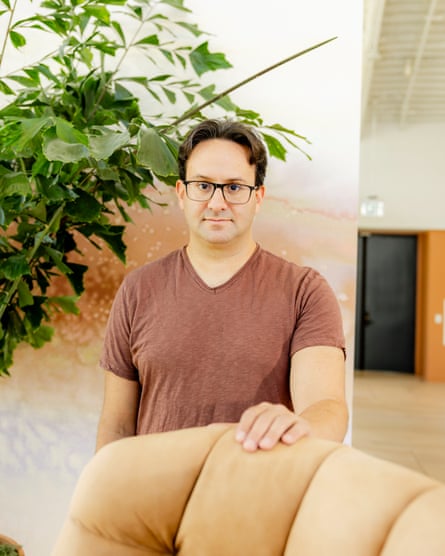
Kaplan stands behind a heavily cushioned chair next to a large houseplant
Photograph: Cayce Clifford/The Guardian

double quotation mark“If you imagine you create this process where you have an AI that is smarter than you, or about as smart as you, it’s [then] making an AI that’s much smarter.”

Blurred image of Kaplan on an amber background
Photograph: Cayce Clifford/The Guardian

double quotation mark“It sounds like a kind of scary process. You don’t know where you end up.”

Kaplan has gone from being a theoretical physicist scientist to an AI billionaire in seven years working in the field. In a wide-ranging interview, he also said:

  • AI systems will be capable of doing “most white-collar work” in two to three years.

  • That his six-year-old son will never be better than an AI at academic work such as writing an essay or doing a maths exam.

  • That it was right to worry about humans losing control of the technology if AIs start to improve themselves.

  • The stakes in the race to AGI feel “daunting”.

  • The best-case scenario could enable AI to accelerate biomedical research, improve health and cybersecurity, boost productivity, give people more free time and help humans flourish.

Kaplan met the Guardian at Anthropic’s headquarters in San Francisco, where the interior of knitted rugs and upbeat jazz music belies the existential concerns about the technology being developed.

Skyscrapers reflected on the facade of a glass building
San Francisco has become the epicentre of AI startups and investment. Photograph: The Washington Post/Getty Images

Kaplan is a Stanford-and Harvard-educated professor of physics who researched at Johns Hopkins University and at Cern in Switzerland before joining OpenAI in 2019 and co-founding Anthropic in 2021.

He is not alone at Anthropic in voicing concerns. One of his co-founders, Jack Clark, said in October he was both an optimist and “deeply afraid” about the trajectory of AI, which he called “a real and mysterious creature, not a simple and predictable machine”.

Kaplan said he was very optimistic about the alignment of AI systems with the interests of humanity up to the level of human intelligence, but was concerned about the consequences if and when they exceed that threshold.

The future of AI

The rivals racing to create super-intelligence. This was put together in collaboration with the Editorial Design team. Read more from the series.

Words

Nick Hopkins, Rob Booth, Amy Hawkins, Dara Kerr, Dan Milmo

Design and Development

Rich Cousins, Harry Fischer, Pip Lev, Alessia Amitrano

Picture Editors

Fiona Shields, Jim Hedge, Gail Fletcher

He said: “If you imagine you create this process where you have an AI that is smarter than you, or about as smart as you, it’s [then] making an AI that’s much smarter. It’s going to enlist that AI help to make an AI smarter than that. It sounds like a kind of scary process. You don’t know where you end up.”

Doubt has been cast on the gains made from deploying AIs in the economy. Outside Anthropic’s headquarters, a billboard for another tech company pointedly asked “All that AI and no ROI?”, a reference to return on investment. A Harvard Business Review study in September said AI “workslop” – substandard AI enabled-work that humans have to fix – was reducing productivity.

Some of the clearest gains have been in using AIs to write computer code. In September, Anthropic revealed its cutting-edge AI, Claude Sonnet 4.5, a model for computer coding that can build AI agents and autonomously use computers.

A smartphone that reads: ‘Claude by Anthopic’
Attackers used the Claude Code tool to target various organisations. Photograph: Anthropic

It maintained focus on complex multistep coding tasks for 30 hours unbroken, and Kaplan said that in some cases using AI was doubling the speed with which his firm’s programmers were able to work.

But in November Anthropic said it believed a Chinese state-sponsored group had manipulated its Claude Code tool – not only to help humans launch a cyber-attack but to execute about 30 attacks itself, some of which were successful. Kaplan said allowing AIs to train the next AIs was “an extremely high-stakes decision to make”.

“That’s the thing that we view as maybe the biggest decision or scariest thing to do … once no one’s involved in the process, you don’t really know. You can start a process and say, ‘Oh, it’s going very well. It’s exactly what we expected. It’s very safe.’ But you don’t know – it’s a dynamic process. Where does that lead?”

He said if recursive self-improvement, as this process is sometimes known, was allowed in an uncontrolled way there were two risks.

“One is do you lose control over it? Do you even know what the AIs are doing? The main question there is: are the AIs good for humanity? Are they helpful? Are they going to be harmless? Do they understand people? Are they going to allow people to continue to have agency over their lives and over the world?”
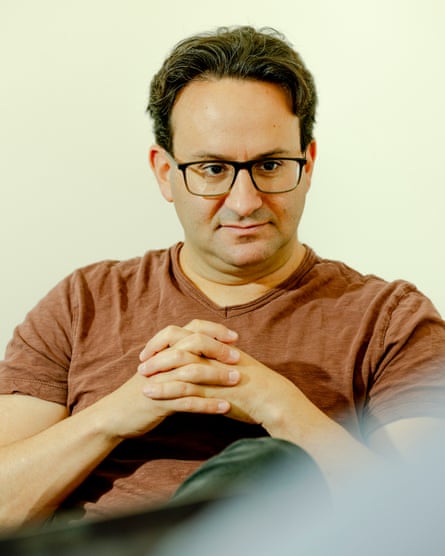
Kaplan looks down with folded hands
Photograph: Cayce Clifford/The Guardian

double quotation mark“I think preventing power grabs, preventing misuse of the technology, is also very important.”

Blurred image of Kaplan on an amber background
Photograph: Cayce Clifford/The Guardian

double quotation mark“It seems very dangerous for it to fall into the wrong hands”

The second risk is to security resulting from the self-taught AIs exceeding the human capabilities at scientific research and technological development.

“It seems very dangerous for it to fall into the wrong hands,” he said. “You can imagine some person [deciding]: ‘I want this AI to just be my slave. I want it to enact my will.’ I think preventing power grabs – preventing misuse of the technology – is also very important.”

Independent research into frontier AI models, including ChatGPT, shows the length of tasks AIs can do has been doubling every seven months.

The future of AI

The rivals racing to create super-intelligence. This was put together in collaboration with the Editorial Design team. Read more from the series.

Words

Nick Hopkins, Rob Booth, Amy Hawkins, Dara Kerr, Dan Milmo

Design and Development

Rich Cousins, Harry Fischer, Pip Lev, Alessia Amitrano

Picture Editors

Fiona Shields, Jim Hedge, Gail Fletcher

Kaplan said he was concerned that the speed of progress meant humanity at large had not been able to get used to the technology before it leaped forward again.

“I am worried about that … people like me could all be crazy, and it could all plateau,” he said. “Maybe the best AI ever is the AI that we have right now. But we really don’t think that’s the case. We think it’s going to keep getting better.”

He added: “It’s something where it’s moving very quickly and people don’t necessarily have time to absorb it or figure out what to do.”

Anthropic is racing with OpenAI, Google DeepMind and xAI to develop ever more advanced AI systems in the push to AGI. Kaplan described the atmosphere in the Bay Area as “definitely very intense, both from the stakes of AI and from the competitiveness viewpoint”.

“The way that we think about it is [that] everything is on this exponential trend in terms of investment, revenue, capabilities of AI, how complex the tasks [are that] AI can do,” he said.

The speed of progress means the risk of one of the racers slipping up and falling behind is great. “The stakes are high for staying on the frontier, in the sense that you fall off the exponential [curve] and very quickly you could be very far behind at least in terms of resources.”

By 2030, datacentres are projected to require $6.7tn worldwide to keep pace with the demand for compute power, McKinsey has estimated. Investors want to back the companies closest to the front of the pack.

Claude name and logo on a large screen behind a smartphone that features the same logo
Some of the biggest gains have been in using AIs to write computer code. Photograph: Cheng Xin/Getty Images

At the same time, Anthropic is known for encouraging regulation of AI. Its statement of purpose includes a section headlined: “We build safer systems.”

“We don’t really want it to be a Sputnik-like situation where the government suddenly wakes up and is like, ‘Oh, wow, AI is a big deal’ … We want policymakers to be as informed as possible along the trajectory so they can take it into account.”

In October, Anthropic’s position triggered a put-down from Donald Trump’s White House. David Sacks, the US president’s AI adviser, accused Anthropic of “fearmongering” to encourage state-by-state regulation that would benefit its position and damage startups.

After Sacks claimed it had positioned itself as “a foe” of the Trump administration, Dario Amodei, Kaplan’s co-founder and Anthropic’s chief executive, hit back by saying the company had publicly praised Trump’s AI action plan, worked with Republicans and that, like the White House, it wanted to maintain the US’s lead in AI.