

Scientific bedlam at the world’s weirdest and wildest research conference



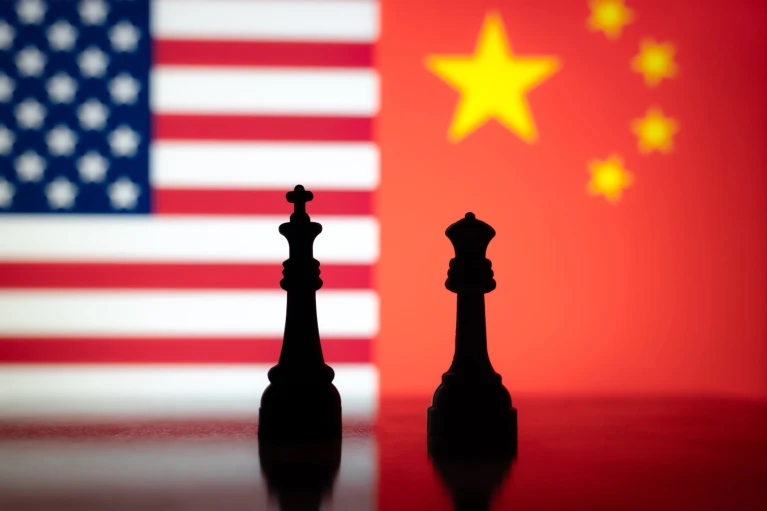
Controversy over attendance at the 2026 NeurIPS meeting reflects a growing divide in artificial-intelligence research between the two nations.Credit: Marciobnws/Shutterstock
A key Chinese research organization is set to boycott the prestigious NeurIPS conference, which is run by a US-based non-profit organization, after a row over a policy that initially seemed to exclude many Chinese researchers.
NeurIPS later apologized and watered down the policy. But the China Association for Science and Technology (CAST) is standing by its decision to no longer pay for researchers to attend the conference and to discount NeurIPS papers in crucial researcher evaluations.
The controversy reflects a growing divide in artificial intelligence (AI) research between the two nations, say analysts. CAST’s decision might be “signalling that China can increasingly stand on its own feet when it comes to advanced AI research”, says Rebecca Arcesati, who studies AI policy at the Mercator Institute for China Studies in Brussels. “This is their way of showing that if Chinese talent isn’t appreciated and welcome to these gatherings, then China will do things more on its own,” she says.
Last year, for the first time, the largest share of first authors of papers at the NeurIPS conference, which was held in December in San Diego, California, was made up of China-based researchers. A 2025 study by the London-based firm Digital Science showed that China already publishes the greatest number of AI papers by volume and has a talent pool that “dwarfs its rivals”. (Digital Science is operated by the Holtzbrinck Publishing Group, which has a share in Nature’s publisher, Springer Nature.)
Without Chinese participation, “NeurIPS would be devastated”, says William Hannas, a China specialist at Georgetown University’s Center for Security and Emerging Technology in Washington DC. It remains unclear how many researchers will actually boycott NeurIPS, given the organizers’ U-turn since the original announcement. But if all Chinese researchers withdrew papers that they co-authored, “the event would, frankly, be gutted”, he says.
The controversy began on 23 March, when NeurIPS said that the organizers of this year’s conference, to be held from 6 to 12 December with Sydney, Australia, as its main location, would reject papers submitted by researchers associated with “US-sanctioned” institutions. The organizers provided a link to a US government web page that listed prominent Chinese technology firms, including previous conference sponsor Huawei, headquartered in Shenzhen.
Scientific bedlam at the world’s weirdest and wildest research conference
The move prompted an outcry on social media, with researchers of many nationalities saying that they would refuse to take part in the conference. Among those calling on Chinese researchers to boycott the meeting were CAST — an important state-backed group that funds academic exchanges as well as attendance at foreign conferences — and the China Computer Federation (CCF), a leading professional body for computer scientists.
Although NeurIPS later issued an apology and amended its policies, saying that the ban applied only to a much narrower list of bodies, CAST said in a statement on 31 March that its measures would continue to apply, with the funding allocated for NeurIPS to be transferred to other eligible international or domestic projects and conferences. The CCF welcomed the organizers’ clarification.
CAST did not respond to Nature’s request for comment. Yunji Chen, who is director of the State Key Laboratory of Processors in Beijing, says CAST’s action “sends a clear signal: science should not be made a casualty of politics”. He adds that “if NeurIPS wishes to repair the situation, one viable approach would be to publicly reaffirm its commitment to academic neutrality”. It remains unclear how many researchers will be unable to attend NeurIPS because of CAST’s actions.
此内容由惯性聚合(RSS阅读器)自动聚合整理,仅供阅读参考。 原文来自 — 版权归原作者所有。