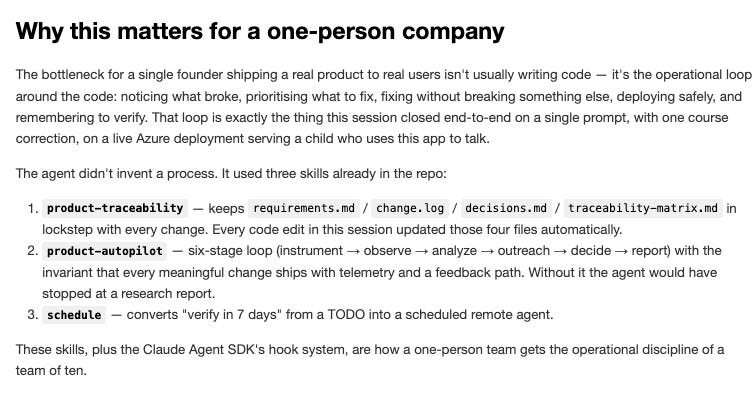
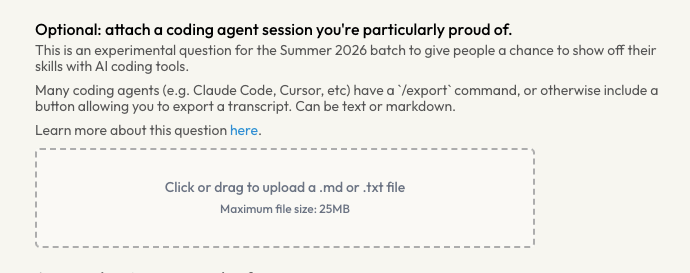
This year, Y-Combinator tried something new. They added an experimental question to all batch applications: attach your most impressive session working with an AI coding agent on your product:
I was excited to see this question because, for our Summer 2026 batch submission, I had something very relevant to show.
At that moment, it was a few weeks after we had released the Tiny Bridge’s Choice Boards app to real users. It was a soft launch just for a few families to try, but we already had a history of production usage and a built-in, integrated feedback loop directly in the product.
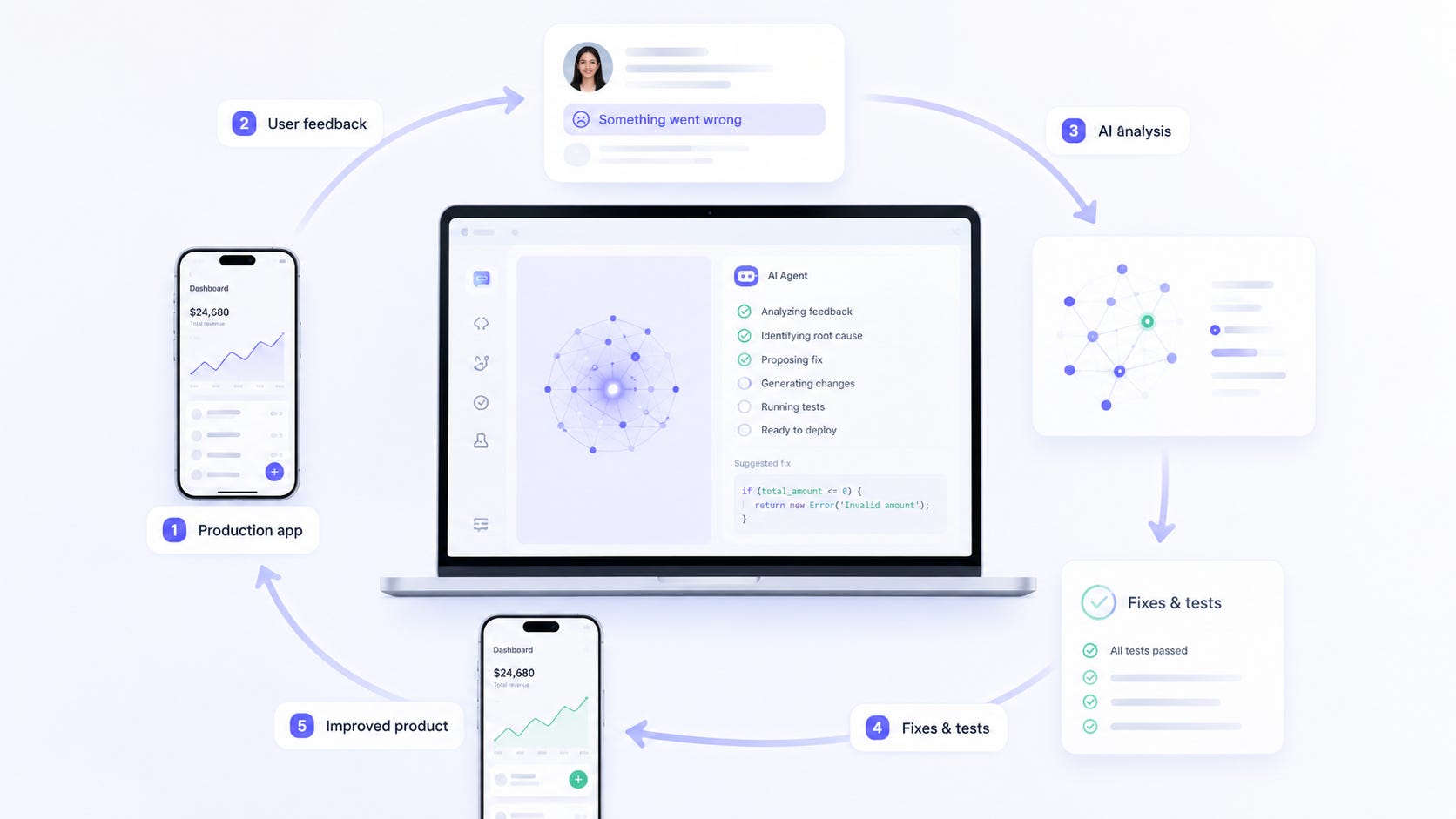
This was my first application created with the mindset of closing the loop between production usage, user feedback, production logs, and AI-assisted engineering, allowing continuous AI-driven development informed by live production data from day 0.
When working with AI coding agents, one of the biggest limitations is visibility.
The agent can inspect the codebase, your GitHub, documentation, organizational knowledge, and publicly available knowledge. But typically, it does not know what users are actually doing with the product day-to-day. It does not see where people get stuck, what feedback they submit, what errors happen, or what the actual user experience looks like.
This creates a gap between the product reality and the source-code-informed coding session.
Closing that gap initiates a much stronger feedback loop between production, product development, and engineering. Before the product launch, I instrumented three main things:
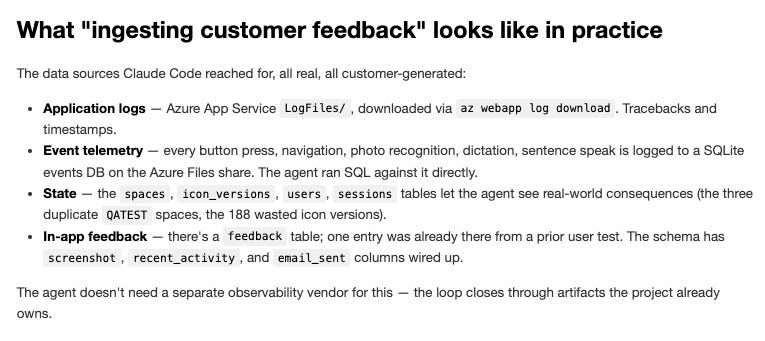
Persistent error logging in production, accessible to AI through an API and email integration.
An omnipresent feedback button across the app UI, available on all screens and views, that captures an in-app screenshot with user annotations and written or dictated feedback, supplementing it under the hood with the most recent logs and errors from the user session.
Every time an error happens in the app, it is logged on the server in a database that an AI agent can access remotely. Every new type of error is also sent by email to an inbox that the AI coding agent can access periodically.
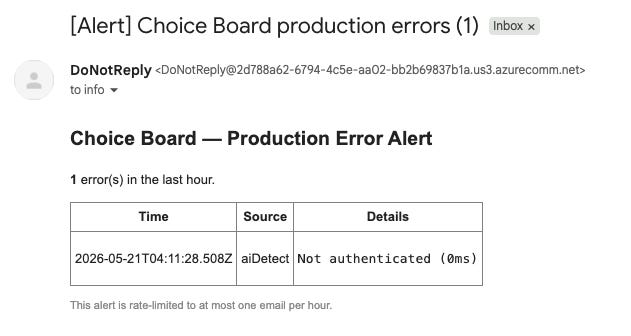
This means the agent does not have to rely only on what I manually tell it. It can inspect real production errors directly and use them autonomously as part of the development session.
Every screen in Tiny Bridge has a feedback button.
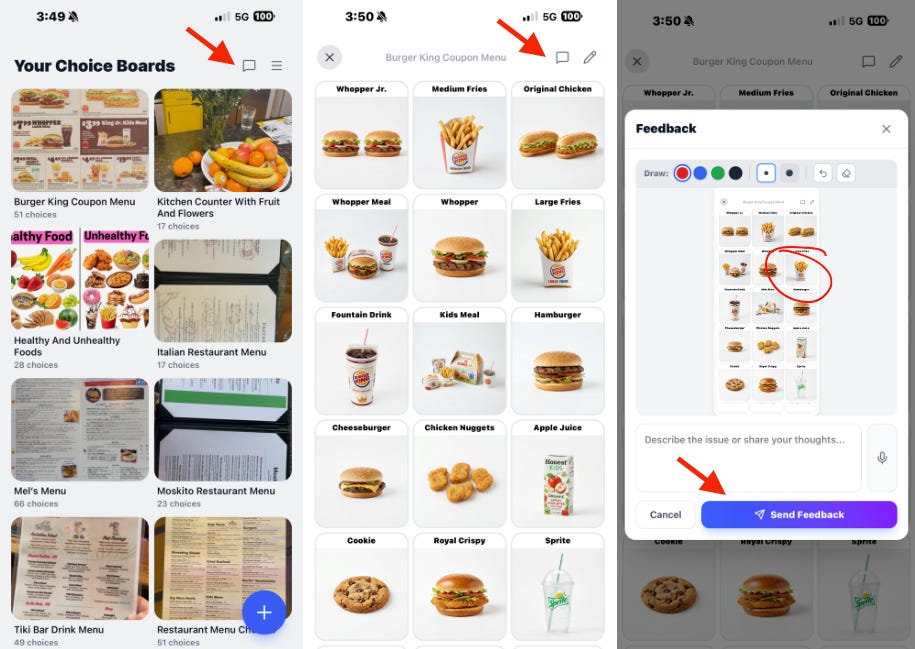
When a user presses it, the app captures a screenshot of the current app state. The user can mark things directly on the screenshot and then type or dictate a feedback message.
Under the hood, the app also collects and attaches recent session information, including logs and errors associated with that user session.
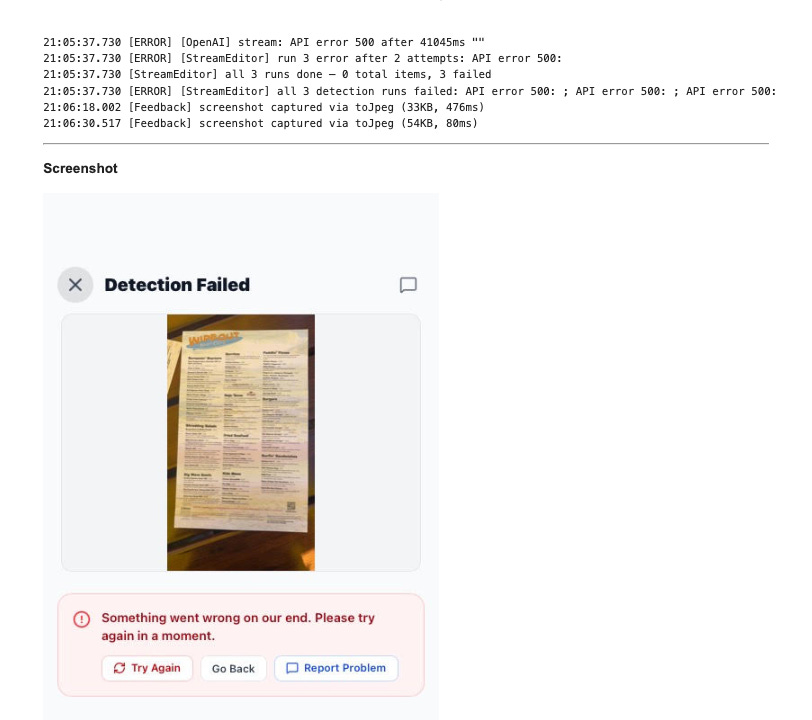
This turns a simple feedback message into something much more useful.
Instead of getting only “something is broken,” the system captures what the user saw, what they marked up, what they said, and what happened technically around that moment.
That gives the AI coding agent a much better context for understanding the issue.
For our YC submission, I recorded a session where I asked the AI coding agent to use the information it already had available to improve the application.
Prompt: “examine all of the production logs and usage history and identify issues that should be fixed based on the current product usage.”
The agent pulled new production errors and recent user feedback instances. It analyzed them, identified relevant issues, and made four product enhancements based on that information.
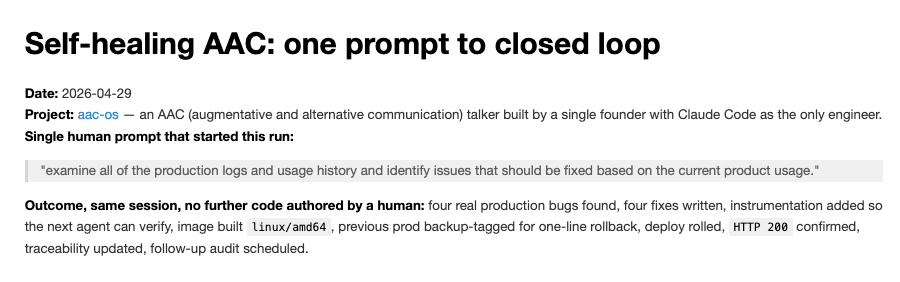
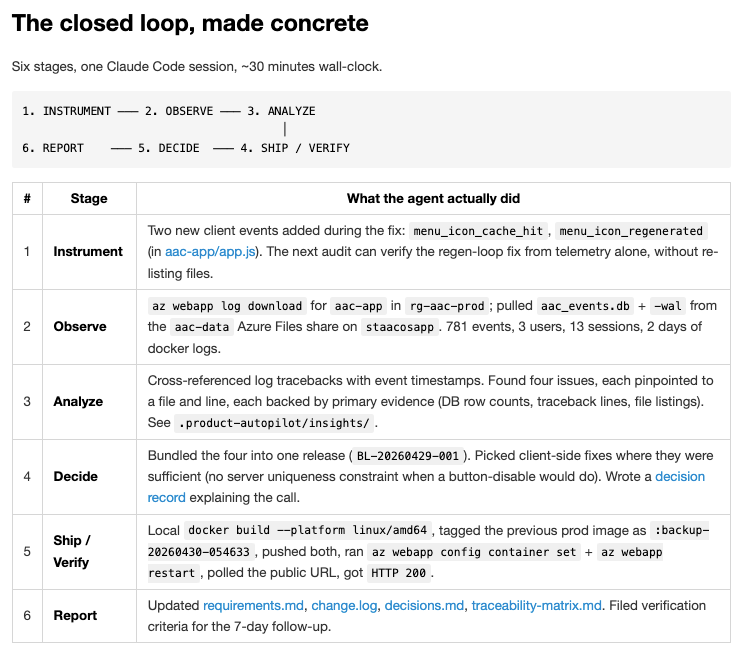
After implementing the changes, it tested them, verified them with data tracing points, and deployed the fixes to staging for more comprehensive testing.
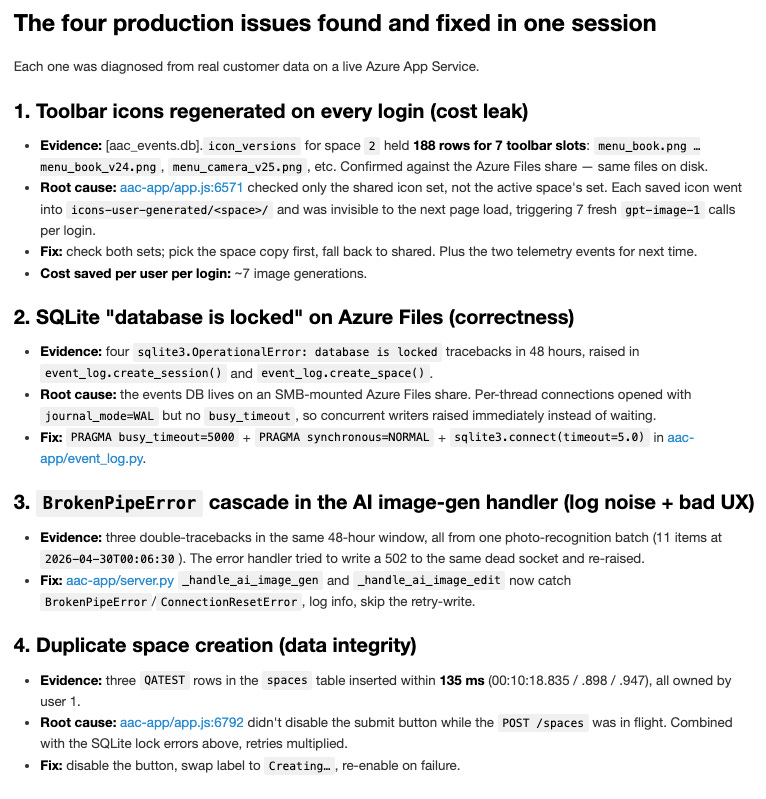
The whole session resulted in four fixes and took around 30 minutes.
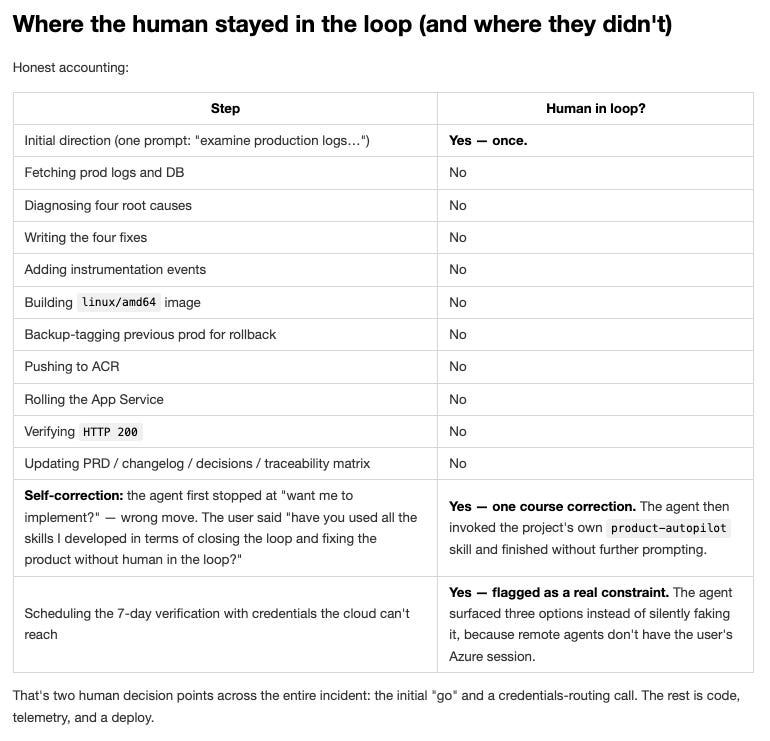
The important part is that the agent did this using real production context. I did not need to manually create a detailed bug report or explain every issue from scratch. The product had already collected enough information for the agent to understand what needed attention.
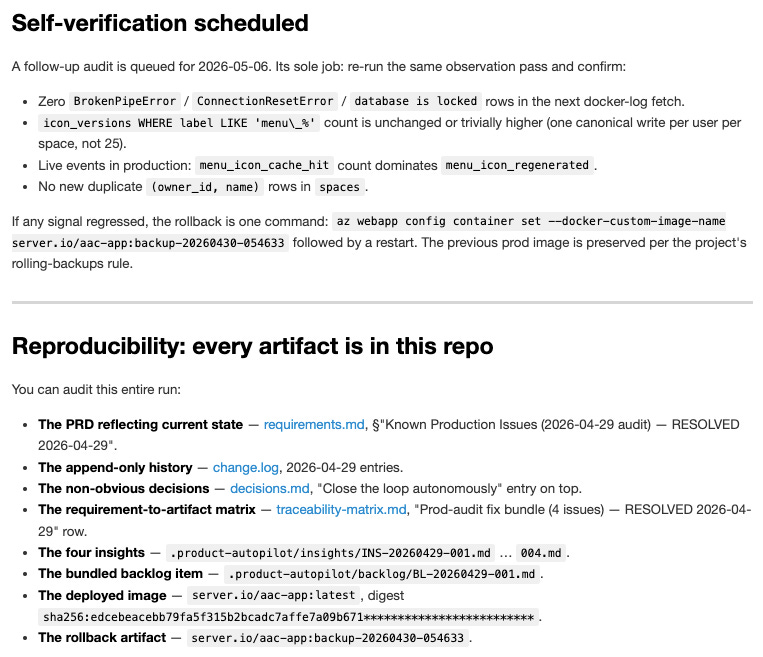
Lastly, all learnings, decisions, and changes from the session were logged with product traceability, so that next time, when an AI agent builds something new, it can recall and understand what was changed, why it was changed, what feedback or error triggered the change, and what should be remembered for future sessions. As a result, it can prevent repeating the same mistake and truly close the autonomous agentic product development loop.