





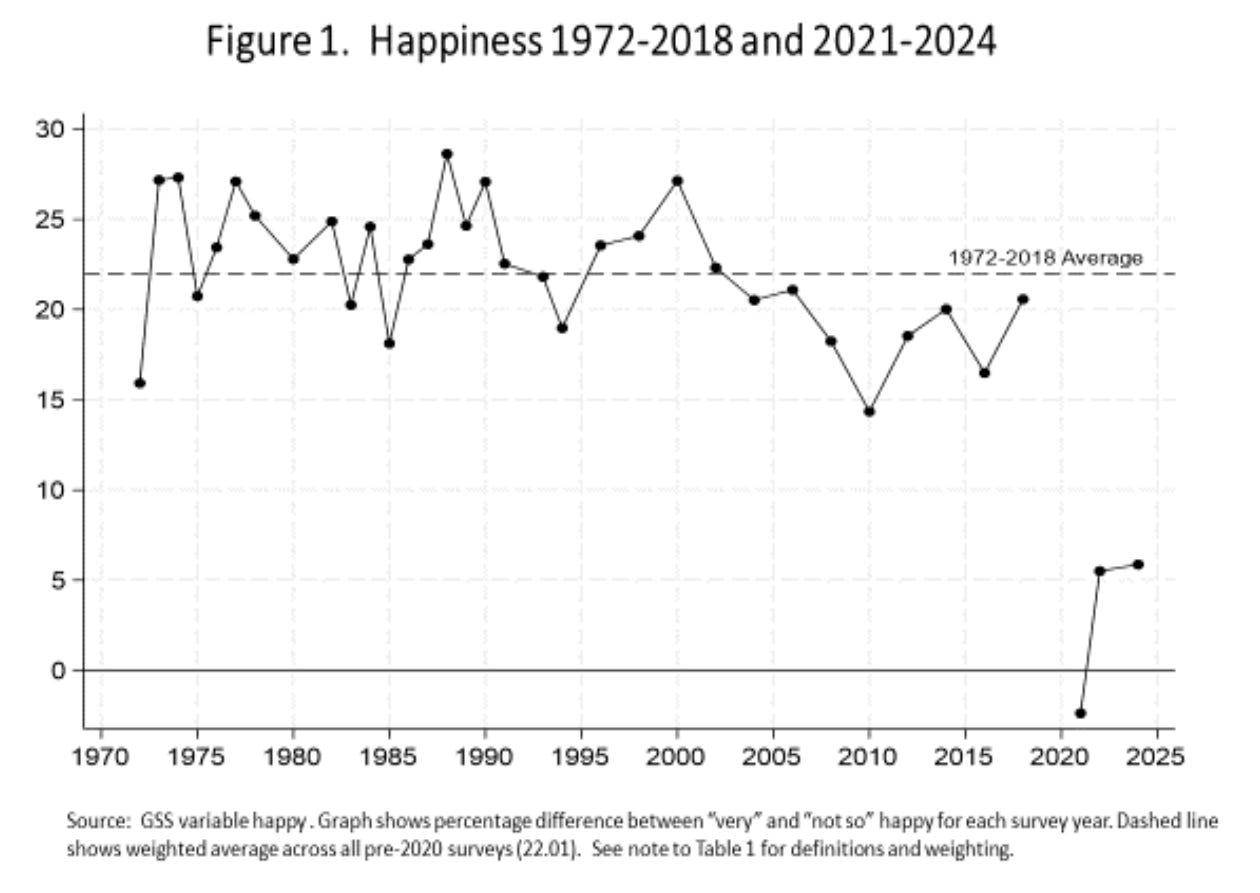
“The United States was a reasonably happy country for a long time,” the University of Chicago economist Sam Peltzman wrote in a 2026 paper. “It is not happy now.”
Crunching data from the General Social Survey, Peltzman documented “a sudden, sharp and historically unprecedented decline in self-reported happiness in the US population” after COVID that “mainly persists” through 2024. He called it a “regime change” in national sentiment. After 50 years of mostly steady levels of self-reported well-being, American happiness plunged. And it’s hardly bounced back at all.
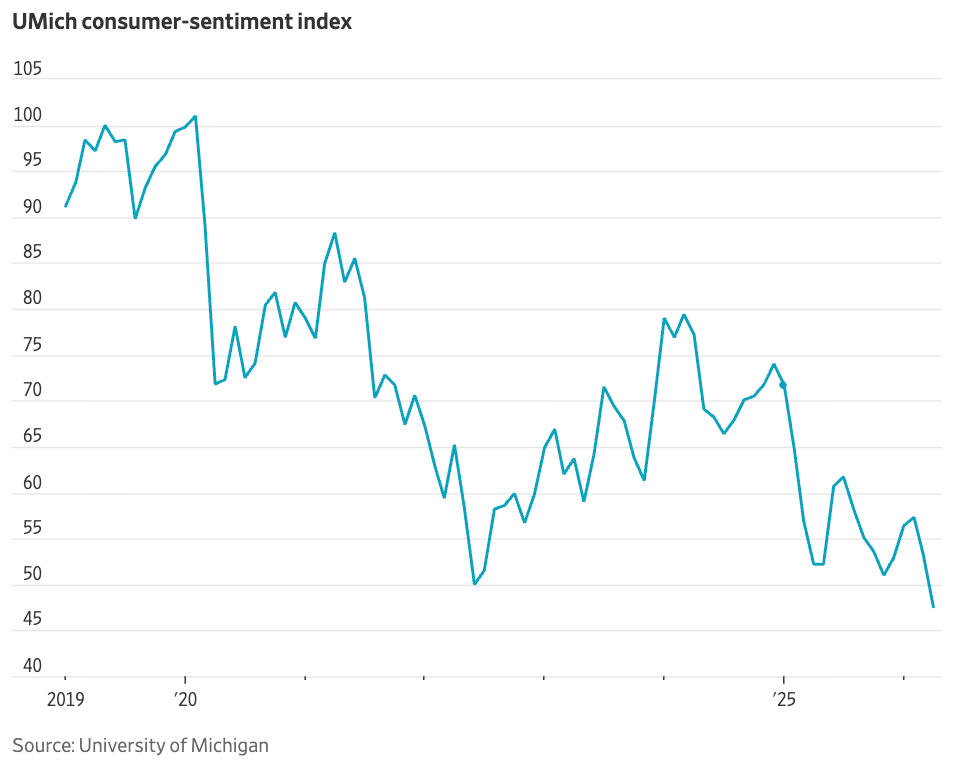
Peltzman’s analysis is not a lonely voice; there is a veritable chorus of gloomy sentiment. This week, the Federal Reserve’s measure of US worker satisfaction fell to its lowest level since the survey began in 2014. One week prior, consumer sentiment had fallen to the lowest level ever recorded in the 70-year history of the University of Michigan economic survey. Once again, the index plunged around 2020 and, like a hiker on the far side of a mountain, continues down step by step. Americans are telling pollsters that they are more depressed about this economy than they were during the depths of the Great Recession or the painful stagflationary years of the 1970s.
Finally, the U.S. has also fallen to its lowest ranking ever in the World Happiness Report, largely due to the astonishingly swift decline in well-being among young people in that international survey.

Matt Clancy@mattsclancy
Circa 2024/2025, American self-reported well-being remains near all-time lows in both the Gallup World Happiness data and the (much longer running) GSS.

1:02 PM · Apr 10, 2026 · 11.6K Views
2 Replies · 5 Reposts · 36 Likes
If you are looking for a sympathetic ear to explain this phenomenon, certainly do not seek counsel from your local economist. The American blues seem awfully curious to those who view the world through the keyhole of employment or income statistics. The unemployment rate has been below 5 percent for practically the entire decade, which is basically as good as you can ask for. For this entire decade, the US economy has significantly outgrown the Eurozone and other rich countries, such as Japan and the UK. Americans are rich and getting richer, by most conventional measures. More Americans are breaking into the upper middle class, and workers at the bottom of the income distribution have seen their wages grow faster than those at the top in the last few years.
So, those who privilege economic statistics over self-reports might be tempted to summarize the situation this way: America’s resilient economy is a fact, while Americans’ sad-sack survey results are mere irrational feelings. There is something to this; the gap between so-called “hard data” (e.g., the unemployment rate) and “soft data” (e.g., a survey) is certainly wide and widening. But a feeling is an important kind of fact. Feelings don’t just shape consumer behavior. They shape political attitudes; and attitudes influence voting; and voting determines policies; and policies shape the economy. To understand the future of the US economy and the United States writ large, one cannot afford a haughty indifference toward sentiment.
And on the sentiment front, what we’ve got are four survey results—four facts, you might even say, of American lugubriousness—all of which point to one unmistakable conclusoin. This decade has been the very opposite of “roaring.” We are mired instead in the Tragic Twenties.
One of the more remarkable discoveries in Peltzman’s paper is that the decline in self-reported well-being since 2020 has not been concentrated among young people, poor people, or unmarried people—three of the groups typically afflicted by higher levels of anxiety and sadness. Instead, the decline in happiness has been an across-the-board 10- to 15-point decimation experienced by practically every demographic. (In the graphs below, BLUE refers to happiness levels before 2020; PINK is happiness levels post-2020; and BLACK is the decline, which is remarkably uniform across groups.)
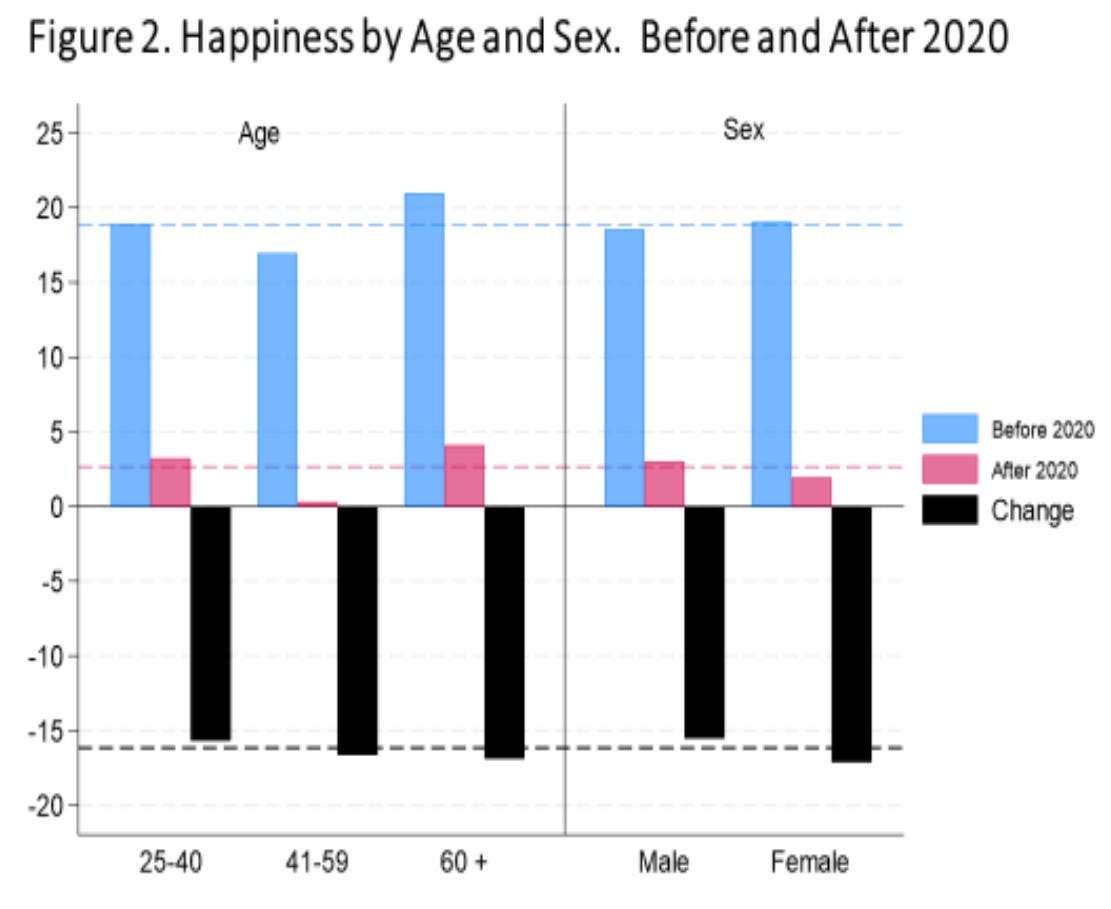
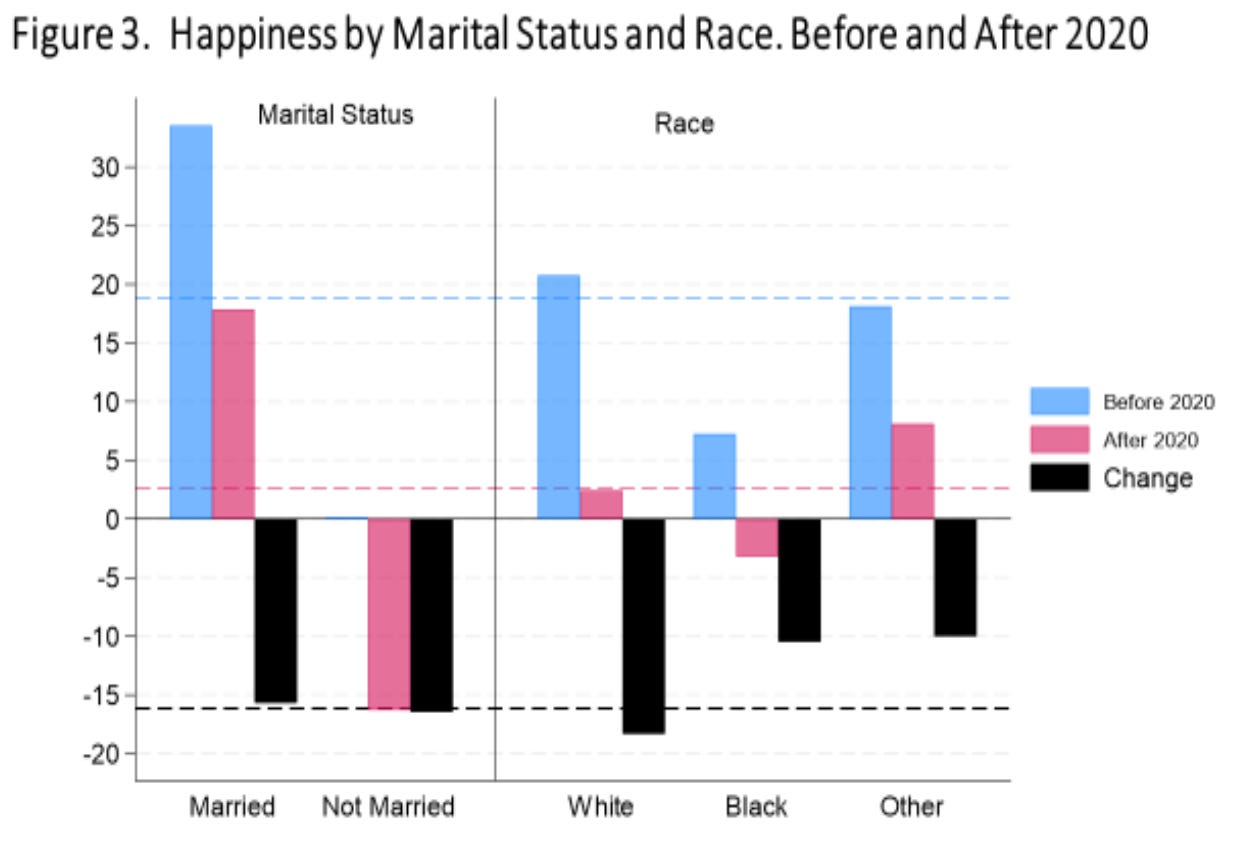
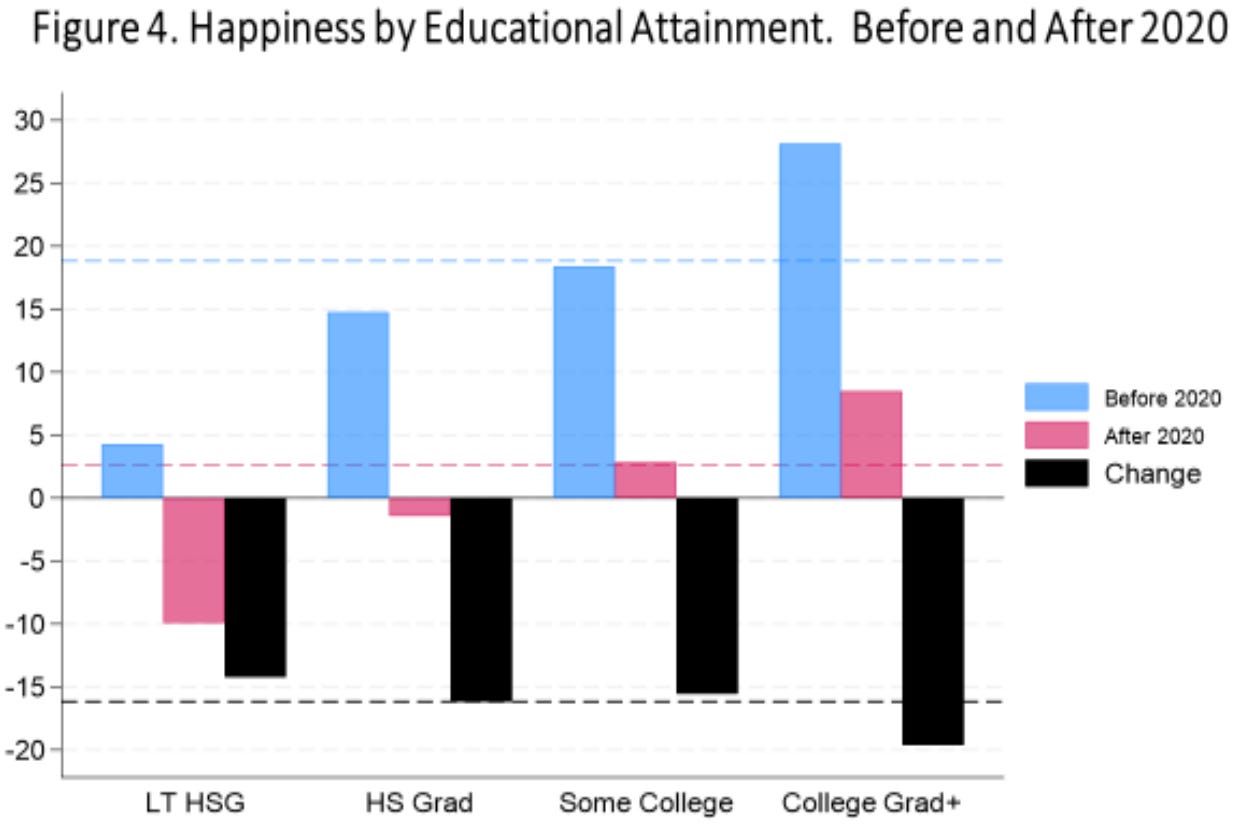
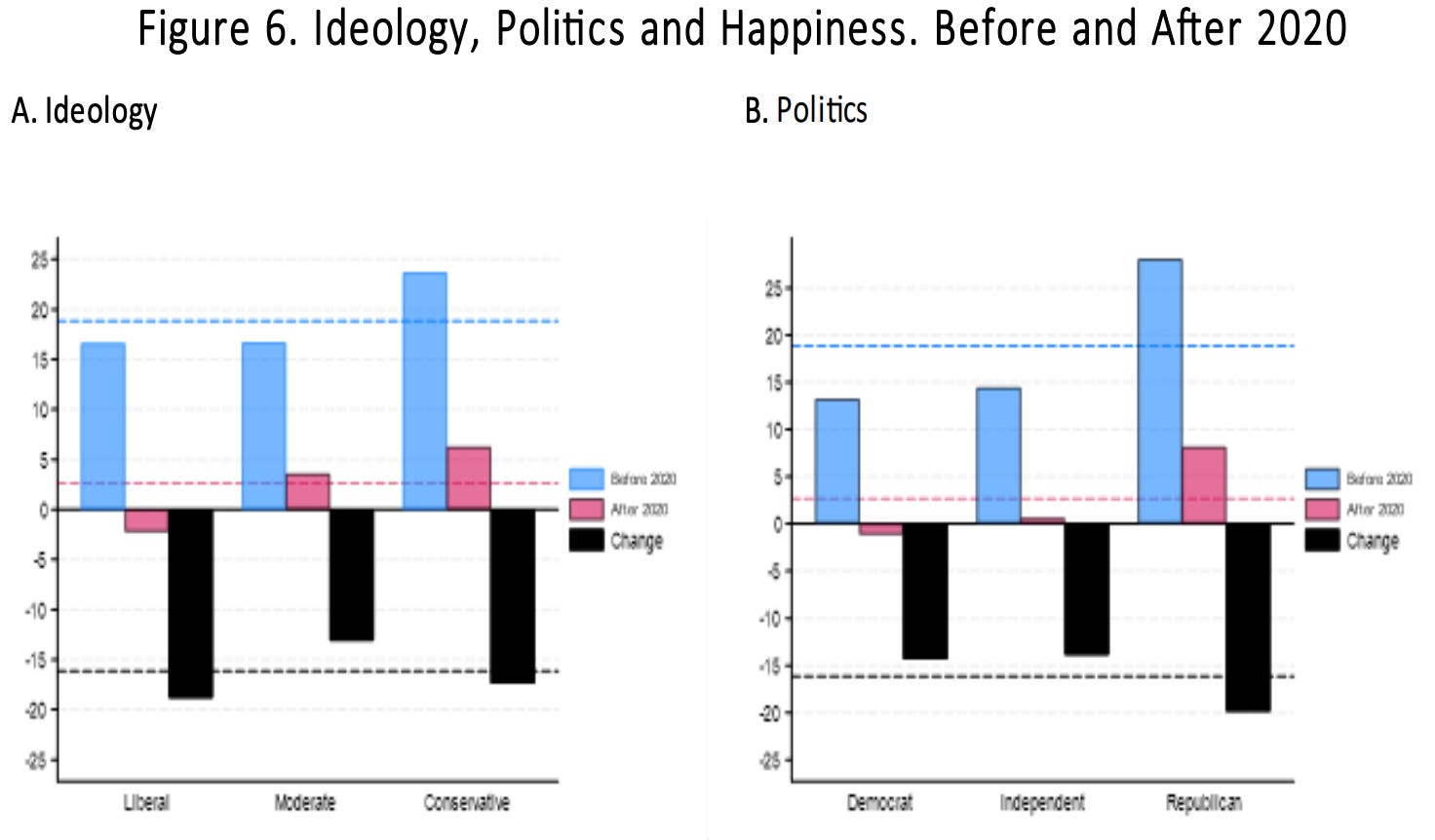
Something significant has bludgeoned Americans’ well-being in the last six years without discriminating much by age, ideology, education, or gender. What is it?
The culprit has to fit the crime. Most importantly, it has to fit the timing of the crime. What we’re looking for is something that happened around 2020 (uh, seems obvious) and then didn’t recover (ah, that’s the hard part). This timing rules out several otherwise plausible suspects.
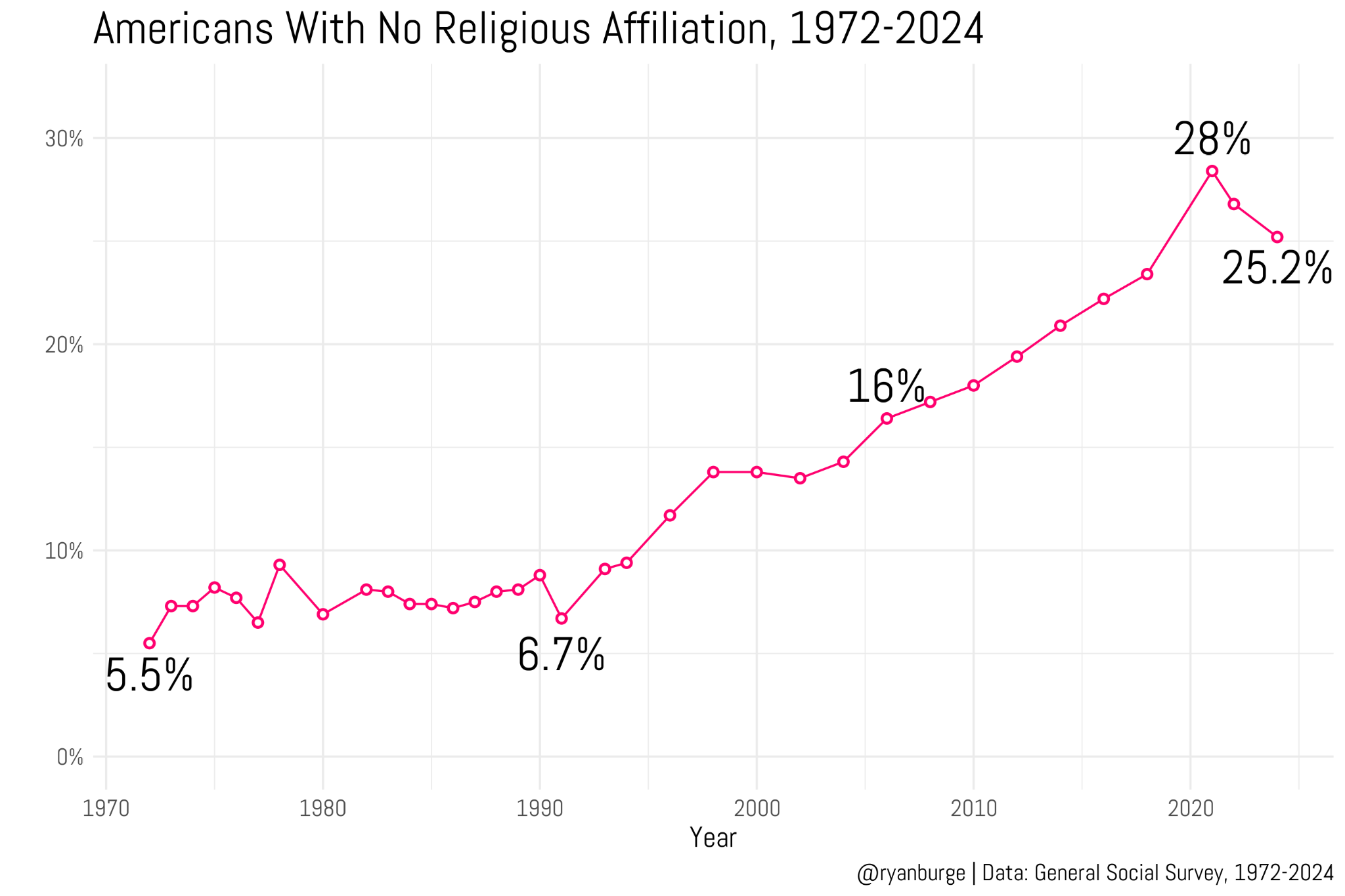
It’s probably not about cultural shifts, such as the decline of religion. Cultural conservatives might try to explain the Tragic Twenties by citing the rise of secular individualism among American liberals and pointing to the fact that religion seems to be a tonic for unhappiness. But the rise of religious non-affiliation in America has been a steady 30-year trend, whereas this falloff in well-being started in 2020, when secularism reached its recent peak. So, that explanation won’t do.
It’s probably not about old-fashioned wage inequality. Someone on the left might be inclined to argue that American misery is the reasonable and automatic societal reaction to severe class inequality. But low-income wage growth has been unusually strong since the pandemic, as the economist Arin Dube has taken pains to point out. Median household incomes are higher now than they were 10 years ago. What’s more, Peltzman’s analysis finds that some of the largest declines in happiness seem concentrated among well-to-do demographics, like older people, white people, and college graduates. So, here’s another suspect that doesn’t fit the crime.
It’s probably not just about phones and social media. When the subject is American anxiety and unhappiness, the most obvious suspect is smartphones, social media, and the surging negativity of the American news cycle. As I explained in a long essay last month, I am quite persuaded by the argument that phones and social media are associated with—and, probably, actively causing—a decline in well-being among young people in the U.S. But the rising misery of young people—often rightly associated with rising phone and social media use—has been going on for about 15 years. The more sudden collapse in general wellness that we see in the GSS and University of Michigan data points to an emotional break that happened around 2020. So, even if phones aren’t blameless here (I’ll return to them in a moment), they don’t make sense as the primary culprit.
If neither cultural decadence, nor material inequality, nor phones and social media seem to fit the shape of this particular phenomenon, we have to keep looking for what broke our brains in the 2020s. The simplest explanation I can offer is this: As a cultural-political force, the 2020 pandemic never ended.
One cannot even pretend to explain the happiness crash of 2020 without starting with the crisis that arrived in 2020 and never quite departed. The COVID pandemic unleashed more than a coronavirus upon the planet. The biological antagonist of the disease gave way to a cavalcade of economic disasters, from supply chain disruptions, to global inflation, to surging interest rates. We are still are living in the midst of an aftershock.
While the official rate of annual inflation has gone up, then down, and then up, again, the typical family does not experience price changes as a 12-month average with monthly updates. What they feel at the grocery store, or the restaurant, or the online checkout page, is something more like holy shit, this cost what?! And that holy shit moment is best understood as the accumulation of years of above-average inflation.
Think of it this way: Consumer prices, which had increased by 25 percent between the summer of 2007 and the summer of 2020, surged by the same amount between the summers of 2020 and 2025. In housing, the 50 percent increase in the Case-Shiller US national home price index between the summers of 2020 and 2025 was equal to the 50 percent increase in home prices between 2004 and 2020. In both cases, it is fair to say that Americans in the 21st century have experienced roughly triple the typical rate of inflation in the 2020s compared to what they’d grown accustomed to. Everything that people buy feels like it is constantly slipping out of the zone of affordability, and that is absolutely maddening to many people, no matter what the economic statistics suggest they should feel.
The economics writer Matt Darling has traced the relationship between actual consumer sentiment and “predicted” sentiment, based on unemployment, inflation, and interest rates. Around 2020, the relationship broke down and consumer sentiment nose-dived into what Kyla Scanlon famously dubbed a “vibecession.” In the graph below, the plunging dark purple line shows actual consumer sentiment while the light dotted line shows were consumer sentiment “should” be.
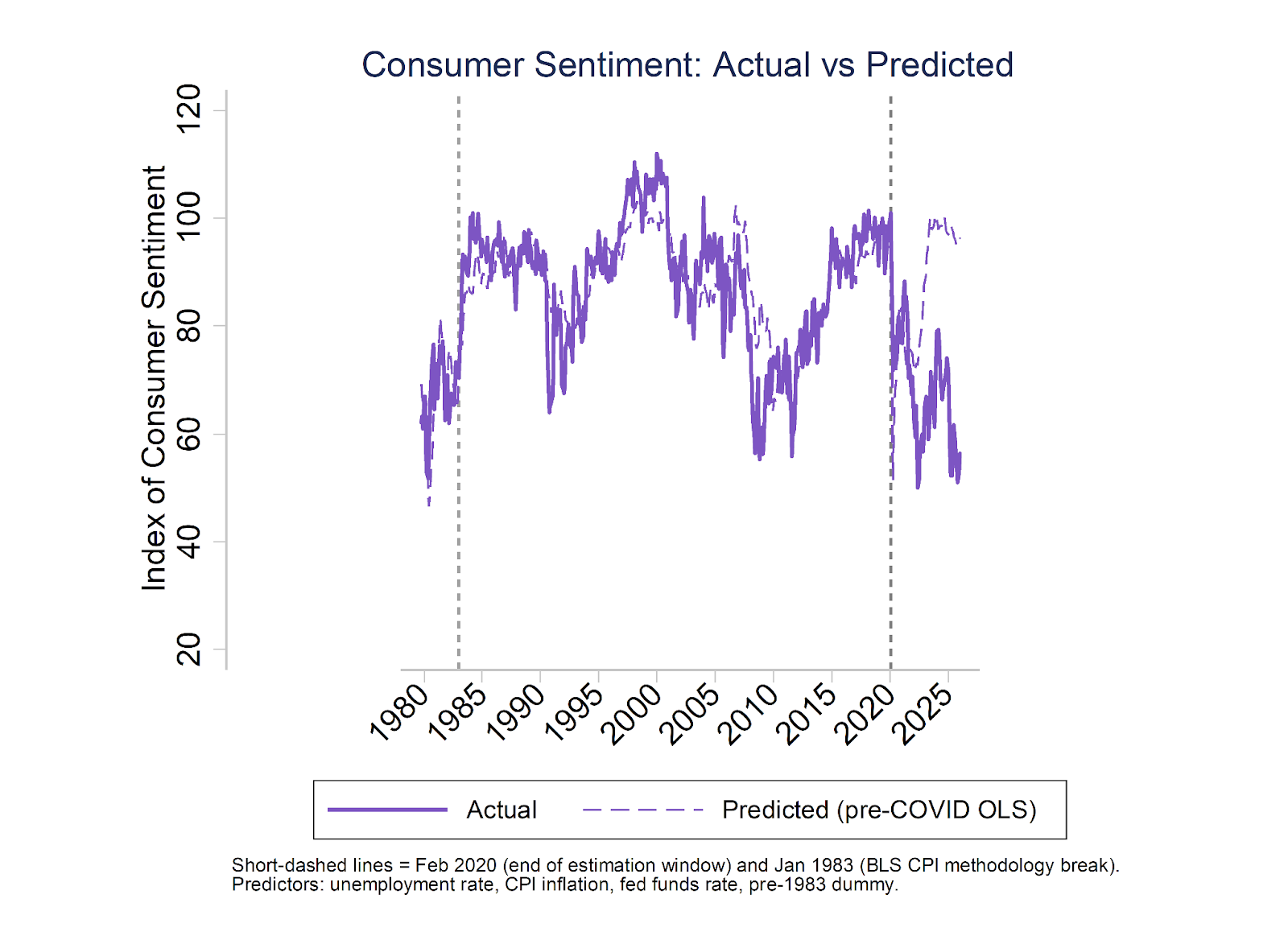
It is tempting to think: Well, this just shows how terrible inflation is for the poorest Americans. But the most interesting and confounding piece of Darling’s analysis is that it’s actually the richest third of households whose consumer sentiment has plunged most significantly relative to where we would expect it to be. Darling’s explanation is clever but depressing: Full employment, especially in an era of elevated inflation, has increased the cost of everything that involves other people, and it’s created a nation of grumps. Here’s Darling:
I think part of what happened is that many middle- and upper-income households were used to being able to afford low-wage labor on demand - for childcare, for food service, for home health care. Middle- and upper-income households found this frustrating and assumed it was part of the broad story throughout the economy; not realizing that much of this frustration was driven by low-wage workers finally earning a little more bargaining power.
Putting it all together: In the last 40 years, Americans have come to expect and prize affordability without even having to think about it. But in the last five years, prices for all sorts of things, including housing, have increased about three times faster than the rate Americans are used to; meanwhile, full employment has put upward pressure on the cost of services. The US public has responded by not only screaming at pollsters about their misery but also by rushing to the polls to vote out every incumbent who failed to do something about the “affordability” crisis of the 2020s. And Americans are not alone: The year 2024 was a bloodbath for incumbent parties around the world, as fury about high prices went as global as the pandemic itself.
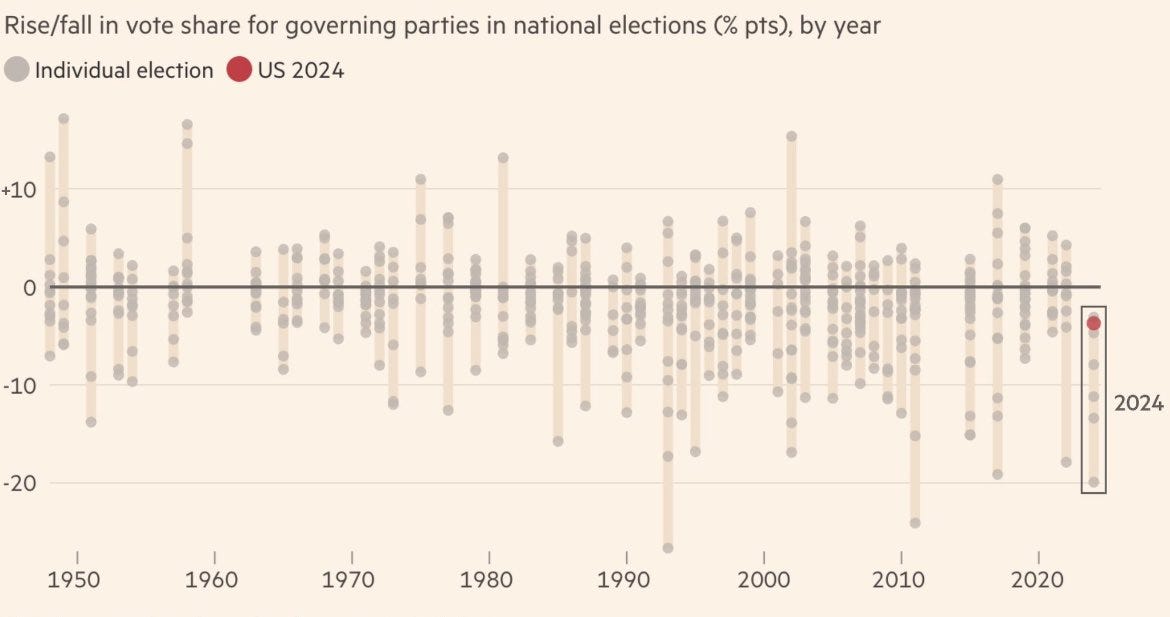
Which raises a good question: If it’s been a Tragic Twenties for the United States, what about the rest of the world?
According to the latest World Happiness Report, well-being has actually increased in the last few years in many countries, including China, India, and Vietnam. But well-being has fallen in much of the west, particularly in English-speaking nations, such as the U.S., Canada, the UK, Ireland, Australia, and New Zealand.1 As John Helliwell, an economics professor at the University of British Columbia and a co-author of the World Happiness Report, told me: “If you’re looking for something that’s special about the countries where youth unhappiness is rising, they’re mostly Western developed countries, and for the most part, they are countries that speak English.”
Change in Happiness Score: 2012 - 2025
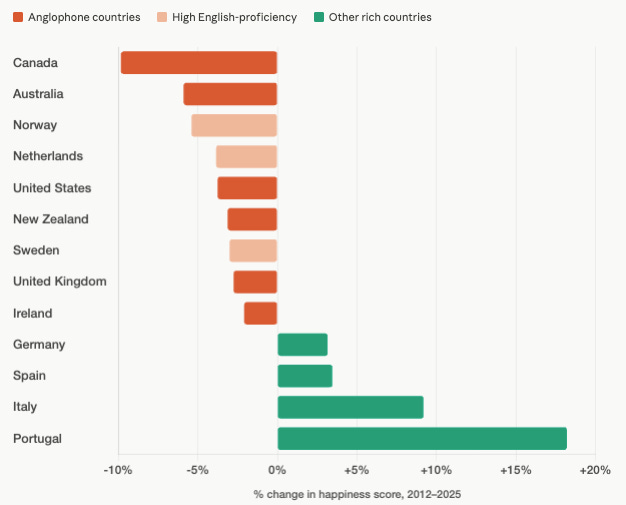
There are several reasons why Anglophone countries might have larger declines in well-being in the last decade. Led by the U.S., these countries share several or all of the following features: (1) a culture of individualism that often correlates with less time spent around other people; (2) a high degree of diagnostic inflation, meaning expanded psychiatric guidelines for anxiety, ADHD, and other mental health disorders, which mechanically increases diagnosed anxiety and raises awareness about negative mental health; and (3) high levels of negativity in the news ecosystem and on social media.
The graph above shows the decline in happiness among Anglophone and other rich countries since 2012. But what happens when you narrow the time period to the subject of this essay—the change in happiness after in the 2020s? You get this:
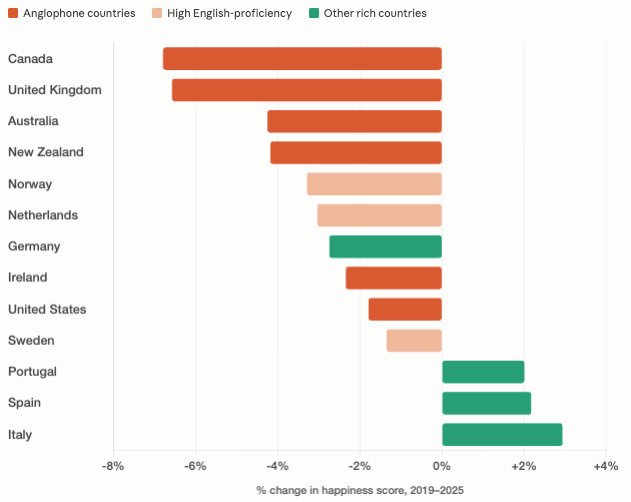
Now that is interesting. In Portugal, Italy, and Spain, happiness increased in the 2020s. What do these countries have in common? They had some of the lowest average inflation rates throughout the 2020s in the west, while Germany and the UK had some of the worst inflation in central and western Europe.
I think this interlude strengthens two arguments: first, that there is something uniquely problematic about mental health in the Anglosphere; and second, that higher rates of inflation are a major contributor to the Tragic Twenties phenomenon, both in the U.S. and throughout the west.
The word pandemic comes from the Greek pan, meaning all, and demos, meaning people. But while the etymology hints at wholeness, the effect of pandemics has historically been to break apart social trust. In one recent analysis of the Spanish Flu, researchers found that the disease had “permanent consequences on individual behavior in terms of lower social trust.” So, it is perhaps not entirely surprising that, in his paper, the economist Peltzman found that confidence has fallen throughout the 2020s for just about every institution, including the federal government, the military, major companies, education, and organized religion. Other studies have found that trust has plummeted for the CDC, higher education, science, and medicine.
It’s not just that Americans have lost trust in august, faraway institutions. Their faith in one another has suffered even more dramatic declines. For decades, the General Social Survey has asked Americans the same basic question: “Do you think most people would try to take advantage of you if they got a chance, or would they try to be fair?” In the 1970s and 1980s, Americans overwhelmingly agreed that other people are more or less trustworthy. That confidence in strangers has plummeted since 2020, according to Peltzman. The share of respondents who say other people are “fair” has declined by even more than overall happiness.
Just as Americans’ trust in institutions and strangers has declined, at least one measure of ecstatic individualism has ascended in its place. Americans now spend an unprecedented amount of time by themselves, along with an abnormal amount of time inside our homes. This means that their engagement with other people is disproportionately mediated, not by real-life experiences in the outside world, but rather by algorithmic media on their screens. As the NYU psychologist Jay Van Bavel has pointed out, online conversations prize and reward negativity and out-group animosity, which convert people who might otherwise enjoy (or tolerate) one another’s presence in a bar or office into antagonists.
It’s not that I think the decline of institutional trust and the rise of solitary individualism ought to produce unhappiness for all who experience it. But trust, companionship, and community are shock absorbers in times of personal and national crisis. And the final thing that must be said about the 2020s is that it really has been one damn crisis after another.
In his 2023 column “The Economy Is Great. Why Are Americans in Such a Rotten Mood?” the Wall Street Journal columnist Greg Ip wrote that Americans’ economic pessimism was akin to the biological phenomenon of “referred pain.” He wrote:
Just as one part of your body can hurt because of injury to another, pessimism about the economy may reflect dissatisfaction with the country as a whole. Lately, there has been a lot to be dissatisfied about: intensifying political and cultural conflict and intolerance, the pandemic, the border, mass shootings, crime, war in Ukraine and now the war in the Middle East.
Indeed, the decade has pretty much been a dumpster fire, hasn’t it? A once-in-a-century pandemic yielded to a once-in-a-generation inflation crisis. Wars in Ukraine, Gaza, Lebanon, Iran, and the Persian Gulf followed one another in a steady martial drumbeat. Existential fears of climate change gave way to existential fears of artificial intelligence. And all of this took place during a period when Donald Trump hovered over the political realm like some kind of unearthly specter—representing the imminence of fascism to roughly half the country while, to the other half or so, signifying a secular savior come to save traditional values from the demonic scourge of leftism. That is all quite a lot.
In this decade of permacrisis, the news has become exceptionally dire, and we have data to show just how much. A 2024 Brookings analysis of news sentiment found that “news tone has been more negative than the fundamentals would predict during 2018 to 2020 and even more negative than predicted in 2021 to 2023.” Today’s news is more surprisingly negative than at any period of news on record.
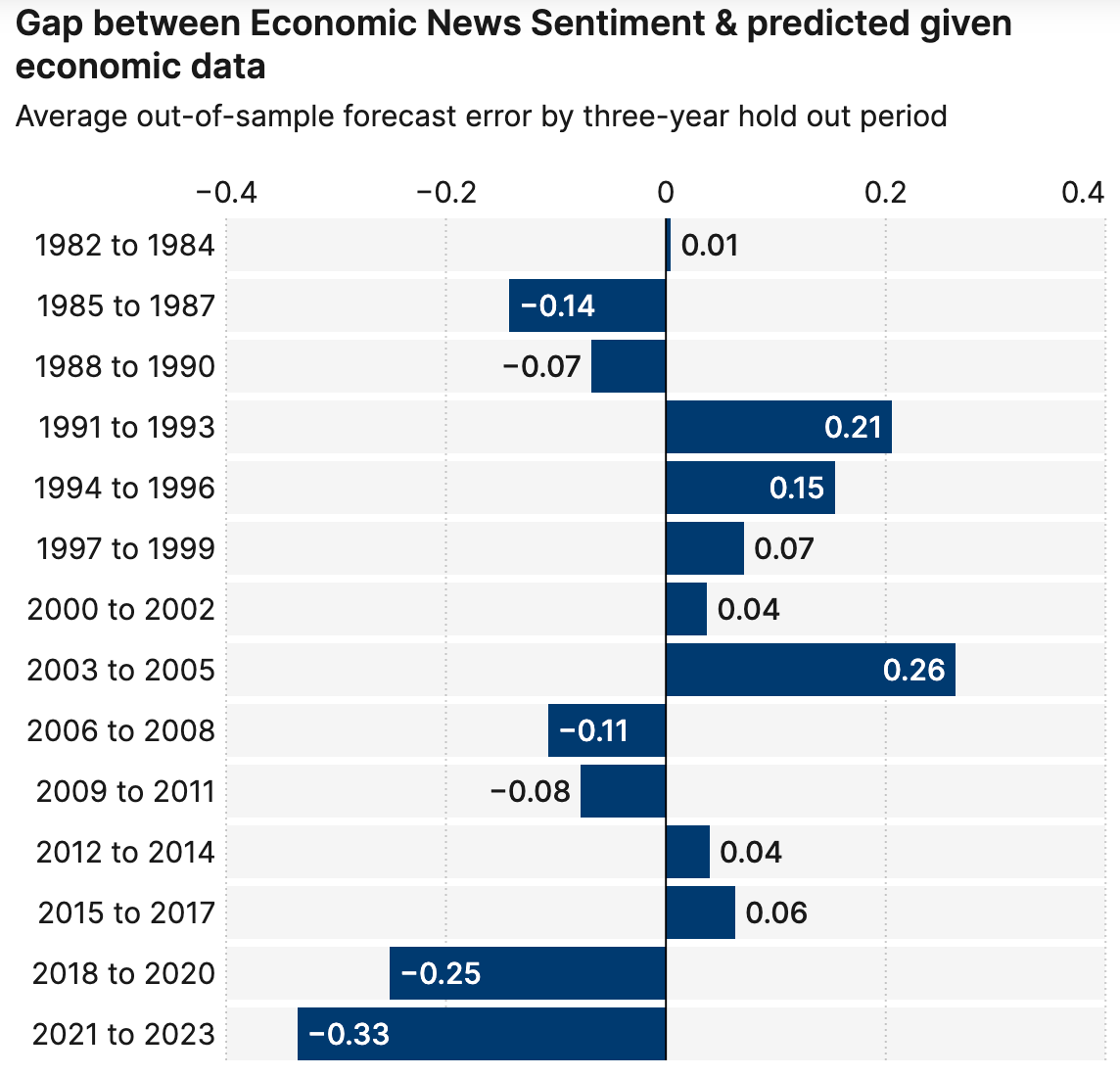
The historic pessimism of the news cycle is both a reflection of the permacrisis decade and a driver of the impression that we are constantly on the verge of crisis. As a global health emergency, the COVID pandemic may have ended, but the state of crisis that Americans feel in their day-to-day lives when they make contact with the news has not gone away. The infection rate went down, but the feeling that the world is constantly pulsing with emergency didn’t go anywhere.
And so, this is as close as I can get to a unified theory of the Tragic Twenties. American sadness this decade has been forged by the fact of, and the feeling of, a permanent unrelenting economic crisis, amplified by a uniquely negative news and media environment, and exacerbated by the rise of solitude and the declining centrality of trusted institutions. Inflation has made today’s life harder to afford, while the ambient awareness of other people’s triumphs on social media had made tomorrow’s success feel harder to achieve. The ongoing collapse of confidence in the establishment has made Americans feel unusually adrift and dissatisfied with institutions outside of their control, while the chosen self-isolation of modern life has demolished communal trust, as we increasingly experience other people’s minds through the toxic surreality of our screens rather than through the embodied reality of strangers who are, for the most part, just as nice as we are.
Is there really something special about English-speaking that’s correlated with declines in well-being in the last few years? Helliwell suggested a clever test of the theory: Look at Quebec, where more than 80 percent of the population speaks French. In neighboring Ontario, by contrast, less than 4 percent of the population speaks French. So, are the Quebecois somewhat inoculated from the epidemic of Anglophone unhappiness? Strange as it seems, the answer seems to be yes: “In Gallup data used for the World Happiness Report, life satisfaction for people under 30 in Quebec fell half as much as it did for people in the rest of Canada, Helliwell told me. In a separate analysis of Canada’s General Social Survey, which asks respondents about their preferred language, researchers at the University of British Columbia and the University of Alberta found that young people who speak French at home saw a smaller decline in happiness than those who speak English at home.”