


惯性聚合 高效追踪和阅读你感兴趣的博客、新闻、科技资讯
阅读原文 在惯性聚合中打开

推荐订阅源

博客园 - 三生石上(FineUI控件)
Martin Fowler
Martin Fowler
月光博客
月光博客
AI
AI
B
Blog
钛媒体:引领未来商业与生活新知
钛媒体:引领未来商业与生活新知
C
CXSECURITY Database RSS Feed - CXSecurity.com
WordPress大学
WordPress大学
GbyAI
GbyAI
L
Lohrmann on Cybersecurity
O
OpenAI News
Schneier on Security
P
Palo Alto Networks Blog
Cyber Security Advisories - MS-ISAC
T
Troy Hunt's Blog
V2EX - 技术
V2EX - 技术
W
WeLiveSecurity
L
LINUX DO - 最新话题
人人都是产品经理
人人都是产品经理
S
Security Affairs
OSCHINA 社区最新新闻
OSCHINA 社区最新新闻
A
Arctic Wolf
Recorded Future
Recorded Future
Microsoft Security Blog
Threat Intelligence Blog | Flashpoint
G
GRAHAM CLULEY
N
Netflix TechBlog - Medium
TaoSecurity Blog
TaoSecurity Blog
C
Check Point Blog
Scott Helme
Scott Helme
cs.CV updates on arXiv.org
Apple Machine Learning Research
PCI Perspectives
PCI Perspectives
www.infosecurity-magazine.com
Vercel News
Vercel News
The Hacker News
The Hacker News
Y
Y Combinator Blog
Latest news
Latest news
SecWiki News
SecWiki News
Hugging Face - Blog
Hugging Face - Blog
cs.AI updates on arXiv.org
Google Online Security Blog
Webroot Blog
Webroot Blog
Google DeepMind News
Recent Commits to openclaw:main
C
Cisco Blogs
博客园_首页
H
Hackread – Cybersecurity News, Data Breaches, AI and More
宝玉的分享
宝玉的分享
L
LINUX DO - 热门话题

Hacker News: Best

madhadron - The seven programming ur-languages GitHub - smol-machines/smolvm: Tool to build & run portable, lightweight, self-contained virtual machines. I Measured Claude 4.7's New Tokenizer. Here's What It Costs You. Introducing Claude Design by Anthropic Labs It Is Time to Ban the Sale of Precise Geolocation The creative software industry has declared war on Adobe Isaac Asimov: The Last Question Newly unsealed records reveal Amazon’s price-fixing tactics, California attorney general claims Clojure - Documentary Android CLI and skills: Build Android apps 3x faster using any agent Qwen3.6-35B-A3B on my laptop drew me a better pelican than Claude Opus 4.7 Codex for almost everything Introducing Claude Opus 4.7 Qwen Studio The Future of Everything is Lies, I Guess: Where Do We Go From Here? Virginia Bans Sale of Geolocation Data YouTube now lets you turn off Shorts Burgers | マクドナルド公式 ChatGPT for Excel Ask HN: Who is using OpenClaw? Live Nation illegally monopolized ticketing market, jury finds Google Broke Its Promise to Me. Now ICE Has My Data. Open Source Isn't Dead. The Future of Everything is Lies, I Guess: New Jobs Unexpected €54k billing spike in 13 hours: Firebase browser key without API restrictions used for Gemini requests IPv6 – Google Your Backpack Got Worse On Purpose Good sleep, good learning, good life Fixing a 20-year-old bug in Enlightenment E16. Does Gas Town 'steal' usage from users' LLM credits & paid services to improve itself? Tell HN: Fiverr left customer files public and searchable Cybersecurity Looks Like Proof of Work Now Getting the Flock out Release OpenSSL 4.0.0 · openssl/openssl Internet será irrespirable los días de fútbol y otros deportes. Telefónica extiende los bloqueos a Champions, tenis y golf. Automate work with routines - Claude Code Docs The Future of Everything is Lies, I Guess: Work Thousands of rare concert recordings are landing on the Internet Archive — listen now What is jj and why should I care? Backblaze has quietly stopped backing up your data Cal.com Goes Closed Source: Why AI Security Is Forcing Our Decision | Cal.com - Scheduling Software for Online Bookings Codex Hacked a Samsung TV The Future of Everything is Lies, I Guess: Safety GitHub - sterlingcrispin/nothing-ever-happens: Polymarket bot that buys "No" on all non-sports markets. For entertainment only, mostly a meme. Make tmux Pretty and Usable - Ham Vocke Microsoft isn't removing Copilot from Windows 11, it's just renaming it Servo is now available on crates.io - Servo aims to empower developers with a lightweight, high-performance alternative for embedding web technologies in applications. We May Be Living Through the Most Consequential Hundred Days in Cyber History, and Almost Nobody Has Noticed All elementary functions from a single binary operator 奈拜提耶市 Seven countries now generate 100% of their electricity from renewable energy Pro Max 5x Quota Exhausted in 1.5 Hours Despite Moderate Usage Tell HN: docker pull fails in spain due to football cloudflare block Bring Back Idiomatic Design @adlrocha - How the "AI Loser" may end up winning Apple update turns Czech mate for locked-out iPhone user Cache TTL silently regressed from 1h to 5m around early March 2026, causing quota and cost inflation The peril of laziness lost AI Will Be Met With Violence, and Nothing Good Will Come of It Center for Responsible, Decentralized Intelligence at Berkeley The disturbing white paper Red Hat is trying to erase from the internet – OSnews The Future of Everything is Lies, I Guess: Annoyances 447 Terabytes per Square Centimetre at Zero Retention Energy: Non-Volatile Memory at the Atomic Scale on Fluorographane Show HN: Pardonned.com – A searchable database of US Pardons 20 Years on AWS and Never Not My Job Artemis II crew splashes down near San Diego after historic moon mission Molotov Cocktail Is Hurled at Home of Sam Altman, OpenAI’s CEO France to ditch Windows for Linux to reduce reliance on US tech On filing the corners off my MacBooks Installing every* Firefox extension Chimpanzees in Uganda locked in vicious 'civil war', say researchers linux/Documentation/process/coding-assistants.rst at master · torvalds/linux GitHub - callumlocke/json-formatter: Makes JSON easy to read. A compelling title that is cryptic enough to get you to take action on it GitHub - Keychron/Keychron-Keyboards-Hardware-Design: Industrial design files for Keychron keyboards and mice. 100+ models with CAD assets in STEP, DXF, DWG, and PDF. Source-available, with commercial use allowed for original compatible accessories within the license terms. [ANNOUNCE] WireGuardNT v0.11 and WireGuard for Windows v0.6 Released 1D-Chess Helium Is Hard to Replace FBI used iPhone notification data to retrieve deleted Signal messages Microsoft suspends dev accounts for high-profile open source projects Why you can’t trust Privacy & Security Serenity Forge (@serenityforge.com) A new trick brings stability to quantum operations OpenAI Backs Bill That Would Limit Liability for AI-Enabled Mass Deaths or Financial Disasters Netflix Prices Went Up Again – I Bought a DVD Player Instead DOJ Wants to Scrap Watergate-Era Rule That Makes Presidential Records Public EFF is Leaving X How NASA built Artemis II’s fault-tolerant computer Meta removes ads for social media addiction litigation How Pizza Tycoon simulated traffic on a 25 MHz CPU Claude mixes up who said what, and that's not OK Reallocating $100/Month Claude Code spend to Zed and OpenRouter Help Keep Thunderbird Alive! Why Are Flock Employees Watching Our Children? The Pentagon Threatened Pope Leo XIV’s Ambassador With the Avignon Papacy Fragments: April 2 Native Instant Space Switching on MacOS Bitcoin miners are losing $19,000 on every BTC produced as difficulty drops 7.8% God sleeps in the minerals Apple Silicon and Virtual Machines: Beating the 2 VM Limit
White House proposes new rules giving political appointees final approval on research grants
Dan Vergano · 2026-05-29 · via Hacker News: Best

These proposed Office of Management and Budget regulations would render the federal research grant review process opaque
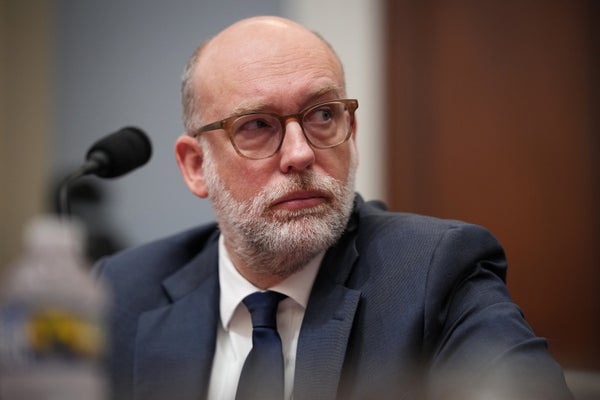
Close-up of Russell Vought testifying before the House Budget Committee on April 15, 2026.

White House Office of Management and Budget director Russell Vought.

Andrew Harnik/Getty Images

On Thursday the White House released long-anticipated draft regulations that, if enacted, would give political appointees the final word on federal research grants and other funding across government agencies.

Scheduled to be officially published in the Federal Register on Friday, the 412-page proposal on federal spending rules would centralize Office of Management and Budget (OMB) control over releases of government funds, including for scientific research grants. The OMB is headed by Russell Vought, lead architect of Heritage Foundation’s Project 2025 plan for the Trump administration.

“Recent years have provided evidence of the need for meaningful reform in Federal grants administration,” states the proposal’s “Background” section, which goes on to criticize “a ‘woke’ policy agenda that deliberately favored certain identity groups over others” under the Biden administration. The new rules would mandate political appointees at scientific agencies to sign off on all research awards for compliance with presidential priorities, including those on race and gender.


On supporting science journalism

If you're enjoying this article, consider supporting our award-winning journalism by subscribing. By purchasing a subscription you are helping to ensure the future of impactful stories about the discoveries and ideas shaping our world today.


And at scientific agencies, the proposal states that “senior appointees must conduct these reviews and apply specific principles when evaluating proposals,” a departure from past practice whereby apolitical expert review committees approved research grants.

Scientific peer review of research proposals, long the standard for approval of research grants at the National Institutes of Health, the National Science Foundation and other governmental science agencies, “remains advisory and does not replace agency discretion,” the proposal states.

“We warned of this exact form of government overreach in science a year ago,” says Colette Delawalla, founder of the science advocacy group Stand Up for Science. “It replaces expertise with political appointees, globally decouples the U.S. and completely guts our scientific ecosystem.”

The OMB plan comes after the White House released an executive order calling for such changes, alarming lawmakers and scientists, last year. Many experts noted that political appointees at agencies such as the NIH, which funds tens of thousands of research grants every year, may not be sufficiently able to judge grant proposals on their scientific merit. President Donald Trump’s executive order was then seen as a reaction to court decisions that had found the administration’s abrupt termination of thousands of grants in its first year to be illegal. The new rules would allow for grant “termination based on the discretion of the Federal agency,” according to the proposal.

“The Office of Management and Budget’s (OMB) proposed rule is an escalation of the administration’s relentless attacks on independent science,” said Jules Barbati-Dajches of the Center for Science and Democracy at the Union of Concerned Scientists, in a statement. “It replaces scientific merit with a political loyalty test and could be used to silence research that is politically inconvenient to the administration.” Barbati-Dajches warned the proposal would “give politically connected industries a functional veto over research that might reveal risks associated with products and practices.”

International research collaboration would only be allowed on a case-by-case basis under the new rules, upending long-standing scientific practice, and would be disfavored against domestic collaborations. Costs for attending conferences—the places where scientists now commonly present and discuss results—would only be allowed if participation in the event was “expressly approved” by the funding agency and written into a grant, regardless of whether the conference was announced at a later time. The proposed rewrite of federal grant rules would not affect the overhead cost rates for research grants, which the administration had previously tried to cap at 15 percent last year—an effort that was rejected by Congress. It does, however, call for favoring institutions with lower indirect cost rates and for prohibiting grant money going to publication costs “unless such costs are expressly required by statute or approved in advance by the Federal agency on a case-by-case basis.”

“What OMB is proposing is not a reform of grants management. It is a complete political control apparatus layered over every stage of the federal science funding lifecycle,” said former NIH program official Elizabeth Ginexi in an analysis of the proposed rules.

The public has 45 days to comment on the proposed regulations—an unusually short time period for such wide-ranging changes, says Matt Owens, president of the Council on Government Relations, an organization that represents more than 150 research universities.

Editor’s Note (5/29/26): This story was updated to include comments from Jules Barbati-Dajches’s statement and Elizabeth Ginexi’s analysis.

It’s Time to Stand Up for Science

If you enjoyed this article, I’d like to ask for your support. Scientific American has served as an advocate for science and industry for 180 years, and right now may be the most critical moment in that two-century history.

I’ve been a Scientific American subscriber since I was 12 years old, and it helped shape the way I look at the world. SciAm always educates and delights me, and inspires a sense of awe for our vast, beautiful universe. I hope it does that for you, too.

If you subscribe to Scientific American, you help ensure that our coverage is centered on meaningful research and discovery; that we have the resources to report on the decisions that threaten labs across the U.S.; and that we support both budding and working scientists at a time when the value of science itself too often goes unrecognized.

In return, you get essential news, captivating podcasts, brilliant infographics, can't-miss newsletters, must-watch videos, challenging games, and the science world's best writing and reporting. You can even gift someone a subscription.

There has never been a more important time for us to stand up and show why science matters. I hope you’ll support us in that mission.