




Chairman and chief executive officer, Ito-Yokado Group and its subsidiary, Seven-Eleven Japan Company
Nationality: Japanese.
Born: December 1, 1932, in Nagano prefecture, Japan.
Education: Chuo University, Tokyo, BA, 1956.
Career: Worked in a publishing sales company until 1963, when he joined Ito-Yokado Co.; first president of its subsidiary, Seven-Eleven Japan, in 1973; has remained with Ito-Yokado group through 2004.
Awards: Voted the fifth most respected business leader in Japan, Nikkei Industrial News , January 2004.
Publications: Coauthor, The Essence of Management: Spontaneous Managerial Decisions Based on Conviction [in Japanese], 2000; The Starting Point of Business, 2003.
Address: Ito-Yokado Company, 8-8, Nibancho, Chiyoda-ku, Tokyo 102-8455, Japan.
■ Toshifumi Suzuki, head of the giant Ito-Yokado Group of Japan, helped revolutionize his country's retail sector, previously known for its inefficient, hidebound practices. He introduced franchising to the Japanese retail industry in 1974, as founder of Japan's Seven-Eleven convenience stores, which eventually grew to a chain of over 10,000 units by 2003, many of them operating 24-hours a day. He pushed the franchise concept in new, creative directions, and then turned around in 1991 to rescue the U.S. company that originated the brand. He has been a pioneer in the gradual introduction of business-to-consumer e-commerce and a forceful public spokesman for economic liberalization and reform.
Suzuki belied all the stereotypes of the consensus-based Japanese business style and was never deterred by opposition within or outside his company or by appeals to tradition. Using the leverage of his growing retail empire, with over $28 billion in worldwide sales in 2003, he succeeded in streamlining much of Japan's multilayered consumer-product distribution
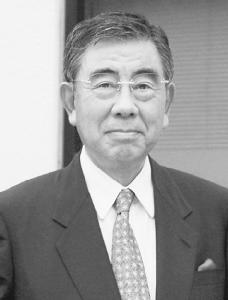
Toshifumi Suzuki. ©
AFP/Corbis
.
system and helped introduce a more consumer-driven orientation to product development and manufacturing. Perhaps his most forward-looking achievement was Seven-Eleven Japan's integrated data systems, whose up-to-the-minute sales, customer, inventory, and supply-chain information dramatically improved productivity, profitability, and responsiveness to consumer needs. Suzuki devoted more than 40 years to finding creative ways to wring ever-more value from his company's assets for stockholders and customers alike.
Born in 1932 in the then-rural Nagano, 125 miles northwest of Tokyo, Toshifumi Suzuki moved to the capital after finishing high school. He received an economics and commerce degree from Chuo University in 1956, where, by his own later description, he was a student protestor; he also did a stint as labor-union leader. Suzuki left a promising career in publishing sales after a fateful 1963 meeting with the legendary retailer Masatoshi Ito, who was then in the process of parlaying his family's modest 40-year-old clothing business into one of the first chains of superstores under the company name Ito-Yokado. This new type of consumer emporium combined separate food, clothing, and other stores into one unified location. It proved to be a successful attempt to work around retail laws that limited department stores. These laws, passed originally in the 1930s and strengthened in the 1950s, were designed to protect the omnipresent mom-and-pop neighborhood markets.
Suzuki became a director of the company in 1971. By then, the small markets had succeeded in imposing legal limits to the superstores too, and Ito-Yokado began shopping around for other growth options. In 1973 Suzuki was instrumental in licensing the Denny's name for a chain of restaurants. During his repeated visits to the United States to clinch that deal, he became enamored with the country's thriving convenience-store chains, especially the brand leader 7-Eleven of Dallas, Texas. He immediately recognized the potential of convenience stores for Japan.
Japanese consumers had long been in the habit of shopping several times a day for small quantities of food. They placed a high value on freshness, and their homes tended to be small, with tiny kitchens and little storage space. Frequent shopping and crowded roads reinforced the need for small, local food shops carrying a limited range of staples. The small shops suffered, however, from antiquated management styles, poor capitalization, and a weak position in the face of distributors and manufacturers. It had become conventional wisdom, shared by most Ito-Yokado executives, that only large stores could achieve productivity, through economies of scale and professional management. Backed by economic consultants and industry experts, Suzuki's colleagues saw no demand for any additional small markets in the crowded Japanese retail scene.
Acting the part of visionary, Suzuki argued that Southland, the 7-Eleven parent company, could supply the management expertise and systems that might transform the Japanese mom-and-pop markets. Rather than continually fight these politically well-connected entrepreneurs, a well-run chain might tempt many of them into buying franchises, trading their valuable locations and customer loyalty for security and higher revenues. Suzuki managed to win over the company boss, Ito; the franchise ideal may have appealed to a man who always preferred leasing his locations rather than incurring the high bank debt typical of land-hungry Japanese retailers.
Suzuki still had to convince Southland executives, who had imbibed the same conventional wisdom about Japanese retail, but again his dogged determination won the day. In November 1973 Southland agreed to license its name and supply expertise and systems, in exchange for a 0.6 percent gross-profit royalty and a pledge to open 1,200 stores within eight years.
Aware that their new venture was unprecedented, Ito and Suzuki set up a new subsidiary, Seven-Eleven Japan, with Suzuki as president and Ito as chairman, and staffed it from outside the retail field. The new company copied two of Southland's key policies: it would not try to match the low prices of nearby supermarkets, and it would keep its accounting system transparent to franchisees in order to maintain their trust.
Suzuki also brought over 7-Eleven's innovative computerized point-of-sale registers, which Southland used primarily for inventory control. In his hands, this technology acquired a far more important role. Constantly upgraded with software developed by outside contractors including Microsoft, rather than by a large in-house information-technology department, using hardware codeveloped with industry leaders such as NEC, these simple point-of-sale terminals and their successors evolved into one of the most sophisticated integrated systems of any company in the world.
Seven-Eleven Japan's system eventually came to link tens of thousands of cash registers, hand-held computers, and other equipment throughout the supply chain. Every employee was trained to use the system's analytic tools, which exploited a wealth of customer, sales, weather, and other relevant data, as a guide to daily ordering. The integration of suppliers and distributors led to unprecedented response times, as freshly made products ordered in the morning were delivered before the evening rush. With such accurate data on sales trends, Suzuki was able to forgo the standard Japanese practice of returning unsold goods; in exchange, he gained full control of shelf space and a lower wholesale price. The system also facilitated real-time two-way communication.
By 1981, with over one thousand stores in operation, Seven-Eleven Japan was listed on the First Section of the Tokyo Stock Exchange, which includes only large, established companies. Several other convenience-store chains had emerged by then but none could shake Suzuki's market domination, especially in the Tokyo area. By the late 1980s Seven-Eleven Japan (along with other Ito-Yokado initiatives like the Mary Ann specialty stores for women, founded in 1978, and Robinson's department stores in 1984) had grown so large and profitable that it began to outshine its U.S. namesake.
When Southland ran into trouble later in the decade, Seven-Eleven Japan helped out by taking over the chain's 58 Hawaii units in 1989. In 1991, in exchange for a $430 million investment, Ito-Yokado acquired 70 percent ownership in Southland, along with the right to retrofit Suzuki's key innovations in the U.S. network. With Suzuki as a very active president and chief executive officer and Itoas chairman, Southland closed some 1,200 of its 6,700 stores; the firm's internal-distribution network was replaced by a third-party wholesaler; product selection was improved and pricing rationalized; and most important, an integrated information system modeled on Japan's was installed across the chain. Despite sustained opposition from many franchisees, who objected to losing their right to choose manufacturers, products, and distributors, Suzuki plowed ahead. By 1994 the U.S. unit was again making money. Profits—and new stores—continued to pile up throughout the decade and into the new century, and the company's name was formally changed to 7-Eleven, Inc.
Suzuki was always known for being hard on staff, loudly demanding they "adapt to change" and "listen to the customer." He never missed an opportunity to proselytize on the value of information technology among employees, franchisees, and suppliers. During all the years of expansion Suzuki held firm to a horizontal management structure, with only a handful of levels between franchisee and top management. He enforced a similar streamlined product-distribution system with regional depots and specialized trucks delivering similar products just in time to all units in an area; this network was organized by Seven-Eleven Japan, but the components (e.g., warehouses, trucks) were all third-party owned, in keeping with Suzuki's goal of profitability rather than volume or assets.
Suzuki enforced his faith in communication through regular meetings with managers at all levels. Some 160 "zone managers" were summoned every Tuesday to the modest, rented Tokyo headquarters to share experiences and opinions about even the smallest details of marketing, a practice followed by no other Japanese firm. Several thousand other employees and franchisees were brought in for weekly meetings and twice-yearly conferences.
In an interview reported in the book Creating Modern Capitalism (1997), Suzuki said, "I don't feel any sense of achievement. The world changes too much. A marathon has an end, but the world does not stop." Even in his late sixties and seventies he remained actively involved in many Ito-Yokado Group initiatives. In 2001 he won rare approval from the cautious government financial authorities for an innovative idea; he launched the independent IY Bank, offering credit cards, loans, and ATMs, all at existing convenience stores. The company's forays into Internet marketing began with a bookselling partnership with Softbank and a book wholesaler in 1999; most books are paid for and picked up at local Seven-Elevens. The next year he engineered a $375 million partnership with NEC, Nomura Research, and Sony, called 7-dream.com, that promised to offer 100,000 products and services over the Internet. The local stores were again expected to be the key—most products would be picked up there and even ordered over public-access terminals.
While still a very active chairman, in the twenty-first century Suzuki took on an elder-statesman role in Japan. He served as vice chairman of the prestigious Keidanren business organization and sat on important commissions on the environment, business ethics, and long-term economic strategy. He also worked to expand Ito-Yokado's presence in China.
See also entry on Ito-Yokado Co., Ltd. in International Directory of Company Histories .
Bernstein, Jeffrey R., "7-Eleven in America and Japan," in Thomas K. McCraw, ed., Creating Modern Capitalism: How Entrepreneurs, Companies, and Countries Triumphed in Three Industrial Revolutions , Cambridge, Mass.: Harvard University Press, 1997, pp. 490–529.
Earl, M. J., and D. Feeny, "How To Be a CEO for the Information Age," MIT Sloan Management Review 41, no. 2 (2000), pp. 11–23.
Sakamaki, Sachiko, "Ito-Yodako is Shaking Up Japan's Staid Retailing World," Far Eastern Economic Review , April 4, 1996, pp. 54–55.
"Seven-Eleven Japan: Blending E-commerce with Traditional Retailing," Economist , May 24, 2001.
"Suzuki Toshifumi on Consumer Preferences," Look Japan , August 1998, pp. 24–25.
此内容由惯性聚合(RSS阅读器)自动聚合整理,仅供阅读参考。 原文来自 — 版权归原作者所有。