


In this series, we will highlight a few of the many publications on GovInfo that showcase works of art through different mediums, including photographs, paintings, and drawings. This second part of the series, “Art in National Parks,” presents publications that highlight works of art and stories of art preservation in our national parks.

Image: Cover images of publications featured in this article.
Architecture in the Parks National Historic Landmark Theme Study* (1986)
This publication showcases the history and beauty of architecture within the boundaries of the National Park System. In addition to meeting the criteria for national significance, all buildings represented in this study were constructed for visitors, for explanatory purposes, or for administrative purposes. "Some of these buildings fell into the mainstreams of American architecture; the architects of these buildings pulled their ideas out of prevailing stylistic tendencies. Other architects looked toward nature and allowed the surrounding landscape to influence their designs."
Source: National Park Service.
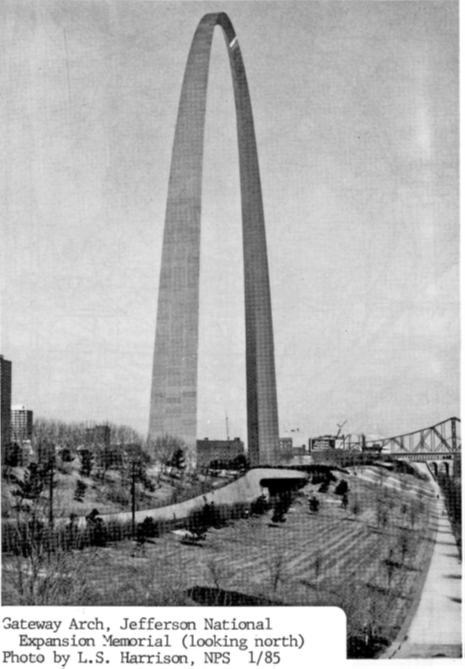
Image:
Gateway Arch, Jefferson National Expansion Memorial, St. Louis, MO ** (looking north) Photo by L.S. Harrison, NPS 1/85s. ”The use of a stressed metal skin in the Arch allowed the skin to carry all of the structural loads eliminating massive interior framing. Saarinen used a similar structural approach, but in reinforced concrete in his TWA terminal at John F. Kennedy Airport in New York. The new construction techniques included the use of 100-ton creeper cranes mounted on steel tracks on each leg of the Arch. The cranes lifted and placed each of the triangular steel sections until the final section was put in place topping off the arch. The cranes then went back down each of the respective legs polishing the finished surface, while the tracks were removed simultaneously.”
Source: National Park Service .
At Work in the Wrangells: A Photographic History, 1895-1966 – National Park Service* (2016)
Stretching over 13 million acres, Wrangell-St. Elias National Park, located in eastern Alaska and the largest national park in the U.S., offers adventure amid its rugged landscape. "In the early 1900s, the Kennecott Mining Co. transported copper from its mines near McCarthy by railroad along the Chitina and Copper rivers to ships at Cordova. Ore was extracted from these productive mines between 1911 and 1938 and lured many people to the area. Gold was extracted from the Nabesna area then too. Mining still takes place on private lands in the park."
Source: National Park Service
This publication showcases a photographic look through the lenses of the people who lived and worked in the Wrangells.
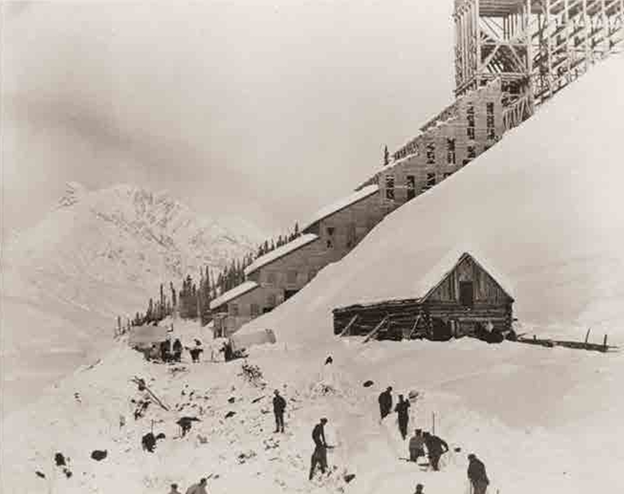
"By the early twentieth century, copper was the coveted metal made increasingly valuable by America’s desire for electric power. With outside interests looming, claim to the Bonanza lode failed to remain in the hands of Warner and Smith. Through the legal “wheeling and dealing” efforts of Stephen Birch, mining claims were consolidated with the formation of the Kennecott Copper Company in 1906 (Graumann 1976: 6-7). Snowslide. WRST History Files, “Kennecott Millsite pre-1920” Folder, 742. Original image is located at the Washington State Historical Society, Tacoma, WA."
Source: National Park Service
Art and the American Conservation Movement – National Park Service* (2001)
This study highlights a nineteenth-century art collection in the mansion at the Marsh-Billings Rockefeller National Historic Park in Vermont.
The park's mission aims to interpret the rich history of conservation in America, to preserve the iconic Marsh-Billings-Rockefeller Mansion and its surrounding landscapes, and to honor the legacies of those who shaped the environmental movement.
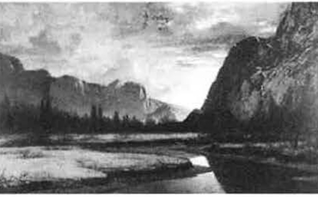
Image: William Bradford, Sunset in the Yosemite Valley, (1832-1892), Marsh-Billings-Rockefeller National Historical Park.
Source: National Park Service

Image: Albert Bierstadt, Cathedral Rock, Yosemite, (1870), Marsh-Billings-Rockefeller National Historical Park.
Source: National Park Service
Wallpapers in Historic Preservation* (1977)
Under Executive Order 11593, signed May 13, 1971, the Secretary of the Interior was given the responsibility for developing and disseminating to Federal agencies and State and local governments information concerning professional methods and techniques for preserving, improving, restoring, and maintaining historic properties. As a result, this was the preliminary report on wallpaper preservation. This publication features a history of wallpaper styles and uses, illustrated with images of printing processes and wallpaper samples, along with guidance on restoring and replacing wallpaper.
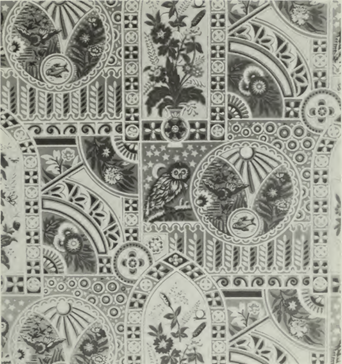
Image: "In a commercialized American version of the Anglo-Japanese style, owls, fish, and flowers are all arranged in a strange asymmetrical configuration considered artistic in its day. Printed in maroon, yellow, light green, black, and olive on an olive green ground, this pattern is typical of quantities produced by American factories during the 1880s and into the 1890s.”
Source: National Park Service
Below are some suggested searches to help you find other publications like these in the article.
Cover Image: Brick archways as part of the historical preservation at Fort Point National Historic Site, San Francisco, California. Source: National Park Service Cultural Resource Challenge*
*This content was harvested from online sources of the original hosting or authoring agency and may not reflect current policy. As Federal agencies add publications to their websites or report new publications to GPO per statutory mandate (44 U.S.C. §§ 1710, 1902-1903), GPO ensures long-term preservation of and access to the content.
**This links to a Statute Compilation, which is a compilation of the public law, as amended, and is an unofficial document and should not be cited as legal evidence of the law. Learn more.
About Featured Content Articles - This series of articles aims to highlight content available in GovInfo related to various national observances, commemorations, anniversaries, and more. See more featured content articles.
此内容由惯性聚合(RSS阅读器)自动聚合整理,仅供阅读参考。 原文来自 — 版权归原作者所有。