23rd March – Threat Intelligence Report
2026-03-23
·
via Check Point Research
For the latest discoveries in cyber research for the week of 23rd March, please download our Threat Intelligence Bulletin.
TOP ATTACKS AND BREACHES
- Navia Benefit Solutions, a United States-based employee benefits administrator, has disclosed a breach affecting more than 2.6 million individuals after unauthorized access and potential data exfiltration occurred between December 22, 2025 and January 15, 2026. Exposed information may include personal, health, and benefits data.
- Identity protection firm Aura was breached after a phone phishing attack let an intruder access an employee account and a marketing platform. The actor obtained about 900,000 records, mostly names and emails, while the core systems and identity protection services were not compromised.
- Puerto Rico Aqueduct and Sewer Authority, which manages the territory’s water supply, has confirmed a cyberattack that exposed customer and employee information. The authority said critical infrastructure was not affected because network segmentation separated operational systems, limiting the incident to business data and administrative environments.
- Intuitive, a United States-based robotic surgery company, has suffered a data breach after a targeted phishing incident led to a compromised employee account. Exposed information includes customer contact details, employee data, and corporate records, while the company said its da Vinci and Ion platforms were unaffected.
AI THREATS
- Check Point Research highlighted the key developments and major trends in the AI threat ecosystem during January – February 2026. The report focuses on the transition to the agentic era by the threat actors, where development is shifting from simple prompting to structured workflows, attack chains are evolving from human-led to AI-led operations, and safeguard bypass techniques are increasingly beginning to exploit agent mechanisms.
- Researchers have discovered three chained flaws in Anthropic’s Claude.ai, enabling invisible prompt injection, silent exfiltration of conversation history through the Files API, and redirection through an open redirect. Anthropic patched the injection issue and is addressing the remaining weaknesses, while the chain enables stealthy data theft.
- Researchers have witnessed exploitation of CVE-2026-33017, a critical unauthenticated remote code execution flaw in Langflow, an open-source framework for AI agents and retrieval-augmented generation pipelines. Attackers weaponized the bug within 20 hours of disclosure, allowing arbitrary Python execution on exposed instances through a single crafted request.
Check Point IPS provides protection against this threat (Langflow Remote Code Execution (CVE-2026-33017))
VULNERABILITIES AND PATCHES
- ConnectWise has patched CVE-2026-3564, a critical cryptographic signature verification flaw in ScreenConnect, its remote access platform used by managed service providers and IT teams. The issue could let attackers use extracted machine keys to authenticate sessions without authorization and gain elevated privileges on affected instances
- Ubiquiti has addressed CVE-2026-22557, a maximum-severity flaw in the UniFi Network Application used to manage access points, switches, and gateways. The unauthenticated path traversal bug affects version 10.1.85 and earlier and can let attackers access files, compromise accounts, and potentially seize control of underlying systems.
- Zimbra warns of active exploitation of CVE-2025-66376, a stored cross-site scripting flaw in Zimbra Collaboration Suite that was recently patched. Malicious emails can execute code when viewed in the Classic UI, exposing session cookies and mailbox data, while patched versions include 10.1.13 and 10.0.18, following warnings about real-world abuse.
- GNU InetUtils telnetd is affected by CVE-2026-32746, a CVSS 9.8 remote code execution flaw impacting all versions up to 2.7. Attackers can trigger the issue with a single Telnet connection without logging in, potentially gaining root control on exposed Linux, IoT, and industrial systems before a patch arrives.
Check Point IPS provides protection against this threat (GNU inetutils Buffer Overflow (CVE-2026-32746))
THREAT INTELLIGENCE REPORTS
- Check Point researchers have analyzed recent developments in the Telegram cybercrime scene, after the company had bolstered its moderation tools due to extensive criticism of allowing criminal behavior. Data shows that despite Telegram’s efforts, it is still the primary platform for cybercrime communication, with activity only growing.
- Researchers identified an Interlock ransomware campaign exploiting CVE-2026-20131, a critical flaw in Cisco Secure Firewall Management Center that enables remote code execution. The group used the zero-day as early as January, several weeks before it was patched and publicly disclosed by Cisco.
- Researchers revealed that two React Native npm packages, react-native-country-select and react-native-international-phone-number, were backdoored on March 16, 2026, in a coordinated supply-chain attack. A preinstall script deployed credential and crypto theft malware with persistence, while the packages recorded over 130,000 combined downloads over the previous month.
- Researchers have published a threat assessment of MuddyWater, linking the Iranian APT group to spear-phishing and LampoRAT. The report details delivery infrastructure, command-and-control patterns, and victimology.
Check Point Harmony Endpoint and Threat Emulation provide protection against these threats
- Check Point Research Publications
- Global Cyber Attack Reports
- Threat Research
February 17, 2020
“The Turkish Rat” Evolved Adwind in a Massive Ongoing Phishing Campaign
- Check Point Research Publications
- Global Cyber Attack Reports
- Threat Research
January 22, 2020
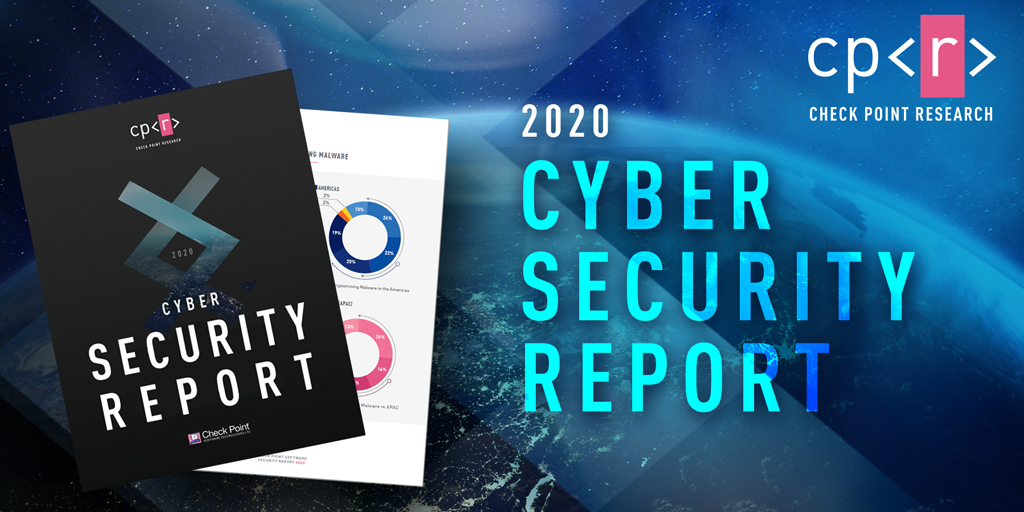
The 2020 Cyber Security Report

- Global Cyber Attack Reports
December 15, 2021
StealthLoader Malware Leveraging Log4Shell
此内容由惯性聚合(RSS阅读器)自动聚合整理,仅供阅读参考。 原文来自 — 版权归原作者所有。