


惯性聚合 高效追踪和阅读你感兴趣的博客、新闻、科技资讯
阅读原文 在惯性聚合中打开

推荐订阅源

罗磊的独立博客
小众软件
小众软件
The Cloudflare Blog
博客园 - 【当耐特】
钛媒体:引领未来商业与生活新知
钛媒体:引领未来商业与生活新知
酷 壳 – CoolShell
酷 壳 – CoolShell
WordPress大学
WordPress大学
freeCodeCamp Programming Tutorials: Python, JavaScript, Git & More
V
Visual Studio Blog
量子位
奇客Solidot–传递最新科技情报
奇客Solidot–传递最新科技情报
美团技术团队
S
SegmentFault 最新的问题
宝玉的分享
宝玉的分享
博客园 - 叶小钗
月光博客
月光博客
Apple Machine Learning Research
T
Tailwind CSS Blog
博客园 - 聂微东
OSCHINA 社区最新新闻
OSCHINA 社区最新新闻
J
Java Code Geeks
Y
Y Combinator Blog
D
Docker
Microsoft Azure Blog

Internet Society

What Happens When a Community Wires Itself: Lessons from Colville on the Power of Indigenous-Led Connectivity - Internet Society From Curiosity to Confidence: CodificaKids Builds Digital Trust in Rural Brazil - Internet Society Community Snapshot—August - Internet Society Empowering Parents in Rwanda Through Digital Literacy Training - Internet Society Advancing the Safer Internet Initiative for Everyone - Internet Society Youth in Action: Contributing to a More Connected and Inclusive Digital Future - Internet Society Advancing a Connected Future for Indigenous Communities - Internet Society How One Alum Helped Build a Community of Internet Leaders - Internet Society The Tribal Broadband Bootcamps Celebrate Their Five-Year Anniversary - Internet Society Adaptability and Resilience: Q&A with New Board Chair Brian Haberman - Internet Society Community Snapshot—July Community Snapshot—July - Internet Society Defending the Open Internet: Why Italy’s Content Delivery Network Decision Matters - Internet Society Carrying the Light of the Internet Forward: A Farewell Message from Board Chair Ted Hardie - Internet Society Community Snapshot—June Community Snapshot—June - Internet Society Digital Coercion: How Inaccessible Design Strips Financial Privacy - Internet Society The Need to Reimagine the WSIS Forum - Internet Society How Local Peering Is Strengthening Africa’s Internet - Internet Society Safety Over Bans: Internet Society Challenges App Store Age Verification - Internet Society The Organizations on the Front Lines of a Safer Internet Need Our Help - Internet Society Connectivity Is a Lifeline in Venezuela’s Humanitarian Emergency - Internet Society NDSS Symposium 2027 Heads to Seoul: Expanding Global Collaboration in Cybersecurity Research - Internet Society Solving Crime Without Breaking Encryption - Internet Society Carrying the Light of the Internet Forward: A Farewell Message from Board Chair Ted Hardie Community Snapshot—May - Internet Society From Refugee to Digital Leader: How Justin Is Helping to Connect Rhino Camp The World Cup of Internet Resilience Community-Centered Connectivity Initiatives Earn Viddy Awards Recognition Zombie IXPs: The Four Types of Exchanges That Refuse to Die, but Fail to Live
New ITU Report Finds Community Networks Are Key to Reachi...
Naveed Haq · 2026-07-16 · via Internet Society

New ITU Report Finds Community Networks Are Key to Reaching the Unconnected Thumbnail

Connectivity 16 July 2026

There are many reasons why communities worldwide still lack meaningful Internet access, even decades after the Internet has become a staple of everyday life for others. Technical and policy limitations, geographic barriers, and high costs all play a part. More often than not, multiple factors are at play.

But while the exact reasons vary from one unconnected community to the next, one common solution for connecting these hard-to-reach places has emerged in recent years: community-centered connectivity—networks built and maintained by and for the communities themselves, in partnership with technical experts.

A new report from the International Telecommunication Union (ITU) takes a close look at how community-centered connectivity efforts are helping connect people living beyond the geographic or business reach of traditional last-mile connectivity models.

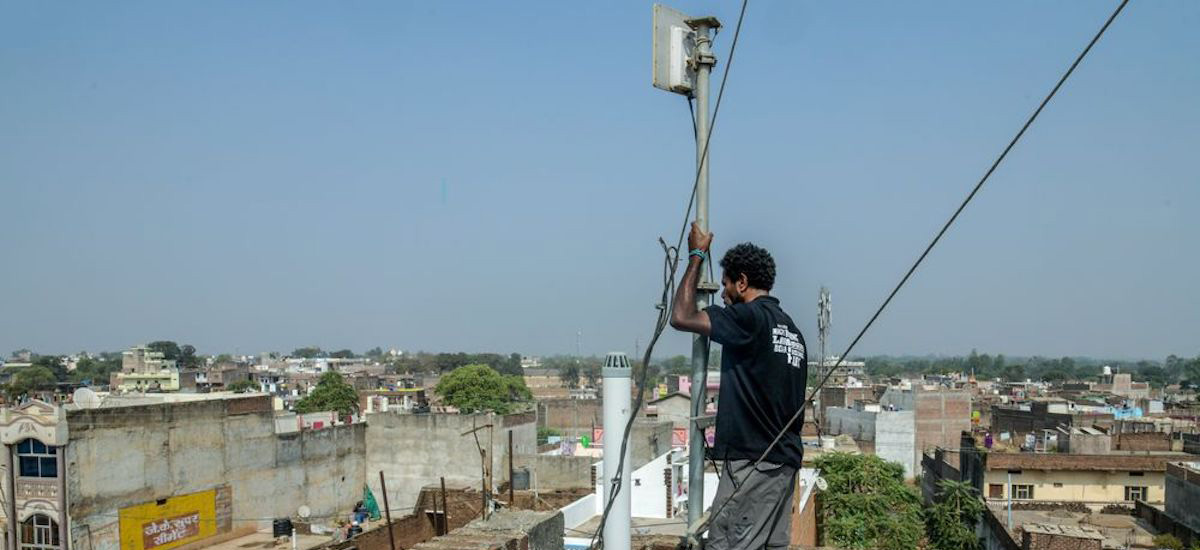
The report highlights practical, real-world examples, including projects that the Internet Society is proud to have been part of: Thailand’s first community network, TakNet; the Common Room Network in Indonesia; and the Digital Empowerment Foundation’s (DEF) Wireless for Communities (W4C) network in India.

DEF was the Internet Society’s first community network partner, back in 2010, when we collaborated to establish the W4C network in rural Chanderi. At the time, community networks were experimental. Now, 16 years later, as the report demonstrates, they are a visionary and effective tool for narrowing the digital divide.

The ITU plays a critical role in mapping global connectivity and identifying where gaps remain. Its research helps us pinpoint where the need for the technical community’s expertise is most acute, while also allowing us to celebrate and learn from success stories from around the world. These case studies add to that longstanding body of work, showing how remote villages and island communities can build sustainable connectivity solutions when local leadership is paired with support from across sectors.

We applaud this emphasis on multistakeholderism. A shared approach is the only way to ensure that the Internet is a force for good, and that those of us who make up the global Internet community can learn from one another and find ways to bring our collective strength to bare on connecting the remaining 2.2 billion people worldwide who are still offline.


Image © Atul Loke/Panos for Internet Society

Disclaimer: Viewpoints expressed in this post are those of the author and may or may not reflect official Internet Society positions.

Related Posts