




惯性聚合 高效追踪和阅读你感兴趣的博客、新闻、科技资讯
阅读原文 在惯性聚合中打开

推荐订阅源

J
Java Code Geeks
F
Fortinet All Blogs
Martin Fowler
Martin Fowler
M
MIT News - Artificial intelligence
G
Google Developers Blog
P
Proofpoint News Feed
Recent Announcements
MyScale Blog
MyScale Blog
D
DataBreaches.Net
Stack Overflow Blog
Stack Overflow Blog
月光博客
月光博客
爱范儿
爱范儿
罗磊的独立博客
腾讯CDC
Hugging Face - Blog
Hugging Face - Blog
博客园 - 叶小钗
Vercel News
Vercel News
酷 壳 – CoolShell
酷 壳 – CoolShell
B
Blog
C
Check Point Blog
美团技术团队
宝玉的分享
宝玉的分享
Microsoft Security Blog
OSCHINA 社区最新新闻
OSCHINA 社区最新新闻

Stanford Copyright and Fair Use Center

Code of Best Practices in Fair Use for Open Educational Resources (OER) - Stanford Copyright and Fair Use Center New Legislation: The CASE Act - Stanford Copyright and Fair Use Center Celebrating the unfreezing of the public domain - Stanford Copyright and Fair Use Center Stanford Copyright & Fair Use - Key Overview Updates - Stanford Copyright and Fair Use Center Future of Libraries - Need First Sale for ebooks - Stanford Copyright and Fair Use Center protect your site from copyright lawsuits - Stanford Copyright and Fair Use Center Happy Birthday - ruling plus full court docket filings - Stanford Copyright and Fair Use Center IP Without IP? A Study of the Online Adult Entertainment Industry - Stanford Copyright and Fair Use Center Guidance on websites and copyright registration from the U.S. Copyright Office - Stanford Copyright and Fair Use Center
How much of a photo do you need to alter to avoid copyrig...
Mary Minow · 2014-12-23 · via Stanford Copyright and Fair Use Center

How much of a photo do you need…

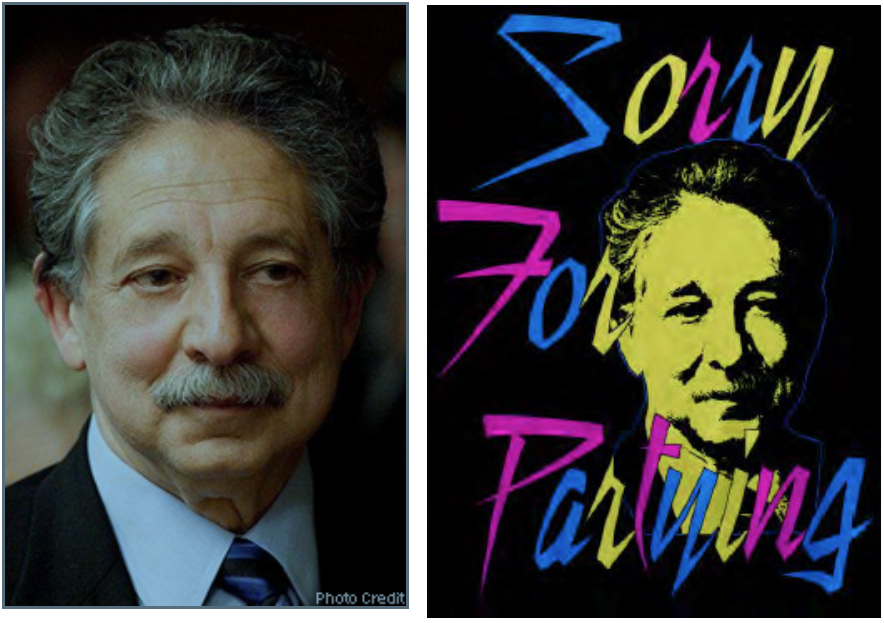
Bloggers and artists often ask, “how much of a photo do you need to alter to avoid copyright infringement?”   Five changes? Fifteen?  The Seventh Circuit addressed the issue in the Kienitz v Sconnie Nation case recently. According to the court, Sconnie Nation made t-shirts displaying an image of  Madison Wisconsin mayor Paul Soglin, using a photo posted on the City’s website that was authored by photographer Michael Kienitz.

The court looked to the Cariou v Prince decision, but complained that its approach to appropriation art looked only at whether a work is “transformative” and doesn’t fully address a copyright owner’s derivative rights under 17 U.S.C. Sect. 106(2).  This court analyzes the market effect, looking to see if the contested use is a complement to the protected work (allowed) rather than a substitute for it (prohibited).

The photographer in this case did not claim that the t-shirt was a disruption to his own plans to license the photo for t-shirts or tank tops. He did not argue that demand for the original work was reduced.

And as for Fair Use factor three, the amount and substantiality of the portion used … the court wrote “Defendants removed so much of the original that, as with the Cheshire Cat, only the smile remains.”  The original background is gone, its colors and shading are gone, the expression in the eyes can no longer be read, and the effect of the lighting is “almost extinguished.”  “What is left, besides a hint of Soglin’s smile, is the outline of his face, which can’t be copyrighted.”
cheshire cat

Kienitz v Sconnie Nation